
A Guide To Aging In Place Home Modifications

Choosing to stay in your own home as you get [...]
Choosing to stay in your own home as you get older is a powerful way to hold onto your independence and comfort. Think of aging in place home modifications not as a reaction to a problem, but as a smart, forward-thinking way to make your familiar space a true sanctuary. It’s all about getting ahead of potential issues, rather than waiting for a fall or mobility challenge to force your hand.
Creating A Safer Home To Age In Place
The goal for so many of us is to live out our years in the home we love, but making that a reality takes more than just wishing for it. It requires an honest look at your living space to make sure it can truly support you, safely and comfortably, for the long haul.
This guide isn't just another checklist. It’s about showing you how practical, thoughtful changes can empower your lifestyle and give you—and your family—invaluable peace of mind. The real aim is to create a home that makes daily life feel easier and more secure, not more difficult.
This proactive mindset is more important than ever. A recent survey of adults between 50 and 80 found that only 34% felt their home was definitely equipped for them to age in place. That's a huge gap, and home remodelers are seeing the results. From 2020 to 2023, a staggering 76% of them saw a jump in requests for aging-friendly features like grab bars and taller toilets. These aging in place statistics really paint a picture of a growing movement.
Why Proactive Modifications Matter
Waiting until after an accident to make changes is a recipe for stress and hasty, often expensive, decisions. When you adapt your home on your own terms, you’re the one in control. It's simply about acknowledging that our needs change over time and making sure our homes can change right along with us.
Even small adjustments can make a world of difference:
- Preventing Falls: Simple additions like grab bars in the bathroom or better lighting in hallways are small investments that can prevent the #1 cause of injury for older adults.
- Boosting Confidence: When your home is set up for safety and ease, it builds a powerful sense of independence. You feel more confident tackling daily routines on your own.
- Supporting Mobility: Widening a doorway or clearing a main walkway might seem minor, but it can be life-changing for someone who starts using a mobility aid. If you're exploring options, you might find our guide on walkers and rollators in St. Petersburg, FL helpful.
The best plans for aging in place are built on foresight. By thinking ahead about what you might need and making smart changes now, you're not just remodeling a house—you're making a direct investment in your long-term independence and quality of life.
Ultimately, you want your home to be a partner in your well-being, not an obstacle course.
Starting With High-Impact Safety Zones
When you start thinking about modifying a home for aging in place, the list of possibilities can feel endless and, frankly, a bit overwhelming. The best way I've found to tackle this is to forget the whole house for a minute and focus on where it counts the most.
Start with the high-impact zones. For older adults, that almost always means the bathrooms and the main entryways. These are, by far, the most common spots for falls and accidents, so even small, smart changes here can make a world of difference in safety and confidence.
Mastering Bathroom Safety Beyond The Basics
The bathroom is often the first place where the daily reality of mobility changes hits home. Everyone knows about grab bars, but here's something I see all the time: their effectiveness is all about where you put them. A randomly placed bar is just a piece of metal on the wall.
For grab bars to really work, they need to be installed to support specific movements:
- Next to the toilet: A vertical or angled bar is a huge help. It lets you use a natural push-pull motion to sit and stand, taking a lot of the strain off your knees and hips.
- Inside the shower or tub: You really need two here. A horizontal bar gives you a steady handhold while showering, and a vertical one right at the entrance makes getting in and out much, much safer.
But true bathroom safety goes beyond just grab bars. A shower chair is a simple addition that reduces fatigue and the risk of a slip. If stepping over the high wall of a bathtub is a concern, a transfer bench is an absolute game-changer. It lets you sit down safely outside the tub and then just slide over into the shower.
This is where you can start building a proactive mindset—thinking ahead instead of reacting to a fall. It's a simple process: become aware of the risks, plan the right solutions, and then take action.
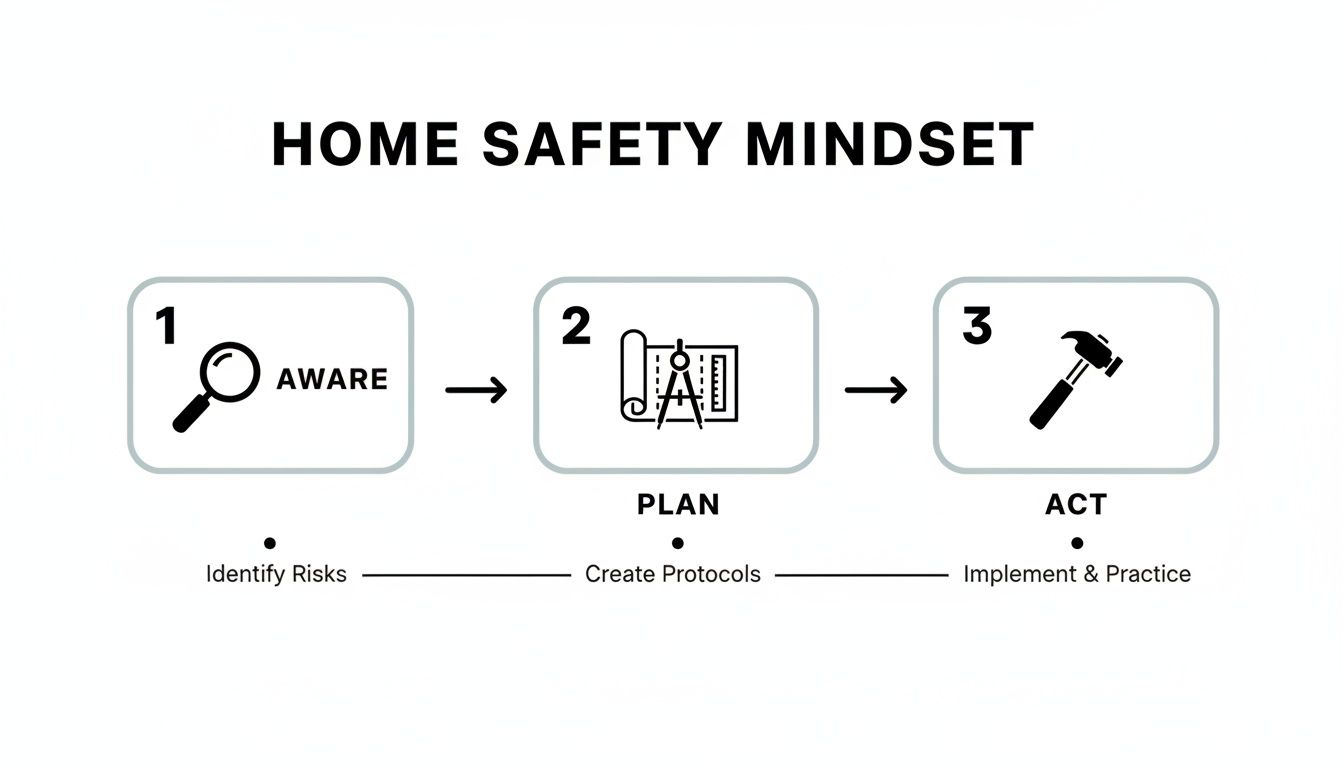
This visual guide really nails it—successful home modification is a thoughtful process, not just a frantic reaction after something bad happens.
Another quick win? A raised toilet seat. Adding just a few inches of height makes a massive difference for anyone with joint pain or weakness. It shortens the distance you have to lower yourself, and many models even come with built-in arms for extra support.
Creating Accessible and Welcoming Entryways
Getting into and out of the house should be the easiest part of the day, but steps, uneven pavement, or a narrow door can turn it into a major obstacle. This is especially true for someone using a walker or wheelchair, or even just feeling a bit unsteady.
One of the most powerful modifications you can make is creating a zero-step entrance. This doesn't have to mean a massive construction project. Often, a sturdy, low-slope ramp is all you need to bridge one or two steps. For a full flight of stairs, a professionally installed ramp is the only way to go.
The details matter. Make sure any ramp has a non-slip surface for safety in wet weather and, ideally, handrails on both sides.
A home's entrance sets the tone for accessibility. A smooth, unobstructed entry not only prevents falls but also sends a powerful message of welcome and independence, ensuring that getting in and out of the house is never a source of anxiety.
Doorway width is another critical point. Your standard door might be too tight for a walker or wheelchair to pass through without a struggle. Widening even one key doorway—like the front door or the entrance to the main bedroom—can be absolutely transformative.
This isn't a niche idea anymore. A leading industry index found that 98% of remodelers report that their customers are now familiar with aging-in-place concepts. Grab bars are still the most common request at 93%, but wider doorways are quickly gaining ground at 63%. This shows a real shift toward making homes fundamentally more accessible from the start.
By focusing on these targeted fixes in bathrooms and entryways, you get the biggest return on your investment in terms of safety and peace of mind. For more extensive needs, like those after a surgery, you might also want to explore options for hospital beds in St. Petersburg, FL to ensure the best possible comfort and support at home.
Improving Comfort and Mobility in Every Room
True freedom at home means being able to move safely and comfortably through every single part of it. Once you've secured the high-impact zones like bathrooms and entryways, it's time to look at the rest of your living space—the living room, bedroom, and hallways where life really happens. These are the areas where thoughtful adjustments can make a world of difference.
The goal here isn't just to prevent falls; it's about creating a home that supports your lifestyle instead of limiting it. It’s about enhancing day-to-day comfort, reducing physical strain, and making sure every room is a place of ease and independence. You'd be surprised how small changes add up to a huge impact on quality of life.
Creating Clear and Safe Pathways
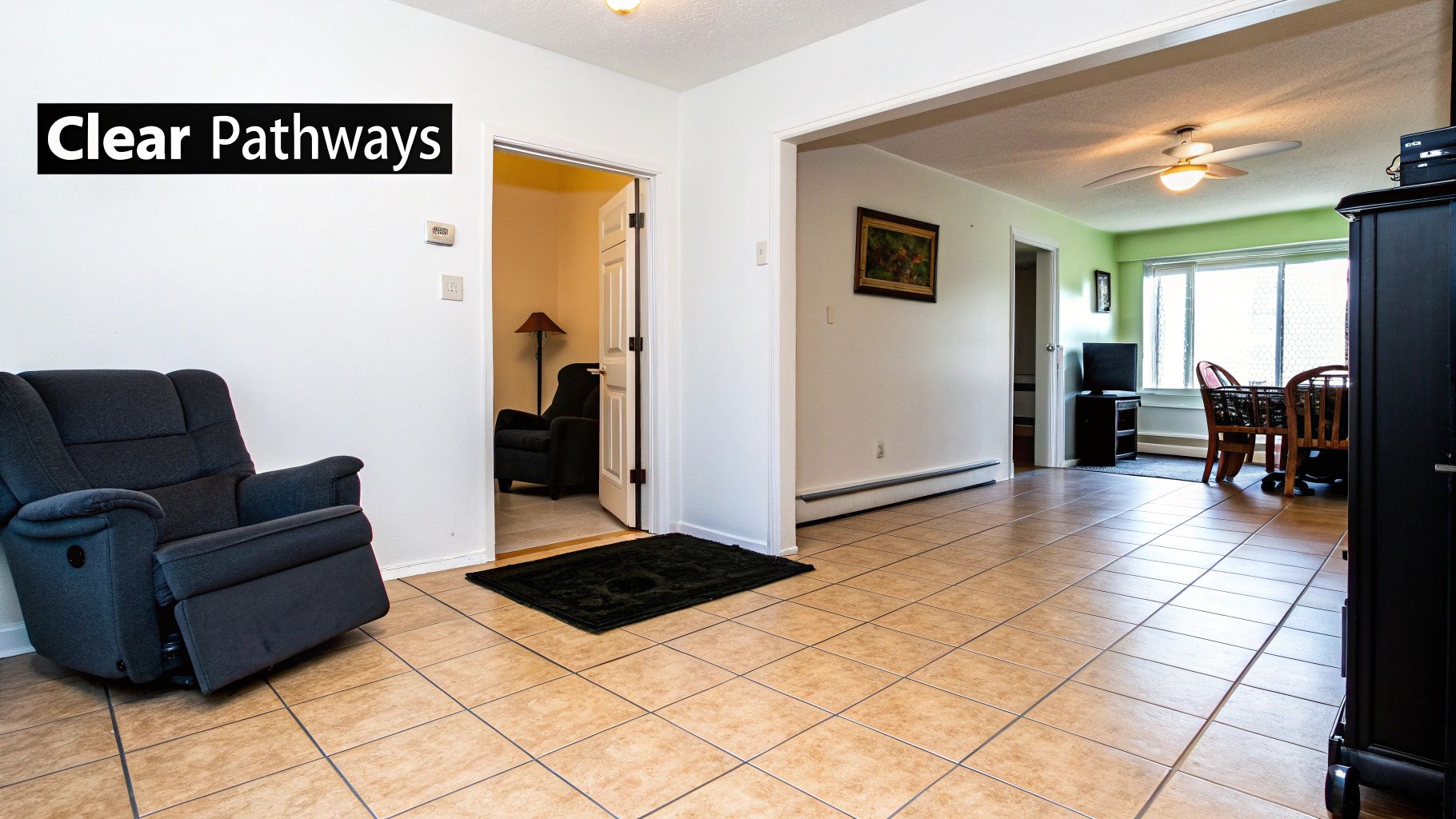
One of the most effective home modifications is also one of the simplest: optimizing the flow of your home. Clear, wide pathways are non-negotiable for safe navigation, especially if you or a loved one uses a walker, cane, or wheelchair.
Take a hard look at your furniture arrangement. Is there a straight, unobstructed shot from the bedroom to the bathroom? From the kitchen to your favorite chair? You should aim for pathways that are at least 36 inches wide to give mobility aids plenty of room to maneuver.
A few practical steps can make an immediate difference:
- Declutter ruthlessly. This means getting rid of stacks of magazines, non-essential decorative pieces, and any furniture that just gets in the way.
- Tame the cords. Electrical cords are notorious trip hazards. Run them tightly along baseboards or use cord covers to keep them pinned down and out of walkways.
- Re-evaluate your rugs. Area rugs look nice, but they can be a real danger. If you absolutely must keep them, make sure they are low-pile and secured with double-sided tape or a non-slip backing. Honestly, removing them is usually the safest bet.
The idea of a "clear path" is fundamental to aging in place. It's not just about avoiding trips; it's about designing a space where moving around feels intuitive and effortless, which reduces both physical and mental strain throughout the day.
Upgrading Lighting and Flooring
You can't avoid what you can't see. As we get older, our eyes need more light to see clearly, making good lighting a top priority. Focus on adding task lighting in key areas, like over a reading chair or kitchen counter. And don't forget nightlights—plug-in versions in hallways, bedrooms, and bathrooms are a must for preventing falls during those middle-of-the-night trips.
Your floors play a massive role, too. Hard, slick surfaces like tile can be unforgiving in a fall, while plush, high-pile carpets can make it tough to push a walker or wheelchair. The sweet spot is a firm, non-slip surface like low-pile carpet or luxury vinyl plank. They provide a stable surface that’s easy to move across.
Integrating Assistive and Smart Furniture
These days, furniture can do more than just sit there—it can actively help you move. A lift chair is a perfect example. It looks and feels just like a comfy recliner, but a powered mechanism gently lifts you to a standing position, taking a huge amount of strain off your knees and back.
This kind of assistive furniture can be a total game-changer for maintaining independence. Similarly, beds with adjustable heights can make the simple act of getting in and out of bed safer and far less of a struggle.
The data backs this up. A major review of 20 different studies confirmed that these types of changes are incredibly effective at preventing falls and supporting daily independence. In fact, modifications in kitchens and living areas were featured in 75% of the studies, highlighting just how critical these spaces are. While a full remodel can be expensive, adding just a few key pieces offers a massive return on investment for your safety and peace of mind.
Accommodating Specific Health Needs
When specific health conditions are part of the picture, you have to integrate medical equipment seamlessly into the home. Things like oxygen concentrators and CPAP machines are common, but their cords and tubing can create serious trip hazards if you're not careful.
Here’s how to create a safer setup:
- Secure the tubing. Run oxygen tubing right along the baseboards and around doorways. Use small clips to secure it and keep it completely out of walking paths.
- Create a "home base." Designate a specific spot for equipment, like a sturdy bedside table or a small cart, to keep it organized and contained.
If you are exploring mobility solutions, our resources on wheelchair rentals and sales in St. Petersburg, FL can offer some valuable guidance. By thoughtfully arranging these core living spaces, you can transform a standard house into a personalized haven that actively supports well-being for the long haul.
Budgeting Your Project and Finding Trusted Help
Once you have a plan for making your home safer, the next step is figuring out the finances and finding the right people to bring it all to life. Let's be honest, this is often the part that feels most intimidating. But with a little bit of planning, you can navigate the costs and hire a professional you can count on.
It’s easy to get caught off guard by the expenses involved in creating a safer home. Most people don’t think about the cost of installing a few grab bars or building a ramp until a fall or a close call makes it an urgent need. When you plan ahead, you can manage these expenses thoughtfully instead of making rushed, expensive decisions in a moment of crisis.
Estimating the Costs of Common Modifications
The final price tag for any home modification will naturally depend on your home’s layout, local labor rates, and the materials you pick. That said, having a ballpark idea of what to expect helps you build a realistic budget from the get-go.
Common modification costs can vary. A simple grab bar installation might cost a few hundred dollars, while a more involved project like converting a tub into a walk-in shower can run into the thousands. It's always a good idea to research local rates and get multiple quotes for any significant work.
Some of the most impactful, budget-friendly fixes include:
- Raised Toilet Seats: A high-quality model can often be found for under $100 and makes a significant daily difference.
- Shower Chairs: These are affordable additions that dramatically improve bathroom safety.
- Improved Lighting: Adding brighter bulbs, nightlights, and task lighting is a low-cost way to prevent falls.
It's important to know that many insurance plans may not cover these kinds of modifications, as they are often viewed as home improvements rather than direct medical necessities. We do not accept insurance, so planning for these expenses as an out-of-pocket investment in your safety is the most direct approach.
Finding a Contractor You Can Trust
For any job that involves a structural change—whether it’s installing grab bars, widening a doorway, or building a ramp—hiring a qualified professional isn't just a good idea, it's absolutely essential for safety. You’re looking for someone who sees more than just a construction project; you need someone who understands the unique demands of aging in place.
When you start talking to potential contractors, asking the right questions from the very beginning will tell you everything you need to know.
A contractor with genuine experience in aging in place modifications will understand that their work is about more than just building codes—it's about creating a living space that actively supports independence and prevents accidents.
Make sure you ask these critical questions before hiring anyone:
- Do you have specific experience with aging in place projects? You want a specialist who has done this exact type of work before, not a general handyman who's figuring it out as they go.
- Can you provide references from past clients with similar needs? Talking to their previous customers is the single best way to get a feel for their work quality and reliability.
- Are you licensed and insured? Never, ever hire a contractor who can’t show you proof of both. This is what protects you from liability if an accident happens on your property.
- Will you provide a detailed, written estimate? A vague, one-line quote is a major red flag. A proper estimate should break down all the costs for labor, materials, and any necessary permits.
Getting at least three bids is always a smart move. It not only helps you compare costs but also gives you a gut feeling for who you’ll be most comfortable working with. Taking the time to find the right professional ensures your investment pays off with a home that's genuinely safe and secure for years to come.
If you have any questions about selecting the right equipment for your modifications, please feel free to contact our knowledgeable team at Affinity Home Medical Equipment for guidance.
Flexible Solutions For Immediate And Temporary Needs
While permanent home modifications are a fantastic long-term strategy, life has a way of throwing curveballs. A sudden health scare, a planned surgery with a long recovery, or even just an unexpected dip in mobility can create an urgent need for support. In those moments, you don't have time to plan a major renovation.
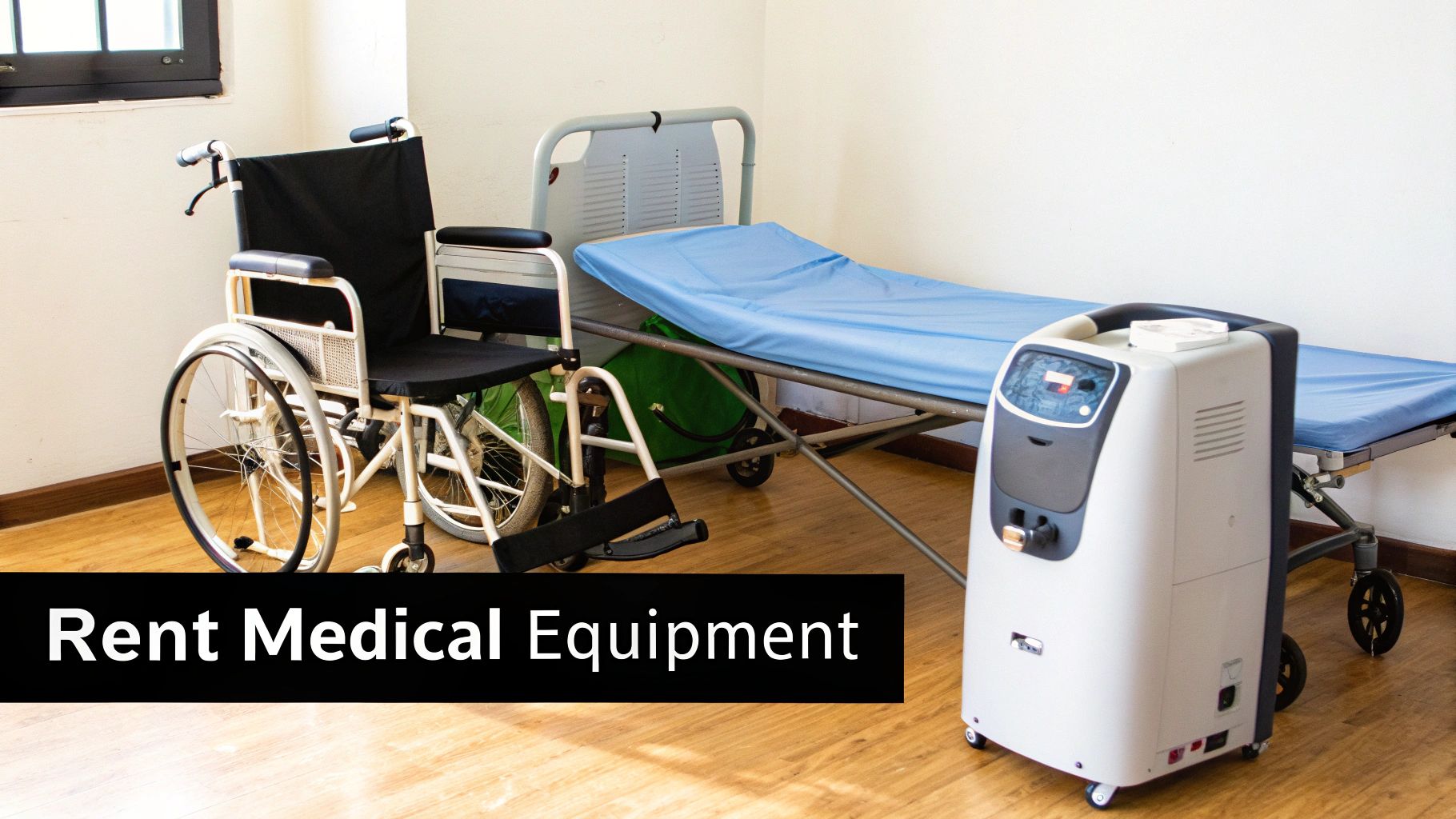
This is where renting medical equipment can be a lifesaver. It’s a practical, fast solution that bridges the gap, giving you the support you need, exactly when you need it, without the long-term financial commitment.
When Renting Makes The Most Sense
Renting is the perfect answer for all sorts of temporary situations, providing practical support for someone recovering at home and peace of mind for their family. It allows you to quickly create a safe environment without delay.
Think about a common real-world scenario: your dad is coming home from the hospital after hip surgery. For those first critical weeks, his mobility will be extremely limited, and getting in and out of his regular bed is just not going to happen safely. A rented hospital bed, with its adjustable positions and sturdy side rails, becomes the centerpiece of a safe and comfortable recovery at home.
Renting is a no-brainer for situations like these:
- Post-Surgery Recovery: After a joint replacement or major surgery, equipment like a lift chair or wheelchair might only be needed for a few weeks or months.
- Short-Term Illness or Injury: A bad fall could mean a temporary need for a walker, while a serious respiratory illness might require an oxygen concentrator for a short period.
- Visiting Relatives: If your elderly mom is coming to stay for the holidays and has trouble getting around, renting a simple transport chair or a bath bench can make her visit much more enjoyable and safe for everyone.
The biggest advantage of renting is speed. When a need pops up out of the blue, you can often get essential equipment delivered the very same day. This turns a high-stress situation into something you can manage.
The Try-Before-You-Buy Advantage
Renting isn't just for emergencies. It also offers a brilliant opportunity to test-drive equipment before you sink a lot of money into buying it. This is especially true for big-ticket items like a high-end lift chair or a mobility scooter, where comfort and a good fit are everything.
Let's say you're thinking about a lift chair to make standing up easier. Renting one for a month lets you see exactly how it works in your living room. Is it the right size? Are the controls intuitive? Does it actually make a difference in your day-to-day life? You might find the model you had your eye on is too bulky, or that you really need a feature you hadn't even considered.
This trial run completely removes the risk of buying an expensive piece of equipment that ends up collecting dust because it wasn't right for you. It’s a smart, practical way to make informed decisions about the aging in place home modifications that will become part of your daily routine.
Navigating The Rental Process
Getting started with a rental is usually very straightforward. Good local providers understand that these needs are often urgent, and they've made their process as smooth as possible. You can typically arrange for equipment for as little as a few days, a week, or on a flexible month-to-month basis.
While many insurance plans may not cover these kinds of rentals, the out-of-pocket cost is a very affordable alternative to a large upfront purchase, especially for short-term use. This flexibility ensures you get the right support at the right time, helping you or your loved one recover safely and comfortably in the familiar surroundings of home. It’s a crucial piece of any complete aging-in-place plan, offering solutions that adapt as life changes.
Common Questions About Home Modifications
Thinking through all the details of modifying your home can bring up a lot of questions. It's completely normal. The key is to get solid answers so you can move forward with confidence, knowing you're making the right choices for your safety and independence. Let's walk through some of the questions we hear most often.
Getting the right information from the start saves a ton of time, money, and headaches down the road. It helps you focus on what really matters—the changes that will make the biggest, most positive impact on your daily life.
What Are The First and Most Important Modifications?
When you can't do everything at once, you have to prioritize. My advice is always the same: start with changes that prevent the most common and devastating accidents. That means focusing on fall prevention.
The first place to look is the bathroom. It’s a perfect storm of slippery surfaces, tight spaces, and lots of movement, making it the highest-risk room in the house.
- Install Grab Bars Correctly: This is absolutely essential. Put them in the shower or tub and right next to the toilet. And please, make sure they are professionally anchored into wall studs. A suction-cup grab bar is not a safe substitute.
- Add Seating: A simple shower chair or a transfer bench can be a game-changer. It eliminates the risk of standing on a wet, slippery surface when you're feeling tired or unsteady.
- Raise the Toilet: A raised toilet seat, especially one with its own support arms, makes a world of difference. It dramatically reduces the strain on your knees and hips during one of the most frequent activities of the day.
Once you’ve tackled the bathroom, shift your focus to the main entrance. Having at least one zero-step entrance, usually by adding a sturdy ramp, removes a huge daily hazard and barrier to getting in and out of your home. These initial steps address the biggest risks first.
Renting Versus Buying Medical Equipment?
So, should you rent or buy that hospital bed or lift chair? It really comes down to your specific situation and how long you'll need the equipment. There's no one-size-fits-all answer.
Renting is the perfect solution for short-term needs. If you’re recovering from a surgery, for example, you might only need a wheelchair or lift chair for a few weeks or a couple of months. Renting gives you the support you need without the big price tag. It's also a fantastic way to "try before you buy" on larger items to make sure it’s a good fit for your space and your daily routine.
Buying, on the other hand, makes more sense when you're dealing with a permanent, long-term condition. If a piece of equipment is going to be part of your life for the foreseeable future, purchasing it is almost always the more cost-effective choice in the long run.
DIY vs. Hiring A Professional?
It’s tempting to try and save some money by installing things yourself, and for some tasks, that's perfectly fine. But you need to know where to draw the line.
Simple, non-structural jobs are great for DIY. Things like laying down non-slip bath mats, swapping out round doorknobs for easier-to-use lever handles, or setting up a freestanding shower chair are quick wins. They don't require specialized skills and can immediately make your home safer.
For any modification that touches the structural integrity of your home, you must hire a qualified professional. A poorly installed safety feature is a dangerous illusion—it creates a false sense of security that can lead to a serious injury.
This is non-negotiable for grab bars, which are completely useless if they aren’t anchored securely into wall studs. The same goes for building ramps, widening doorways, or doing any electrical work for better lighting. These are jobs for the pros, ensuring everything is done right and, most importantly, safely.
Will Insurance Cover These Modifications?
This is the big question everyone asks, and unfortunately, the answer is often no. Most standard health insurance plans, including Medicare, do not typically cover home modifications. They tend to view these projects as "home improvements" rather than direct "medical necessities," even with a doctor's recommendation.
This means that installing grab bars, building a ramp, or converting a tub to a walk-in shower almost always comes out of pocket. It’s absolutely critical to budget for these expenses yourself as part of your aging-in-place plan. We do not work with insurance providers, so planning for these costs directly is the best approach. You can find answers to more common questions by exploring the Affinity Home Medical Equipment FAQ page. The most reliable approach is to plan for these costs yourself.
At Affinity Home Medical Equipment, we provide practical solutions and expert guidance to help you create a safer home environment. Whether you need to rent equipment for a short-term recovery or purchase a long-term mobility aid, our team is here to support you. Visit us online to explore our products and services at https://affinityhomemedicalequipment.com.
Share This Article

Written by : Rich affinityrich@gmail.com
Follow Us
Latest Articles

October 14, 2026

October 14, 2026

October 14, 2026
