
Bath Safety Products For Seniors: Guide To Bath Safety Products For Seniors

Bathroom safety products are more than just equipment; they're essential [...]
Bathroom safety products are more than just equipment; they're essential tools—like grab bars, shower chairs, and toilet risers—that give older adults the stability and confidence they need to stay safe and independent in what is often the most hazardous room in the house.
Why Bathroom Safety Is A Non-Negotiable For Seniors
For many seniors, the bathroom can feel like an obstacle course. What should be a private, comfortable space often becomes the most dangerous room in the home. Simple, everyday movements we take for granted, like stepping over a tub ledge or getting up from the toilet, suddenly carry a real risk of a slip or a fall.
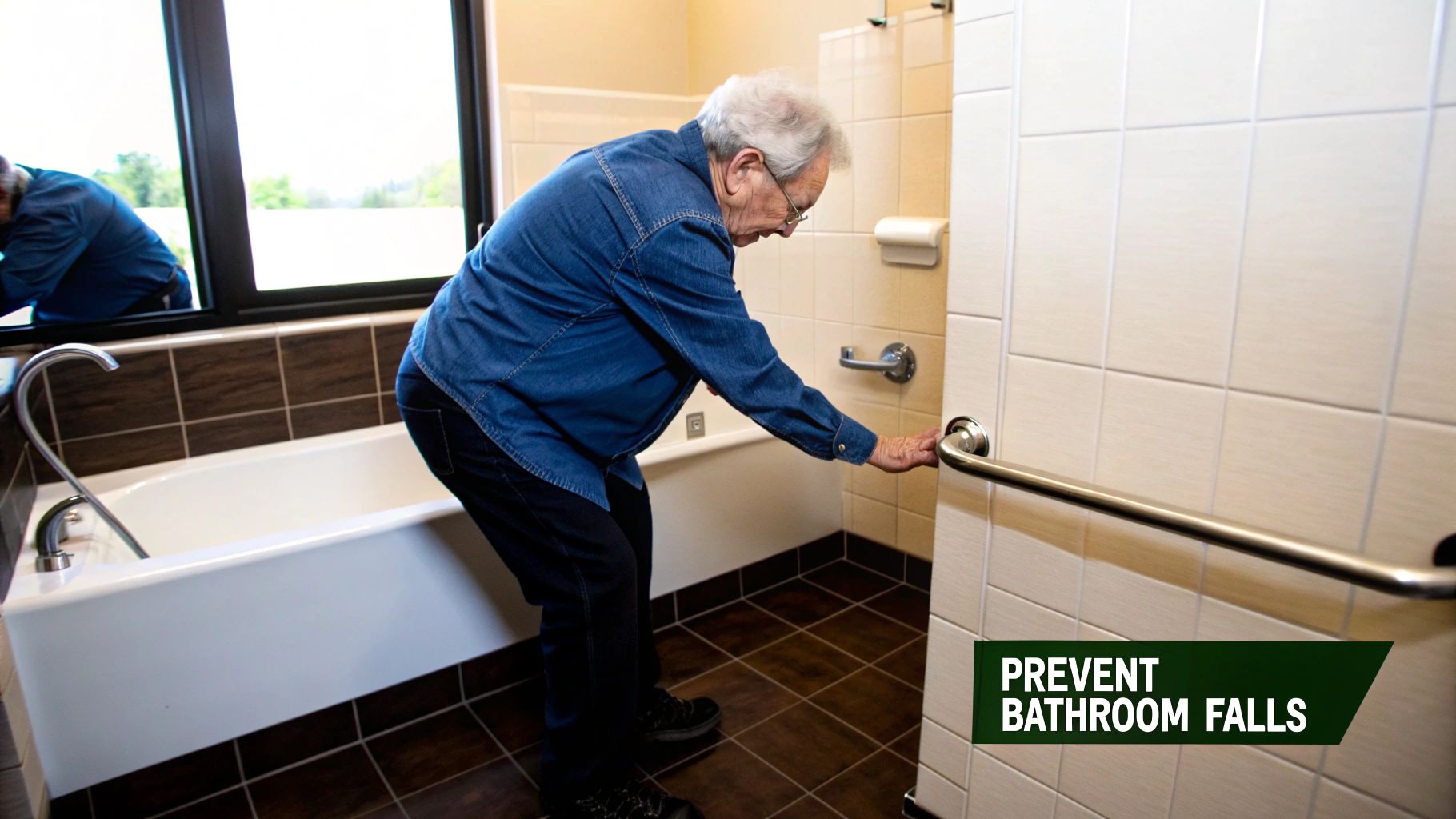
Imagine a wet tile floor—it’s essentially an unpredictable ice rink. One moment of lost balance, combined with the hard, unforgiving surfaces of a tub or counter, can lead to a serious injury. This isn't just a remote possibility; it's a painful reality for countless families every single year.
The Unseen Dangers In Every Bathroom
Several common factors transform routine activities into potential hazards. Pinpointing these dangers is the crucial first step toward making a bathroom a safer place.
Here’s what to look out for:
- Slippery Surfaces: Water is the main culprit. It makes tile, vinyl, and porcelain floors incredibly slick, creating the perfect storm for a fall.
- Poor Lighting: A dimly lit bathroom makes it hard to see obstacles or judge distances, especially for those late-night trips.
- Physical Strain: The simple act of bending down, lifting a leg over a high tub wall, or pushing up from a low toilet can strain joints and throw a person off balance.
- Lack of Support: Most bathrooms aren't built with safety in mind. Seniors often end up grabbing onto flimsy towel racks or shower doors for support—things that were never designed to hold a person's weight.
These are the exact challenges that make proactive safety measures so critical. Putting the right bath safety products for seniors in place isn't about taking away independence; it's about preserving it for as long as possible.
"The bathroom is where 81% of all injuries for seniors occur at home, primarily due to falls. Proactively installing safety equipment is one of the most effective ways to maintain autonomy and prevent life-altering accidents."
Addressing The Urgent Need For Safety
The numbers don't lie. The statistics on senior falls are truly sobering and highlight just how urgent prevention is. In 2021, the death rate from falls among older Americans was a shocking 78 deaths per 100,000. Every year, about 800,000 people are hospitalized from a fall, with over 300,000 of those being seniors treated for a broken hip.
At Affinity Home Medical Equipment, we see firsthand how important bathroom safety is for families right here in Pinellas County. Our solutions are designed to tackle these risks head-on, giving everyone peace of mind. While mobility aids are a big piece of the puzzle—and you might find our guide on selecting walkers and rollators helpful—true safety comes from ensuring stability in every part of the home. We keep things simple with direct, clear pricing, so you can get the equipment you need without any confusing delays.
The Core Four: Your First Line of Defense in Bathroom Safety
When we talk about making a bathroom safer, it’s not just about being more careful. It’s about putting the right tools in the right places. Think of it like a seasoned hiker who wouldn't dream of tackling a tricky trail without trekking poles for stability. For seniors, a few key pieces of equipment can offer that same level of confidence and support right at home.
These "core four" products are the absolute foundation of a safe bathroom. They're your primary defense against the most common hazards, each one solving a specific problem. Together, they can transform a room filled with potential risks into a space where you can feel secure and maintain your independence.
Grab Bars: The Anchors for Your Stability
Let's be clear: a towel rack is for towels, and a shower door handle is for opening the door. Neither one is designed to hold your body weight, and relying on them is an accident waiting to happen. Grab bars are the real deal—they are permanent, reliable anchors bolted securely into your walls, engineered to support you when you need it most.
Placement is everything. A vertical grab bar installed just outside the tub or shower acts as the perfect handhold for stepping in and out, much like grabbing a sturdy post before stepping onto a boat. Inside, a horizontal bar gives you a continuous handrail to hold onto as you move or wash. These aren't just accessories; they're essential structural supports for moving around a slippery environment.
Shower Chairs and Benches: Your Personal Safety Zone
Standing for a full ten-minute shower can be exhausting, especially if you're feeling a bit unsteady. That fatigue is a major fall risk. A shower chair or bench completely changes the game by creating a safe, stable spot to sit, relax, and bathe without worrying about losing your balance.
The best choice really comes down to your bathroom layout and your personal mobility:
- Shower Chairs: These are basically sturdy, waterproof stools with four non-slip legs. They're compact and designed to fit right inside a standard shower stall or bathtub. They’re a great fit for anyone who can still step over the tub wall but needs a secure place to sit down while washing.
- Transfer Benches: If lifting your legs over the side of the tub is difficult or dangerous, this is your solution. A transfer bench is longer, straddling the wall of the tub with two legs inside and two legs out. You simply sit down on the part of the bench that's outside the tub, then swing your legs over and slide across. It turns the most hazardous part of bathing into a simple, safe, seated maneuver.
Toilet Safety Frames and Risers: Your Built-in Lift Assist
Getting up from a low seat can put a huge strain on your knees, hips, and back. Most standard toilets are simply too low for comfort and safety, especially for anyone with joint pain or less muscle strength. That’s where toilet safety equipment comes in, acting as a "lift assist" for one of the most common daily movements.
You generally have two great options here:
- Raised Toilet Seats: This is a straightforward fix. These devices attach right onto your toilet bowl and add 3 to 5 inches of height. That simple elevation means you don't have to lower yourself as far down or push yourself as far back up, which makes a world of difference in the effort required.
- Toilet Safety Frames: These are adjustable frames that fit right around your existing toilet, giving you sturdy armrests to hold onto. They allow you to use your arm strength to help push yourself up, taking the pressure off your legs and core. Many models even combine a riser and a frame for the ultimate support.
These tools give you the leverage you need to stand up safely, preventing that dizzy or off-balance feeling that can sometimes happen when you get up too quickly.
Non-Slip Mats: Your Guardians Against the Slip
The most obvious danger in any bathroom is a smooth, wet surface. It’s a recipe for disaster. Non-slip mats are your "grip guardians," providing crucial traction exactly where you need it. They are perhaps the simplest, most affordable safety product, but the payoff is enormous.
A good bath mat isn't just a piece of rubber; it has strong suction cups on the bottom that anchor it firmly to the tub or shower floor so it can't slide out from under you. This creates a textured, high-friction surface that gives your feet a solid hold, even when it’s covered in soap and water. Think of it as the foundational layer of safety that makes everything else work even better.
To see what's available, you can explore our collection of bath safety equipment and find the right solutions for your home.
How To Choose The Right Safety Tools For Your Home
Knowing what bath safety products are out there is one thing, but figuring out which ones are right for your home is the real key to staying safe. The goal isn't just to buy equipment; it's to create a personalized safety system that matches your specific needs, your mobility, and the layout of your bathroom. This isn't about giving up independence—it's about reclaiming it with confidence.
Think of it like being a detective. By zeroing in on the exact moments you feel unsteady or uncomfortable in the bathroom, you can find the perfect tool to solve that specific problem. It turns a general sense of worry into a clear, actionable plan.
Matching The Product To The Problem
Everyone's body and balance are different, so a one-size-fits-all approach just doesn't work. The trick is to connect the challenge you're facing with the right piece of equipment.
-
Is lifting your legs over the high tub wall the biggest hurdle?
- A Transfer Bench is your best friend here. It completely removes the need to step over that barrier. You simply sit on the edge outside the tub, then slide safely across. It’s a game-changer for preventing falls during entry and exit.
-
Do you feel weak, dizzy, or just plain tired standing in the shower?
- A Shower Chair provides a stable place to sit, letting you conserve energy and focus on washing without the fear of losing your balance. It creates a secure home base inside the shower.
-
Does knee or hip pain make getting on and off the toilet a struggle?
- A Raised Toilet Seat or Toilet Safety Frame can make a world of difference. Standard toilets are often too low, putting a lot of strain on aching joints. A raised seat adds a few crucial inches of height, while a safety frame gives you sturdy arms to push off from, making the whole process easier and far less painful.
To help narrow it down, this flowchart gives you a simple, visual way to connect your main concern with the most effective solution.
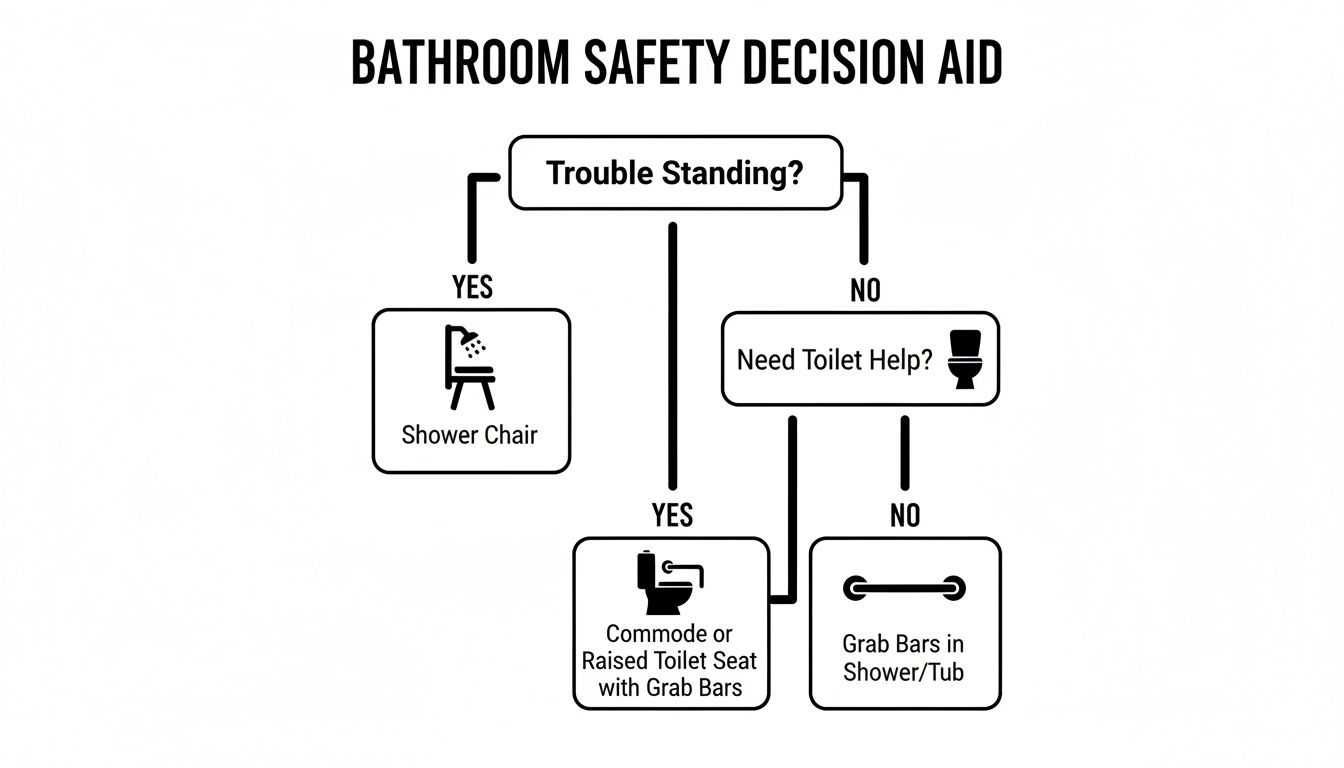
As you can see, the right tool directly solves a specific challenge, whether that's staying steady on your feet, navigating the toilet, or preventing a slip on a wet floor.
Key Considerations Before You Buy
Once you’ve identified the main problem-solver you need, there are a few practical details to check. Taking a minute to measure and assess your space will save you a lot of headaches down the road.
First things first: measure your space carefully. Bathrooms are notoriously tight on space. You’ll want to get the width of your tub or shower stall to make sure a chair or bench will fit comfortably. For a toilet riser, double-check if your toilet has a standard or an elongated bowl.
Next, think about the person who will be using the equipment. Consider the user's weight and height. Most standard products can support up to 250-300 pounds, but heavy-duty (bariatric) models are available if you need something more robust. Look for shower chairs and transfer benches with adjustable legs—this feature is crucial for setting the seat to a height where feet can rest flat on the floor for maximum stability.
For a toilet riser, the ideal height allows the user's hips to be slightly higher than their knees when seated. This posture reduces joint strain and makes standing up significantly easier.
Finally, evaluate any specific health conditions. Someone with severe arthritis might find a grab bar with a textured, non-slip grip much easier to hold. For anyone recovering from a hip or knee replacement, a transfer bench is practically essential.
And sometimes, a single piece of equipment is just one part of a bigger picture. For those with more significant mobility limitations, it's worth exploring how different aids can work together. You can learn more about our wheelchair rentals and sales in St. Petersburg to see how they can support a comprehensive home safety plan.
The growing demand for these solutions is undeniable. The bath safety product market is expanding rapidly, driven by the global increase in older populations who want to age safely at home. In 2019, nearly 25 million older Americans reported needing help with daily activities like bathing, a number that continues to fuel innovation in this essential industry.
Proper Installation and Upkeep for Lasting Safety
Picking out the right bath safety products for seniors is a great start, but it's only half the battle. How they're installed and cared for makes all the difference. Think of it this way: a grab bar is a lifeline, but it's useless if it's not anchored correctly. Getting the setup right from day one and keeping an eye on things is how you turn a piece of equipment into a truly reliable safety tool.
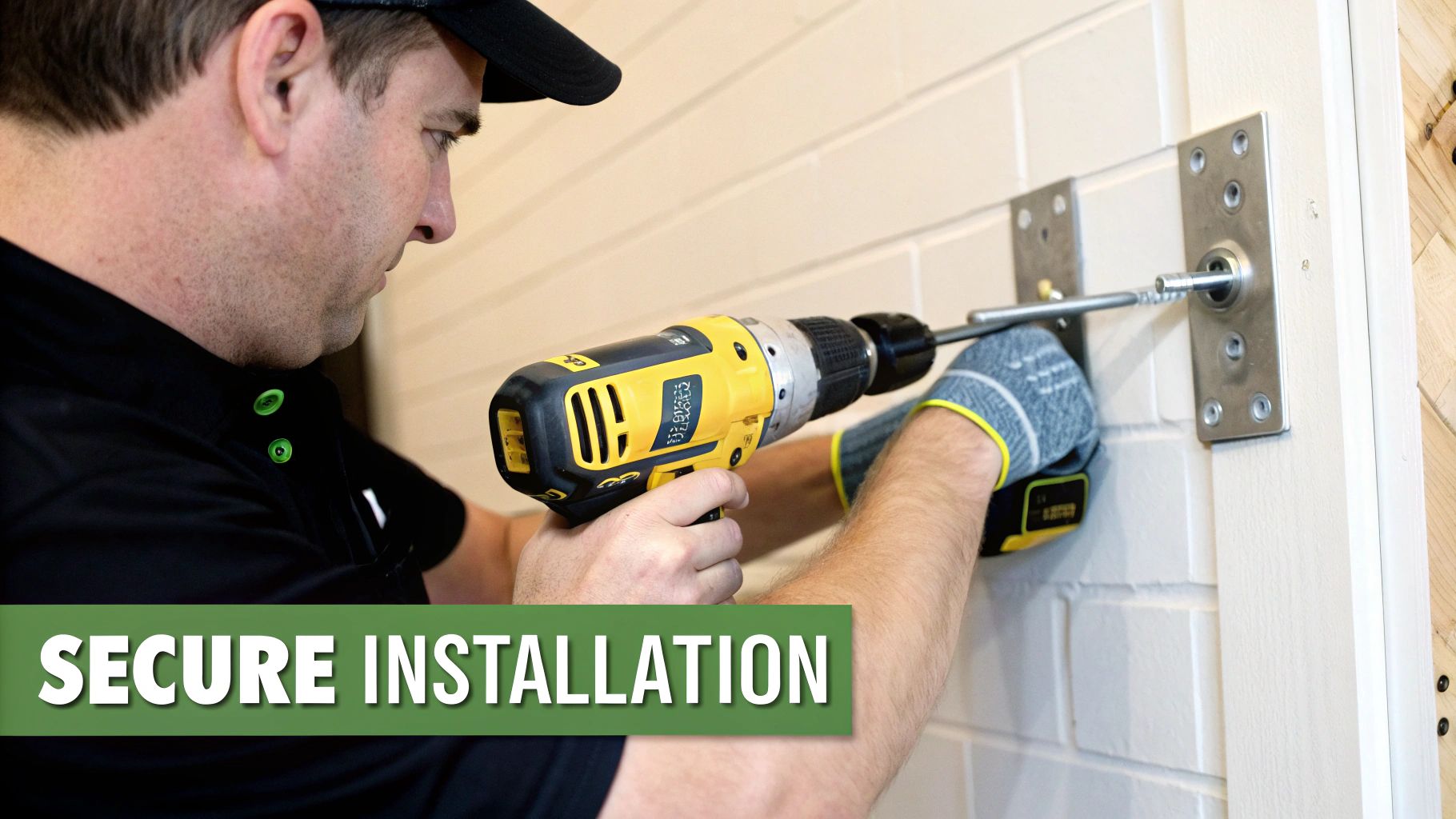
It doesn't have to be a huge chore. For anything that gets permanently attached to your home, the focus is on a rock-solid installation. For the more portable items, it’s all about simple, routine checks. Both are vital for long-term safety and your peace of mind.
The Critical Importance of Secure Installation
When you're dealing with equipment designed to hold someone's full body weight, there’s simply no room for error. This is especially true for grab bars—they are your main anchors for getting around safely.
A grab bar is only as strong as what it's attached to. Screwing it directly into drywall is a recipe for disaster; the drywall can easily crumble and pull out under pressure. That’s why grab bars must be mounted directly into solid wood wall studs. This creates a powerful connection that can handle hundreds of pounds of force without budging.
Finding those studs and ensuring a perfectly level and secure fit can be tricky. For this reason, we always recommend professional installation for any wall-mounted equipment. It's a small price to pay for the absolute certainty that the bar will be there for you when you need it most.
A Simple Checklist for Portable Equipment
For items that you can move, like shower chairs, transfer benches, or toilet safety frames, a little bit of regular attention goes a long way. A quick check once a week can spot a small problem before it turns into a serious hazard.
Here's what to look for:
- Check for Stability: Give the chair or frame a gentle wiggle. Does it feel solid, or does it wobble? If you feel any movement, take a moment to tighten any knobs, bolts, or adjustment pins.
- Inspect the Rubber Tips: The rubber feet are what stop the equipment from sliding around. Make sure they aren't cracked, missing, or worn smooth. Worn-out tips can easily slip on a wet surface, which defeats the entire purpose of the device.
- Look for Rust or Cracks: Give the frame a once-over, paying close attention to the joints and welds. Any signs of rust or tiny stress cracks mean the structure could be weakening.
This simple routine ensures your portable aids are always ready to do their job safely.
A well-maintained piece of safety equipment is a reliable partner in preventing falls. Taking just a few minutes each week to inspect and clean your products is one of the most effective ways to ensure your bathroom remains a safe space.
Keeping Your Equipment Clean and Hygienic
Good upkeep isn't just about stability; it's also about cleanliness. A hygienic bathroom is crucial for staying healthy, and that includes your safety equipment. The good news is, it's incredibly easy to do.
Just use a soft cloth with a bit of mild soap and warm water to wipe everything down. Avoid using abrasive cleaners, bleach, or harsh chemicals. These can damage the product's materials and protective coatings, which can weaken the structure over time. A quick wipe-down after each use also helps prevent soap scum from building up.
This commitment to proper care makes sure your investment in safety continues to pay off for years to come. If you're looking into other long-term home health solutions, you might find our guide on hospital beds for home use in St. Petersburg helpful. At Affinity Home Medical, we offer straightforward pricing, making it simple to get the equipment you need without any hassle.
Your Pinellas County Partner in Home Medical Equipment
Figuring out home medical equipment can feel overwhelming, but it doesn't have to be. For more than 20 years, Affinity Home Medical Equipment has been a go-to local resource for families all over Pinellas County, from St. Pete and Clearwater to Seminole and beyond. We get the needs of our community because we live here, too. That means we offer real, practical solutions with a personal touch.
Our whole approach is built on being clear and direct. We give you straightforward, upfront pricing on all our bath safety products for seniors. What does that mean for you? You get the equipment you need, right when you need it, without getting bogged down by approvals or confusing paperwork. We believe safety should be simple and accessible.
Flexible Solutions for Every Situation
We know that every family's situation is unique, and sometimes, those needs are only temporary. Maybe a loved one is recovering from surgery, or you have family visiting for a few weeks who need a little extra support in the bathroom. That’s exactly why we offer flexible rental options designed to fit your life.
You can rent essential bath safety equipment by the:
- Day: Perfect for a weekend guest or a very brief recovery.
- Week: A great choice for post-operative care or a short-term rehab plan at home.
- Month: Ideal for longer recovery periods or if you simply want to try out a piece of equipment before you decide to buy.
This flexibility means you only pay for what you need, for precisely how long you need it. You can learn more about how our system works on our St. Petersburg medical equipment rentals page to see how we can help in your specific situation.
Same-Day Service and Expert Guidance
When you realize you have a safety need at home, waiting around isn't really an option. We get that urgency. That’s why we offer the peace of mind that comes with same-day pickup for all our in-stock items. It's a critical service that gives families an immediate solution to make their home safer, right away.
But we do more than just hand you a product. Our staff is here to provide genuinely helpful, personalized consultations. We’ll take the time to actually listen to your concerns, understand the specific mobility challenges you're facing, and help you pick out the equipment that will be a perfect fit for both your home and your daily routine. Our goal is to give you the right tools to stay independent and feel confident.
Choosing the right equipment is about more than just a list of features; it's about finding a solution that fits seamlessly into your daily life. Our team's hands-on experience means you get practical advice you can actually trust.
It's no surprise that the market for these products is growing. As technology improves and our population ages, the demand for reliable safety equipment is on the rise. In fact, the bath safety durable medical equipment market was valued at $2.5 billion in 2025 and is projected to hit $4 billion by 2033, growing at a steady 6% each year. We're seeing huge growth in key products like shower chairs and transfer benches—with chairs and stools expected to grow by 7.5% annually through 2030. At Affinity Home Medical Equipment, we keep a close eye on these trends to make sure we're stocking the most effective and essential products for our customers. You can read the full analysis on bath safety equipment market trends to learn more.
Common Questions About Bathroom Safety Products
When you start looking into home medical equipment, a lot of questions pop up. It’s completely normal. Making sure you're getting the right bath safety products for seniors is a big deal, and getting clear answers is the first step to making a smart choice for your family.
This is a list of the questions we hear most often from our neighbors right here in Pinellas County. We've put together some direct, practical answers to help you cut through the confusion and create a safer home.
What's The Real Difference Between A Shower Chair And A Transfer Bench?
This is easily one of the most common points of confusion, and it’s an important one to get right. While both a shower chair and a transfer bench help make bathing safer, they’re designed for two totally different situations. Picking the correct one is fundamental to preventing a fall.
A shower chair is exactly what it sounds like: a small, waterproof stool that sits completely inside the shower or tub. It’s the perfect fit for someone who can still step over the side of the tub safely but gets tired, dizzy, or unsteady standing for a long time. It’s a secure place to rest while washing up.
A transfer bench, on the other hand, is a longer bench that actually straddles the tub wall. Two legs stand firmly inside the tub, and the other two are on the bathroom floor. This design is a game-changer for anyone who struggles to lift their legs over the high tub wall. You simply sit on the part of the bench outside the tub, then carefully slide yourself over and into the bathing area. It completely eliminates that big, risky step.
- Go with a shower chair if: The user can get in and out of the tub without a problem but needs a place to sit down while showering.
- Go with a transfer bench if: Lifting a leg over the tub wall is a struggle, causes pain, or feels like a serious fall risk.
Are Suction Cup Grab Bars Actually Safe?
The idea of a grab bar you can just stick on the wall with no tools sounds fantastic. They seem so easy and convenient. But when we’re talking about something that needs to support a person's full body weight to stop a fall, convenience can be dangerously misleading.
Let me be direct: we strongly advise against ever relying on suction cup grab bars for support. Their entire grip depends on a perfect, uninterrupted seal against a smooth, non-porous tile. That seal can fail in an instant, without any warning at all. A little bit of humidity, a change in temperature, or even some soap residue can break the suction, sending the bar—and the person holding it—to the floor.
For real, dependable safety, professionally installed, wall-mounted grab bars are the only trustworthy option. These bars are bolted directly into the wooden studs inside your wall, creating a rock-solid anchor that can handle hundreds of pounds of force, day in and day out. When safety is on the line, there’s no substitute for a secure, permanent installation.
How Should I Clean And Maintain The Equipment?
Keeping your bath safety gear clean isn't just about hygiene; it’s also a key part of making sure it lasts and stays safe to use. A quick, simple cleaning routine helps prevent soap scum and bacteria buildup and gives you a chance to spot any wear and tear before it becomes a problem.
Honestly, the best way to clean is also the easiest. All you need is a little bit of mild soap and warm water. Use a soft cloth or sponge to wipe down your shower chair, transfer bench, or toilet riser.
Stay away from abrasive cleaners, scouring pads, or harsh chemicals like bleach. They can easily scratch the plastic, wear away protective coatings, and even corrode the metal parts, which could weaken the whole structure over time.
A quick wipe-down after every few uses is a great habit to get into. This gentle cleaning keeps your equipment in great shape and ensures your investment in safety will protect your loved one for years. It’s a small bit of effort that provides a whole lot of peace of mind.
At Affinity Home Medical Equipment, we believe in giving our Pinellas County neighbors clear answers and real-world solutions. We keep our pricing simple to make it as easy as possible to get the equipment you need, when you need it. Stop by our store to find the right products to make your home safer and more independent.
Share This Article

Written by : Rich affinityrich@gmail.com
Follow Us
Latest Articles

October 14, 2026

October 14, 2026

October 14, 2026
