
Essential Bathroom Safety Equipment Elderly Homeowners Need

When we talk about bathroom safety equipment for the elderly, [...]
When we talk about bathroom safety equipment for the elderly, we're really talking about tools that promote independence. Simple but sturdy items like grab bars, shower chairs, raised toilet seats, and non-slip mats are designed to prevent falls and make daily life easier and safer. These aren’t just accessories; they are essential for providing stability and support in what is often the most hazardous room in the house.
Creating A Safe Haven For Independent Living
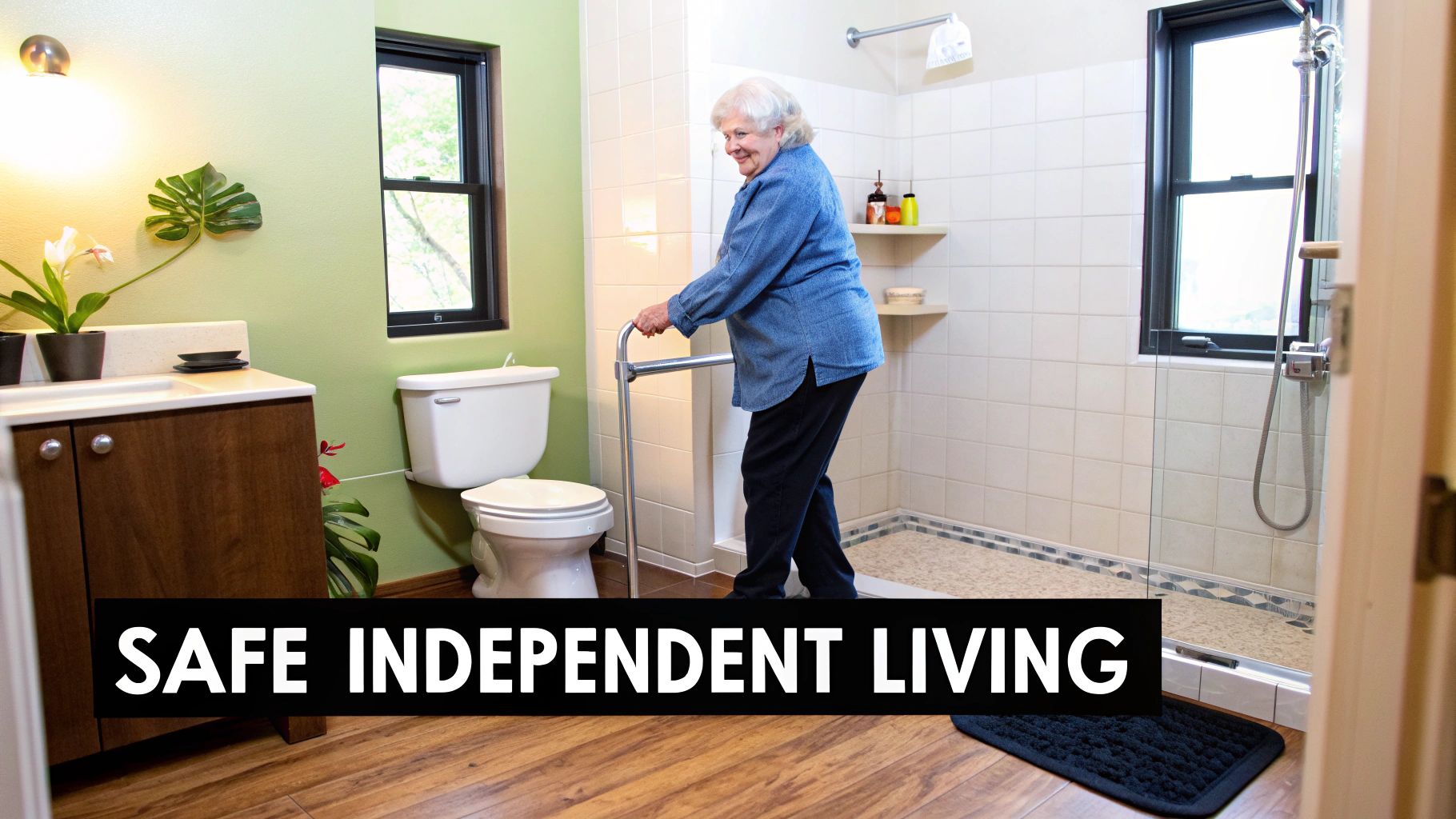
For many older adults who want to age in place, the bathroom can feel like the biggest obstacle. It's a room full of hard surfaces, slippery floors when wet, and often tight corners. An unmodified bathroom is a bit like a hiking trail after a rainstorm—some can navigate it just fine, but for many, it’s treacherous without the right gear. This guide will serve as your map to turning that space into a secure and accessible environment.
By strategically adding the right bathroom safety equipment, you can dramatically cut the risk of falls, which are a leading cause of serious injury among older adults. These tools do more than just prevent accidents; they build a foundation for secure, confident living. It's not just about installing hardware, it’s about restoring confidence and bringing peace of mind to both the user and their family.
The Growing Need For Bathroom Safety
It's no secret our population is aging, and this global demographic shift is driving a huge demand for better safety solutions at home. The World Health Organization projects that the population of people over 60 will nearly double, from 12% in 2015 to 22% by 2050.
This trend highlights an urgent need for practical tools that can prevent falls. In fact, the market for these devices is already significant, valued at USD 4.76 billion in 2023 and expected to keep growing.
Equipping a bathroom with the right safety aids is one of the most effective ways to preserve autonomy and ensure a secure home environment for older adults. Simple additions can make a world of difference.
More Than Just Equipment—It's About Independence
By tackling the specific challenges a bathroom presents, these tools empower people to manage their personal care routines with dignity. The impact goes far beyond physical safety, offering powerful psychological benefits as well.
Here are a few key benefits of making a bathroom safer:
- Increased Confidence: When you can move around the bathroom without the constant fear of slipping or falling, you naturally feel more secure and self-reliant.
- Reduced Caregiver Stress: Family members and caregivers can rest easier knowing their loved one is protected from one of the most common household accidents.
- Sustained Mobility: Safety equipment supports continued movement, which is crucial for overall health. Improved safety in the bathroom often goes hand-in-hand with other mobility aids; for more on that, you can check out our guide on selecting the right walkers and rollators.
Ultimately, taking proactive steps to modify a bathroom helps create a true safe haven, allowing seniors to live more comfortably and independently for years to come.
Your Essential Bathroom Safety Toolkit
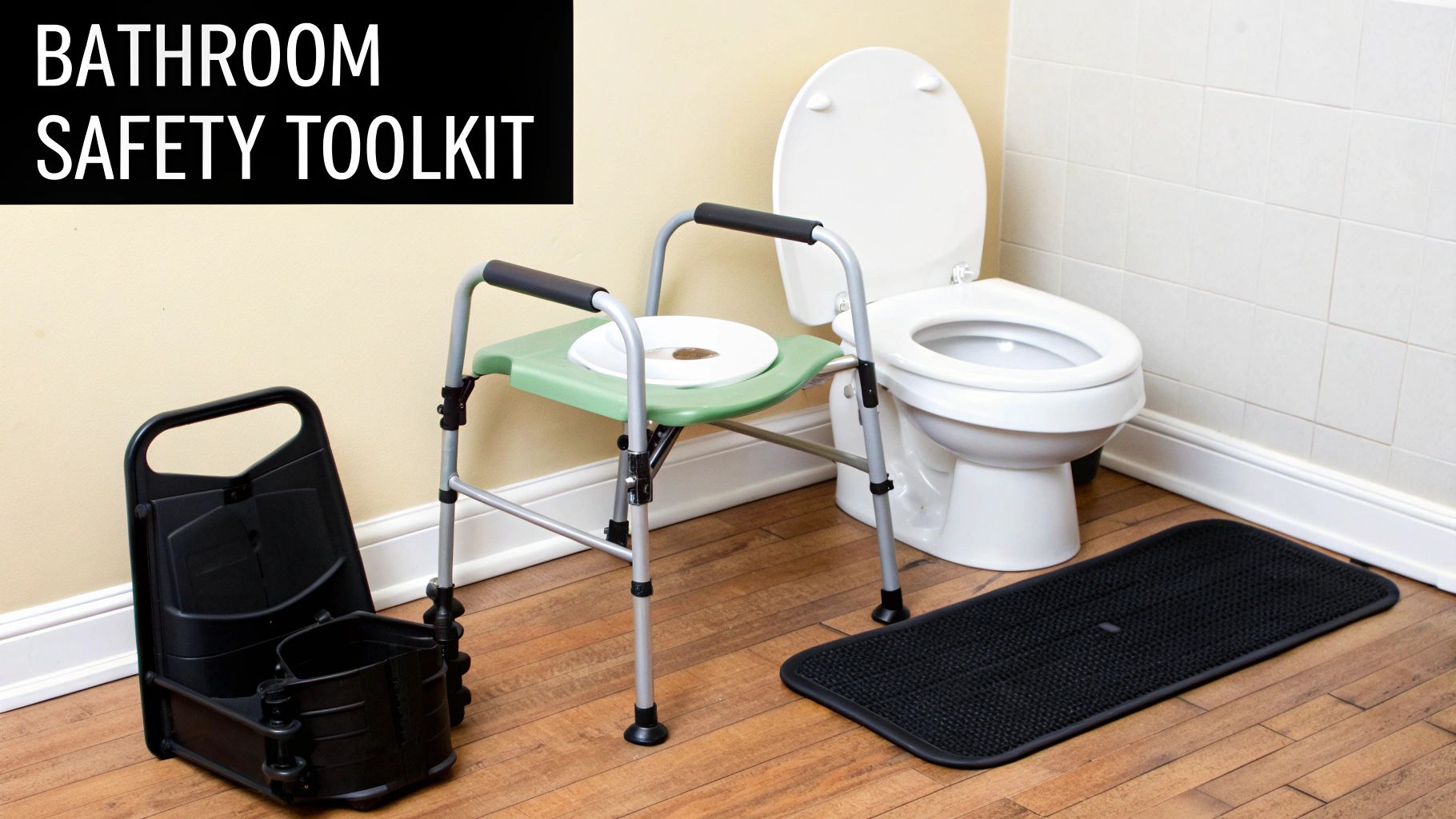
Turning a bathroom from a high-risk zone into a haven of safety is about more than just adding a few gadgets. It's about building a smart, cohesive system where each piece of bathroom safety equipment for elderly users plays a specific role. Think of it like a well-coordinated team, with every player working to prevent accidents and boost confidence.
The first step is simply understanding what each tool does and why it's there. From offering a steady handhold to making transfers less daunting, these pieces are the true building blocks of maintaining independence at home.
The Foundation: Grab Bars
Think of grab bars as the handrails on a steep, tricky staircase—they're absolutely non-negotiable for stability. When mounted correctly, they provide a rock-solid anchor point for navigating the shower, tub, or toilet area. They are, without a doubt, the most fundamental piece of the safety puzzle.
You'll generally run into two types:
- Wall-Mounted Grab Bars: These are the gold standard, and for good reason. When anchored directly into wall studs, they offer incredible strength—enough to support a person's full body weight and stop a fall in its tracks.
- Temporary or Suction-Cup Bars: While they might seem like a convenient fix, these should be used with extreme caution. They are not built for bearing weight and can pop off the wall without warning, creating a dangerous false sense of security. At best, they offer a light touch-point for balance.
Seating for Stability: Shower Chairs and Benches
Trying to stand on a wet, slippery surface is a challenge for anyone. For seniors with limited strength or balance, it’s a major risk. This is where shower chairs and transfer benches come in, completely removing the danger by providing a secure place to sit while bathing.
A shower chair is a simple, waterproof stool that sits right inside the tub or shower. It lets someone bathe comfortably and safely, without the fatigue or unsteadiness that comes from standing for an extended time.
A transfer bench is a real game-changer, especially for getting in and out of high-walled bathtubs. It works like a bridge, with two legs resting inside the tub and two outside. This clever design lets you sit down safely outside the tub, then gently slide across and over the wall—eliminating that precarious, high-risk step-over motion where so many falls happen.
Making the Toilet More Accessible
The simple act of sitting down and standing up from a standard-height toilet can put a real strain on knees, hips, and back muscles. This exertion can easily lead to a loss of balance. Toilet safety equipment is designed specifically to reduce that physical effort.
Here’s a look at the most common solutions:
- Raised Toilet Seats: These devices clip securely onto your existing toilet bowl, adding several inches of height. By shortening the distance you have to lower yourself, they make sitting and standing significantly easier.
- Toilet Safety Frames: These frames fit around the toilet to provide sturdy armrests on either side. They give you two firm points of contact to push up from, much like the arms of a comfortable chair, offering fantastic support.
- Commodes: A commode is one of the most versatile pieces of equipment out there. It can be used as a freestanding toilet in the bedroom, placed directly over an existing toilet to serve as both a raised seat and a safety frame, or even used in a roll-in shower as a shower chair.
Securing Your Footing
Even with the best bars and chairs, the floor itself can still be a hazard. Water on smooth tile is a recipe for disaster. That's why non-slip surfaces are an absolute must. High-traction mats placed inside the tub and on the main bathroom floor provide the critical grip needed to keep feet from sliding out from under you. It’s a low-cost solution with a massive safety payoff.
The growing need for these assistive devices is reflected in market trends. Globally, the market for elderly and disabled assistive devices was valued at $23 billion in 2018 and is projected to reach $35.6 billion by 2026, a clear indicator of their importance in modern healthcare.
This surge shows just how essential bathroom safety equipment for elderly individuals has become. These tools aren't just minor conveniences; they are vital for aging in place safely and with dignity. To see a wide variety of these essential products, you can explore our shop for bathroom safety solutions tailored to meet diverse needs.
Ensuring Maximum Safety With Proper Installation
Even the best piece of bathroom safety equipment for elderly users is worthless if it's not installed correctly. A grab bar leaning against the wall or a wobbly shower chair doesn't just fail to help—it can actually make things more dangerous. Proper setup is what turns a piece of plastic and metal into a life-saving tool, ensuring it’s there and ready to work when it's needed most.
A poorly installed device creates a false sense of security, and that’s a serious problem. When someone reaches for a grab bar in a moment of instability, they’re putting all their trust and weight into it. The last thing they need is for it to rip out of the wall. This is why getting the installation right isn't just a suggestion; it's everything.
Anchoring Grab Bars The Right Way
Here's the most important rule, and it's non-negotiable: a grab bar must be anchored directly into a wall stud. A stud is the solid wood beam that makes up your home's frame, hidden behind the drywall and tile. Trying to attach a grab bar to drywall alone is like trying to anchor a ship with a paperclip—it simply won't hold under pressure.
Just think about the physics of a slip. A person grabs instinctively, putting a sudden and powerful force on that bar. Only a screw driven deep into a solid piece of wood can handle that kind of load. Anything less is an accident waiting to happen.
A sobering study from the CDC found that a staggering 80% of falls among seniors happen in the bathroom. Properly installed grab bars are one of the most direct and effective ways to combat this statistic, providing a reliable anchor to prevent these common accidents.
Positioning Equipment For Natural Support
Once you know a bar is secure, the next question is where it should go. Placement is just as critical as anchoring. The goal is to put these aids right where someone would naturally reach for support, without forcing them into an awkward or off-balance position.
Here are a few pointers for getting the placement right:
- Grab Bars: Think about the movement. A vertical bar is perfect for helping someone pull themselves up from a sitting position. A horizontal bar provides stability while standing or walking. A diagonal bar can offer the best of both worlds.
- Shower Chairs: Before anyone sits down, make sure the chair is completely level and stable. All four legs need to be planted firmly on the shower floor with zero wobble. Double-check that the adjustable legs are locked securely into place at the right height.
- Raised Toilet Seats: The perfect height is one where the user's feet can sit flat on the floor, with their hips just slightly above their knees. This simple alignment makes a world of difference when it comes to standing up without straining muscles and joints.
When To Call A Professional
Look, some things are easy enough to set up yourself. You don't need a handyman to place a non-slip mat or adjust the legs on a shower chair. But installing grab bars is a different ballgame.
Finding studs, especially behind a layer of tile, requires the right tools and a bit of know-how. If you get it wrong, you’re creating a serious hazard. Because safety is the whole point, we always recommend professional installation for anything that gets mounted to a wall. A pro will find the studs, use the right hardware, and give you the peace of mind that comes from knowing the equipment is truly secure and ready to do its job.
Maintaining Your Equipment for Lasting Reliability
Once you've installed all the necessary bathroom safety equipment for elderly family members, you might think the job is done. But there's one more crucial step: ongoing maintenance. Think of it like a car's regular oil change—a few simple checks can prevent a serious breakdown, ensuring every piece of equipment is ready and reliable when it's needed most.
This isn't about adding another complicated chore to your list. It's about a proactive mindset that guarantees consistent protection and peace of mind. After all, a grab bar that has worked its way loose isn't a safety device anymore; it’s a hazard. A quick, regular look-over ensures everything performs exactly as intended.
Your Simple Maintenance Checklist
The easiest way to keep up with maintenance is to build it into a routine. A quick monthly check is usually all it takes to spot a potential issue before it becomes a real problem. You don't need special tools—just a few minutes and a keen eye.
Here’s a straightforward checklist anyone can follow:
- Check Grab Bar Stability: Give each grab bar a firm tug and wiggle. There should be absolutely no movement or give whatsoever. If you feel even the slightest looseness, the anchors may need professional tightening right away.
- Inspect Shower Chair Legs: Take a close look at the rubber tips on the legs of shower chairs and transfer benches. They're what stop it from sliding. If they look cracked, worn out, or have gone hard, it's time to replace them. Double-check that the adjustable legs are level and locked securely.
- Clean Non-Slip Mats: Soap scum and mildew are the enemies of a non-slip mat, making it slippery and defeating its purpose. Scrub it regularly and, just as importantly, lift it after every shower to let both the mat and the tub floor dry completely.
- Confirm Toilet Frame Tightness: With daily use, toilet safety frames can start to loosen. Check all the connection points and make sure the frame is still snug against the toilet bowl, with no wobbling or shifting.
This visual guide shows the core of a secure installation, which is the foundation of long-term reliability.
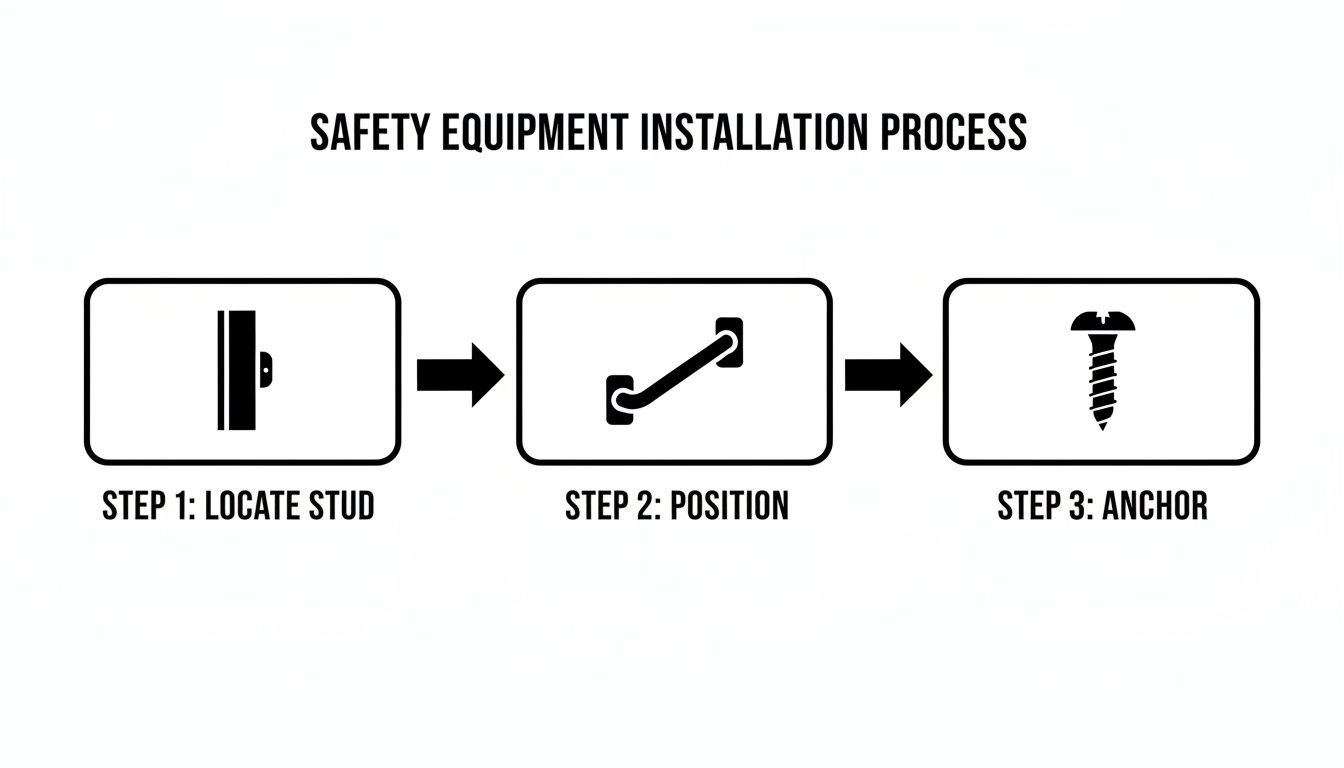
The image breaks down a proper installation into three key steps: finding a solid stud, positioning the equipment correctly, and anchoring it securely. This really drives home why checking that those anchors are still tight is so critical for safety over the long haul.
Deciding Between Buying And Renting Safety Equipment
So, you've decided to make the bathroom safer for a loved one. The next big question is: should you buy the equipment or just rent it? Honestly, there’s no one-size-fits-all answer. The right choice really comes down to your family's unique situation.
Think about how long the equipment will be needed, what your budget looks like, and how much flexibility you need. Weighing these factors will point you to the smartest and most cost-effective path. For some, a temporary rental is a perfect fit, while for others, purchasing is the only thing that makes sense.
When Renting Makes The Most Sense
Renting is your best friend for any short-term need. It’s like renting a car for a weekend getaway instead of buying one—it just works for a specific, limited time. This approach gives you flexibility without the long-term cost or commitment.
Here are a few common situations where renting is a great idea:
- Post-Surgery Recovery: After a major surgery like a hip or knee replacement, someone might only need a raised toilet seat or shower chair for a few weeks or months while they get back on their feet.
- Accommodating Visiting Relatives: If an elderly parent or grandparent is staying for the holidays, renting the right gear ensures they’re safe and comfortable in your home without you having to make permanent changes.
- Trial Periods: Not sure which shower chair is the right fit? Or whether a toilet safety frame will work better than a raised seat? Renting lets you "try before you buy," so you can test out different products and find the perfect match.
When Purchasing Is The Better Investment
On the other hand, buying the equipment is the way to go when you're looking at a permanent, long-term safety solution. This is especially true for anyone planning to age in place who needs consistent, reliable support day in and day out. Think of it as an investment in their ongoing safety and independence at home.
You should probably lean toward buying if:
- The Need is Long-Term: If you're dealing with a chronic condition or a progressive mobility issue, this equipment will become a permanent part of the home.
- Multiple Users Benefit: In a house with more than one older adult, owning the equipment makes sure it’s always there for whoever needs it, whenever they need it.
- Customization is Required: Owning allows for permanent installations. You can have grab bars mounted securely into the wall studs, perfectly placed for the user’s height and the bathroom’s specific layout.
The decision to rent or buy is part of a larger conversation happening in so many families. More and more seniors want to stay in their own homes, adapting them for safety instead of moving into a facility. This is all about empowering them to live independently in the place they know and love.
For example, a flexible rental might be a lifesaver for someone recovering from a fall in Clearwater, while a permanent purchase supports a couple’s plan to age in place together in their Seminole home. This trend toward home-based care is a major force in the industry, even as it navigates challenges like raw material shortages. To get a better sense of these trends, you can discover more insights on the bathroom assist devices market.
Ultimately, having both options available means families can find a solution that truly fits. For those looking into local options, you can learn more about St. Petersburg medical equipment rentals to see what’s available nearby for your short-term needs.
Partnering With A Local Bathroom Safety Expert
Taking that first step to make a bathroom safer is one of the most powerful things you can do for yourself or a family member. By now, you've got a solid foundation of what kind of bathroom safety equipment elderly folks really need to stay independent. The next part is turning that knowledge into a real-world plan.
The journey starts with understanding the risks, but it's only finished when you have high-quality products installed correctly. A grab bar that isn't screwed into a wall stud or a wobbly shower chair isn't a safety device—it's just a different kind of hazard. The whole point is for every piece of equipment to be absolutely reliable, turning a risky room into a place of confidence.
Turning Knowledge Into Action
Figuring out the right choices can feel like a lot to handle, but you don't have to go it alone. This is where sitting down with a real expert makes all the difference. They can help bridge the gap between knowing what you need and actually getting it set up perfectly in your home.
A local expert helps you nail down the important decisions:
- Assessing Specific Needs: They can look at a person's mobility and the unique layout of the bathroom to figure out the best combination of equipment.
- Ensuring Proper Fit: They'll help you measure for a transfer bench or choose the right height for a toilet riser—small details that make a huge difference every single day.
- Prioritizing Safety: A pro will always push for professional installation for things like grab bars. It’s the only way to be certain they can support someone's full weight when it matters most.
Your Local Partner In Home Safety
For over 20 years, our team has been right here in the community, helping families make their homes safer. We get the challenges that come with aging in place, and we're all about finding practical solutions that actually work. Our approach is personal and hands-on, making sure you get the right gear to live independently and give everyone peace of mind.
We truly believe everyone deserves to feel secure at home. When you combine what you've learned here with our team's experience, we can transform any bathroom from a place of worry into a space that builds confidence and well-being.
A personalized consultation is the best way to make sure every piece of equipment is chosen and placed for maximum safety and comfort. It turns a space of risk into one of reassurance.
Ready to take the next step? Our experienced team is here to help you find the perfect solutions. To see how our commitment has served the community for years, learn more about Affinity Home Medical Equipment in St. Petersburg, Florida and let us help you build a safer tomorrow.
Answering Your Questions About Bathroom Safety
It's completely normal to have questions when you're looking to make a bathroom safer. We get them all the time. Here are some of the most common ones we hear, with straightforward answers to help you make the best choices for your home and family.
How Do I Pay For Bathroom Safety Equipment?
Items like grab bars, shower chairs, and toilet risers are typically paid for directly by the customer. We do not work with insurance providers, so you would handle the purchase with us and then seek any potential reimbursement from your insurance company on your own.
We recommend contacting your insurance provider beforehand to understand what your specific plan may or may not cover under "Durable Medical Equipment," so you know exactly what to expect.
- Direct Purchase: You’ll see clear, upfront prices. No hidden fees, ever.
- Clear Invoices: We provide a proper invoice for your records.
- Financing Options: If you need to spread out the cost, just ask us about our flexible payment plans.
What's The Most Important Piece Of Safety Gear If I'm On A Budget?
If you can only choose one thing, make it a professionally installed grab bar. Placing one right where you get in and out of the tub or shower provides a huge boost in stability and confidence.
After that, the next best investment is a quality non-slip bath mat to keep your feet firmly planted. If there's still room in the budget, a sturdy shower chair is an excellent, low-cost way to combat fatigue and prevent falls. Each one of these items delivers a lot of safety for a modest price.
A single, well-placed grab bar can cut the risk of a bathroom fall by over 50%. It’s a small change with a massive impact.
Are Suction Cup Grab Bars A Safe Choice?
Honestly, no. Suction cup grab bars are not a safe substitute for the real thing. They are not designed to hold a person’s body weight and can detach from the wall suddenly and without any warning.
Think of them as a light steadying hand, not a lifeline. For true, reliable safety, you absolutely must install grab bars that are screwed securely into the wall studs. There's just no other way.
How Do I Know The Right Height To Install Grab Bars?
While ADA guidelines recommend a height of 33 to 36 inches from the floor, the best height is whatever feels most natural for the person actually using it. One size does not fit all here.
The best way to figure it out is to have the user stand or sit where the bar will be used. Then, have them reach out to a comfortable, intuitive spot on the wall and mark it. Installing the bar right there ensures it will be in the perfect position when it's needed most.
Read also: Learn more about customization and installation in our detailed FAQ page
We hope these answers give you the confidence to start making your bathroom a safer space. Getting clear on payment, priorities, and proper installation is the first step. For any other questions, our local experts are always here to help you find the right solution.
Ready to upgrade your home with trusted safety solutions? Affinity Home Medical Equipment offers same-day pickup, personalized fitting, and flexible rentals to keep your bathroom safe and accessible. Visit https://affinityhomemedicalequipment.com to get started today.
Share This Article

Written by : lori@netcodesign.com
Follow Us
Latest Articles

October 13, 2026

October 13, 2026

October 13, 2026
