
A Guide To Bathroom Safety Equipment For Elderly Loved Ones

When we talk about helping older adults live independently, the [...]
When we talk about helping older adults live independently, the conversation almost always turns to the bathroom. Simple, commonsense additions like grab bars, shower chairs, and non-slip mats can make a huge difference in preventing accidents. These aren't just gadgets; they're tools that provide stability and support exactly where it's needed most.
Why Bathroom Safety Is A Top Priority For Senior Independence
For many aging adults, the bathroom can feel like the most treacherous room in the house. It’s a perfect storm of hard surfaces, wet floors, and the physical demands of bending, standing, and stepping. It’s no surprise, then, that the National Institute on Aging reports a staggering 80% of falls among seniors happen right there in the bathroom.
This is about so much more than just preventing a fall. It's about preserving a person's dignity and confidence. When an older adult starts to feel unsure or unsafe just trying to bathe or use the toilet, their personal hygiene can suffer, and that precious sense of independence starts to slip away. By proactively installing the right bathroom safety equipment for elderly loved ones, you can turn a source of anxiety into a place of security.
The Real Impact of an Unsafe Bathroom
A single slip in the shower or a struggle to get up from the toilet can have a ripple effect that touches every part of a senior's life. It's not just about the immediate injury. A bad fall can lead to a hospital stay, a long and difficult recovery, and a new fear of being alone, which can often speed up the transition to an assisted living facility.
Thinking about these risks makes it clear why prevention is so important. A few key upgrades can change everything:
- Promoting Confidence: Just knowing a sturdy grab bar is there to hold onto can eliminate the fear that comes with using the shower or toilet.
- Sustaining Independence: The ability to handle personal care without help is fundamental to living at home on your own terms.
- Providing Peace of Mind: For family and caregivers, knowing your loved one has the right tools to stay safe brings incredible relief.
The goal is to build safety right into the environment, not just react to problems. Every piece of equipment should be there to reduce physical strain and create a solid foundation for secure daily living.
Taking The First Step
Figuring out what you need is the first step toward making a home safer. You can learn more by exploring our other articles on essential medical equipment at our news and blog.
It’s important to know that while your doctor may suggest specific items, we do not work with insurance providers. This allows for a much more direct and simple process for buying or renting, without dealing with third-party paperwork. By focusing on practical, accessible solutions, you can empower the people you care about to continue living the life they love, with safety and dignity.
The Most Important Bathroom Safety Equipment To Prevent Falls
Figuring out the right bathroom safety equipment for an older loved one can feel overwhelming. But think of it less like a complicated puzzle and more like building a foundation. Each piece you add strengthens the overall safety and boosts confidence. Let's walk through the essential items that make the biggest difference in preventing falls and turning a high-risk area into a secure space.
This diagram clearly shows how a simple solution can directly address a common bathroom hazard, leading to a much safer outcome.
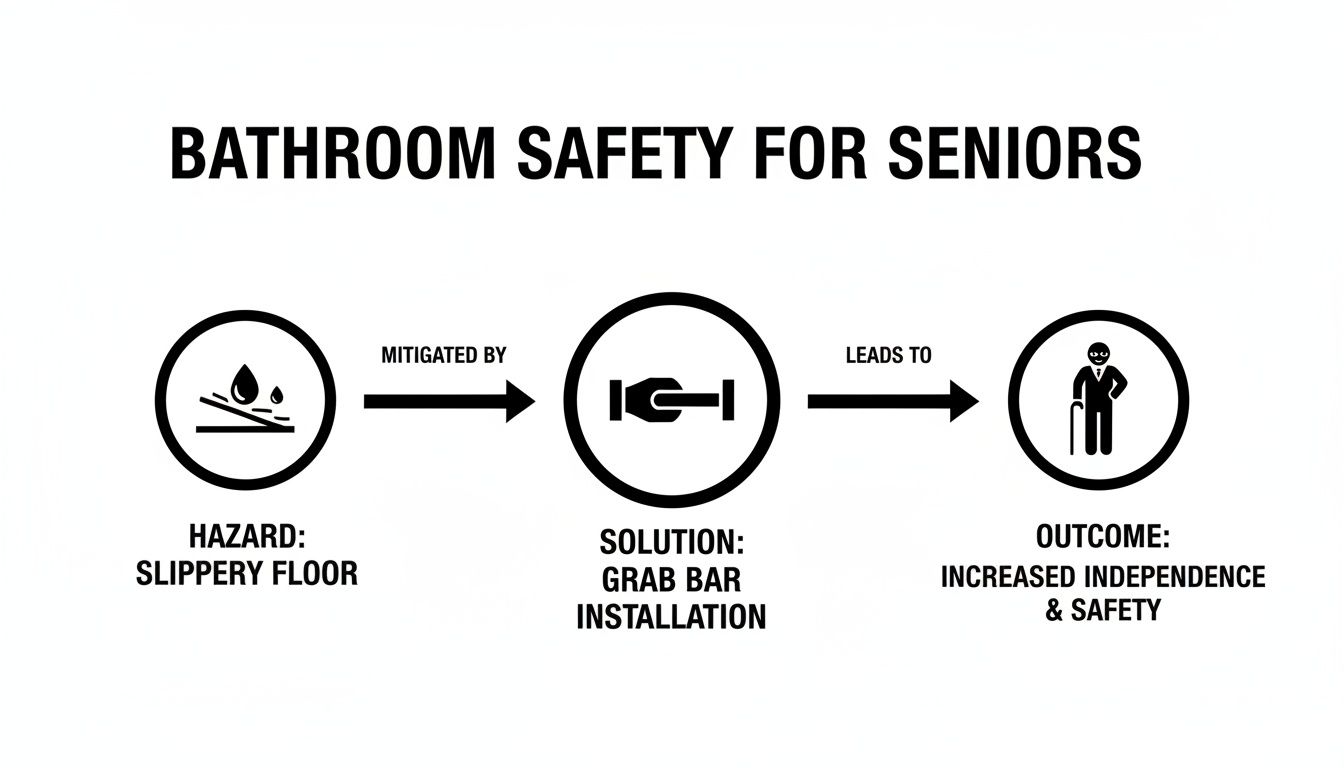
The takeaway here is simple but powerful: a single, well-placed piece of equipment like a grab bar tackles a major risk head-on. It's a small change that delivers a huge improvement in stability and independence.
The Anchor of Bathroom Safety: Grab Bars
If you only install one thing, make it a grab bar. It's easy to mistake a towel rack for something to lean on, but they're not built to hold a person's weight. Grab bars are different—they are mounted securely into the wall's studs, providing a rock-solid handhold you can truly rely on. They are, without a doubt, the single most effective tool for preventing slips and falls.
The numbers back this up. The global market for bathroom and toilet assist devices has grown to USD 4.9 billion, and grab bars alone command a massive 28.3% market share. This isn't just a trend; it's a reflection of how vital these aids are for home safety. Studies have shown they can slash the risk of falls by as much as 50% in high-risk bathrooms.
But they only work if they're in the right spot. Placement is everything.
- Next to the Toilet: A grab bar here is a game-changer, offering crucial support for sitting down and standing up—two movements that can easily cause dizziness or strain.
- Inside the Shower: A vertical bar gives you something to hold onto for balance while washing, while a horizontal one makes stepping in and out much safer.
- On the Wall Beside the Tub: This provides a steadying point for that tricky maneuver of getting over the high tub wall.
Comparing Essential Bathroom Safety Aids
To make sense of the options, it helps to see how the most common pieces of equipment compare. Here’s a breakdown of what each item does, where it goes, and why it's beneficial, helping you quickly pinpoint what's needed.
Grab Bars
- Primary Function: Provides a stable handhold for support and balance.
- Best For: Toilets, showers, and tubs.
- Key Benefit: Dramatically reduces slip-and-fall risk during transitions.
Shower Chair/Bench
- Primary Function: Offers a secure seating option during bathing.
- Best For: Showers or bathtubs.
- Key Benefit: Eliminates the danger of standing on wet, slippery surfaces.
Raised Toilet Seat
- Primary Function: Increases toilet height to reduce strain.
- Best For: Standard-height toilets.
- Key Benefit: Makes sitting and standing easier on knees and hips.
Toilet Safety Frame
- Primary Function: Adds armrests for leverage around the toilet.
- Best For: Individuals needing extra help to stand up.
- Key Benefit: Provides sturdy support for pushing up from a seated position.
Each piece of equipment serves a distinct purpose, but together, they create a comprehensive safety net that addresses the bathroom's most common hazards.
A Safer Way to Bathe: Shower Chairs and Benches
Standing on a wet, slippery surface for any length of time is a serious fall risk, especially for anyone dealing with fatigue or balance issues. A shower chair or bath bench completely removes that danger. It’s that simple.
This one addition can transform showering from a source of anxiety into a relaxing, comfortable experience. It allows someone to wash safely without the constant worry of losing their footing, which not only prevents falls but also helps conserve energy.
When you're shopping for one, look for models with a backrest and handles for extra support. And always make sure it has non-slip rubber feet to keep it firmly planted. While a shower chair is a fantastic solution for bathing, navigating the rest of the home might require other aids. If mobility is a challenge outside the bathroom, our guide on walkers and rollators can be a great resource.
Easing the Strain: Raised Toilet Seats and Safety Frames
It’s an everyday motion we take for granted, but getting on and off the toilet can be surprisingly difficult for seniors with stiff joints, weak knees, or back pain. A standard toilet is quite low, forcing a deep squat that can be both painful and unstable.
A raised toilet seat is an incredibly simple yet effective solution. By adding just a few inches of height, it dramatically reduces the distance a person has to lower themselves. This small adjustment makes a huge difference in comfort and safety by decreasing physical effort and minimizing the risk of a fall.
For even more stability, a toilet safety frame is an excellent choice. This device fits right around the existing toilet and adds sturdy armrests to grip, making the process of sitting and standing much easier and more secure. It’s an essential piece of bathroom safety equipment for elderly individuals who need that extra leverage and support to stay independent.
How To Choose The Right Equipment For Your Unique Needs
Choosing the right bathroom safety equipment for elderly loved ones isn't about simply buying gadgets; it's about crafting a personalized safety solution. There's no one-size-fits-all answer here. Every person's needs are unique, and every bathroom has its own quirks and dimensions. The trick is to start by taking a close look at the individual's specific challenges and the space they navigate every day.
Think of it as getting a custom-tailored suit versus grabbing one off the rack. A shower chair that's too bulky for the stall or a toilet safety frame that blocks the doorway isn't just an annoyance—it's a new accident waiting to happen. The goal is to find pieces that feel like they belong, offering solid support without creating obstacles.
Start With The Individual
Before you even begin browsing products, take a moment to think about the person who will be using them. This is, without a doubt, the most important step. A little bit of thoughtful assessment upfront will steer all your decisions, making sure the equipment you end up with is genuinely helpful.
Ask yourself a few key questions:
- Mobility Level: Does your loved one use a walker or a cane? Can they stand comfortably for a few minutes, or do they tire out quickly? The answer here will tell you if a simple grab bar will do the trick or if a shower bench is a must-have.
- Strength and Balance: Can they get up from a chair without a struggle? Do they ever get dizzy or unsteady on their feet? Poor balance is a huge factor in falls, which makes support rails and sturdy chairs non-negotiable.
- Physical Limitations: Are they dealing with stiff knees, hip pain, or trouble reaching? These kinds of limitations point directly to solutions like a raised toilet seat or a long-handled shower sprayer.
Measure Twice, Buy Once
Once you have a clear picture of the user's needs, it's time to get friendly with a tape measure. This simple step can save you the headache—and potential danger—of bringing home equipment that just doesn't fit. Get the exact dimensions of your bathroom.
A few centimeters can be the difference between a helpful aid and a total hindrance. For example, a bath transfer bench needs to sit securely both inside and outside the tub, with no wobbling. A toilet safety frame needs enough clearance on either side to be useful, not cramped.
The right equipment shouldn't just squeeze into the bathroom; it should enhance the flow and function of the space. A well-chosen safety aid should feel like it was always meant to be there, seamlessly integrating to make daily routines safer and easier.
Consider Materials and Weight Capacity
The build quality and materials of bathroom safety equipment are directly linked to how long it will last and how safe it will be. Bathrooms are wet, humid environments, so you absolutely have to choose materials that can stand up to moisture.
Keep an eye out for items made from rust-proof materials like stainless steel, aluminum, or durable molded plastic. This ensures the equipment stays strong and reliable for the long haul. Just as important is the weight capacity. For anything that will support a person's weight—grab bars, shower chairs, toilet frames—check the manufacturer's listed limit. Always pick a product with a capacity that is well above the user's weight for total peace of mind and stability.
For a firsthand look at durable and reliable options, you can browse a wide selection of in-stock items by exploring our Affinity Home Medical Equipment shop. Getting the materials and weight limit right isn't just a suggestion; it's a critical step for ensuring safety.
Understanding Professional Installation Versus DIY Setups
You’ve picked out the right safety equipment for your bathroom, which is a huge step. But the job isn't done yet. The next, and arguably most critical, decision is how to install it. After all, a grab bar is only as strong as its anchor, and a wobbly toilet frame can create a hazard instead of preventing one.
This brings up a big question: Is this a weekend DIY project, or is it time to call in a professional?
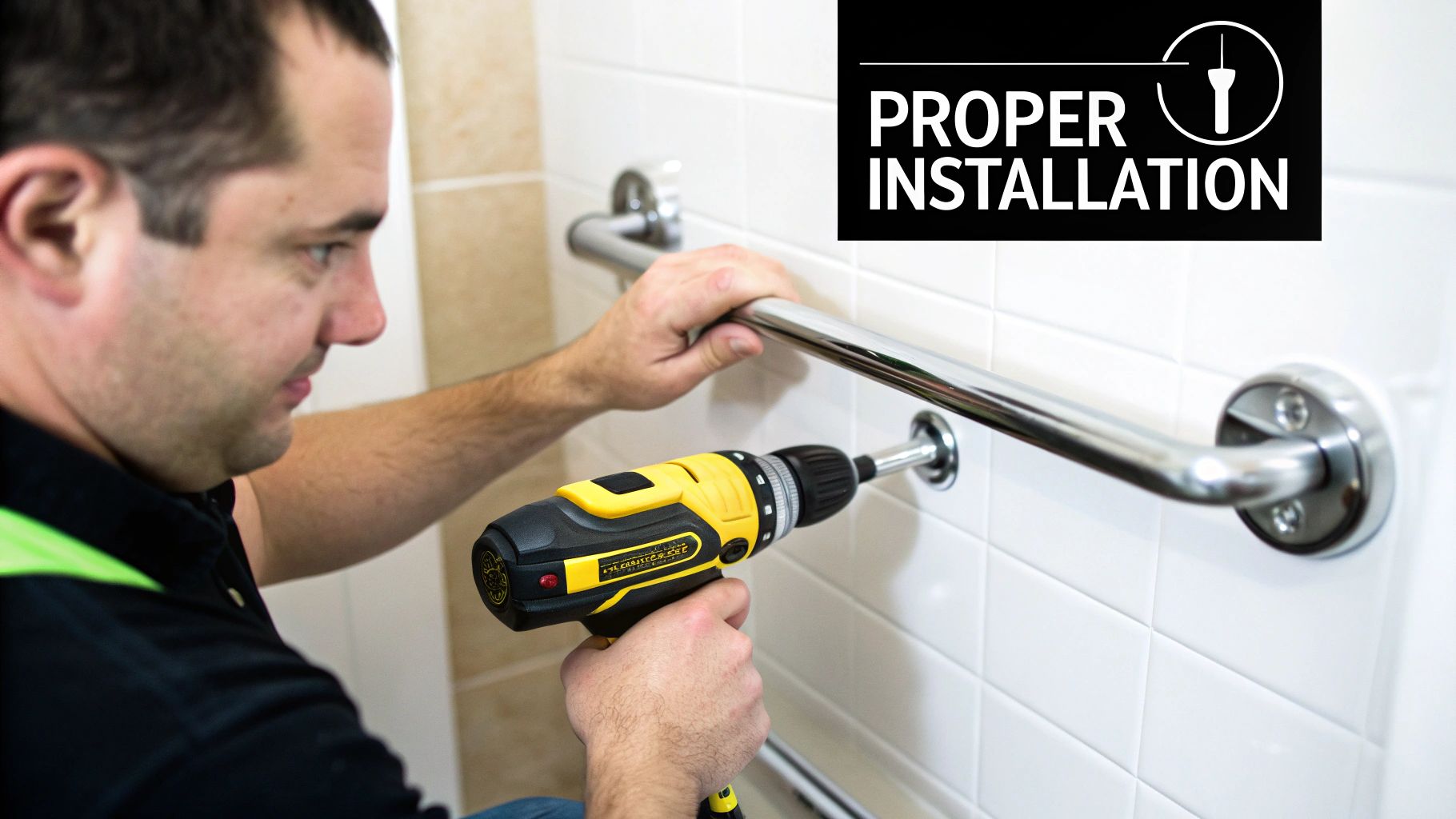
The answer really comes down to what you’re installing. Some pieces are designed to be set up in minutes with no tools, while others need a precise, sturdy installation that requires knowing what's behind your walls. Getting this wrong can create a false sense of security, and that’s a risk you can’t afford to take.
Simple DIY Solutions You Can Handle
Thankfully, a lot of essential safety gear is truly "out-of-the-box" ready. These items are perfect for a do-it-yourself approach because their safety isn't dependent on being bolted to a wall. You can confidently tackle these yourself.
A few examples of straightforward DIY equipment:
- Freestanding Shower Chairs: These usually just need their legs and backrest snapped into place. No toolbox required.
- Non-Slip Bath Mats: This is the easiest one—just place it in the tub or on the floor. The suction cups handle the rest.
- Raised Toilet Seats and Safety Frames: Most modern designs are engineered to clamp firmly onto the toilet bowl itself, with no drilling needed.
These products offer an immediate safety boost with very little effort. But when you move on to equipment that needs to be permanently mounted, the game changes completely.
When To Absolutely Call A Professional
Here’s a simple rule of thumb: if a piece of equipment has to support someone's full body weight when they’re unsteady, it needs to be installed by a professional. This isn't just a suggestion; it's a critical safety measure. The most common example is grab bars.
A grab bar that isn’t screwed directly into a wall stud is not a safety device. It’s a liability. Drywall alone simply cannot hold the force of a person grabbing on to stop a fall. The bar will rip right out of the wall, likely causing an even worse injury.
A professional installer has the right tools, like a stud finder that works through tile, and the experience to know exactly what they’re doing. They’ll make sure the bar is anchored to withstand hundreds of pounds of force, giving you certainty that it will hold up when it matters most.
Guessing where a stud is just isn't an option here. Investing in a professional installation buys you invaluable peace of mind. If you have any questions about what’s involved with specific products, take a look at our Frequently Asked Questions section. Knowing the job was done right is everything.
Deciding Between Renting and Buying Safety Equipment
When you realize a loved one needs some extra support in the bathroom, one of the first questions you’ll probably ask is, "Should we rent this stuff or just buy it?" There’s no single answer that fits everyone. It really boils down to your unique situation—how long the equipment is needed, your budget, and the person's specific health needs.
Think of it like deciding between leasing or buying a car. A short-term lease is a no-brainer if you only need a vehicle for a few months. But if you're in it for the long haul, buying almost always makes more financial sense. Let's walk through when each choice is the right call.
When Renting Makes Perfect Sense
Renting is a fantastic, flexible option for any temporary setup. It gets you high-quality safety gear right away without the big upfront cost or long-term commitment of a purchase. This is the go-to solution when you know there's an end date in sight.
Renting is probably your best bet in situations like these:
- Short-Term Recovery: If someone is recovering from surgery, like a hip replacement, they might only need a shower chair or toilet safety frame for a few weeks or months. Renting fills that gap perfectly.
- Visiting Family Members: Got an elderly parent coming to stay for the holidays? Renting a few key items can make your bathroom safe and accessible for their visit without you having to buy permanent fixtures.
- Trying Before Buying: Sometimes, you just don't know what will work. Renting allows you to test drive a specific model—say, a particular transfer bench—to see if it fits the bathroom and is comfortable before you decide to buy it.
The whole point of renting is to be simple and stress-free. For example, at Affinity Home Medical Equipment, we streamline the process by not requiring insurance, which cuts through a lot of red tape. You get what you need, when you need it. To see what’s available, you can learn more about our St. Petersburg medical equipment rentals.
Why Buying Is The Better Long-Term Investment
Now, if the need for safety equipment is tied to a chronic condition, progressive illness, or simply the natural process of aging, buying is almost always the smarter, more practical choice. That initial cost can feel steep, but it quickly pays for itself when you compare it to months or years of rental fees stacking up.
When you know that safety and stability are a daily necessity, owning the equipment just makes more sense. It guarantees that the support is always there, right where it needs to be.
Owning the equipment provides a sense of permanence and reliability. You know the device is a constant fixture in the home, providing consistent support day in and day out, which is crucial for building a safe daily routine.
Plus, buying gives you total freedom of choice. You can pick the exact model with the specific features and finishes that work best for your bathroom and, more importantly, for the person using it. For anything that needs to be permanently installed, like grab bars, buying is really the only way to go. These items become a true part of your home’s safety foundation.
Building A Complete Daily Bathroom Safety Routine
Think of your bathroom safety equipment for elderly loved ones as the foundation of a house—absolutely essential, but it's only the first step. True safety isn't just about the hardware you install. It's about the daily habits and routines you build around that equipment that really prevent accidents.
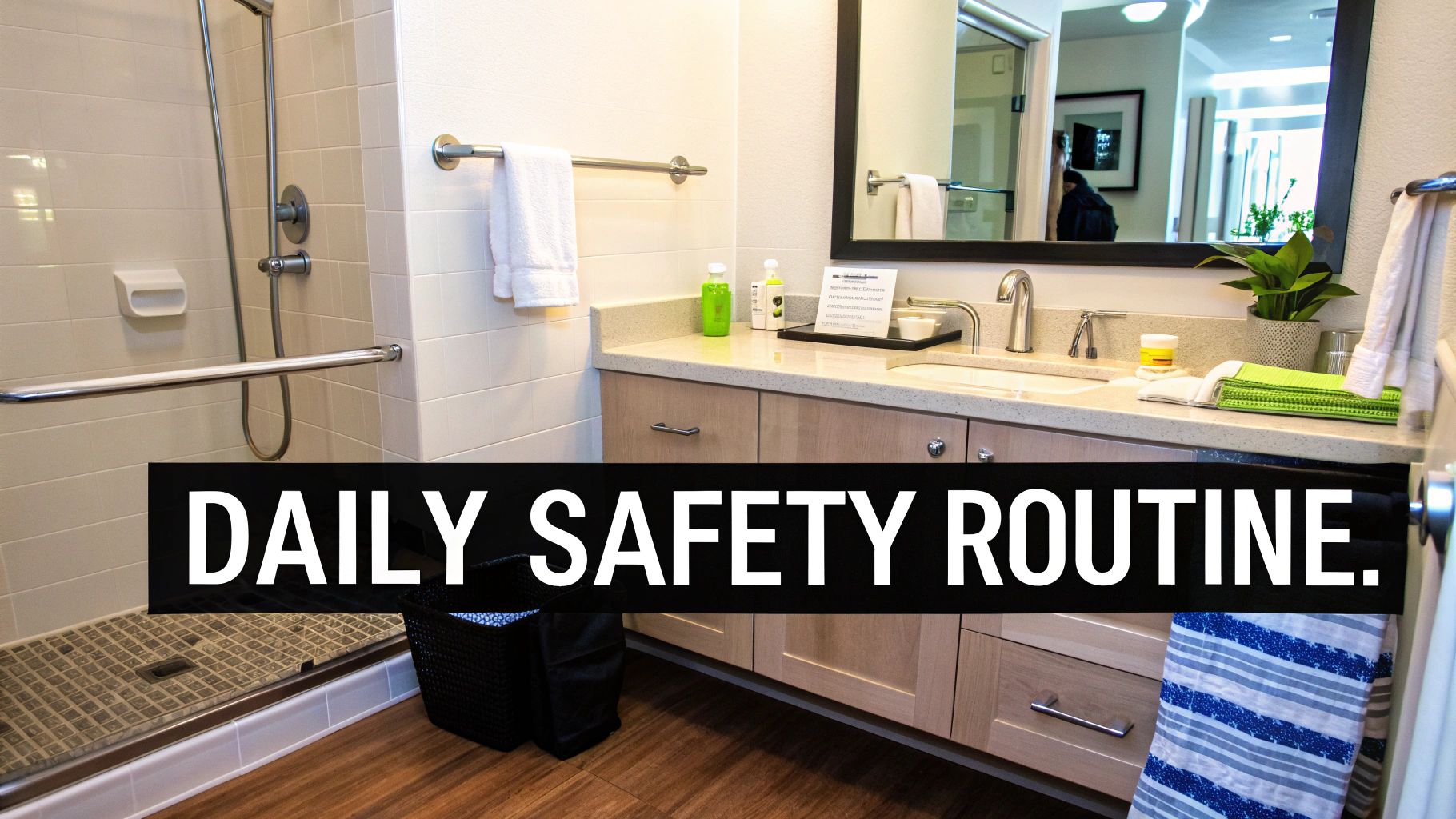
This is the final piece of the puzzle: creating a culture of proactive safety where smart tools and smart habits work together. It’s the small, consistent efforts that make the biggest difference in reducing risk, helping your loved one live confidently and independently.
Creating A Safer Daily Flow
The real goal is to weave safety so seamlessly into the daily routine that it becomes second nature. This means looking beyond just the equipment to address the environment and the behaviors that can lead to falls. A few simple adjustments can make all the difference in the world.
Here are the core habits to focus on:
- Keep It Dry: Water on a tile floor is one of the most common slipping hazards. Make sure there’s always an absorbent, non-slip bath mat right outside the tub or shower, and get in the habit of wiping up any splashes right away.
- Keep It Lit: It’s hard to avoid what you can’t see. Poor lighting is a huge risk, especially for those middle-of-the-night trips. Use bright overhead lighting and think about plugging in an automatic nightlight to light up the path from the bedroom.
- Keep It Clear: A cluttered floor is an obstacle course waiting to happen. Keep floors clear of towels, loose rugs, or laundry baskets that someone could easily trip over. It's also wise to store toiletries within easy reach to prevent risky stretching or bending.
Maintaining Your Safety Equipment
Just like any other important tool, bathroom safety equipment needs a little attention every now and then to make sure it's working properly. A grab bar that’s come loose or a shower chair with a worn-out leg can fail at the worst possible moment. A quick, simple maintenance check can provide invaluable peace of mind.
Think of your safety equipment like the tires on your car. You wouldn't drive on them without checking the pressure and tread. A quick monthly check-up ensures your safety gear is always ready to provide reliable support.
This doesn't have to be a big chore. Once a month, just take a few minutes to run through these simple steps:
- Check for Stability: Give all grab bars and toilet safety frames a firm tug. There should be absolutely no movement or wiggling. If you feel any give, it needs to be tightened up immediately.
- Inspect Surfaces: Look over plastic shower chairs and benches for any signs of cracks. Check the rubber tips on the legs for wear and tear—those little tips are critical for preventing the chair from slipping.
- Clean and Dry: Wipe down all the equipment regularly. This prevents mildew and also makes it easier to spot any potential problems like cracks or rust.
When you combine top-quality equipment with these simple daily habits and maintenance checks, you create a complete safety system. It’s this thoughtful, comprehensive approach that truly empowers older adults to use the bathroom with confidence and hold onto their independence at home.
Frequently Asked Questions About Bathroom Safety
It’s completely normal to have a lot of questions when you start looking into bathroom safety equipment for elderly family members. You want to get it right. Getting clear, practical answers is the first step to making confident choices that will genuinely improve safety and keep your loved one independent at home. Let’s walk through some of the most common questions we hear from families.
What Are The First Pieces Of Equipment I Should Get?
If you’re just starting out, it’s easy to feel overwhelmed by all the options. The best approach is to focus on the "big three"—the items that tackle the most immediate and serious fall risks right away.
Think of these as your foundational safety net:
- Grab Bars: Honestly, these are the single most important thing you can install. They provide a sturdy, reliable handhold for getting up and down from the toilet or stepping in and out of the shower.
- A Shower Chair or Bench: Standing on a wet, slippery surface is a huge risk. A good shower chair takes that danger right out of the equation, making bathing a safe and comfortable experience instead of a stressful one.
- A Non-Slip Bath Mat: Such a simple thing, but so important. It gives you a secure footing on wet tile or inside the tub, preventing those split-second slips that can cause a bad fall.
By putting these three items in place first, you’re addressing the most critical hazards where the vast majority of bathroom falls happen.
Can I Just Use A Towel Rack For Support?
Please, don't. This is one of the most dangerous and common mistakes people make. Towel racks are only designed to hold the weight of a damp towel and are usually just anchored into the drywall with flimsy screws.
Relying on a towel rack for support is a recipe for disaster. The moment you put any real weight on it, it will almost certainly rip right out of the wall, turning a minor stumble into a serious fall.
You need professionally rated grab bars that are securely anchored into the solid wood studs behind the wall. These are specifically engineered and tested to support an adult's body weight, providing the kind of dependable support that actually prevents an accident. This isn’t just a suggestion—it’s a critical safety rule.
How Often Should I Inspect The Safety Equipment?
Regular check-ins are key to making sure everything is still working as it should. Think of it as quick, preventative maintenance. We recommend doing a quick visual scan weekly and a more hands-on inspection at least once a month. This helps you catch small issues before they become big problems.
During your monthly check, make sure to:
- Give all grab bars a firm tug. You’re checking to see if they are rock-solid. There should be absolutely no wiggle or movement.
- Examine the legs and rubber tips on shower chairs and toilet frames. Look for any signs of cracking, wear, or instability that could make them wobbly.
- Wipe down all the equipment. This keeps things hygienic and also gives you a chance to spot any developing issues, like rust on metal parts or small cracks in the plastic.
These quick checks only take a few minutes but provide invaluable peace of mind, knowing the equipment is always ready and reliable.
At Affinity Home Medical Equipment, we’re here to help you find the right solutions to keep your loved ones safe, comfortable, and independent at home. Explore our wide selection of bathroom safety products and other home medical supplies today. Visit https://affinityhomemedicalequipment.com to get started.
Share This Article

Written by : lori@netcodesign.com
Follow Us
Latest Articles

October 14, 2026

October 14, 2026

October 14, 2026
