
Best Walkers For Balance Problems: Top Picks For Safer Mobility

If you’re dealing with balance issues, the best walker is [...]
If you’re dealing with balance issues, the best walker is one that offers a wide, stable base and gives you a real sense of control. For some, that might be a standard walker that provides maximum support. For others who need a bit more mobility, a rollator with reliable hand brakes is the perfect solution for added safety on the move.
It all comes down to your personal level of stability, your strength, and where you’ll be using it most. That’s why getting the right fit and understanding the key features isn’t just a detail—it’s everything.
Regain Your Confidence and Independence
Feeling unsteady on your feet can be unnerving, but finding the right walker is a huge first step toward getting your confidence back. This guide is here to cut through the noise and give you clear, practical advice on selecting the best walker for your balance needs. Don’t think of it as a limitation; see it as a dependable tool that empowers you to move safely and freely again.
We’ll walk through the different types of walkers, break down the features that are most critical for stability, and show you how to get a perfect fit. Knowing this stuff is what helps you make a smart choice. It’s also incredibly helpful to understand how mobility and stability are measured in the first place, often through professional methods like balance assessment tests for elderly.
The Goal is Empowerment
Our main goal here is to give you the knowledge you need to pick a walker that genuinely improves your mobility and your life. It’s about being able to handle your daily routines with more independence and a whole lot less worry. A good walker becomes a true partner in your journey toward safer movement.
A lot of people think all walkers are basically the same. The truth is, the difference between a generic model and one designed specifically for balance can be life-changing. It can dramatically reduce your fall risk and boost your confidence with every step.
To get you there, we’ll focus on a few key areas to build a solid foundation of what to look for.
- Walker Types: We’ll cover the main categories, from standard walkers to wheeled rollators, and explain the real-world pros and cons of each for someone needing balance support.
- Essential Features: You’ll learn about the non-negotiable features—like braking systems, wheel size, and the width of the frame—that directly impact your stability.
- Proper Fitting: We’ll go over how to get that “just right” fit, which is crucial for maintaining good posture and avoiding extra strain on your body.
- Financial Considerations: It’s important to know that we do not take insurance. Our focus is on providing you with direct, immediate access to the best equipment without the delays and complexities of insurance claims.
By getting a handle on these points, you can go from feeling unsure to feeling completely confident in your decision. The right walker doesn’t just stop falls; it opens up your world, helping you stay connected to the people and activities you love. We’re here to give you straightforward information to find the perfect solution for you.
Understanding The Different Types Of Walkers
When you start looking for a walker to help with balance, you’ll quickly realize they aren’t all created equal. Each type offers a different kind of support, and the best one for you really boils down to your personal situation. Think of it like choosing the right tool for a job—you need the one that gives you the perfect blend of stability and freedom to move.
Let’s walk through the main categories, from the super-stable standard models to rollators built for people who want to keep up a good pace. Seeing what each does best will help you zero in on the right starting point.
Standard Walkers: Your Portable Handrail
A standard walker is the classic, no-frills option, and it’s often the most stable of the bunch. It has four sturdy legs with rubber tips and no wheels at all. To get around, you have to physically lift the walker, place it in front of you, and then take a step.
This design essentially acts like a portable handrail. It gives you a completely stationary, secure base of support every time you set it down, which is perfect for someone with significant balance challenges or for post-surgery recovery when you can’t put weight on a leg.
The trade-off? You need decent upper body strength to do all that lifting. It also means you’ll move at a slower, more deliberate pace, which isn’t the right fit for everyone.
Wheeled Walkers: A Step Toward More Mobility
A front-wheeled walker is a smart hybrid, sitting right between a standard walker and a rollator. It has two wheels on the front legs and two simple, rubber-tipped legs at the back. This setup lets you push the walker forward instead of lifting it every single time, saving you a good bit of energy.
This style offers a fantastic compromise. You get more stability than a four-wheeled rollator, but you can move with a much more natural, fluid stride than with a standard walker. Those back legs are a great safety feature, too—they create a bit of drag to keep the walker from getting away from you.
Rollators: The Supportive Mobility Cart
A rollator, which you might hear called a rolling walker, is an incredibly popular choice for people who need a hand with balance but still want to lead an active life. These come with three or four wheels, handlebars with brakes, and usually have a built-in seat and a basket for your things. It’s like a supportive mobility cart.
The wheels mean you can move continuously without any lifting, making it much easier to walk at a normal pace and go farther. The hand brakes are absolutely essential, giving you total control over your speed and letting you lock the wheels securely before you take a seat. It’s this all-around usefulness that makes rollators a go-to for so many.
In fact, the market is dominated by rollators for a reason. They made up a whopping 57.4% of the elderly walkers market, a segment that’s expected to grow past USD 1.8 billion by 2034. Their features just work better for a lot of people dealing with balance issues.
This infographic breaks down the simple steps to finding the right walker and getting your confidence back.
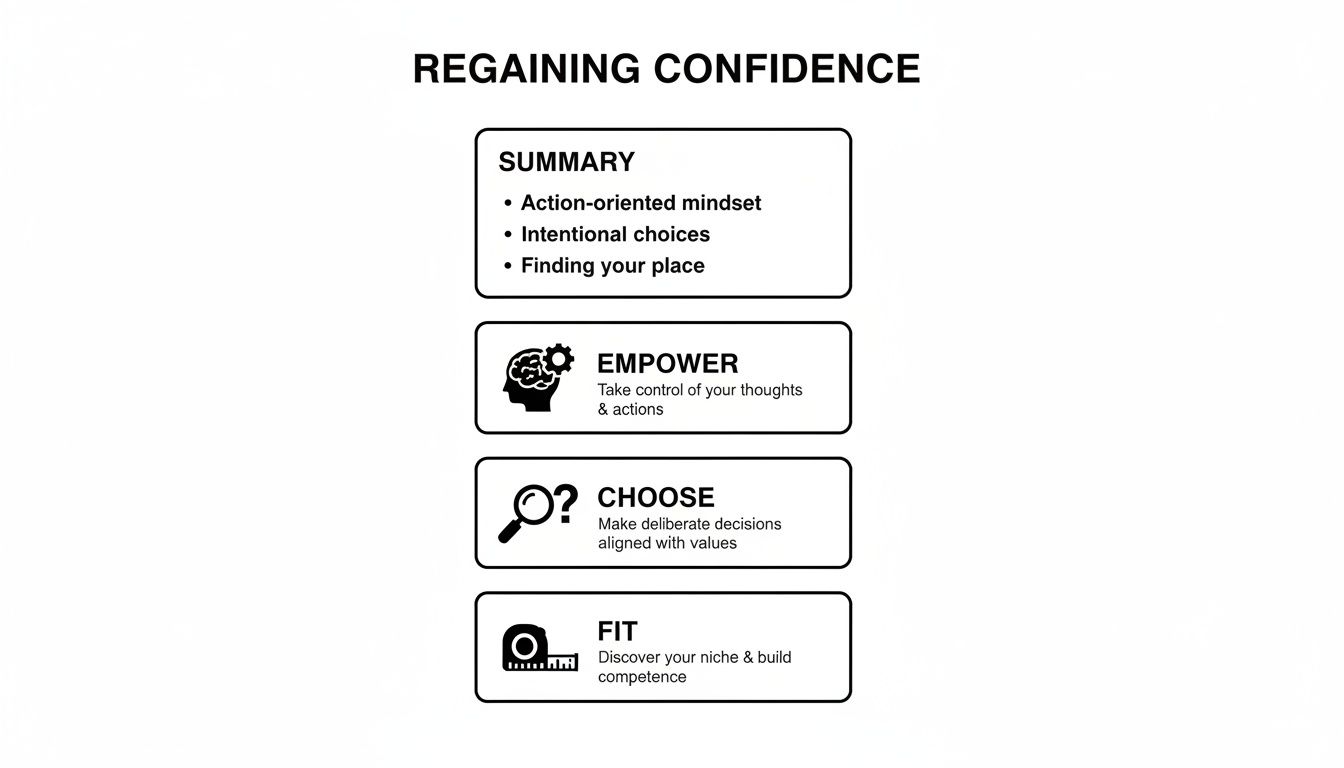
As you can see, it all comes down to arming yourself with knowledge, choosing the right tool for your body, and making sure it’s fitted correctly for your safety.
Walker Type Comparison For Balance Issues
To make things even clearer, here’s a quick comparison of how these walkers stack up for different balance needs.
- Standard Walker: Best for maximum stability, significant balance issues, and post-surgery recovery. Its key stability feature is a completely stationary base that must be lifted to move. However, it requires upper body strength and promotes a very slow pace.
- Front-Wheeled Walker: Ideal for moderate balance support when you want a more fluid gait. The two stationary rear legs provide drag and prevent it from rolling away. It’s more stable than a rollator but less so than a standard walker.
- Rollator: Suited for mild-to-moderate balance issues, active users, and those who need a seat. Hand brakes give you speed control and lock for stability. This type requires the ability to manage the brakes, as it can roll too fast if not controlled.
- Hemi-Walker: Designed for one-sided weakness (e.g., post-stroke) and the need for a wide support base. It offers a wider base than a cane and is built for one-handed use, though it is not as stable as a full-sized walker.
This breakdown should help you quickly see which category might be the best fit for your situation.
Specialized Walkers For Unique Needs
Beyond the big three, a few other walkers are built for very specific challenges.
A hemi-walker, for instance, is a lifeline for someone who only has the use of one hand or arm, often after a stroke. It provides a much wider, more stable base than a cane but is far more manageable than a full-size walker.
Another great example is the knee walker (or knee scooter). This is the perfect solution if you’re recovering from a foot or ankle injury and can’t put any weight on it. You just rest your injured leg on a padded cushion and scoot around with your good leg.
It’s so important to remember that the “best” walker is deeply personal. What works wonders for your neighbor might be all wrong for you. The key is often trying out a few different models to find that sweet spot of support, comfort, and ease of use.
When you’re ready to see them in person, we invite you to check out our local selection of walkers and rollators available in St. Petersburg, FL. Our team is here to help you find the perfect match without any insurance hassles, as we do not accept it.
Key Features That Make a Real Difference in Balance and Safety
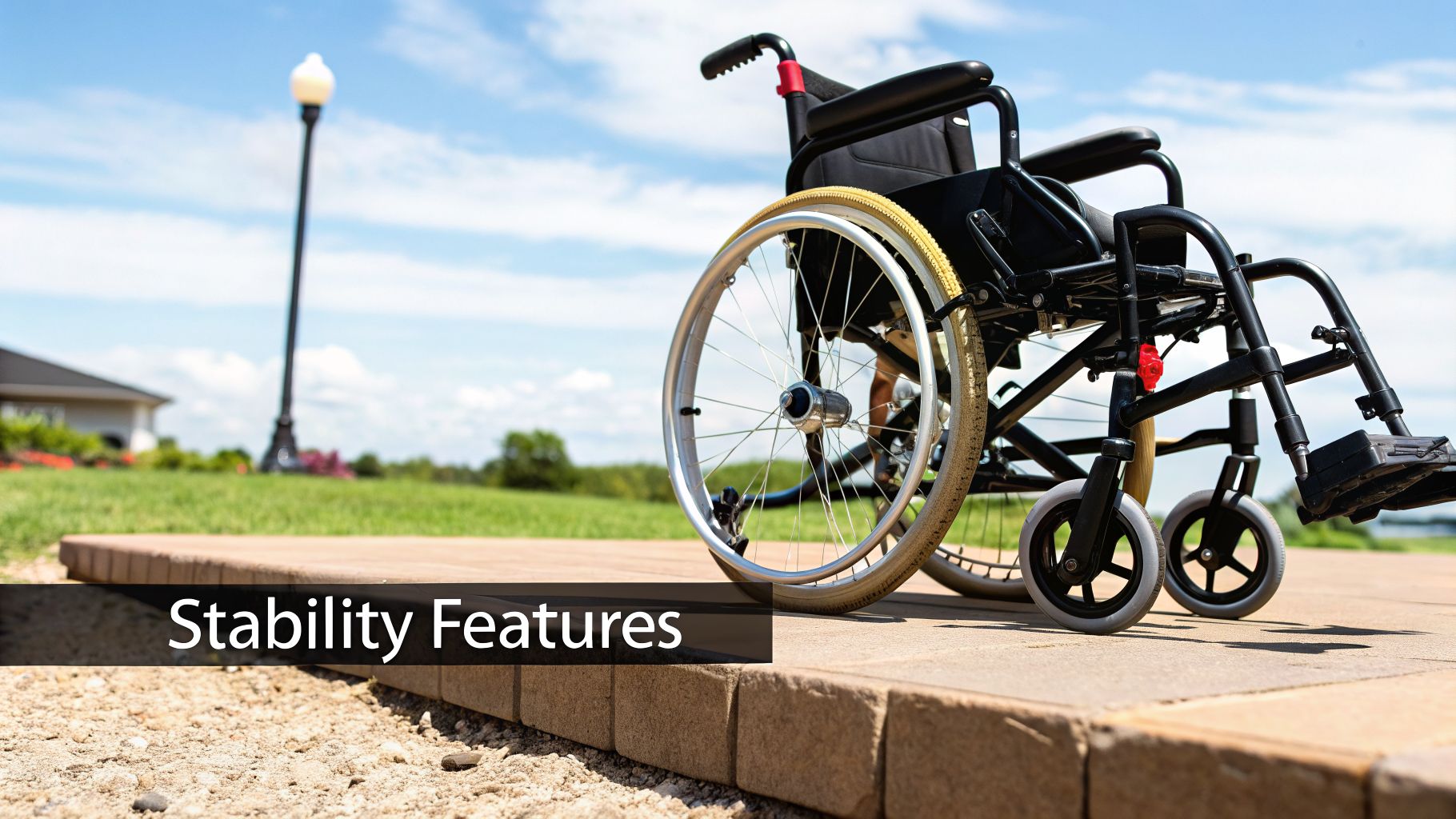
Once you’ve narrowed down the type of walker you need, it’s time to get into the details—the specific features that truly impact your stability. Think of it like buying a car. You pick the model first, but it’s the handling, the traction control, and the brakes that give you confidence on a tricky road. For walkers, these details aren’t just bonuses; they are absolutely essential for your safety and peace of mind.
We’ll look at the most critical components, from the width of the base to the wheels and brakes. Understanding how each one contributes to your stability will empower you to look at a walker and know if it’s genuinely up to the task of keeping you steady.
The Foundation: A Wider, Sturdier Base
The single most important principle for stability is a wide base of support. Just think about standing with your feet together versus shoulder-width apart—that wider stance is unshakable. The exact same logic applies to a walker’s frame. A walker with a wider base is far less likely to tip, giving you a solid foundation with every step you take.
This becomes especially critical when you’re making a turn or navigating a tight corner, which are common moments when people feel unsteady. A broader frame distributes your weight more evenly, creating a solid center of gravity that anchors you to the ground.
At its core, a walker’s job is to expand your “footprint” on the ground. A wide, well-built frame is the most important defense against tipping forward or sideways.
Beyond just the width, pay attention to the feel of the frame itself. It should be made from durable, high-quality materials that don’t wobble or flex when you put weight on them. That solid construction is a huge part of what makes the best walkers for balance problems so effective.
Wheels and Brakes: Your Control Center
For any walker with wheels, the wheel and brake system is your direct line of control. The right setup can be a game-changer, especially when moving between different surfaces or when you need to stop on a dime.
First, let’s talk about wheel size. Bigger wheels, usually around 8 inches, act like the all-terrain tires on an SUV. They roll right over cracks in the sidewalk, doorway thresholds, and thick carpet without getting stuck. Smaller wheels tend to catch on these obstacles, which can cause a sudden jolt or even a fall.
The brakes are just as crucial. Most rollators have loop brakes under the handgrips, which work just like bicycle brakes—they’re intuitive and easy to squeeze for immediate speed control. The most important feature, however, is a locking function. This lets you push the brake handles down until they click into place, essentially putting the walker in “park.” It won’t move an inch, giving you a stable support to hold onto as you stand up or sit down.
- Large Wheels (8-inch): Perfect for navigating uneven ground, both inside and out. They create a much smoother, safer ride.
- Responsive Loop Brakes: Give you instant control over your speed, which is a must on ramps or slight slopes.
- Parking Brakes: A non-negotiable safety feature that locks the wheels, turning the rollator into a stationary support for transfers.
These features give you command over your movement. It’s interesting to see how this plays out in the real world. While studies show that 91% of users feel safe with their walkers indoors, that number drops to just 59% for outdoor use. The difference often comes down to wheel size and brake reliability.
Seats and Adjustments for Comfort and Endurance
A built-in seat on a rollator might look like a simple convenience, but it’s really a powerful safety feature. Why? Because fatigue makes balance problems significantly worse. Having a safe, reliable place to rest anytime you need it can prevent falls caused by exhaustion and give you the confidence to stay out longer.
If you’re looking at a rollator with a seat, make sure it’s at a comfortable height and has a sufficient weight capacity. A padded seat with a backrest makes those rest breaks even more restorative.
Finally, proper adjustment is what makes a walker work for you, not against you.
- Handle Height: The handgrips should be right at the crease of your wrist when you stand up straight with your arms hanging naturally at your sides. This gives you a slight, comfortable bend in your elbows.
- Ergonomic Grips: Look for handgrips that are comfortable and non-slip. They’ll reduce pressure on your hands and wrists, which is a big deal for anyone with arthritis.
A poorly fitted walker forces you to hunch over, which can throw your balance off even more and lead to back pain. Taking a few minutes to get the fit just right is one of the most important steps you can take. As you look at different models, keep in mind we aim to provide direct, simple access to this equipment, which is why we don’t work with insurance. We invite you to browse our online shop to see the variety of walkers available.
How to Choose and Properly Fit Your Walker
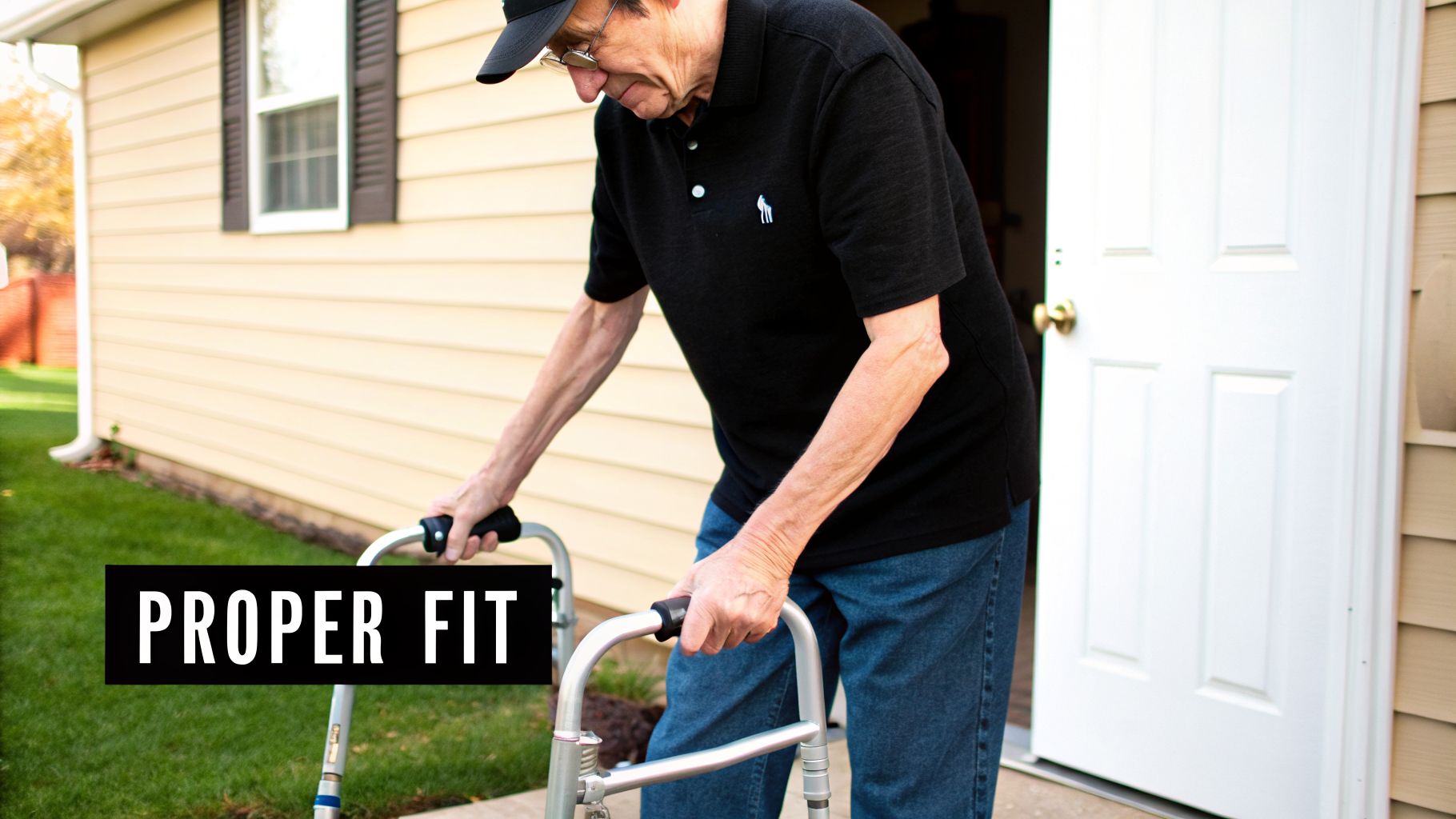
Picking out the right type of walker is a great first step, but it’s only half the battle. The most critical part of the process is making sure it’s fitted perfectly to you. A walker with the wrong fit can actually do more harm than good, forcing you into an awkward posture that can throw your balance off even more and cause nagging back, shoulder, or wrist pain.
Think of it like getting a new pair of prescription glasses. The frames might look great, but if the prescription is wrong, they’re not going to help you see any better. It’s the exact same principle with a walker—the right fit turns it into a true extension of your body, giving you the solid, reliable support you need.
Let’s walk through the simple, practical steps to get that fit just right. We’ll also cover a few other crucial things to think about to make sure the walker you choose is a perfect match not just for your body, but for your home and lifestyle, too.
The Gold Standard of Walker Fitting: The Wrist Crease Method
Sizing your walker is surprisingly simple. You don’t need any fancy tools, just a reliable technique we call the “wrist crease” method. This is the easiest way to find the perfect handle height that encourages good posture and gives you the best possible support.
Here’s how to do it in three easy steps:
- Stand Up Straight: First, put on the shoes you typically wear. Stand tall and relaxed inside the walker’s frame with your arms hanging naturally at your sides.
- Align the Handgrips: Now, adjust the height of the walker’s legs up or down until the top of the handgrips lines up perfectly with the crease in your wrists.
- Check Your Elbow Bend: With the height set, place your hands on the grips. You should feel a slight, comfortable bend in your elbows—about 15 to 20 degrees is ideal.
That gentle bend is the sweet spot. It allows you to put your weight on the walker for support without locking your elbows, giving you better control and shock absorption. If the handles are too high, you’ll find yourself shrugging your shoulders, which leads to neck and shoulder strain. Too low, and you’ll be forced to hunch over, which completely throws off your center of gravity and makes your balance worse.
Other Crucial Factors to Consider
Beyond getting the height just right, there are a few other real-world factors that will make a huge difference in your day-to-day life. It’s important to think about where and how you’ll be using your walker the most.
Your Home Environment
Before you get your heart set on a specific model, take a quick tour of your home. Will that walker actually fit through your doorways and hallways? A wider base offers fantastic stability, but that doesn’t help if you can’t get it through the bathroom door. Take a moment to measure your narrowest doorways to be sure your new walker can go everywhere you need it to.
Weight and Portability
Think about how often you’ll need to lift the walker, especially if you plan on taking it in the car. Standard aluminum walkers are incredibly light, often weighing less than 8 pounds. Rollators are a bit heavier because of their seats and baskets. If you travel frequently or have a busy, on-the-go lifestyle, pay close attention to the walker’s weight and how easily it folds.
A walker should make your life easier, not more complicated. The best choice is one that works for you in every situation, from navigating your kitchen to running errands. That’s why trying a model before you commit can be so valuable.
The Importance of a Physical Trial
You can read about features all day, but nothing replaces trying a walker out in person. It’s your chance to really feel how it moves, test the brakes, and make sure the fit is genuinely comfortable. A hands-on trial lets you see if the grips feel good in your hands and if the weight is truly manageable for you.
This is a key step in making a confident, safe choice. While we don’t accept insurance, our goal is to provide you with direct, immediate access to the equipment that’s right for you. If you’re weighing your options, you might find it helpful to learn about our St. Petersburg medical equipment rentals, which can be a fantastic way to test out a walker in your own home environment.
Enhancing Your Mobility With The Right Accessories
Once you have the right walker, a few smart accessories can take it from a simple mobility tool to a true personal assistant, making your day-to-day life so much easier and safer.
Think about it: have you ever tried to carry a cup of tea or your morning paper while using a walker? It’s a juggling act that can easily lead to a spill or, worse, a fall. A simple clip-on tray or cup holder solves that problem in an instant, freeing up your hands to stay firmly on the grips where they belong.
Likewise, a roomy basket or a discreet under-the-seat bag can be a game-changer for quick trips to the store or just getting the mail. You can stop worrying about balancing bags and focus entirely on maintaining a secure, two-handed grip on your walker. These aren’t just gadgets; they’re small, practical additions that protect your independence.
Customizing For Convenience And Safety
Beyond just carrying things, some accessories are designed to make your walker perform better and keep you safer.
For example, if you have a walker with front wheels, you can add ski glides to the back legs. These little add-ons help the walker glide smoothly over all kinds of surfaces, from plush carpet to tile, preventing it from catching or jerking you off balance.
Another incredibly simple but effective upgrade is reflective tape. A few strips placed strategically on the walker’s frame make you much more visible to cars and cyclists, especially if you’re out for a walk in the early morning or evening. It’s a tiny detail that adds a huge layer of safety.
A walker is a tool for independence, and the right accessories are what truly sharpen that tool. Each add-on should solve a specific daily challenge, making movement feel less like a task and more like a natural part of your day.
Support From The Ground Up
Your stability isn’t just about the walker—it’s about your entire body working together. What you wear on your feet can make a massive difference in your overall balance and comfort. If your feet are tired, sore, or poorly supported, that instability travels right up your body and can undermine the support your walker provides.
Making sure you have good, supportive footwear is a critical piece of the puzzle. You might even want to look into a guide to insoles for comfortable and stable footing to really dial in your stability and fight off fatigue.
By thinking through these additions, you create a complete support system that’s built for your specific life. It’s important to remember that our services are direct-to-consumer, which means we do not take insurance. This approach allows us to offer clear, upfront pricing and get you the equipment you need right away, without waiting on approvals. Every accessory you choose is another step toward more confidence and freedom.
Your Trusted Local Partner in St. Petersburg
Trying to find the right mobility aid can feel overwhelming, but you don’t have to go it alone. Online research is a decent place to start, but it can’t replace the value of getting hands-on advice from a local expert who can help you find the perfect match.
It’s a bigger deal than you might think. The demand for walkers has exploded, with North America making up a huge 36.4% of the global market. That’s a statistic from Global Market Insights, and it shows just how many of our neighbors rely on these tools every day.
The Affinity Home Medical Equipment Difference
Here at Affinity Home Medical Equipment, we offer our St. Pete community something you just can’t get from a website: the chance to see, touch, and test-drive different walkers right in our store. Our experienced team is here to give you a personalized fitting, making sure any walker you choose is adjusted perfectly for your height and specific needs. That’s how you get real balance and safety.
We keep the process simple and focused on you. To make things as easy as possible, we do not take insurance. This means no waiting for approvals and no confusing paperwork. You get clear, upfront pricing and can take home the equipment you need, when you need it.
Finding the best walker for balance isn’t just about the product itself. It’s about the support and expertise that come with it. A proper fitting from someone who knows what they’re doing can be the difference between a walker that helps and one that gets in the way.
Flexible Options to Suit Your Needs
We get it—everyone’s situation is unique. That’s why we offer daily, weekly, and monthly rental options. Renting is a fantastic choice if you’re recovering from surgery or just want to try a specific model in your own home before deciding to buy. It’s a completely risk-free way to make sure a walker truly fits your life.
Our commitment to this community goes back decades. We’re not just a store; we’re a local partner dedicated to helping you move safely and confidently. You can read about the Affinity Home Medical Equipment story on our website to learn more about our roots here.
Stop by our showroom today. Let us help you find better balance and get you moving again.
Got Questions? We’ve Got Answers
When you’re searching for a walker to help with balance, it’s natural to have a few questions. Let’s tackle some of the most common ones we hear from our customers.
Is a Rollator or a Standard Walker Better for Severe Balance Problems?
For someone dealing with severe balance issues, a standard walker is almost always the more stable choice. Think of it this way: you have to physically lift it with each step. This means it creates a completely fixed, unmoving base of support every single time you plant it on the ground. There’s zero chance of it rolling away from you.
A rollator is fantastic for mobility and cruising along, but for a person with significant instability, those wheels can sometimes be a liability. The final decision really comes down to a person’s specific mix of physical strength and balance, which is why getting a professional opinion and a proper fitting is so crucial.
How Do I Know If My Walker Is the Right Height?
Getting the height just right is non-negotiable for both safety and comfort. An ill-fitting walker can do more harm than good.
Here’s a quick way to check:
- Stand up straight inside the walker frame.
- Let your arms hang naturally at your sides.
- The handgrips should line up right at the crease of your wrists.
When you grip the handles, your elbows should have a slight, comfortable bend—about 15 to 20 degrees. If it’s too high or too low, you’ll end up with a sore back and bad posture, which completely defeats the purpose.
Can I Rent a Walker Before I Decide to Buy One?
You absolutely can, and it’s a great idea. Renting is the perfect way to “test drive” a walker in your own home, on your own terms. See how it handles corners in your hallway or how it fits in your car.
It’s an ideal solution for short-term needs, like recovering from surgery, or if you simply want to try out a couple of different models before making a final decision. We offer flexible rental plans so you can find the right fit without feeling locked in.
For more answers to common questions, head over to our FAQ page.
At Affinity Home Medical Equipment, our goal is simple: get you the right equipment, right when you need it, without any hassle. We’re a direct-to-consumer provider, which means we don’t work with insurance, keeping the process clean and straightforward for you. Come see us and find your perfect fit today at https://affinityhomemedicalequipment.com.
Share This Article

Written by : lori@netcodesign.com
Follow Us
Latest Articles

October 14, 2026

October 14, 2026

October 14, 2026
