
Best Wheelchair Brands: Find The Right Fit For Your Mobility

Picking out a wheelchair is a deeply personal decision, one [...]
Picking out a wheelchair is a deeply personal decision, one that directly impacts your daily comfort and freedom. That’s why figuring out the best wheelchair brands is less about a brand name and more about what’s best for you. Sure, names like Pride Mobility, Invacare, and Quickie have built solid reputations for quality, but the perfect chair is always the one that fits your specific needs, lifestyle, and home environment.
Your Journey To Finding The Right Wheelchair
Choosing a new wheelchair is so much more than a simple purchase—it's about finding a reliable partner for your independence. This guide is here to help you cut through the noise and feel confident in picking a brand and model that truly fits into your life. Instead of trying to pinpoint a single “best” brand, we’re going to focus on what makes a wheelchair the right fit for your unique situation.
This isn't about just scrolling through a catalog. It's about really understanding how different types of wheelchairs are built for different purposes and which features are absolutely essential for your personal comfort and safety.
Start With Your Environment
Before you even start comparing brands, take a look around your own home. As you get ready to bring a new mobility aid into your daily routine, making sure your living space is safe and easy to navigate is a critical first step. Using a complete home safety checklist is a great way to spot and fix potential hazards that could lead to falls. A safe home is the foundation for confident mobility.
A wheelchair should adapt to your life, not the other way around. The goal is to find a solution that enhances your freedom, whether you’re navigating tight corners at home or exploring the outdoors.
Understanding Your Options
The path to the right wheelchair begins with knowing what's out there. When you learn how to compare different models and what key features to look for, you can make a decision you feel good about. For many people, a wheelchair is a primary mobility aid, but sometimes other devices can play an important supporting role. If you're curious about other options, you might find it helpful to look into our guide on walkers and rollators to see how they can fit into your overall mobility plan.
Think of this guide as your roadmap. We’ll walk you through:
- The different types of wheelchairs available.
- Key features to compare for comfort and performance.
- Why working with a local mobility expert is so valuable.
By the end, you’ll have a much clearer picture of what you need, empowering you to reclaim your freedom with the right equipment.
Understanding The Different Types Of Wheelchairs
Before you even think about brands, let's talk about the type of wheelchair you need. This is the single most important step. Trying to pick a brand first is like shopping for a car and comparing a sports car to a pickup truck—they're built for completely different jobs. We need to find the right category for your life first.
Your first big decision is between a manual wheelchair and a power wheelchair. A manual chair, which is moved by the user or a caregiver, is a great fit for someone with good upper body strength or who will usually have help. On the other hand, a power chair runs on a motor and is controlled with a joystick, giving true independence to those who can't propel themselves, especially over longer distances.
Manual Wheelchair Categories
Digging a little deeper into manual chairs, you'll find a few key options.
-
A transport chair is designed to be pushed by someone else. It has small wheels, is incredibly lightweight, and folds up easily. Think of it as the perfect solution for quick trips, like getting from the car to a doctor's office or navigating an airport.
-
A standard manual wheelchair is what most people picture. With its large rear wheels and handrims, it allows the user to move around on their own. They're built to last, but that durability often means they're on the heavier side.
-
This is where lightweight manual wheelchairs shine. They offer the same independence as a standard chair but are made from lighter materials, making them much easier to lift and load into a vehicle.
To get a better sense of which one is right, it helps to look at the big picture. Your daily routines, the layout of your home, and your specific medical needs all play a crucial role in this choice.

As you can see, your unique situation is at the very heart of finding the right fit.
To help you compare these options at a glance, we've put together this simple guide.
Wheelchair Type Comparison Guide
- Transport Chair: Best for short trips, travel, and users with a caregiver. Its key features are small wheels and a lightweight frame that must be pushed, making the user dependent on a caregiver.
- Standard Manual: Best for daily use by individuals who can self-propel. It features large rear wheels for self-propulsion, offering moderate to high independence.
- Lightweight Manual: Best for active users who need portability. Its key feature is a lighter frame that is easier to lift and transport, providing a high level of independence.
- Power Chair: Best for users with limited strength or endurance. It is motorized with joystick control, offering a very high level of independence.
This list should give you a solid starting point for figuring out which category makes the most sense for you or your loved one.
Power and Specialized Wheelchairs
Power wheelchairs can be life-changing, opening up a world of mobility. The options range from simple, foldable models designed for easy transport to highly advanced complex rehab power chairs. These are custom-built machines with features like power tilt, recline, and even standing functions to accommodate very specific medical and positioning needs. Seeing the different wheelchair sales and rentals in St. Petersburg, FL can really help you understand the full range of what's possible.
A wheelchair isn't just a piece of equipment; it's an extension of your body. Choosing the right type ensures it works with you, not against you, in every part of your day.
Finally, there are specialized chairs built for specific needs. Bariatric wheelchairs, for example, have wider seats and specially reinforced frames to safely support higher weight capacities. For children, pediatric wheelchairs are designed to be adjustable, allowing the chair to grow with them.
Once you know which of these categories you fall into, your search for the perfect brand becomes much clearer and far more likely to end in success.
Key Features To Compare Across Top Wheelchair Brands
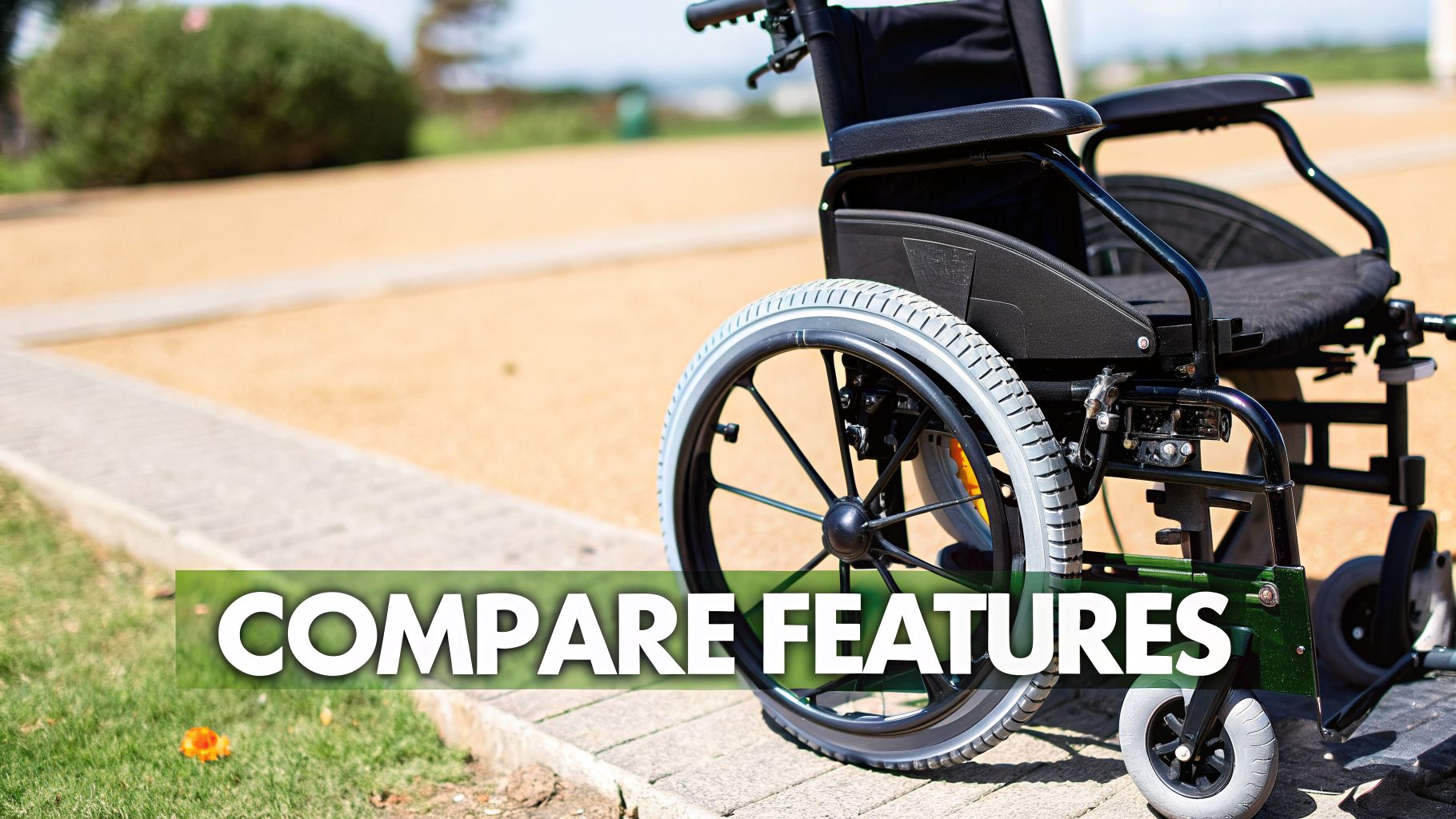
So, you've figured out which type of wheelchair you need. Now comes the important part—looking past the brand names and getting into the nitty-gritty features that will shape your comfort and mobility every single day.
Think of it this way: deciding you need an SUV is the first step, but the real choice comes down to things like legroom, cargo space, and how it handles on the road. The same exact logic applies to a wheelchair. The small details are what truly matter.
Core Components For A Perfect Fit
Since no two bodies are the same, a "one-size-fits-all" wheelchair just doesn't cut it. Getting the dimensions right isn't just about initial comfort; it's critical for your long-term health, helping you avoid problems like pressure sores or poor posture down the road.
Here are the key measurements you’ll want to dial in:
- Seat Width And Depth: The goal is a snug, supportive fit—not too tight, not too loose. When your weight is distributed evenly across the seat, you’ll be much more comfortable, especially if you spend long hours in the chair.
- Back And Armrest Height: Properly adjusted armrests can make a world of difference in preventing shoulder and neck fatigue. Likewise, the backrest should support your posture where you need it, whether that’s a lower profile for active movement or full-height support for more complex needs.
- Cushion Material And Quality: Never underestimate the importance of a good cushion. It’s your main defense against pressure-related injuries and general discomfort. You can find everything from basic foam to advanced gel or air-cell cushions engineered for maximum pressure relief.
When all these pieces work in harmony, the chair starts to feel less like a piece of equipment and more like a natural part of you.
Performance And Portability Features
Beyond a perfect fit, you have to think about how the chair will actually perform in your world. This is where you'll really see the differences between models, especially when it comes to the materials and overall design.
A chair’s frame weight is a massive consideration. A lightweight aluminum frame, for example, is far easier for a user or a loved one to lift into a car trunk compared to an older, heavier steel model. If you plan on traveling with your chair, its total weight should be a top priority.
Tires are another feature that can completely change your experience. Solid or foam-filled tires are fantastic because they're virtually maintenance-free, perfect for smooth indoor floors. But if you’ll be navigating cracked sidewalks or grassy parks, air-filled (pneumatic) tires will give you a much smoother, more cushioned ride.
A wheelchair's specifications aren't just numbers on a page; they directly translate into real-world benefits. A longer battery range means more freedom, while the right tire type means fewer obstacles can stand in your way.
Special Considerations For Power Wheelchairs
With power wheelchairs, the technical specs take on even greater importance. These chairs are often a person's primary means of getting around, so their performance and reliability are non-negotiable.
When looking at a power chair, pay close attention to:
- Battery Range And Life: How far can you go on one charge? Think about your typical day—errands, appointments, social visits—to make sure the battery has the stamina to keep up with your life.
- Control System: The joystick is your steering wheel and gas pedal all in one. It needs to feel responsive and easy to use. Some models even have programmable controls to adjust sensitivity for a truly personalized feel.
- Drive Wheel Configuration: Power chairs come in three main setups: front-wheel, mid-wheel, and rear-wheel drive. Mid-wheel drive is the champion of indoor maneuverability with its tight turning radius, while front-wheel drive is a pro at climbing over small obstacles.
If you're leaning toward a powered device, it's also smart to weigh the pros and cons of a power chair versus a mobility scooter. You can learn more about our mobility scooters for sale or rent in St. Petersburg to see how they compare.
When you’re choosing a wheelchair, it’s easy to get caught up in comparing features and prices. But I've learned from years of experience that what happens after the sale is just as important—if not more so. A wheelchair isn't just a product; it becomes an extension of you. Think of it less like buying a device and more like finding a reliable partner for your independence.
A brand's true colors show over time. You can't judge reliability from a glossy brochure. It's built on years of solid performance, word-of-mouth from actual users, and a commitment to supporting you long after you've left the store. You're looking for a manufacturer that's known for building things to last.
The Importance Of A Solid Warranty
A warranty tells you a lot about how much a company believes in its own work. A strong, multi-year warranty on the frame and electronic components isn't just a piece of paper; it's a promise and a critical safety net. It shows the brand is willing to stand behind its craftsmanship.
But here’s the thing: a warranty is only as good as the service behind it. This is where replacement parts and a responsive support team come in. A great brand makes sure that common parts—things like tires, batteries, or armrest pads that naturally wear out—are easy to get. The last thing you want is to have your mobility put on hold for weeks.
Peace of mind is just as important as the wheelchair itself. Knowing that help and parts are a phone call away when you need them is non-negotiable.
When a battery starts to lose its charge or a joystick gets finicky, you can't afford to wait for a part to be shipped from halfway across the world. This is why a brand’s relationship with local, trusted dealers is so incredibly valuable.
Vetting Brands For Reliability And Service
So, how do you really know if a brand is dependable? I always look for a few key signs:
- A History of Innovation: The best brands never sit still. They're always investing in research to make their chairs lighter, their batteries last longer, and their seating more comfortable.
- Consistently Positive Reviews: Look for feedback that talks about durability. Do people mention their chairs lasting for years? When they did have a problem, how did the company respond?
- Strong Local Partnerships: A manufacturer that works with experienced local providers is a huge plus. It means they trust experts in the field to represent them, and it ensures you have someone to turn to for hands-on service.
Honestly, buying from a local provider like us simplifies this whole process. We’ve already done the vetting for you. Our team has firsthand experience with these brands—we know which ones hold up and which ones come with headaches. We can guide you to a wheelchair with a proven track record, and we'll be your direct line to fast, reliable service for years to come.
Deciding Between Renting Or Buying Your Wheelchair
One of the first big questions you’ll run into is whether it makes more sense to rent or buy a wheelchair. There’s no single right answer—it really comes down to your personal situation. Getting this choice right means you'll have the mobility you need without paying for more than you require.
I often tell people to think of it like deciding between leasing or buying a car. A short-term lease is perfect if you only need a vehicle for a little while, but buying is a commitment you make for the long haul. Wheelchairs are no different.
When Renting Is The Smartest Move
Renting gives you incredible flexibility and is almost always the best path for temporary mobility issues. It’s a way to get the right equipment into your hands quickly, without the major financial step of a purchase.
Renting is probably your best bet if you find yourself in one of these situations:
- Short-Term Recovery: If you're healing from an injury or surgery, a rental can bridge the gap for a few weeks or months until you’re mobile again.
- Accommodating Visitors: Have a family member with mobility challenges coming to stay? A rental can make your home and any planned outings much more accessible and comfortable for them.
- Trying Before You Buy: Sometimes, you just need to live with a chair for a bit. Renting lets you "test-drive" a specific model in your own environment to see if it’s truly the right one before you commit to buying.
Here at Affinity, we keep this process as simple as possible. We specialize in direct rentals, so you can skip complex paperwork and get what you need right away. Our St. Petersburg medical equipment rentals are designed to be fast, easy, and hassle-free.
Why Buying Is A Long-Term Investment
On the other hand, buying a wheelchair is the way to go for anyone with a permanent or long-term condition. The upfront cost is higher, of course, but over months and years of use, it becomes the far more economical choice.
Purchasing also opens the door to complete customization, ensuring the chair is a perfect match for your body, your lifestyle, and your daily routines.
The demand for these long-term solutions is driving huge growth in the wheelchair market. It was valued at around USD 8.93 billion in 2025 and is on track to hit USD 21.81 billion by 2033.
This growth is a good thing for users. It means more innovation, more options, and a better chance of finding a chair that feels like it was made just for you.
Why A Local Mobility Expert Makes All The Difference
With everything available online these days, it’s tempting to think you can just click 'buy' on a wheelchair and have it show up at your door. But a wheelchair isn't just another purchase—it's an extension of your body, a key to your independence. Trying to navigate this process alone can be overwhelming, but working with a local mobility expert turns a confusing search into a confident decision.
Think of it this way: would you buy a custom-tailored suit by just guessing your measurements online? Probably not. You’d go to a professional tailor who measures everything precisely to ensure a perfect fit. That’s exactly what a mobility specialist does for a wheelchair—we’re the tailors for your mobility.

Why an In-Person Fitting is Non-Negotiable
A professional fitting is so much more than just measuring the width of a seat. It’s a comprehensive assessment where we look at your posture, your unique body mechanics, and how you'll actually be using the chair day-to-day. This hands-on process is the only way to guarantee the chair gives you the right support.
Getting this right is crucial for preventing serious long-term health problems like pressure sores, poor circulation, or chronic back and shoulder pain. A proper fit is about your daily comfort and your long-term health.
A wheelchair that isn't fitted to your body can cause more problems than it solves. Personalized, in-person service ensures your chair supports your health and enhances your independence, rather than hindering it.
An online retailer simply can't provide this level of personalized care. We don't just move boxes; we build relationships and make sure you have the right tool for the job.
The Real-World Advantages of a Local Partner
Choosing a local provider like Affinity Home Medical Equipment gives you a partner for your entire mobility journey. We know the community and the challenges of getting around our area, which means we can recommend solutions that are truly practical for your life here.
One of the biggest perks? Immediate access. If you need a wheelchair right away, we offer same-day pickup for many in-stock models. No waiting for shipping, no frustrating assembly instructions.
The demand for reliable mobility solutions is growing fast. The U.S. wheelchair market is currently valued at USD 1.75 billion and is expected to hit USD 3.83 billion by 2035, driven by an aging population and a greater focus on accessibility. You can learn more about these wheelchair market trends to see why a trustworthy local source is more important than ever.
To keep things simple and fast, we do not take insurance. This allows us to offer transparent, direct pricing on all sales and rentals, bypassing the lengthy and often complicated approval process. Our goal is to get you the right equipment, right when you need it.
Frequently Asked Questions About Choosing a Wheelchair
It's completely normal to have questions when you're looking for the right mobility equipment. In fact, asking questions is the best way to make sure you find a solution that fits your life. Here are some of the most common ones we hear—and the straightforward answers you need.
How Do I Get Measured For A Wheelchair?
Getting the right fit isn't just about comfort; it's about your health. Think of it like a tailored suit—an off-the-rack solution rarely fits perfectly. A mobility specialist will take several key measurements, including seat width and depth, backrest height, and the length from your knee to your heel.
We can't stress this enough: an in-person fitting is crucial. An improperly sized chair can lead to poor posture, discomfort, and even serious health issues like pressure sores. Taking the time for a proper fitting from the start prevents a lot of problems down the road.
Can I Travel With My Wheelchair?
Absolutely, but some chairs are built for the road and others are not. If you're a frequent traveler, you'll want to look at lightweight or transport manual wheelchairs. These are designed to fold up easily and compactly, making them a breeze to get in and out of a car.
Flying with a power wheelchair involves a few more steps. Airlines have specific rules about battery types and chair dimensions, so you’ll need to call them well in advance of your trip to understand their policies and make sure there are no surprises at the airport.
What Is The Difference Between A Standard And A Lightweight Wheelchair?
The main distinction is weight, which comes from the material used to build the frame. A standard wheelchair usually has a steel frame. This makes it incredibly durable, but also heavy—often tipping the scales at 35+ lbs.
A lightweight wheelchair uses aluminum or a similar alloy, bringing its total weight under 35 lbs. That difference might not sound like much, but it makes a world of difference when you or a caregiver has to lift it into the trunk of a car.
Your questions are the final step in finding the perfect mobility solution. Getting clear answers ensures you choose a wheelchair that not only fits your body but also fits seamlessly into your life.
As you consider your options, other questions specific to your situation will likely come up. For a more complete list of topics, we've compiled more answers on our detailed FAQ page.
At Affinity Home Medical Equipment, we're committed to being your long-term partner in mobility. Our experienced team provides personalized fittings, direct rental and purchase options, and reliable local support to ensure you find the perfect fit. Visit us in St. Petersburg or explore our mobility solutions online.
Share This Article

Written by : lori@netcodesign.com
Follow Us
Latest Articles

October 13, 2026

October 13, 2026

October 13, 2026
