
Your Ultimate Cpap Mask Fitting Guide For Lasting Comfort

Embarking on CPAP therapy is a huge step toward better [...]
Embarking on CPAP therapy is a huge step toward better health, but I've seen countless people struggle unnecessarily. The single most important factor for success? Getting a perfect mask fit right from the very beginning. A mask that fits you well transforms CPAP from a nightly obligation into a genuinely restorative experience.
Why A Perfect Cpap Mask Fit Is Your Key To Success
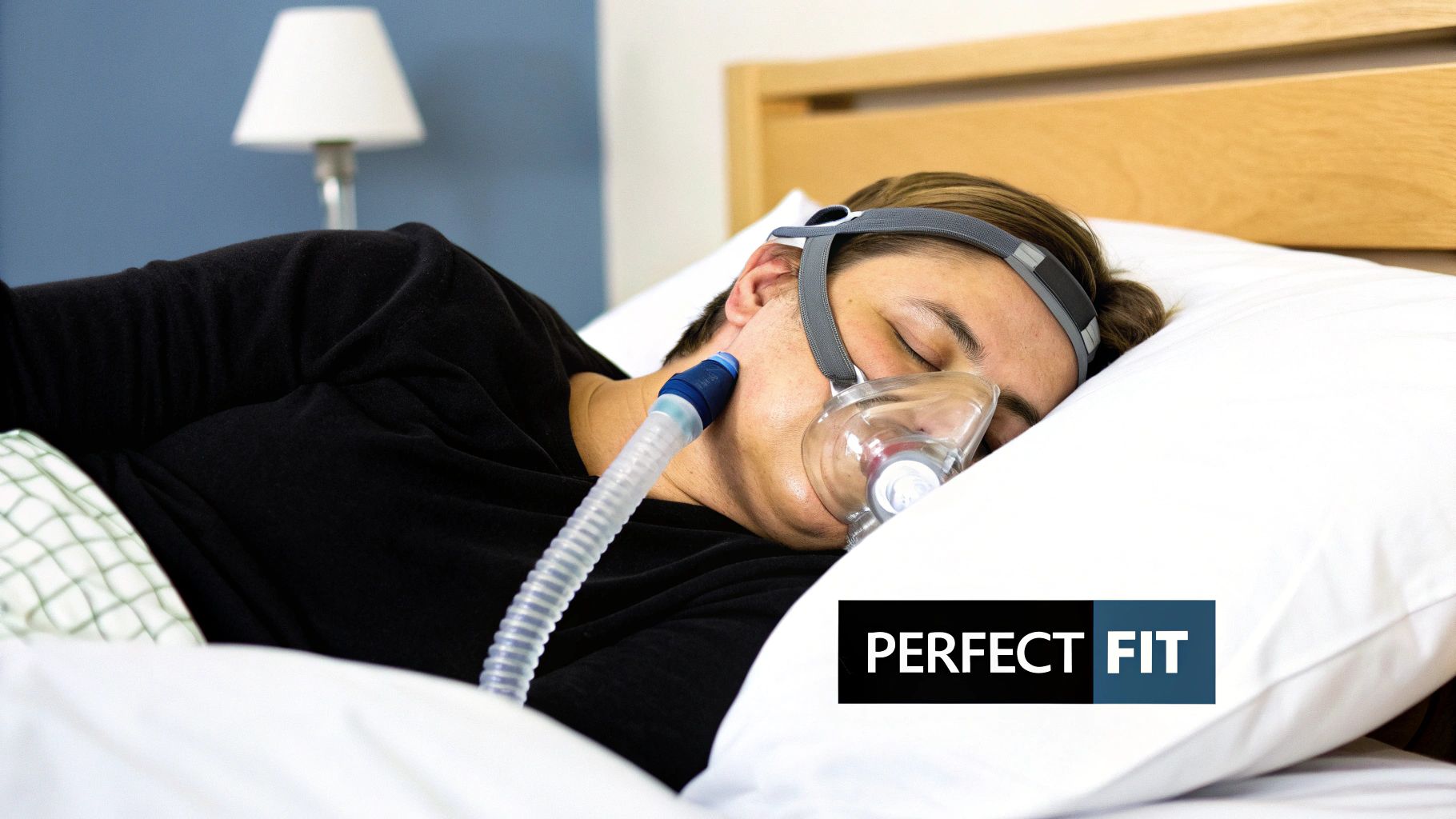
There’s definitely a learning curve when you start CPAP therapy, but knowing just how crucial a proper fit is can make all the difference. Think of your mask as the key to unlocking effective sleep apnea treatment—if it’s not the right one, the door simply won't open. A poorly fitting mask is the root cause of so many preventable problems that can sabotage your progress before you even get started.
The whole point of a CPAP mask is to create a reliable seal against your face. This seal is what allows the prescribed air pressure from your machine to get to your airway and do its job. If that seal is broken, air leaks out, and the effectiveness of your therapy drops dramatically.
The Impact Of An Improper Seal
Air leaks aren't just a small nuisance. They can create an annoying whistling sound that keeps you (and your partner) awake, dry out your eyes, and even cause skin irritation or rashes. Most importantly, a bad seal means you're not getting the full pressure you need to keep your airway open, which defeats the entire purpose of using the machine.
A common mistake I see people make is cranking down the headgear straps to stop a leak. This almost always makes things worse. Overtightening can actually distort the mask's cushion, creating new leaks elsewhere and causing painful pressure sores on the bridge of your nose or along your cheeks.
The goal is a seal that’s both gentle and effective. A great fit feels secure without being restrictive. You want to let the machine's air pressure do the work of sealing the cushion against your skin, not brute force from the straps.
Comfort Is Key To Consistency
Beyond all the technical stuff, comfort is everything. If your mask is uncomfortable, you're just not going to wear it every night, and consistency is what makes CPAP therapy work. This is why we stress that even minor adjustments can lead to major improvements in how the mask feels.
Modern technology has been a game-changer here. A clinical trial showed that when advanced facial scanning was used to give personalized recommendations, 90% of patients were fitted successfully with a single mask during their initial setup. This fantastic start led to a 50% reduction in the need for mask refits during the first 90 days of therapy.
To get the full picture, it's a good idea to research all your options and understand which sleep apnea treatment is right for you, whether it's CPAP or an oral appliance.
How To Choose The Right Type Of CPAP Mask
Finding the right CPAP mask is less about the technology and more about you. It’s a very personal decision. The mask your friend swears by might be a terrible fit for your needs. We have to consider how you sleep, how you breathe, and even the shape of your face to get this right.
The whole point is to match the equipment to your life, not force you to adapt to the equipment. There are three main styles out there—full face, nasal, and nasal pillow masks. Each one is built for a different kind of sleeper, and understanding how they differ is the first real step toward successful therapy.
Full Face Masks For Mouth Breathers
Do you tend to breathe through your mouth at night or wake up with a really dry mouth? If that sounds familiar, a full face mask is probably where you should start. It covers both your nose and mouth, creating a reliable seal that ensures you get the air pressure you need, no matter how you're breathing.
This style is also a lifesaver for anyone dealing with regular nasal congestion from allergies or a cold, since it gives you another way to breathe comfortably. Modern designs are much less bulky than they used to be, so don't let the "full face" name fool you—they're often surprisingly light with a great field of vision.
Nasal Masks A Versatile Choice
Sitting right in the middle of the spectrum, you’ll find nasal masks. These are a hugely popular choice because they seal just over the nose, feeling much less restrictive than a full face mask. If you naturally breathe through your nose, this style offers a fantastic balance of comfort and performance.
Another big plus? Your mouth is completely free, which is perfect if you like to read a book or watch a bit of TV before you drift off. The only catch is that if you sometimes breathe through your mouth, you might need a chin strap to keep it closed and prevent air from escaping. For many people, that simple combination is the ticket to a great night's sleep.
Nasal Pillow Masks For Active Sleepers
If you're looking for the absolute minimum contact with your face, look no further than nasal pillow masks. Instead of a traditional cushion, this clever design uses two small, soft "pillows" that gently seal at the entrance of your nostrils. They are incredibly lightweight and leave your line of sight almost completely clear.
Because they're so minimal, they're a top pick for people who toss and turn or sleep on their side, since there's very little to get knocked out of place. They're also the go-to solution for anyone with a beard or mustache, as you don't have to worry about facial hair breaking the seal.
Comparing CPAP Mask Types At a Glance
Here’s a quick breakdown of the three main styles to help you visualize the differences. Your personal comfort and therapy needs will be the ultimate guide in finding the perfect match.
- Full Face Mask: Best for mouth breathers, those with nasal congestion, and high-pressure settings. Potential drawbacks include feeling bulky and a risk of leaks at the top or bottom of the cushion.
- Nasal Mask: Ideal for nose breathers who want less facial contact or people who read or wear glasses before sleep. It is not ideal for mouth breathers unless used with a chin strap and can sometimes cause irritation on the bridge of the nose.
- Nasal Pillow Mask: Perfect for active sleepers, side sleepers, those with facial hair, or anyone prone to claustrophobia. It can sometimes cause nostril dryness or soreness and may not be suitable for very high-pressure settings.
The mask you start with has a huge effect on whether you'll stick with your therapy. In fact, research shows that up to 30% of patients might need to switch masks within their first year. The same study also found that people who switched from a full face mask to a nasal mask saw the biggest improvement in sticking with their therapy. It really highlights why we so often recommend starting with a nasal style if possible. You can explore the findings on mask adherence here.
Making the right choice from the get-go is ideal, but don't feel locked in. If you're visiting our area or just want to "try before you buy," exploring St. Petersburg medical equipment rentals is a great way to test-drive a different mask style without committing to a purchase.
Sizing And Fitting Your Mask For a Perfect Seal
Picking the right style of mask is a huge win, but the journey to a great night's sleep isn't quite over. Now comes the part that can make or break your therapy: getting the size and fit dialed in perfectly at home. This is all about matching the mask to the unique contours of your face.
So many people new to CPAP think a tighter mask means a better seal. I see it all the time. But in reality, cranking down the straps is one of the worst things you can do. It actually warps the soft cushion, creating new gaps and leaving you with painful pressure marks on your face in the morning.
The real goal is to get a gentle but secure seal. You want the mask to just "float" on your face, letting the air pressure from your machine do the hard work of sealing it.
To help you get a feel for this, let's look at the three main ways these masks connect with your face.
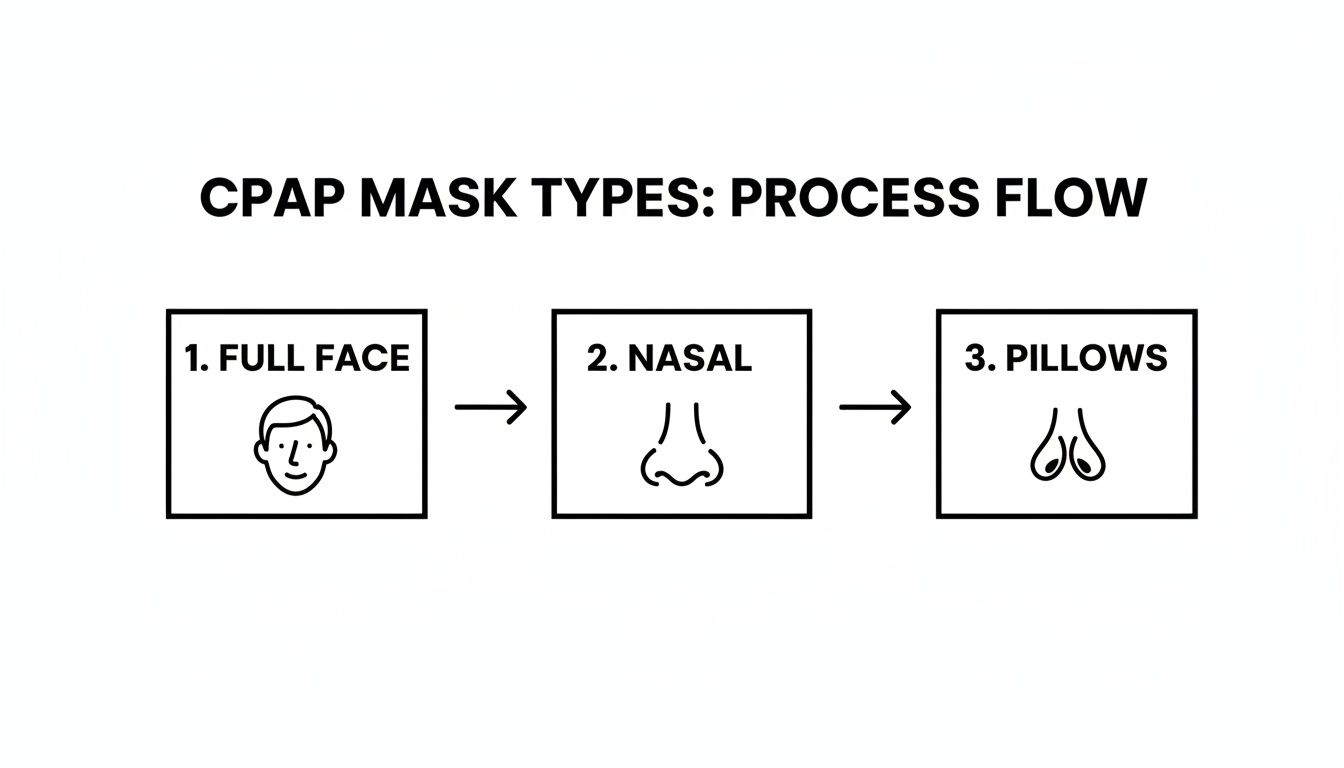
This simple breakdown shows you where the seal happens for Full Face, Nasal, and Nasal Pillow masks. Understanding this helps you visualize how each one is designed to work.
Start With The Sizing Guide
Before you even think about putting on the headgear, grab the sizing guide that came in the box. Yes, it's usually just a piece of paper you hold up to your face, and it might feel a little low-tech. Trust me, it's the most effective way to find your starting size.
Just make sure you follow the instructions on the template. Some have you measure the width of your mouth, while others look at the distance from the bridge of your nose down to that little divot between your bottom lip and chin. Nailing this step from the get-go keeps you from fighting with a mask that was never going to fit in the first place.
The Art Of The Initial Fit
Got the right size? Great. Now it's time to put it on, but don't connect it to the machine just yet. We're just getting the basic placement right.
- Loosen all the straps. Seriously, let them all the way out until they're completely slack.
- Place the cushion first. Without any tension from the straps, just hold the mask cushion against your face exactly where it's supposed to sit.
- Bring the headgear over. While keeping the cushion in place with one hand, gently pull the headgear over your head and attach the clips or Velcro tabs.
Right now, the mask should be sitting on your face, but it'll be very loose. That’s perfect. This is the starting point for making those tiny, precise adjustments.
Here's a little trick we call the 'two-finger rule.' When your straps are adjusted, you should be able to slide two fingers comfortably underneath them. Can't fit them? It's too tight. If you can easily slide your whole hand under there, it's way too loose.
Test The Seal In Your Sleep Position
This is the moment of truth. A mask can feel perfect when you're sitting up straight, but the second you lie down, your facial muscles relax and shift. That perfect seal can vanish instantly.
So, connect the mask to your CPAP tubing and turn the machine on. Get into bed just like you would to go to sleep.
As the air pressure starts to flow, listen and feel for any leaks. Now, start making micro-adjustments to the top and bottom straps—a tiny tug is often all it takes. The key is to make even, balanced adjustments on both sides. Once it feels good, roll over onto your side, then to your other side. Does the seal hold? A truly great fit is one that stays quiet and comfortable no matter how you move.
Troubleshooting Common CPAP Mask Problems
Even when you've found a great mask and nailed the initial fit, you might still hit a few bumps in the road. That's completely normal. Just think of the first few weeks as a fine-tuning period, where you learn to make small adjustments that lead to big improvements in comfort and therapy.

The most common complaints—leaks, skin irritation, or feeling a bit closed-in—are almost always solvable. The real key is tackling them head-on with simple, practical fixes instead of getting frustrated and giving up. This part of our guide is your resource for getting over those initial hurdles.
Solving Annoying Air Leaks
A whistling sound or air puffing into your eyes is easily the most frequent issue we hear about from new CPAP users. Before you do anything else, fight the urge to just yank the straps tighter. That's a classic mistake that usually makes leaks worse by squishing and warping the mask's cushion.
Instead, try these more effective adjustments:
- Re-seat the mask. While your machine is running, gently pull the mask straight out from your face. Let the cushion fully re-inflate with air, and then gently settle it back into place.
- Adjust in your sleeping position. Your face shape changes a little when you lie down versus when you're sitting up. Get into bed and make your final, tiny tweaks to the straps only after you're in the position you'll actually be sleeping in.
- Check the cushion's condition. An old, worn-out cushion gets stiff and loses its ability to create a good seal. If your mask is several months old, it might just be time for a replacement.
Dealing With Skin Irritation And Red Marks
Waking up with red marks or sore spots is a dead giveaway that something is off with your fit. This is almost always caused by too much pressure in one specific area, most often right on the bridge of your nose.
If you're dealing with discomfort, consider these solutions. You can try soft fabric mask liners, which create a comfortable barrier between the silicone cushion and your skin. For targeted relief on the nasal bridge, specialized gel pads are fantastic for providing extra cushioning and distributing the pressure more evenly. And don't forget, you should be cleaning your mask cushion every day to remove facial oils that cause both skin irritation and a poor seal.
It's important to know you have options and don't just have to put up with discomfort. We focus on providing direct access to the equipment and accessories you need, without getting insurance involved. This helps you get what you need, when you need it.
Overcoming Feelings Of Claustrophobia
Feeling a little confined or anxious when you first put on a CPAP mask is way more common than people realize. The good news is that this sensation usually fades with a little time and practice as your brain gets used to the new routine.
A great way to ease into it is by wearing the mask for short periods during the day while you’re awake and relaxed, maybe while watching TV. Start without the hose connected. Then, add the hose and try turning on your machine's ramp feature. This lets you get accustomed to the feeling of airflow at a lower, more comfortable pressure.
If you're still struggling, a different mask style could be the answer. A minimal-contact option like a nasal pillow mask often does the trick. If problems persist and you need some personalized advice, please don't hesitate to contact our team for assistance.
Mask Care and Replacement For Optimal Performance
Think of your CPAP mask like the tires on your car. You wouldn't expect them to perform well without proper maintenance, and the same goes for your therapy equipment. Keeping your mask clean is about more than just hygiene; it's essential for getting a good seal and preventing issues that can disrupt your sleep.
The good news is that it doesn't take much effort. A simple, daily habit can make all the difference in how well your mask works and how long it lasts. Just a quick wipe of the cushion can prevent the buildup of skin oils and dirt that break down the silicone over time.
Creating A Simple Cleaning Routine
Your daily goal is pretty straightforward: get the oils, sweat, and grime off the cushion. This is the part that’s in direct contact with your face, and those substances are the primary culprit behind a leaky seal.
Once a week, you'll want to give the whole setup a more thorough wash. This includes the headgear and the frame, which can also accumulate buildup.
Here’s a practical, no-fuss cleaning schedule that we recommend to our patients:
- Daily Care: Take a minute each morning to wipe down the mask cushion. You can use a damp cloth with a bit of mild soap or a dedicated CPAP wipe. This is easily the most important step for maintaining your mask's seal.
- Weekly Care: Take the mask apart completely. Hand wash the cushion, frame, and headgear in a basin of warm, soapy water. Make sure to rinse everything really well and let it air dry completely before putting it back together.
A clean mask isn't just about hygiene; it directly impacts therapy effectiveness. Daily cleaning can prevent the gradual breakdown of the mask's cushion, which helps maintain a secure seal night after night.
Knowing When To Replace Your Mask Parts
Even the best-maintained mask parts will eventually wear out. It's a common mistake to try and stretch the life of a cushion or headgear for too long, but it can seriously compromise your therapy. An old cushion gets stiff, a worn headgear loses its grip, and the frame might not hold things together as securely.
This slow breakdown forces you to overtighten the straps to stop leaks, which just leads to red marks and discomfort. Following a consistent replacement schedule is the best way to ensure your therapy stays effective and comfortable.
As we handle equipment purchases directly, you have more control over when you get the parts you need. You can always explore our complete selection of replacement CPAP supplies to find what you need.
Here’s a general guide for how often to replace your supplies. Sticking to this schedule helps ensure every component of your mask is working as it should.
- Cushions & Nasal Pillows: Every 1 to 3 months
- Mask Frame: Every 6 months
- Headgear: Every 6 months
By staying on top of this simple maintenance and replacement schedule, you're setting yourself up for success. It ensures your equipment is always in prime condition to deliver the effective, restorative sleep you need.
Your Top CPAP Mask Questions, Answered
Even with the best instructions, you're bound to have questions as you start your CPAP journey. That's completely normal. Think of this as the "what if" section, where we tackle the most common hurdles people face. Getting these little details sorted out is often the key to a great night's sleep.
Many new users run into the same few frustrating (but fixable!) problems. Instead of tossing and turning, let's get you some clear, practical answers.
Can I Use a CPAP Mask With a Beard?
Yes, you can—but you have to be smart about it. A beard or mustache can definitely interfere with a good mask seal, creating tiny air channels that cause leaks and undermine your therapy.
If you have facial hair, here are a few things that have worked for our customers:
- Try a nasal pillow mask. This is usually the best first option. Since the pillows seal directly against your nostrils, they bypass your beard and mustache area completely.
- Look at specific full face masks. Some designs feature a more flexible, forgiving cushion that can mold over a neatly trimmed beard and still create a solid seal.
- Use a mask liner. These soft fabric liners go between your face and the mask cushion. They can fill in the gaps created by facial hair and dramatically reduce leaks.
What If My Mask Feels Too Tight But Still Leaks?
This is easily the most common fitting mistake we see, and the solution feels backwards. When you feel a leak, your first instinct is to yank the headgear tighter. Don't do it! Overtightening almost always makes leaks worse by distorting the shape of the mask cushion.
The goal is a gentle seal, not a vise grip. The air pressure from your CPAP machine is what inflates the cushion to create the seal. If you’re waking up with red marks or sore spots, your mask is on way too tight.
Try this instead: Loosen all the straps. Turn your machine on, place the mask on your face, and then gently and evenly tighten the straps just enough to stop the major hissing. If it's still leaking, the problem is likely the mask style or size for your face, not the tightness. You can find more answers to common queries on our frequently asked questions page.
How Do I Handle Feeling Claustrophobic?
Feeling a bit closed-in when you first wear a mask is incredibly common, and it almost always gets better with a little time and practice. The trick is to ease into it.
Start by just holding the mask up to your face for a few minutes during the day while you’re awake and relaxed, maybe while watching TV. Once you're okay with that, try wearing it with the headgear on, but don't connect the hose. The next step is to connect the hose without turning the machine on. This slow, gradual exposure helps your brain get used to the sensation without the added pressure.
It's also good to know that beyond CPAP, other treatments exist for sleep-related breathing disorders. You can learn more about how dentists play a role in this field through Dental Sleep Medicine.
At Affinity Home Medical Equipment, we believe getting the right CPAP supplies should be simple and direct. We are a private pay provider and do not work with insurance companies. This approach gives you more control, ensuring you get the equipment you need quickly and without the usual red tape. Visit us online to see our full selection of CPAP masks and accessories.
Share This Article

Written by : lori@netcodesign.com
Follow Us
Latest Articles

October 13, 2026

October 13, 2026

October 13, 2026
