
Durable Medical Equipment Insurance Coverage Your Complete Guide

When your doctor recommends equipment like a walker, a hospital [...]
When your doctor recommends equipment like a walker, a hospital bed, or an oxygen machine for home use, the first question that usually comes to mind is, "Will my insurance cover this?" The answer can be complex, and depends on your specific plan.
Navigating the world of durable medical equipment insurance coverage can be a real headache. That's why we've put together this guide. Even though we operate on a direct-to-consumer model and don't accept insurance, we believe in empowering you. Understanding how the system works helps you make the best choice for your situation, whether that’s working through your insurance provider or opting for a more direct route to get what you need right away.
What Is DME and How Does Insurance Work?
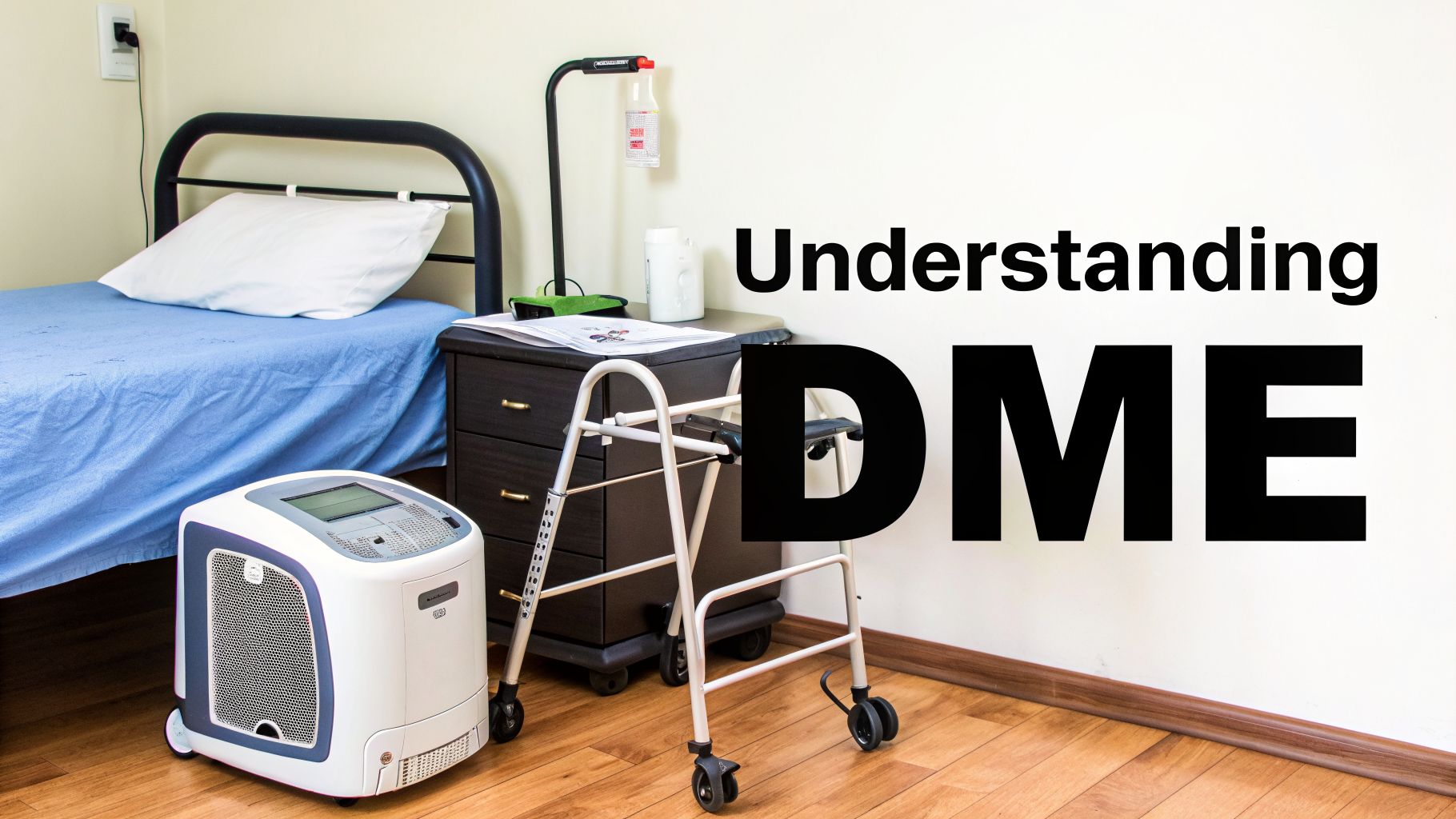
Think of Durable Medical Equipment (DME) as any tool your doctor prescribes to help you manage a health condition at home. It’s similar to a prescription for medication, but instead of a pill, it’s a physical item supplied by a company to improve your safety, mobility, or daily life.
The word "durable" is the key here. These aren't single-use items like bandages or disposable gloves. They’re built to be used over and over again—think of a sturdy walker, a patient lift, or an adjustable hospital bed.
The Role of Medical Necessity
For an insurance plan to even consider paying, the equipment must be proven to be medically necessary. This is the single most important concept to grasp. It means your doctor has officially determined the item is essential for treating your specific injury, illness, or diagnosed condition.
Without a doctor's prescription and clear documentation explaining why you need it, a claim is almost guaranteed to be denied. An item that’s purely for convenience, like a reading tray for your bed, simply won't qualify for coverage.
The bottom line is simple: Insurance coverage is tied directly to a documented medical need, not personal comfort or convenience. The equipment must be a fundamental part of your treatment or daily care plan.
Understanding the Financial Side
This is where things can get confusing, and it's a major reason why many people feel overwhelmed. Even with a doctor's order and insurance approval, you'll almost always have some out-of-pocket costs.
You'll run into terms like deductibles, copayments, and coinsurance. These all refer to the portion of the bill that you're responsible for paying. To help clear things up, here’s a quick breakdown of what these common terms actually mean for your wallet.
Quick Guide to DME Insurance Terminology
- Deductible: The fixed amount you must pay out-of-pocket for covered health care services before your insurance plan starts to pay.
- Copayment (Copay): A fixed amount you pay for a covered service, like a doctor's visit or a piece of equipment, after you've paid your deductible.
- Coinsurance: The percentage of costs you pay for a covered service after you've met your deductible. For example, your plan might pay 80% and you pay 20%.
- Prior Authorization: A decision by your health insurer that a service, treatment plan, or piece of equipment is medically necessary. It's an approval you need before you get the item.
Understanding this vocabulary is the first step to truly grasping how your benefits work.
The scale of this industry is enormous, largely because insurance makes this equipment accessible. By 2025, the global durable medical equipment market is projected to hit $246.02 billion. North America makes up a huge piece of that pie, with a 34.70% share driven by programs like Medicare and Medicaid. This has helped shift more care from hospitals back into the home, which often lowers costs for everyone involved. You can explore more data about the growing DME market and its drivers.
Our goal with this guide is to pull back the curtain on these rules and processes. We want you to be fully informed so you can confidently decide on the best path forward—whether it's working through your insurance or choosing a simpler, faster alternative.
Which Equipment Do Insurance Plans Typically Cover?
So, what will your insurance plan actually pay for? It’s the first question on everyone's mind, and the answer isn't always as simple as we'd like. Insurance companies won't cover everything that makes life at home more comfortable—the whole system hinges on a single, critical concept: medical necessity.
Think of it like a prescription from your doctor. They prescribe a specific medication to treat a documented illness, right? In the same way, your doctor has to “prescribe” a piece of equipment to help you manage a medical condition, recover from an injury, or support a specific bodily function that isn't working as it should.
This is exactly why an insurance company will almost never cover an item just for convenience. It has to serve a clear medical purpose inside your home.
The 3 Core Rules for Coverage
Before an insurance plan, including Medicare, will even consider covering a piece of equipment, the item itself has to pass a three-point test. These rules are what separate truly medical equipment from simple comfort items or home improvements.
The item must be:
- Durable: This means it's built to last and can withstand repeated use. The general rule of thumb is a lifespan of three years or more. A wheelchair is durable; disposable bandages are not.
- For Medical Use: Its main job has to be addressing a health issue. A hospital bed is considered medical because its adjustable features help with serious conditions like respiratory distress, poor circulation, or chronic pain. A standard adjustable bed from a furniture store? That's usually seen as a comfort item.
- Used in the Home: The equipment is intended for your day-to-day life within your home. While you might take a walker to the park, its primary purpose is to help you get around safely at your residence.
This simple framework makes it easier to see why some things get approved and others don't. A walker is covered because it helps with mobility due to a diagnosed condition. But a stairlift, while incredibly helpful, is usually seen as a permanent home modification and is almost always excluded from DME coverage.
Common Categories of Covered Equipment
While every policy has its own fine print, most insurance plans cover several major categories of equipment that are vital for home care. Knowing these categories gives you a good starting point for what to expect.
Here’s a look at what’s often covered:
- Mobility Aids: This is a big one. It includes standard wheelchairs, walkers, crutches, and canes—anything prescribed to help you move around your home safely.
- Patient Room Equipment: These are the items that make a bedroom a safe space for care. We’re talking about hospital beds, patient lifts to help with safe transfers, and bedside commodes.
- Respiratory Support: Equipment that helps you breathe is nearly always covered when a doctor confirms it's medically necessary. This includes things like oxygen concentrators, nebulizers (which turn liquid medicine into a mist you can inhale), and CPAP machines for treating sleep apnea.
Here's an important note: Insurance often covers disposable supplies, but only if they are used with a piece of covered equipment. For instance, the liquid medication used in a covered nebulizer or the test strips for a covered glucose monitor are also typically paid for, even though the supplies themselves aren't "durable."
At the end of the day, the first step in navigating your insurance is understanding which items are even in the running for coverage. If you keep medical necessity and these core rules in mind, you'll be able to set realistic expectations and have a much more productive conversation with your doctor and insurance provider.
Navigating how your insurance plan covers durable medical equipment can feel like a real puzzle. The rules for Medicare, Medicaid, and private insurance are completely different, and what works for one person might not work for another.
The bottom line is that every policy is unique. Getting familiar with the specifics of your plan is the single best thing you can do. It arms you with the right questions and helps you know what to expect.
Medicare Coverage for DME
For most folks over 65, Medicare Part B is the go-to for durable medical equipment. Part B is the part of your Medicare that covers outpatient services and medical supplies. When your doctor prescribes equipment you need to use at home for a medical condition, Part B is what helps foot the bill.
But when you're talking about Medicare, you have to talk about its famous 80/20 coinsurance rule. This is a big one.
- Once you’ve paid your annual Part B deductible, Medicare steps in to pay 80% of the approved amount for your equipment.
- You are then responsible for the remaining 20% coinsurance.
This 80/20 split applies to almost all approved items, from a simple walker to a hospital bed. It's important to know that this is based on the Medicare-approved amount, which isn't always the same as the retail price you might see online or in a store.
Medicaid and DME
Medicaid is a joint federal and state program designed to provide health coverage for eligible low-income individuals, families, and people with disabilities. Because states have a hand in managing it, the exact rules for DME can change quite a bit depending on where you live.
In Florida, for example, Medicaid typically offers solid coverage for equipment that is deemed medically necessary. The approval process and list of covered items are set by state guidelines. For people who are "dual-eligible" (meaning they have both Medicare and Medicaid), Medicaid can be a huge help by often covering the 20% coinsurance that Medicare leaves behind.
The most important thing to remember is that no two insurance policies are the same. Your out-of-pocket costs—your deductible, copayment, and coinsurance—are completely unique to your plan.
Navigating Private Insurance Plans
If you get your insurance through work or the marketplace, your coverage is spelled out in your specific policy. These plans have their own set of rules you need to watch out for:
- Deductibles and Copayments: Just like with Medicare, you'll almost always have an annual deductible to meet before your insurance starts paying. After that, you'll likely have a copayment or coinsurance for each item.
- In-Network vs. Out-of-Network: This is a huge factor with private insurance. Most plans have a list of approved DME suppliers. Sticking with an "in-network" supplier is key to keeping your costs low. If you go "out-of-network," you could end up paying a much larger share of the cost, or even the whole bill.
The impact of insurance coverage, especially from large-scale programs like Medicare, is clear when you look at the numbers. In 2024, North America accounted for 38% of the entire global DME market, driven largely by reimbursement policies that support at-home care. A staggering 92% of that market is for therapeutic and monitoring devices like CPAP machines and oxygen equipment, showing just how much insurance focuses on managing chronic conditions outside of the hospital.
Whether you're working with Medicare's 80/20 rule or trying to stay in-network with a private plan, understanding these details is your first step. For instance, if you're looking into respiratory support, it pays to know what questions to ask your insurance provider. You can check out our guide on St. Petersburg oxygen concentrators to get familiar with the equipment before you even start the insurance conversation.
Your Step-By-Step Guide to Getting DME Approved
Trying to get your durable medical equipment covered by insurance can feel like a maze. It’s frustrating, confusing, and it’s easy to feel lost. But many people navigate this successfully, and it all comes down to a clear, step-by-step plan.
Let's follow a real-world example. We'll call him John, a local resident who just got home from the hospital. His doctor insists he needs a hospital bed to recover safely—his condition means he must keep his legs elevated, and lying flat makes it tough for him to breathe. This is exactly where the insurance journey kicks off.
H3: The First Step: A Doctor’s Order
Nothing happens without a doctor's prescription. Period. This is the official starting gun for any DME insurance claim. An insurance company won't even consider your request until they see a formal order from your physician.
For John, his doctor writes a prescription for a "semi-electric hospital bed." But here’s a critical piece of advice: a simple note on a prescription pad is rarely enough. The insurance plan needs to know more than just what you need; they have to understand why you need it. This brings us to the most important document in this whole process.
H3: Crafting the Certificate of Medical Necessity
The Certificate of Medical Necessity (CMN) is the absolute cornerstone of your claim. Think of it as the detailed story your doctor tells the insurance company, explaining why the equipment is absolutely essential for your health and daily function.
A well-written CMN is your best weapon. It must clearly outline:
- Your specific medical diagnosis.
- Exactly how the equipment will help treat or manage that condition.
- Why a cheaper option (like stacking pillows or just using a regular bed) won’t work.
- A realistic estimate of how long you'll need the equipment.
In John's situation, his doctor’s CMN would spell out his respiratory and circulatory issues. It would explain that only the unique adjustability of a hospital bed can provide the precise elevation he needs to prevent serious complications. This document proves the bed isn't a luxury—it's a medical requirement.
H3: The Prior Authorization Hurdle
Here's where many people get stuck. Before you get your equipment, most insurance companies demand prior authorization. This is their chance to review all the paperwork—especially the CMN—and give a "yes" or "no" before the equipment is delivered. It's a cost-control measure for them, but it can feel like a major roadblock for you.
Getting all the details right for this step is tough, which is why some providers are now using tools like AI prior authorization to make sure every form is filled out perfectly the first time, hopefully speeding up approvals.
This flowchart gives you a bird's-eye view of the approval pathway.
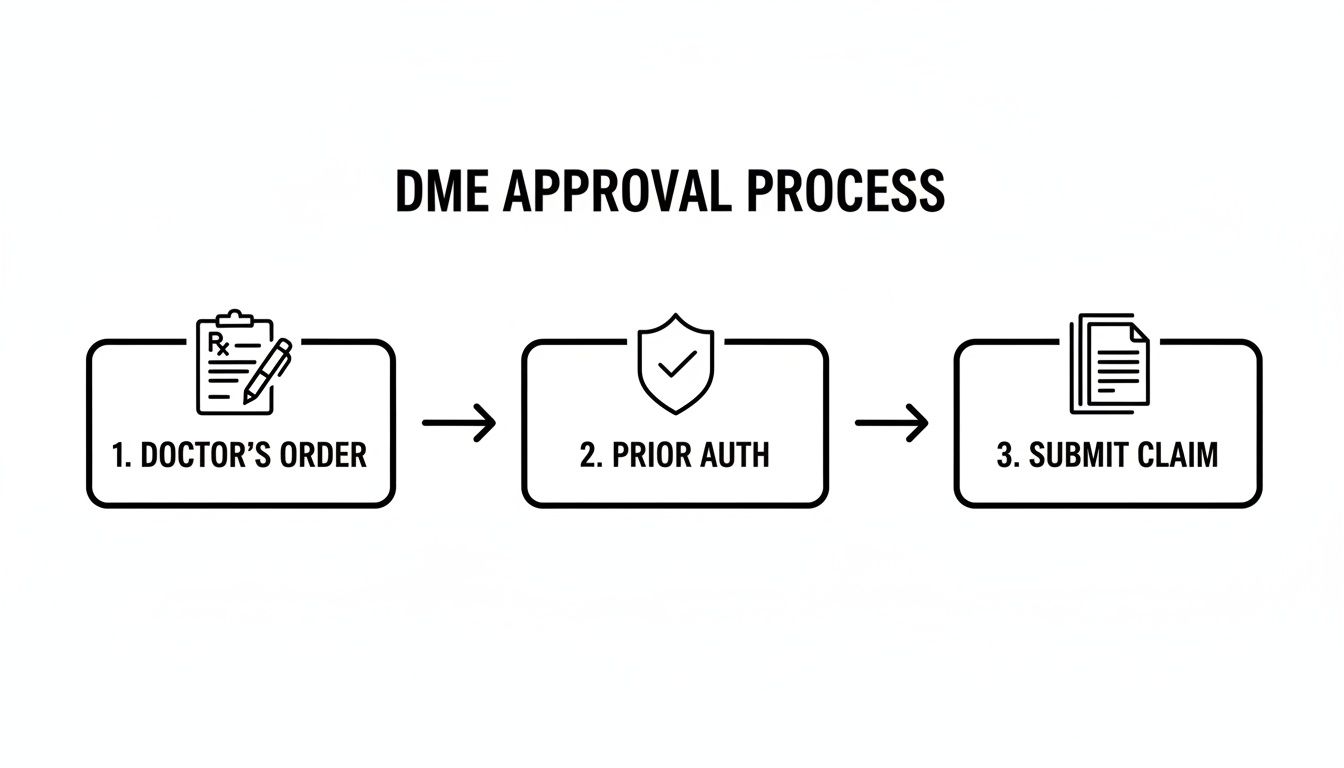
As you can see, a successful outcome depends on moving logically from the doctor's initial order all the way through a carefully managed claim submission.
H3: Submitting the Claim and Following Up
Once you have that prior authorization green light, your DME supplier can formally submit the claim. This packet includes the doctor's order, the CMN, your insurance details, and very specific billing codes for the equipment. Accuracy is everything. One wrong number in a billing code can trigger an instant denial.
John's experience really drives home the need for persistence. He and his family had to stay on top of it, calling both the doctor's office and the insurance company to make sure the paperwork didn't get stuck on someone's desk. This proactive approach is often what separates a quick approval from a long, drawn-out battle.
For a clearer picture of what you might need, it can be helpful to explore the various types of equipment available. You might want to check out our guide on the different wheelchairs in St. Petersburg, FL, for rental and sale to see what options exist.
To help you stay organized, here is a simple checklist to guide you through the approval process.
Your DME Approval Checklist
- 1. Doctor's Visit: Get a formal, written prescription for the specific DME you need. Ask your doctor to be as detailed as possible from the very beginning.
- 2. Medical Necessity: Ensure your doctor completes a thorough Certificate of Medical Necessity (CMN). Review the CMN yourself to make sure it clearly explains why you need the item.
- 3. Prior Authorization: Work with your DME supplier to submit all documents for pre-approval. Don't assume this is happening automatically. Call and confirm it's been submitted.
- 4. Claim Submission: The DME supplier submits the final claim with all supporting paperwork and codes. Keep copies of every single document you submit for your own records.
- 5. Follow-Up: Regularly check in with your insurance company and DME supplier on the status. Be polite but persistent. Write down who you spoke to and when you called.
Following these steps methodically will give you the best chance at a smooth approval. Remember, getting this done is a team effort between you, your doctor, and your DME supplier.
What to Do When an Insurance Claim Is Denied
Getting that denial letter for your durable medical equipment can feel like hitting a brick wall. It’s frustrating, confusing, and honestly, a little disheartening. But here's an important point: a denial is rarely the final word. It's simply the start of a conversation, and you have every right to appeal the decision.
Think of the denial letter not as a dead end, but as your opponent's playbook. It lays out their exact reasoning. Read it carefully. Was it a simple clerical mistake, like a typo in a billing code? Or is the insurer claiming the equipment isn't “medically necessary”?
Knowing the specific reason for the denial is everything. It dictates your entire strategy moving forward.
Digging In: Build a Stronger Case for Your Appeal
Once you know why they said no, you can start building your case to get them to say yes. If it was a simple paperwork error, resubmitting the claim with the correct information might be all it takes. But if the denial questions the medical necessity of your equipment, you'll need to gather more firepower.
This usually means circling back with your doctor. A truly convincing appeal often includes:
- A Detailed Letter of Medical Necessity: Ask your doctor to write a new, more comprehensive letter. It shouldn't just repeat the original Certificate of Medical Necessity (CMN). This letter needs to directly challenge the insurer's reason for denial and clearly explain why this specific equipment is crucial for your health, safety, or ability to function day-to-day.
- Supporting Medical Records: Pull together copies of relevant test results, notes from doctor's visits, or reports from specialists like a physical therapist. These documents provide the objective proof needed to back up your doctor’s recommendation.
- Your Personal Story: Don't underestimate the power of a letter from you or a caregiver. In your own words, explain the real-world impact your condition has on your life. Describe how the equipment you're fighting for would restore your independence or improve your health.
The goal is to paint a vivid and undeniable picture for the person reviewing your appeal. You need to show them that this equipment is a true medical requirement, not just a convenience.
Navigating the Formal Appeal Process
Every insurance plan has its own specific rules for appeals. Your denial letter should spell out the steps you need to follow and, most importantly, the deadline for filing. Missing this deadline is one of the few things that can truly stop an appeal in its tracks.
You’ll almost always need to submit your appeal in writing. Keep it professional and organized. State clearly that you are appealing the decision, include your claim number, and then present your new evidence piece by piece.
If your DME claim is denied, understanding strategies for effective medical billing denial management can be crucial for appeals and re-submissions. The key is to be persistent and meticulously organized. Keep a log of every phone call—date, time, and who you spoke with. Make copies of every single document you send. This level of preparation can make all the difference between a frustrating denial and a successful appeal for your durable medical equipment coverage.
The Direct Path to Getting Equipment Now
Let's be realistic: the insurance process takes time. Even a smooth approval can feel like an eternity when you're trying to manage a recovery at home. But your health needs don't hit pause just because there's paperwork to file. This is a common situation, especially for people coming home after surgery or dealing with a sudden illness.
So, what do you do when the insurance timeline just doesn't work for your immediate needs? There’s a straightforward alternative that puts you back in control: renting or buying your equipment directly from a provider like us.
This route is all about getting the right equipment in your hands right away, without the bureaucratic delays. It’s the choice many families make when speed and certainty are more important than navigating the often unpredictable insurance system.
The Power of Immediate Access
Think about a common scenario: you’re being discharged from the hospital after a knee replacement. Your doctor was clear—you need a raised toilet seat and a shower chair to prevent a fall that could completely undo your surgery. But waiting for insurance could take days, if not weeks. That's a long time to be left in a vulnerable spot.
This is precisely where renting or buying shines. You can contact a direct provider and often get that essential equipment to your home the very same day.
Immediate access isn’t just about convenience; it’s a critical component of safety and successful recovery. For many post-surgery patients, having the right equipment from day one can significantly reduce the risk of re-injury and support a faster return to independence.
Going direct removes the waiting game and the anxiety that comes with it. You’re not left wondering if or when your gear will show up. Instead, you can put all your energy into healing, knowing you have the right tools to do it safely.
The Advantage of Clear, Upfront Pricing
One of the biggest frustrations with using insurance for medical equipment is the financial guesswork. Even with an approval, you can get hit with surprise bills for your deductible, coinsurance, or items that weren't fully covered. The final cost can feel like a moving target.
When you rent or buy directly, that financial fog clears completely. The process is refreshingly simple and transparent.
- You know the exact cost upfront. Whether you're renting a hospital bed for a month or buying a walker, the price is clear from the start.
- There are no hidden fees or surprise bills. You pay the agreed-upon amount, and that’s it. No mysterious charges showing up in the mail weeks later.
- Budgeting becomes easy. You can plan your expenses without worrying about what your insurance company might decide to adjust down the road.
This clarity provides real peace of mind. It allows you to make the best decision for your health and your budget without that nagging question of, "What is this really going to cost me?"
Flexibility That Fits Your Life
Health needs are rarely permanent or predictable. You might only need a wheelchair for six weeks while an ankle heals, or maybe you want to try out a lift chair before committing to see if it’s the right long-term solution. Renting offers incredible flexibility.
For any short-term need, renting is almost always the most logical and cost-effective path. If you just need something for a limited time, exploring St. Petersburg medical equipment rentals is a fantastic option. It gives you access to high-quality items without the cost of a full purchase, ensuring you only pay for what you need, for as long as you need it.
Common Questions About DME and Insurance
When you're trying to figure out insurance coverage for medical equipment, it's easy to get tangled up in the details. To clear things up, we've pulled together some of the most common questions and answered them in plain English.
Can I Just Buy Equipment and Get Reimbursed Later?
That's a gamble we never advise taking. Almost every insurance plan, from Medicare to private policies, requires something called prior authorization, especially for more expensive equipment.
If you purchase an item first without getting that official approval, the insurance company is under no obligation to pay you back. You could easily end up footing the entire bill yourself. The only sure-fire method is to follow the process: get the doctor's prescription, let a supplier submit the paperwork for approval, and wait for the green light before you receive your equipment.
Does Insurance Cover Used or Secondhand Equipment?
Unfortunately, the answer is almost always no. Insurance providers, and Medicare in particular, have very strict safety and quality standards. They will only pay for equipment that comes from an approved supplier who meets all those regulations.
Buying a piece of equipment from a private seller online or at a garage sale comes with no safety guarantees, and your insurance won't touch it. Sticking with an authorized supplier is the only way to ensure your equipment is safe and has a chance of being covered. For more on this and other general topics, feel free to check out our complete frequently asked questions section.
How Long Will Insurance Pay for a Rental Item?
This really depends on the equipment and why you need it. For short-term needs, like a hospital bed while you recover from surgery, your plan might cover the rental for just a few months. But for items you need long-term, like a CPAP machine for sleep apnea, insurance often switches to a rent-to-own model.
Think of it this way: the plan pays the monthly rental fee for a specific period, usually between 10 to 13 months. Once that final payment is made, the equipment is officially yours to keep.
What If My Doctor and Insurance Company Disagree?
This is a common situation. Your doctor might determine that a high-end power wheelchair is essential for you, but the insurance reviewer decides a standard manual wheelchair is medically sufficient for use inside your home.
When this happens, the responsibility falls on you and your doctor to prove your case. You'll need to appeal the denial and provide more detailed documentation. This is where things like a letter from your physical therapist or specific notes detailing how the lesser item would fail to meet your medical needs become incredibly important. The goal is to clearly show why the prescribed equipment isn't just a preference, but a true medical necessity.
At Affinity Home Medical Equipment, we know this process can feel overwhelming. That’s why our team is here to help guide you, providing a clear and direct path to getting the equipment you need. For immediate rentals or sales with transparent pricing, you can always visit us online.
Learn more about our products and services at Affinity Home Medical Equipment
Share This Article

Written by : Rich affinityrich@gmail.com
Follow Us
Latest Articles

October 14, 2026

October 14, 2026

October 14, 2026
