
Home Essentials: Home Modifications For Wheelchair Users To Boost Accessibility

When you live with a wheelchair, your home shouldn't be [...]
When you live with a wheelchair, your home shouldn't be an obstacle course. It should be your sanctuary—a place where you can move freely, safely, and independently. That's what home modification is all about: making smart changes, both big and small, to create a living space that works for you.
This isn't just about installing grab bars or a ramp. It’s about thoughtfully redesigning your environment so every room is accessible and every task is manageable from a seated position.
Creating A Home That Moves With You
Think of it this way: you wouldn't wear shoes that don't fit, so why live in a house that doesn't fit your needs? We're going to walk through how to tailor your home to your life, transforming it into a hub of comfort and empowerment. The goal is to make daily routines easier, not a source of frustration.
These adaptations allow you to preserve your energy for the things that matter most, all while maintaining your dignity and independence in the comfort of your own home.
The Philosophy of Universal Design
The guiding principle behind all of this is an idea called Universal Design. It’s a beautifully simple concept: design spaces and products to be usable by everyone, regardless of their age, size, or ability. It’s not about creating a "special" environment; it's about creating a better one for all.
When you incorporate Universal Design, you’ll find the benefits extend to family, friends, and visitors, too.
- A zero-step entry is essential for a wheelchair, but it’s also a lifesaver for someone pushing a stroller, pulling a suitcase, or recovering from a knee injury.
- Lever-style door handles are easier to open than traditional knobs if you have limited hand strength, but they're also great when your hands are full of groceries.
- Wider hallways eliminate the challenge of navigating a wheelchair, but they also make a home feel more open and spacious for everyone.
By focusing on these thoughtful adaptations, you are investing in a home that supports changing needs over a lifetime, ensuring it remains a place of comfort and security for years to come.
For residents in St. Petersburg and Pinellas County, finding the right partner for this journey is a crucial first step. You can learn more about the team at Affinity Home Medical Equipment and our commitment to the community. We are here to provide the expertise and equipment you need to kick off your home modification project with total confidence.
Your Room-by-Room Accessibility Blueprint
Thinking about modifying an entire house can feel overwhelming, but the best way to tackle it is to see it as a series of smaller, more manageable projects. When you break down your home room by room, you can create a practical blueprint for accessibility. This approach helps you focus first on the changes that will make the biggest difference in day-to-day life.
Let's start where every journey home begins: the front door.
Entrances and Hallways: The Paths to Freedom
Being able to get in and out of your own home without help is the absolute cornerstone of independence. This is exactly why creating a zero-step entry is so often the top priority. A properly designed ramp or a permanent, ground-level entrance gets rid of that first, and often biggest, barrier.
Once you’re inside, you need clear pathways to move around. Hallways should be at least 36 inches wide—that’s the magic number that allows a wheelchair to pass through and turn comfortably. It might not sound like a huge change, but it's often the difference between feeling trapped and feeling free in your own space.
This concept map shows how crucial principles like safety, independence, and good design all come together in an accessible home.
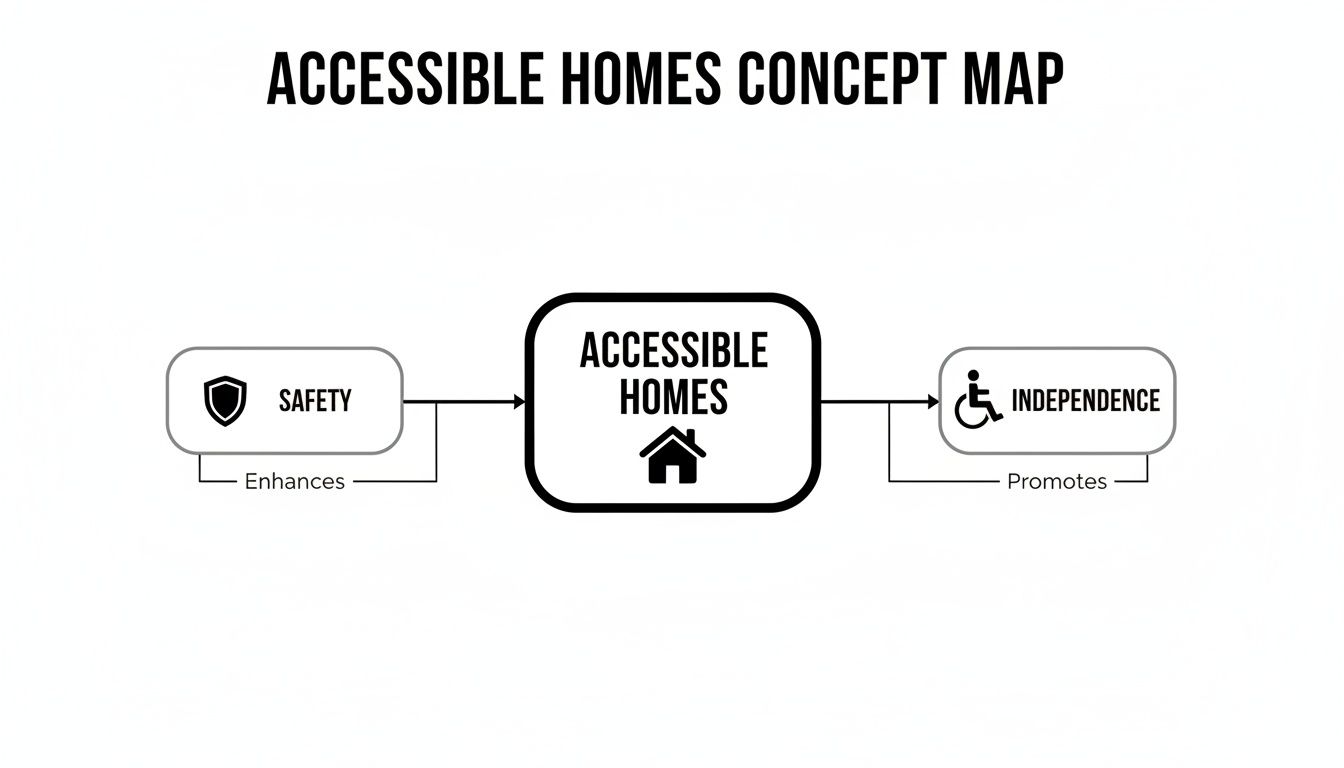
As you can see, these modifications aren't just about construction. They're about building a foundation for a more secure and self-reliant life.
The Heart of the Home: The Kitchen
A truly accessible kitchen is one that works from a seated position. A few smart adjustments can bring back the joy of cooking and preparing meals for yourself and your family.
- Lowered Countertops: Bringing countertops down to a height between 28 and 34 inches makes all the difference for chopping, mixing, and general prep work.
- Roll-Under Sinks: Creating an open space under the sink gives you direct, easy access to the faucet and basin, turning cleanup from a chore into a simple task.
- Smarter Storage: Things like pull-out shelves, lazy Susans in corner cabinets, and D-shaped drawer pulls mean you can get to pots, pans, and food without straining or asking for help.
These changes make sure the kitchen stays a welcoming, central hub of the home, not a place filled with daily frustrations.
The Bathroom: A Sanctuary of Safety
The bathroom is hands-down one of the most critical areas to modify. With wet surfaces, the risk of slips and falls is high, so the goal here is to create an environment that champions safety, privacy, and dignity.
Key bathroom modifications aren’t just about convenience; they are non-negotiable elements for preventing injuries and ensuring personal tasks can be managed independently and safely.
A curbless or roll-in shower is a total game-changer, completely removing the hazard of stepping over a high threshold. Installing sturdy grab bars next to the toilet and inside the shower provides vital support for transfers. It's also crucial to ensure a 60-inch turning radius so a wheelchair user has enough room to maneuver without feeling cramped.
The data backs this up. Research shows that entrance and exit modifications are incredibly common, with 69.5% of individuals with spinal cord injuries making these changes. Studies have also found that 85% of participants adapted doorways for proper width and that bathroom grab bars were installed in every single home studied for safety.
Bedrooms and Living Spaces
Finally, your personal living areas should be all about comfort and ease. In the bedroom, simply arranging furniture to create wide, clear paths to the bed, closet, and windows is a huge step.
In the living room, make sure there's plenty of space between the furniture to allow for easy navigation and socializing. Exploring options like mobility scooters can also dramatically improve how you get around, both inside and outside. If you're in Pinellas County, you might want to look into St. Petersburg mobility scooter sales and rentals to see how one could complement your newly modified home. These simple adjustments put the finishing touches on the blueprint for a truly accessible and empowering home.
The Right Equipment To Maximize Independence
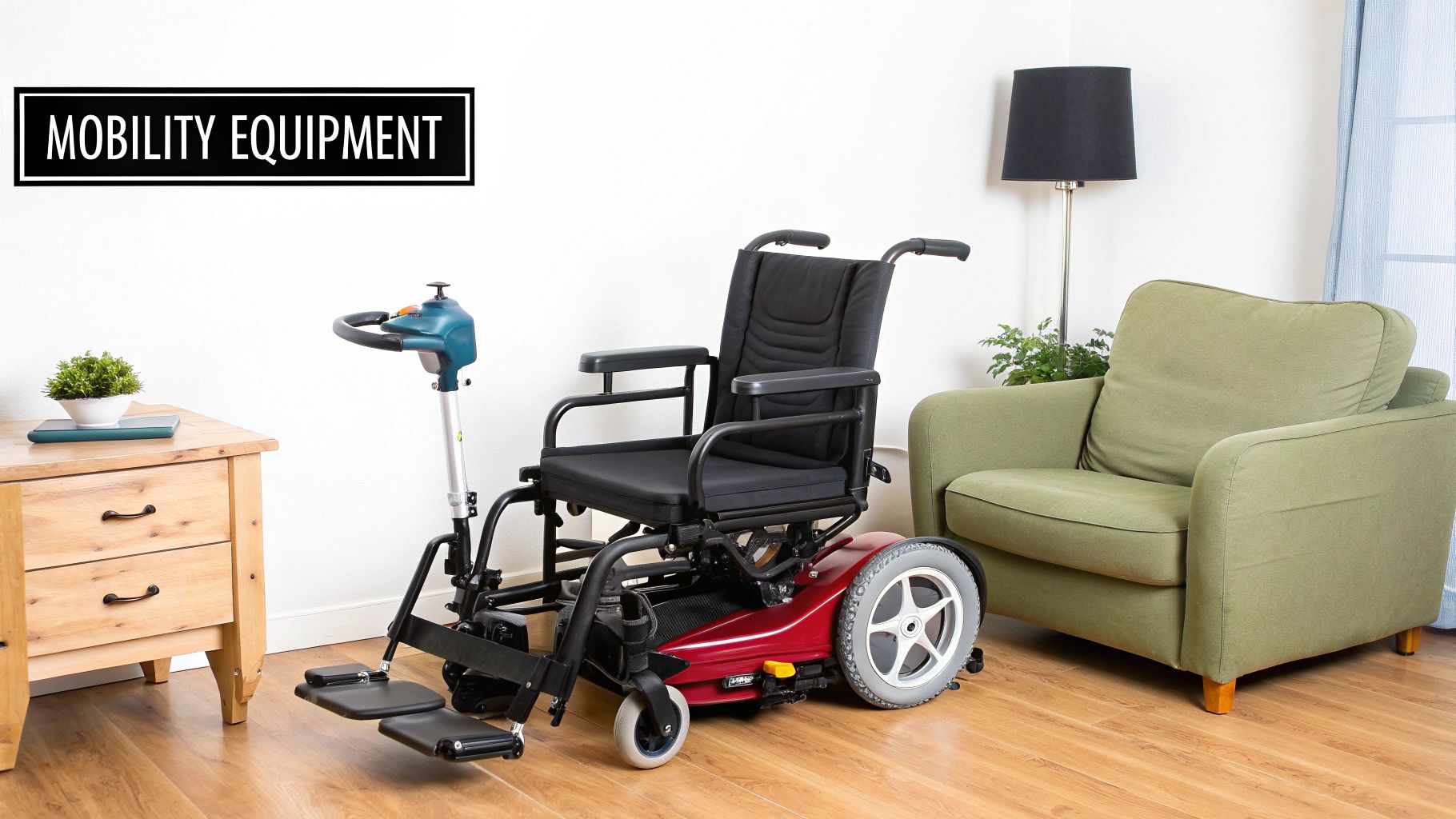
Think of it this way: structural home modifications are like building a perfectly paved road. But without a car, that road doesn't get you very far. The right mobility equipment is the vehicle that brings your accessible space to life, turning potential into practical, everyday freedom.
These tools are what bridge the gap between a modified house and a truly functional home. They make daily tasks easier, safer, and less draining for both wheelchair users and their caregivers. When you have the right equipment, the whole environment just works better for everyone.
Essential Mobility and Transfer Aids
Of course, the wheelchair itself is the centerpiece. The type you use will heavily influence how you navigate your home. A nimble manual wheelchair, for instance, needs more clear space around it for you to propel yourself, while a power wheelchair glides effortlessly but might have a wider turning radius to account for in tight corners and hallways.
Beyond the chair, other key pieces of gear can make a world of difference. In the living room, a lift chair is often a game-changer. It looks just like a comfy recliner, but its powered mechanism gently rises and tilts, helping you to your feet without strain. It's a simple change that saves energy and dramatically cuts down the risk of falls.
You'll also want to consider transfer aids, which are critical for moving safely from one spot to another—like from your wheelchair to your bed.
- Transfer Boards: These are simple, slick boards that act as a bridge between two surfaces, letting you slide across smoothly and securely.
- Gait Belts: A caregiver can use this sturdy belt, worn around the waist, to get a firm grip and provide steady support during a transfer.
- Patient Lifts: For those who can't bear weight, a mechanical lift (like a Hoyer lift) is the gold standard for safe, strain-free transfers.
Bathroom Safety Equipment Is Non-Negotiable
With its mix of hard surfaces and water, the bathroom is one of the highest-risk rooms in any home. That makes specialized safety equipment an absolute must. These items are fundamental for preserving dignity and independence during personal care.
Getting the bathroom set up with the right safety gear is one of the single most impactful things you can do. It tackles the biggest safety worries head-on and empowers you to handle your own personal care with confidence.
A few pieces are essential for any accessible bathroom:
- Shower Chairs or Benches: These give you a secure, waterproof place to sit in a tub or roll-in shower, so you never have to worry about standing on a slippery surface.
- Raised Toilet Seats: By adding a few inches of height, these make sitting down and getting back up much safer and less strenuous.
- Grab Bars: While they are a structural change, their placement depends on the equipment you use. They provide solid anchor points for transfers next to the toilet and in the shower.
Deciding Between Renting and Purchasing
So, should you rent or buy? There’s no single right answer—it really comes down to your situation. Renting is a fantastic option for temporary needs, like if you're recovering from surgery or just want to "test drive" a piece of equipment before buying. It gives you flexibility without a big upfront cost.
For long-term, everyday use, purchasing is almost always the more practical and cost-effective route. A wheelchair that's fitted just for you or a lift chair that becomes a fixture in your living room is an investment in your daily comfort and independence. If you're weighing your options, exploring the different wheelchairs in St. Petersburg, FL—including both rentals and sales can be a great first step toward finding the perfect fit for your lifestyle.
Planning Your Project and Understanding Costs
Let's talk about the elephant in the room: the cost. Turning your home into a truly accessible space can feel like a mountain of a project, but it doesn't have to be a financial black hole. The secret is breaking it down into manageable steps. A little thoughtful planning can turn a massive undertaking into a series of achievable goals.
The best way to tackle this is to think in phases. You don't have to do everything at once. Focus on the modifications that will make the biggest difference right away—like a safe way to get in the front door and an accessible bathroom. This approach delivers an immediate impact on daily life while you plan for other improvements down the road.
Creating a Realistic Budget
Before you can plan, you need a handle on the potential costs. Every home is different, of course, but knowing the typical price range for common projects helps set realistic expectations for your home modifications for wheelchair users.
Here's a ballpark idea of what you might be looking at:
- Installing a permanent ramp: This can run anywhere from $1,500 to $5,000, sometimes more, depending on how long it needs to be and what it's made of.
- Widening a single doorway: To get that wheelchair-friendly 32-inch clearance, you're usually looking at $300 to $800 per door.
- A full bathroom remodel: This is the big one. Creating a roll-in shower and a truly accessible layout is a major investment, often landing between $9,000 and $20,000.
Keep in mind, these are just estimates. The final price tag will depend on your choice of materials, local labor costs, and how complex the job is. For temporary needs or to test a solution, you have other options. Our guide to St. Petersburg medical equipment rentals is a great resource for finding flexible, budget-friendly solutions.
A Direct and Transparent Approach
Figuring out how to pay for it all is often the most stressful part of the process. We believe in keeping things simple and transparent. That’s why we provide clear, upfront pricing on all our equipment and services and operate on a direct-pay basis. This cuts through the confusion and long delays that often come with other payment methods, letting you plan your budget with confidence.
Financial clarity empowers you to make the best decisions for your home and your health. By using a direct-pay model, you stay in full control of your project's timeline and expenses.
With this direct model, you know exactly what to expect from the start. It lets you allocate your funds where they're needed most and focus on what really matters—creating a home that’s safe, comfortable, and promotes independence.
Understanding the Bigger Picture
The push for accessible housing isn't just happening here; it's part of a global movement. It might surprise you to learn that in the United States, an estimated 48 million households—that's 39% of all homes—could benefit from accessibility upgrades. For those of us in St. Petersburg and Pinellas County, this isn't just a statistic; it shows that our local needs reflect a worldwide trend toward building more inclusive communities. This growing demand makes experienced local providers more crucial than ever in closing the gap between standard housing and true accessibility. You can discover more insights about the global accessible housing movement to see how these trends are shaping the future.
In the end, it’s about shifting your mindset. See this not as an overwhelming expense, but as a practical investment in your quality of life. By planning strategically, tackling high-impact changes first, and working with a partner who values transparency, you can create a more accessible home—one smart project at a time.
Finding Trusted Professionals For Your Project
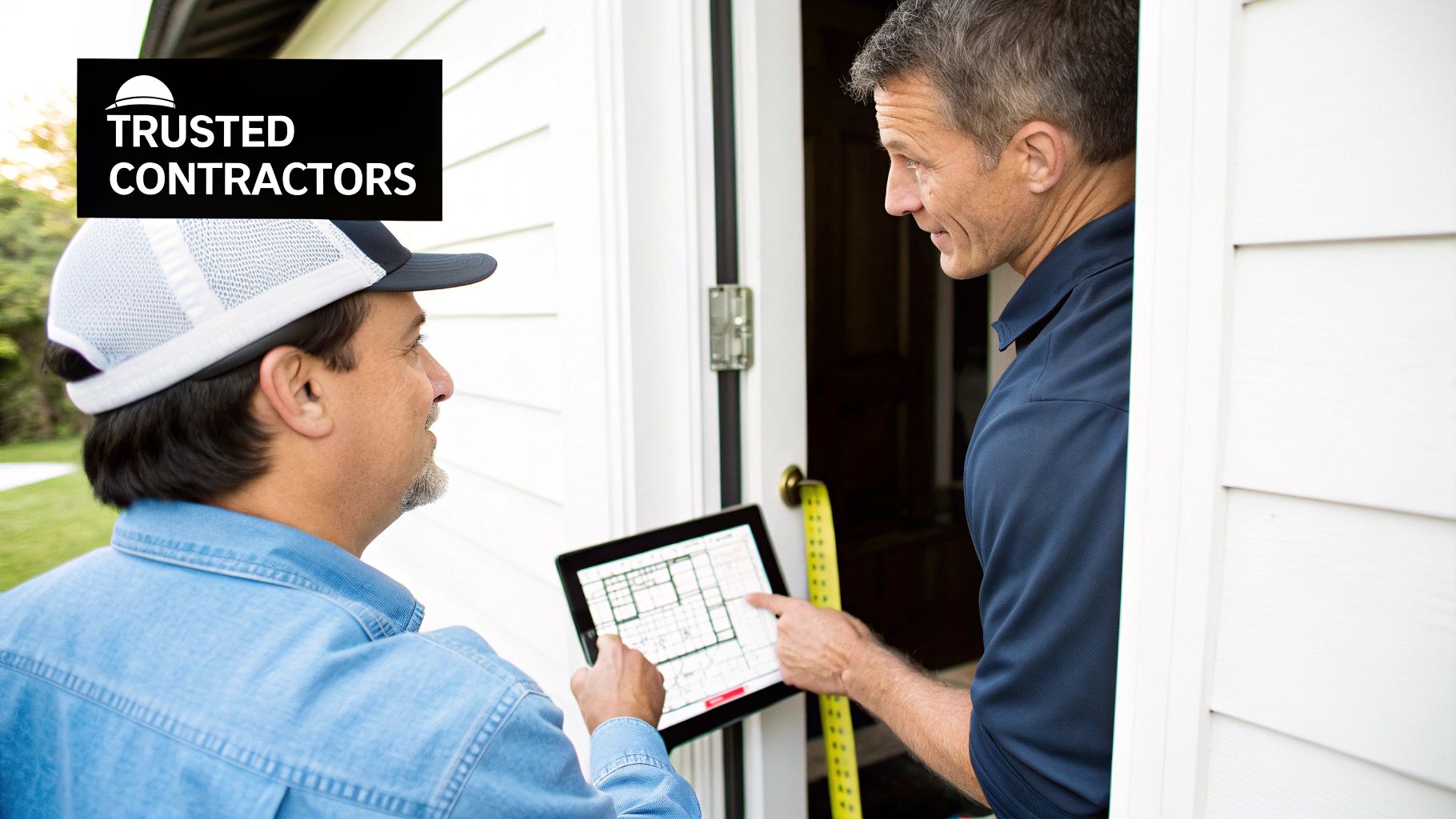
The success of your home modifications for wheelchair users really comes down to the team you hire. A great contractor can bring your vision for a safe, accessible home to life. On the other hand, the wrong one can lead to a lot of frustration and expensive fixes down the road. This isn't just about hiring a builder; it's about finding a partner who truly gets it.
Think of it this way: you wouldn't ask a family doctor to perform heart surgery. In the same way, you shouldn't hire a general contractor for a specialized accessibility project. You need someone who speaks the language of inclusive design and can build a space that works for you, not against you.
Locating a Specialist in Accessibility
Finding a contractor with a solid history in accessibility work is the most important step you'll take. Look for builders who have hands-on experience with Universal Design and are familiar with the Americans with Disabilities Act (ADA) guidelines.
Even though ADA standards are technically for public spaces, a contractor who knows them inside and out already understands the critical details of clearances, heights, and slopes. This know-how is what makes the difference between a simple renovation and a truly successful modification. They'll think beyond the tape measure and consider how you'll actually navigate and live in the space day-to-day.
A contractor who specializes in accessibility doesn't just build ramps or widen doors; they build independence. Their experience ensures every modification is thoughtfully planned to enhance your daily life, not just meet a building code.
Before you even start calling builders, it’s a huge help to know what equipment you'll need. We can help you figure out the right mobility aids, which makes your conversations with potential contractors much more focused and productive.
Questions to Ask Every Potential Contractor
Once you have a shortlist of names, it's time to dig a little deeper. Your goal is to get a feel for their experience, how they work, and whether they understand your unique situation. This is an interview—treat it like one.
Show up to the conversation with a list of questions to make sure they're the right person for the job.
- Can you show me a portfolio of your past accessibility projects? This is a must. Seeing is believing, and photos or site visits prove they have real experience.
- Are you licensed, bonded, and insured? This is basic but essential. It protects you from liability and shows they are a legitimate professional.
- How do you incorporate the homeowner's needs into the design? You want to hear them ask questions about your daily routine, challenges, and goals.
- Can you walk me through your process for creating a contract? A good contractor will insist on a detailed contract that outlines the scope, materials, timeline, and total cost.
- How will we stay in touch throughout the project? Regular, clear communication is the key to avoiding surprises and delays.
The Importance of a Detailed Contract
Never, ever start a project without a signed, detailed contract. This document is your safety net and the roadmap for the entire job. It should spell out every last detail, leaving no room for assumptions.
Make sure your contract clearly states the specific materials being used, a project start and end date, a clear payment schedule, and a precise scope of work. When you combine open communication with a rock-solid contract, you can be confident the final result will be exactly what you need.
If you have questions about equipment before kicking off your project, our team is ready to help. Feel free to contact our local St. Petersburg experts for one-on-one guidance.
Your Local Partner For An Accessible Life
Making your home truly work for you is a big project, but you don't have to figure it all out on your own. Having a knowledgeable, local partner to lean on can turn a daunting process into a series of manageable, confident steps. That's where we come in.
We’re right here in Pinellas County, and our commitment is to be more than just a place that sells equipment. We want to be your go-to resource—the team you call with questions and the guide you trust to help you live more safely and independently at home.
More Than Just Equipment
Real accessibility isn’t about just buying a product off a shelf; it's about finding the right-fit solution for your specific needs, your home's layout, and your daily life. It all starts with a simple conversation, not a sales pitch. Whether you’re just starting to ask questions about mobility aids or you need to find the perfect lift chair or bath safety grab bar, our St. Petersburg team is here to listen.
We’re your neighbors, and that local connection means we understand the community. We're here to offer practical advice that actually makes sense for you.
Creating a home that empowers you is a team effort. When we work together, we can make sure every single modification and piece of equipment enhances your freedom and well-being.
Let's Create Your Accessible Home Together
Your path to a more accessible home is your own, and our team is ready to support you on it. We invite you to reach out and explore the options that will truly fit your life.
Here’s how you can get started:
- Visit our St. Petersburg store to try out products in person and chat with our friendly staff.
- Give us a call to talk through your needs and get straightforward advice over the phone.
- Explore our extensive inventory of rental and for-sale equipment online whenever it's convenient for you.
Let's collaborate on the home modifications for wheelchair users that will turn your living space into a place of empowerment. Your independence is our priority, and we’re ready to help you get there.
Got Questions? We've Got Answers
Starting a home modification project is a big step, and it's completely normal to have a lot of questions running through your mind. We've gathered some of the most common ones we hear and provided straightforward answers to help you get started with confidence.
What Should I Tackle First When Modifying a Home for a Wheelchair?
Your absolute first priority should be getting in and out of the house safely and easily. That means creating a zero-step entrance, which usually involves installing a solid, well-built ramp with the right slope. If you can't get in the front door, nothing else matters.
After that, focus on the main arteries of the home. You need a clear path to the most essential rooms, like the bathroom and the bedroom. This almost always means widening doorways to at least 32 inches, though we really recommend 36 inches if you can manage it. Nailing down entry and main pathways gives you the biggest win for independence right out of the gate.
Are There Any Easy Fixes I Can Do Myself Without a Contractor?
Of course! You'd be surprised how much of an impact you can make with a few simple, DIY-friendly changes. The easiest place to start is just clearing the way—get rid of throw rugs that can snag wheels and declutter hallways to open up your pathways.
The bathroom is another area where you can make some quick improvements without calling in the pros:
- A raised toilet seat can make a world of difference for safer, easier transfers.
- A sturdy shower chair can be placed right in your existing tub or shower stall.
- Non-slip mats are a must-have for preventing falls on wet, slick floors.
Another quick win is switching out your doorknobs. If you have the old-school round knobs, swapping them for lever-style handles is a simple project that makes a huge difference for someone with limited hand strength.
Should I Rent or Buy Medical Equipment?
This really comes down to how long you’ll need the equipment. Renting is the perfect solution for temporary situations. Think post-surgery recovery, a relative visiting for a few weeks, or even just "test-driving" a piece of equipment before you decide to buy it. It lets you get what you need, like a hospital bed or wheelchair, without the big upfront cost.
On the other hand, buying is the way to go for equipment you'll be using every single day for the long haul. A permanent fixture like a lift chair or a wheelchair that's been customized just for you is an investment in your daily comfort and freedom.
If it's going to be a part of your everyday life indefinitely, purchasing almost always makes more sense financially.
What’s the Minimum Hallway Width I Need for a Wheelchair?
For just rolling straight down a hall, you need a bare minimum of 36 inches. This gives enough room for most wheelchairs to get through without banging up knuckles or scratching the walls.
But here’s the tricky part: turning. Making a full 180-degree turn requires a lot more space—a clear 60-by-60-inch T-shaped or L-shaped area is the gold standard. While it might not be realistic to have that much space everywhere, it’s critical to have it near key doorways, like the entrance to the bathroom or bedroom, to make the home truly navigable.
At Affinity Home Medical Equipment, our goal is to make this process as clear and simple as possible. We offer direct, upfront pricing on all our equipment and work on a direct-pay basis. This means you can budget confidently without the hassle of dealing with third-party payers. To see what we offer, visit us online at Affinity Home Medical Equipment.
Share This Article

Written by : Rich affinityrich@gmail.com
Follow Us
Latest Articles

October 14, 2026

October 14, 2026

October 14, 2026
