
A Practical Guide To Home Safety Equipment For Elderly

When people hear "home safety equipment for the elderly," they [...]
When people hear "home safety equipment for the elderly," they often picture something that limits freedom. But the truth is, it’s the exact opposite. The right equipment is all about preserving independence. These tools, from a simple grab bar to a reliable walker, are a support system that empowers older adults to keep living confidently in the homes they love.
The goal is to drastically reduce the risk of falls and injuries, which brings priceless peace of mind to the entire family.
Why Home Safety Is The Key To Independent Living
For most older adults, there's no place like home. Staying in a familiar environment provides comfort, security, and a deep connection to cherished memories—something we all want. But as we age and our physical abilities change, the home itself can suddenly present new challenges.
Getting out of a favorite armchair or just walking down the hall at night can become a source of worry. This is where making smart, simple changes to the home becomes so important.
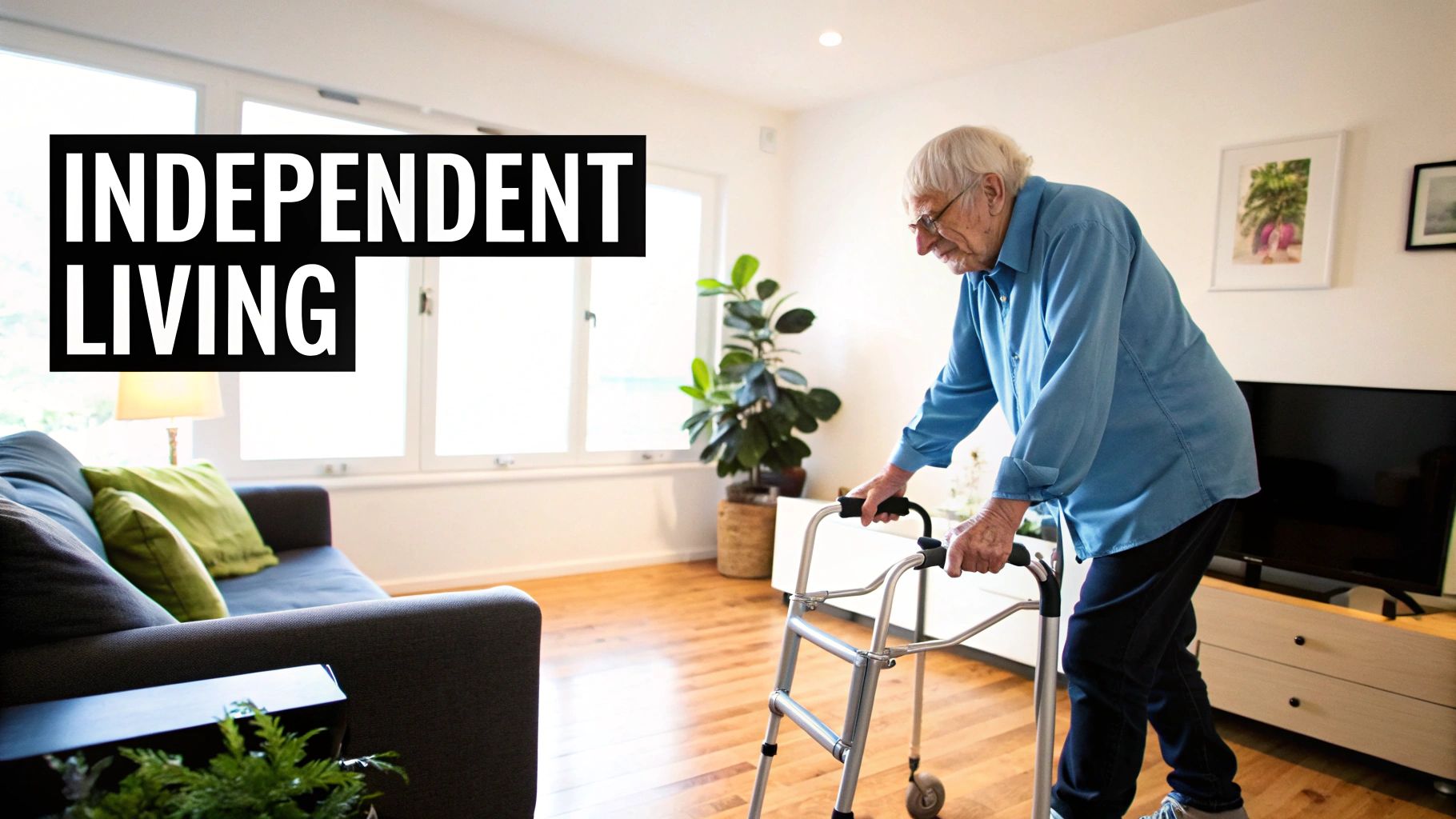
Think of home safety equipment like preventative care for your well-being. You’d fix a loose step on the porch to prevent a fall, right? Adding a grab bar in the shower or using a walker for extra support works the same way—it addresses a potential risk before it turns into a crisis. These aren't signs of weakness; they're smart, proactive moves to maintain a high quality of life.
Fostering Confidence And Engagement
The benefits of a safe home go far beyond just preventing injuries. When a person feels secure on their feet, their confidence soars. That confidence is what encourages them to stay active and connected with friends and family. A walker, for instance, isn't just a mobility aid; it's the key that unlocks a trip to the mailbox or a walk in the park.
This boost in confidence creates a positive ripple effect throughout daily life, supporting:
- Greater Independence: Reducing the need to ask for help with basic tasks like bathing or getting dressed.
- Continued Activity: Providing the stability to keep enjoying hobbies and social outings.
- Reduced Anxiety: Easing the fear of falling, which can often lead to a more isolated and sedentary lifestyle.
The goal is to create an empowering environment where every room feels comfortable and accessible. By tackling small challenges with the right equipment, you can help your loved one continue living a full, meaningful life at home.
A Foundation For Peace Of Mind
For family members and caregivers, knowing a loved one is safe is everything. It replaces worry with reassurance, allowing you to focus on enjoying your time together instead of constantly fearing an accident. Putting home safety equipment in place is a team effort that truly strengthens the support network around the person you care about.
This guide will walk you through the most essential types of equipment, from mobility aids that keep people connected to their community to bathroom safety tools that prevent the most common accidents. By understanding what each piece does, you can make informed choices that turn a house into a truly safe and supportive home.
A Room-By-Room Home Safety Assessment
Figuring out where to even start with home safety can feel overwhelming. The secret is to not try and tackle everything at once. Just break it down and look at the home one room at a time. This simple strategy helps you systematically spot potential hazards and identify the specific home safety equipment for elderly loved ones that will genuinely improve their daily life.
Think of this as a proactive walkthrough, not a fault-finding mission. You’re simply looking at the living space with fresh eyes, focusing on the spots that carry the highest risk for falls or injuries. Let's begin with the areas that demand the most attention.
Evaluating The Bathroom For Hidden Dangers
It's no secret—the bathroom is often the most dangerous room in the house, particularly for older adults. You've got hard surfaces, water, and steam all in one place, creating a perfect recipe for slips and falls. When you're assessing this space, your main focus should be on stability and support.
Ask yourself: is there anything to hold onto near the shower, tub, or toilet? Are the tile floors slippery when wet? The answers will point you directly to the right solutions, whether it's installing sturdy grab bars, putting down non-slip mats, or adding a shower chair for safe, seated bathing.
Securing The Bedroom For Safe Rest
A bedroom should be a peaceful retreat, but it can hide its own set of risks, especially in the middle of the night. A poorly lit trip to the bathroom or the simple act of getting out of bed can quickly lead to an accident. The goal here is to create clear, well-lit paths and add support where it’s needed most.
Look out for these common trouble spots:
- Difficulty Standing: Is it a struggle to push up and out of bed? A simple bed rail offers a firm, reliable handhold.
- Navigating in the Dark: Are the pathways from the bed to the door cluttered or pitch-black? Motion-activated night lights are a brilliant fix.
- Reaching for Items: Is everything needed—glasses, water, phone—within easy grasp? A bedside organizer can prevent risky leaning or reaching.
Making The Kitchen And Living Areas Accessible
The kitchen and living room are the heart of the home, but they come with their own unique challenges. Reaching for a plate in a high cabinet can throw someone off balance, and getting up from a plush, low sofa can be a real strain. Your job is to make these active spaces as effortless and safe as possible.
A simple reacher tool, for instance, can completely eliminate the need for a wobbly step stool. In the living room, a lift chair gives a gentle, controlled boost from sitting to standing, taking a huge amount of pressure off tired joints and muscles. For more ideas on making daily activities safer, you can find great tips on our medical equipment news and blog.
Proactive safety planning is all about making these small, smart adjustments before an accident can happen. Each piece of equipment you add is another layer of security that brings priceless peace of mind.
To help you get started, here is a quick checklist you can use as you walk through the home.
Room-By-Room Safety Checklist
Use this quick-reference checklist to identify common hazards in key areas of the home and discover the corresponding safety equipment solutions.
- Bathroom: Check for slippery tub/shower floors and a lack of support near the toilet or shower. Recommended solutions include non-slip bath mats, shower chairs, grab bars, and raised toilet seats.
- Bedroom: Look for difficulty getting out of bed and dark paths to the door or bathroom. Consider a bed rail, motion-activated night lights, or a bedside commode.
- Living Room: Assess low sofas or chairs that are hard to stand up from. Lift chairs or furniture risers can provide a solution.
- Kitchen: Identify high shelves, hard-to-reach items, and the need to bend down. A reacher/grabber tool or a step stool with a handrail can help.
- Stairs/Hallways: Check for poor lighting, a lack of handrails, and tripping hazards like rugs or cords. Solutions include brighter lighting, secure handrails on both sides, and removing loose rugs.
This checklist is a great starting point, but remember every home and individual is unique.
Addressing Stairs And Hallways
It goes without saying that stairs and long hallways are major risk zones. A single misstep can be a problem, especially if the area isn't well-lit or secure. Your assessment here is pretty straightforward: you need great lighting from top to bottom and sturdy support to hold onto.
Ideally, a staircase should have secure handrails on both sides. For hallways, the mission is to keep them totally clear of clutter, loose rugs, and stray electrical cords that someone could catch a foot on. Beyond the basics, technology is offering some incredible new safeguards. The market for elderly safety monitoring is booming, with floor sensor systems alone valued at USD 2.5 billion. As noted by StrategicRevenueInsights.com, these modern systems can monitor movement and even detect a fall, providing an extra layer of protection that’s especially helpful for caregivers.
Choosing The Right Mobility Aid For More Freedom
When it comes to mobility, we're not just talking about getting from point A to point B. It’s about freedom. It’s about independence. It’s about staying connected to the people and places you love. That’s why picking the right mobility aid is such a personal decision—the best tool is always the one that fits your specific lifestyle, strength, and home environment.
A simple cane might be all someone needs for a little extra stability on their feet. For someone else, a walker provides a more secure frame that inspires confidence with every step. There's no one-size-fits-all solution here. The goal is to match the equipment to the person, empowering them to move through their home and community safely.
This decision tree gives you a great starting point for thinking through potential hazards and which solutions might make sense.
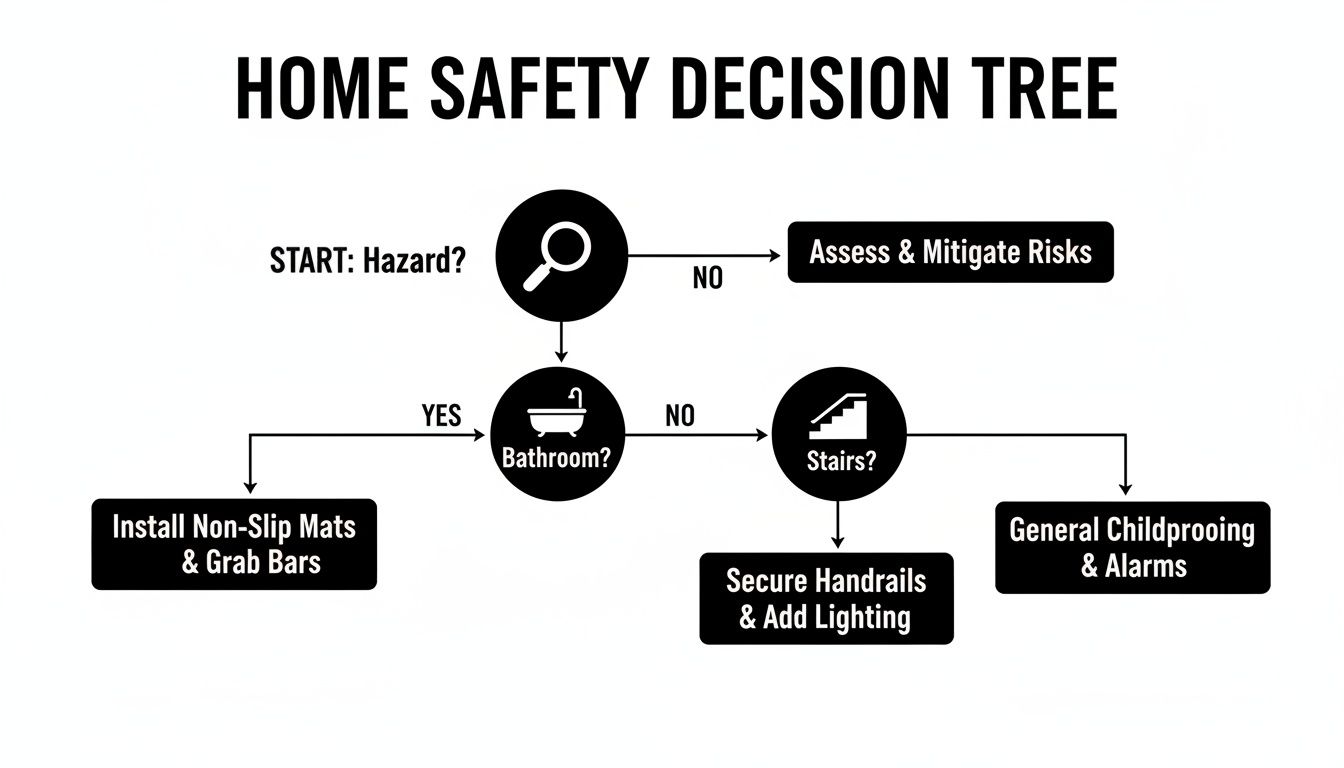
As you can see, the process starts with a specific challenge—like navigating slippery bathroom floors or getting up stairs—and then points you toward the right kind of equipment to solve it.
Canes, Walkers, And Rollators
Let's break down the most common options.
Canes are the simplest mobility aids out there. They're perfect for people who generally have good balance but could use a little extra support, maybe to take some pressure off a sore knee or hip. If you need more stability than a standard single-point cane, a four-point (or "quad") cane offers a wider base that really plants itself on the ground.
Walkers take that support up a notch. A standard walker, the kind without wheels, offers maximum stability. The trade-off is that you need enough upper body strength to lift and place it with each step. If you want something that moves a bit more freely, a rollator is a fantastic choice. Think of it as a walker on wheels, complete with hand brakes for control and often a built-in seat for taking a rest.
We go into much more detail in our guide to walkers and rollators in St. Petersburg, FL.
Wheelchairs And Transport Chairs
When walking longer distances just isn't practical or safe anymore, wheelchairs and transport chairs are essential for staying active and engaged. It's really important to know the difference between the two.
- Standard Wheelchairs: These have large rear wheels, which let the user push themselves. They're designed for self-reliance and are built tough enough for regular, all-day use.
- Transport Chairs: With four small wheels, these chairs are designed to be pushed by a caregiver. They are significantly lighter and fold up more compactly, making them perfect for appointments, shopping trips, or any outing where someone will be there to help.
The choice really comes down to independence versus convenience. A transport chair is for getting around with a helper, while a wheelchair is for moving about on your own terms.
Scooters For Outdoor Freedom
For those who have good core strength and balance but find that walking long distances leaves them drained, a mobility scooter can be a game-changer. Scooters are brilliant for getting around outdoors—think cruising through the grocery store, visiting a local park, or just enjoying a ride around the neighborhood. They bring back a sense of adventure that other aids can't quite match.
You can see how important these devices have become just by looking at the numbers. The global market for elderly and disabled assistive devices was recently valued at USD 31.52 billion and is expected to climb to USD 51.94 billion by 2034. It's telling that mobility aids are the biggest piece of that pie.
In the end, finding the right mobility aid is a team effort. By taking a close look at daily routines, physical abilities, and personal goals, you can land on a solution that doesn't just prevent falls—it truly makes life better.
Mastering Bathroom Safety to Prevent Falls
Of all the rooms in a home, the bathroom presents the most significant fall risk. It's a perfect storm of hard tile, wet surfaces, and frequent movement, creating an environment where one wrong move can result in a serious injury. That’s why we need to think in terms of creating 'zones of safety.' By adding the right home safety equipment for elderly loved ones, you can transform this hazardous space into a secure and accessible sanctuary.
The idea is to provide steady support at every crucial point—getting into the tub, using the toilet, and navigating the room. Each piece of equipment is designed to do a specific job, acting as a reliable partner that helps maintain independence and boosts confidence. Let’s break down how to secure these key areas.
Creating A Secure Shower Or Tub Enclosure
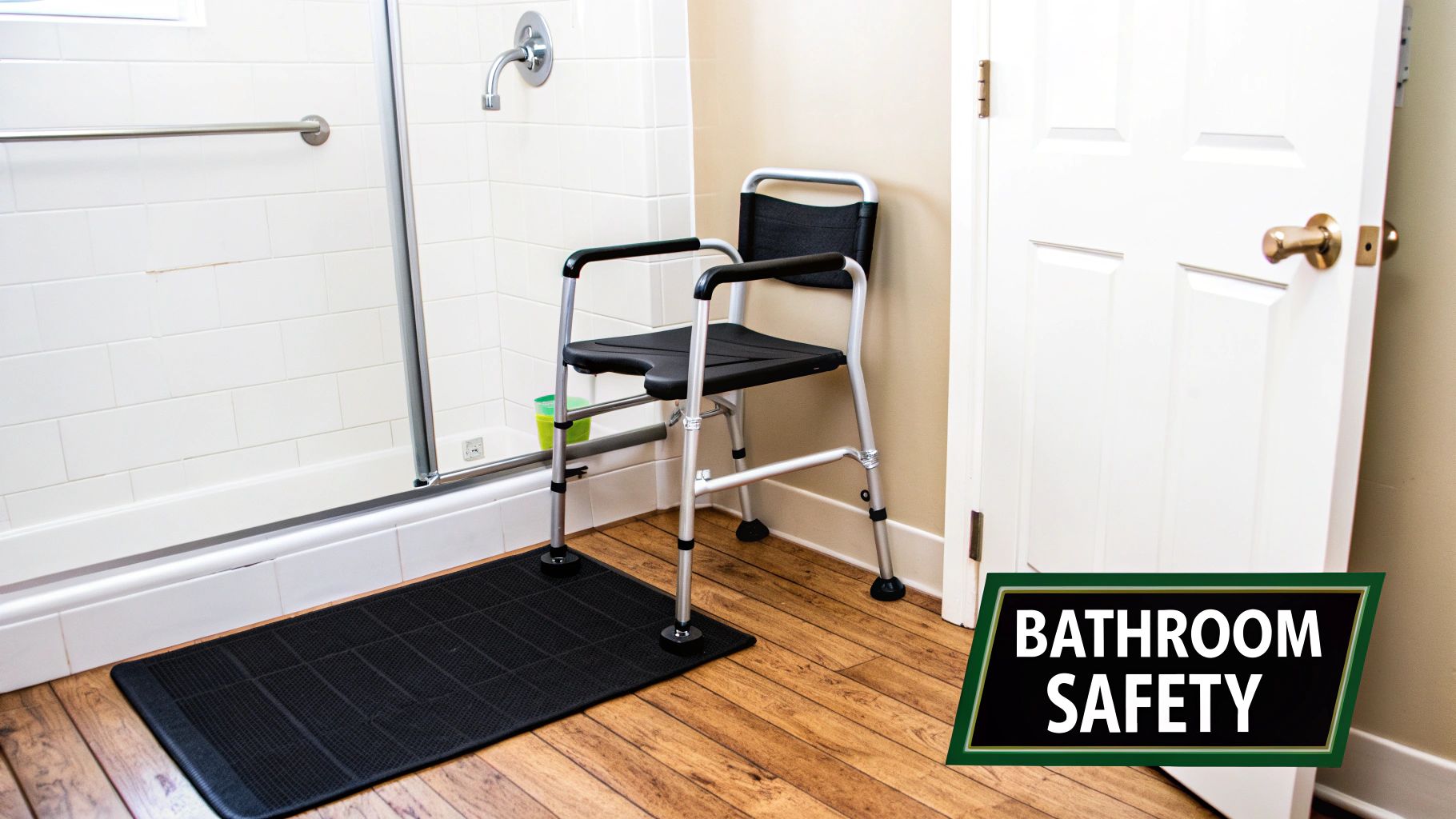
Showering while standing requires a surprising amount of strength and balance, which can be exhausting for many older adults. A simple shower chair or bath bench completely changes this equation. It turns a demanding task into a safe, comfortable activity that can be done while seated, immediately lowering the risk of a slip inside the shower.
But seating is just one piece of the puzzle. The shower walls themselves need to become a source of support. This is where professionally installed grab bars are absolutely essential. These aren't like towel racks; they are anchored directly into the wall studs and are built to handle a person's full body weight, offering a solid grip right when it’s needed.
Key equipment for this zone includes:
- Shower Chairs or Benches: Enables safe, seated bathing to conserve energy and reduce falls.
- Grab Bars: Provides a sturdy, reliable handhold for stability when entering or exiting the tub or shower.
- Non-Slip Mats: Adds vital traction to wet tub or shower floors, preventing feet from sliding out from under you.
- Handheld Shower Heads: Gives a person the flexibility to bathe thoroughly and comfortably while seated.
When used together, these items create layers of safety right where the risk is highest.
Enhancing Toilet Safety And Accessibility
The seemingly simple act of sitting down on and getting up from a toilet involves a lot of bending and balancing, which can put a real strain on weak joints. A standard, low toilet seat can be especially challenging for anyone with hip or knee problems. Thankfully, a few easy additions can make a huge difference.
A raised toilet seat, for example, can add several inches to the seat's height, which means there's less distance to travel when sitting or standing. This small adjustment makes the entire process easier and much safer. For even more support, a toilet safety frame fits around the toilet to provide sturdy armrests, giving a person a firm place to push up from.
Think of these tools as a helping hand. A raised seat and safety frame work in tandem to take the pressure off the back and knees, empowering someone to use the toilet independently and without the fear of a wobble.
Ensuring Proper Installation And Placement
Having the right equipment is only half the job—it has to be installed correctly to actually be safe. Grab bars are a perfect example. They must be mounted directly into wall studs to ensure they can withstand a person's weight if they slip or need to pull themselves up. An improperly installed bar gives a false sense of security and can be more dangerous than no bar at all.
Placement is just as critical. Grab bars should be positioned where they are most intuitive to reach. A vertical bar at the shower entrance helps with stepping over the tub wall, while a horizontal bar along the side provides stability while showering. The goal is to make sure support is always within arm's reach. When done right, these simple changes can reduce the risk of a fall by up to 50%, making a profound impact on home safety.
Beyond Mobility: Lift Chairs and Respiratory Aids
True home safety is about more than just preventing falls—it’s about creating a space where your loved ones can live comfortably, manage their health, and stay independent. While grab bars and walkers are a great start, other pieces of home safety equipment for elderly individuals, like lift chairs and respiratory aids, can make an enormous difference in daily life.
A lift chair might look like your favorite recliner, but it has a powerful trick up its sleeve. A quiet, built-in motor gently tilts the entire chair forward, smoothly lifting a person from a seated to a standing position. It’s like having a steady, helping hand whenever you need to get up.
This isn’t just about convenience; it’s a game-changer for safety. The physical strain of pushing up from a low, soft sofa can easily lead to a loss of balance and a subsequent fall. A lift chair removes that struggle, and with it, a major risk.
The Gentle Assistance of Lift Chairs
Imagine trying to stand up when your joints ache from arthritis or your muscles just don't have the strength they used to. That simple movement can become a painful, frustrating part of the day. A lift chair shoulders that burden, letting you save your energy for more important things.
This newfound ease has a ripple effect. When getting up isn't a major obstacle, it's easier to stay active, grab a drink from the kitchen, or answer the door. It makes the whole house feel more accessible again.
A lift chair is a tool of empowerment. It provides the support needed to maintain an active lifestyle at home, giving users the freedom to get up and move whenever they wish, without having to wait for help.
Essential Respiratory Support at Home
Beyond movement, breathing easily is fundamental to good health, especially for those managing conditions like COPD or sleep apnea. Medical equipment like oxygen concentrators and CPAP machines are not just accessories; they are lifelines that directly impact energy, mental clarity, and the quality of sleep.
An oxygen concentrator, for example, is a smart device that pulls in regular room air, filters it, and delivers a steady stream of purified oxygen through a small tube. This ensures the body gets the oxygen it needs to thrive. If you'd like to learn more about how they work, we have more information about St. Petersburg oxygen concentrators.
Likewise, a CPAP (Continuous Positive Airway Pressure) machine is a lifesaver for people with sleep apnea. It delivers gentle, constant air pressure to keep airways open throughout the night, preventing the dangerous pauses in breathing that can disrupt rest and cause serious health complications down the road.
It's crucial to remember that this kind of specialized equipment almost always requires a doctor's prescription. A prescription ensures the device is calibrated precisely to meet a person's unique medical needs, making it both safe and effective. The demand for these solutions is growing fast—the global market for elder care and assistive devices is projected to hit USD 1.1 trillion by 2029, a clear sign of how vital this technology has become. You can read more research about this growing market on BCC Research.
Your Local Partner For Home Safety Solutions
Trying to find the right home safety equipment for elderly family members can feel overwhelming, especially when you're just scrolling through endless online stores. But picking the right gear is about so much more than clicking "add to cart." It’s about getting a personal touch and expert guidance from someone who understands what you’re going through—and that’s exactly what you get when you work with a local team.
When you connect with a local expert, you're not just a customer; you're a neighbor. We can have a real conversation about the specific challenges you or your loved one are facing. That way, we can make sure the equipment doesn't just fit the house, but fits the person perfectly.
The Power Of Flexible Options
Every family’s situation is different, so your equipment plan should be flexible, too. Maybe you have a loved one recovering from surgery or a relative visiting for a few weeks. In moments like these, renting equipment is a smart, budget-friendly choice that gives you what you need without the long-term commitment of a purchase.
Renting lets you get essential items for the exact time you need them, whether that’s a few days, a week, or a month. This is a game-changer during post-op recovery when things like a hospital bed or a good walker can make all the difference in healing safely and comfortably.
- Try Before You Buy: Not sure if a lift chair or a specific walker is the right fit? Renting lets you test it out in your own home before you decide to invest for the long haul.
- Cost-Effective for Temporary Needs: For short-term situations, renting is much easier on the wallet than buying something you might only use for a few weeks.
- Adaptable to Changing Needs: Health can be unpredictable. Renting gives you the freedom to swap out equipment as needs evolve, so you always have the right support without the stress of selling used items.
Deciding between buying and renting can be tricky. It really comes down to your specific needs, how long you'll need the equipment, and your budget. The right choice depends on your personal circumstances. If you're managing a long-term condition, buying often makes the most sense. But for temporary needs or to test a product, renting offers incredible flexibility.
Working with a local partner means gaining access to a team that is invested in your well-being. It’s about building a relationship with professionals who are there to support you every step of the way, from selection to setup.
Same-Day Solutions And Community Commitment
One of the biggest perks of working with a local shop is getting what you need, when you need it. When a walker breaks or you suddenly need a shower chair, waiting days for an online order to arrive just isn't an option. Our same-day pickup service means you can get crucial equipment right away, giving you an immediate solution and much-needed peace of mind.
We’re deeply committed to serving our neighbors here in Pinellas County with solutions that are both dependable and practical. We don't just sell products; we offer genuine support, real expertise, and a friendly face you can trust. By truly understanding the needs of our community, we help families find the perfect gear to make their homes safer, more comfortable, and more independent.
To learn more about our local focus and dedication, discover the story of Affinity Home Medical Equipment in St. Petersburg, Florida.
Frequently Asked Questions About Home Safety
When you start looking into home safety equipment for elderly parents or loved ones, a lot of practical questions pop up. It's totally normal. Getting the right answers helps you make smart choices and build a truly supportive space, so let's walk through some of the most common things families ask.
Think of this as your starting point for getting the clarity you need.
How Do I Know It’s Time For Home Safety Equipment?
It's rarely one big event that tells you it's time. Instead, you'll start noticing the little things. Maybe your mom is holding onto furniture to get around the living room, or your dad seems a bit hesitant at the top of the stairs.
Other clues can be struggling to get out of a favorite armchair or even avoiding hobbies they used to love. The best advice I can give is to be proactive. Bringing in a simple grab bar or a cane before something happens can prevent a fall that changes everything. Try to frame it as a tool for empowerment—a smart way to stay independent, not a sign of giving up.
My Loved One Is Resistant To Using A Walker What Can I Do?
This is probably one of the most common hurdles families face. For many, a walker feels like a symbol of lost freedom, and that's a tough feeling to overcome. The key is to shift the focus from what's being lost to what can be gained.
Talk about how a modern, lightweight walker or rollator provides the stability to keep doing the things they love.
You could say something like, "With this, we could finally get back to our walks in the park without worrying," or "This would make that trip to the grocery store so much less tiring." It’s all about showing how the tool enables them to live their life more fully.
For more tips and answers on a wide range of topics, you can also check out our Frequently Asked Questions page.
What If We Only Need Equipment For A Short Time?
Renting is your best friend for any short-term situation. It’s a flexible, budget-friendly choice that’s perfect for post-surgery recovery, having a relative with mobility challenges come to visit, or even just to try a piece of equipment out before committing.
With a rental, you get exactly what you need without the full cost of buying. We have daily, weekly, and monthly rates on all sorts of gear, including:
- Wheelchairs and transport chairs for getting to appointments or just getting out.
- Hospital beds to make recovering at home safer and much more comfortable.
- Walkers and rollators to offer that extra bit of support when it's needed most.
It’s all about having the right tool for the job, for exactly as long as you need it.
Ready to make home a safer place for someone you care about? The team here at Affinity Home Medical Equipment knows this stuff inside and out. We’re ready to help you find the right solutions, from a simple bath mat to a full-featured lift chair. Stop by or visit us online to see our sales and rental options.
Share This Article

Written by : Rich affinityrich@gmail.com
Follow Us
Latest Articles

October 14, 2026

October 14, 2026

October 14, 2026
