
Home Safety Modifications For Elderly: A Practical Guide To Safer Living

When we talk about home safety modifications, we're really talking [...]
When we talk about home safety modifications, we're really talking about making smart, strategic changes to a living space. This could be anything from installing grab bars in bathrooms to improving lighting or just getting rid of trip hazards like loose rugs. The goal is always the same: reduce the risk of accidents and support independent living.
These adjustments are what transform a house into a truly safe and comfortable home, allowing older adults to age in place with confidence.
Creating A Safer Home For Independent Living
The desire to "age in place"—to stay in your own home for as long as you possibly can—is a goal most of us share. In fact, over 87% of adults aged 65 and older want to remain right where they are. The problem is, most of our homes simply weren't built with the physical changes of aging in mind.
This is exactly where proactive home safety modifications come into play. They aren't just minor conveniences; they are empowering tools that bridge the gap, making a familiar house a truly supportive home.
The Real Impact of Small Changes
Too often, families wait until after a fall or an injury to think about home safety. But by taking a proactive approach, you can often prevent these incidents from ever happening in the first place. The idea is to spot and fix potential risks before they turn into urgent problems, which goes a long way in preserving both health and independence.
These modifications can be simple, immediate fixes or more involved installations. No matter the scale, they all work toward the same end: enhancing safety and making everyday activities feel less daunting.
- Preventing Falls: This is, without a doubt, the number one reason for most home modifications. Simple things like non-slip mats in the tub or secure handrails on stairways can dramatically cut the risk of a life-altering fall.
- Boosting Confidence: When a home feels secure, a person’s confidence in their own ability to handle daily tasks—like bathing, cooking, or just moving from room to room—grows. That sense of security is absolutely vital for staying active and engaged.
- Supporting Independence: Every single modification that makes a task easier or safer is a direct investment in long-term independence. It allows our loved ones to manage their own lives with dignity, relying less on others for basic needs.
By addressing environmental hazards, home modifications can prevent up to 50% of all home accidents among seniors. That statistic really shows just how powerful these changes can be in creating a true safe harbor.
Making a home safer doesn’t have to be some huge, overwhelming project. By focusing on the most critical areas and getting familiar with the solutions out there, you can create a secure environment that honors a loved one’s wish to remain at home. If you're just starting this process, a great first step is to explore the range of available home medical equipment to start building your safety plan.
A Practical, Room-by-Room Home Safety Walkthrough
Before making any changes, the very first thing you have to do is take a good, hard look at the home itself. This is the most important step in creating a safe environment. It’s funny how we get used to our own spaces, easily stepping over that curled rug edge or knowing just where the dark spot on the stairs is. But for someone with changing mobility, balance, or vision, those little things are major hazards.
The idea here is to walk through the house with fresh eyes. Don't think of it as finding fault; think of it as a proactive search for opportunities. You're looking for tripping hazards, bad lighting, and places that need more support before they cause an accident. Breaking it down room by room makes it a whole lot less overwhelming.
Start with the Big Picture: General Home Safety
Before you get into the nitty-gritty of each room, let's zoom out and look at the safety systems that affect the whole house. These are often the easiest fixes and provide the biggest bang for your buck.
Think about a common scenario: getting up in the middle of the night to use the bathroom. Is that path from the bed to the toilet totally clear and lit well enough to see? A single shoe or a stack of magazines left on the floor can become a massive obstacle in the dark.
Here's what to look for everywhere:
- Smoke & Carbon Monoxide Detectors: Are there working detectors on every floor and right outside the bedrooms? Give them a test. You should be doing this monthly and swapping batteries once a year, no exceptions.
- Cords and Outlets: Keep an eye out for electrical cords running across walking paths—a classic trip wire. Also, check for frayed wires or outlets packed with too many plugs. These aren't just tripping hazards; they're a serious fire risk.
- Rugs and Runners: I've seen it a hundred times: decorative throw rugs are one of the top causes of falls. If a rug slides, bunches up, or has curled edges, it has to go. At the very least, secure it firmly with double-sided rug tape.
- Clear the Clutter: Pathways need to be wide and clear. Piles of mail, shoes by the door, or stacks of books can quickly turn a clear walkway into an obstacle course. Aim for a clear path that’s at least 36 inches wide, which is crucial if a walker or wheelchair is ever needed.
The First Hurdle: Entrances and Pathways
The safety journey starts before you even get through the front door. The walkway, porch, and entryway need to be secure and easy to manage, no matter the weather. A little slip on an uneven sidewalk can cause a major injury.
- Check the Walkways: Make sure outdoor paths are smooth and free of cracks, invasive tree roots, or any other clutter.
- Light It Up: The front door, porch, and any outdoor steps need to be bright. I'm a big fan of motion-sensor lights—they provide hands-free light right when you need it.
- Install Handrails: If you have even one step, you need sturdy handrails. And not just on one side—put them on both for maximum stability.
- Consider a Zero-Step Entry: This is a bigger project, but a ramp or a graded "zero-step" entrance is the gold standard. It completely eliminates the challenge of stairs.
Living Room and Common Areas
The living room is for relaxing, but it’s often full of hidden risks. The way furniture is arranged, the type of flooring, and the lighting all matter. Ask yourself: can someone easily get from their favorite chair to the kitchen without navigating a maze?
A common problem I see is furniture that’s too low and soft. It might be comfortable, but it can be incredibly difficult to stand up from, creating strain and a real risk of losing balance.
A proactive home assessment isn’t about limiting independence—it’s about enabling it. By removing the barriers in the environment, you’re creating a space that builds confidence and helps a person stay in their home longer.
The Kitchen: A Hub of Activity and Hazards
The kitchen is often the heart of the home, but its combination of water, heat, and hard surfaces presents unique dangers. The goal is to make it organized for easy, safe use.
- Reaching and Bending: Where are the everyday items? Plates, glasses, and popular food items should be on shelves that are between waist and shoulder height. This simple change cuts down on the need for a wobbly step stool or risky bending.
- Slippery Floors: Spills need to be wiped up immediately. It's a great idea to use non-slip mats in the high-traffic areas, like in front of the sink and the stove.
- Safe Appliances: Check that the knobs on the stove are clearly marked. For smaller appliances like coffee pots or toaster ovens, models with automatic shut-off features are a smart investment.
Bedroom and Bathroom: The Most Critical Zones
These are the most private spaces in the house, and safety here is non-negotiable, especially at night when someone might be tired or disoriented.
The bedroom should be a sanctuary. A key part of that is ensuring a safe transition in and out of bed. For some, standard beds just don't offer the right support or positioning. You can learn more about how specialized equipment helps by exploring our guide on hospital beds for home use in St. Petersburg.
The bathroom, with its mix of water and hard surfaces, is statistically one of the most dangerous rooms in any home.
- Proper Bed Height: Can the person sit on the edge of the bed with their feet flat on the floor? If it's too high or too low, getting in and out becomes a daily struggle.
- Night Lighting: A simple night light creating a clear path from the bedroom to the bathroom is an absolute must.
- Grab Bars are Essential: Check for securely mounted grab bars—not towel racks!—in the shower/tub and right next to the toilet. They provide a critical point of stability.
- Non-Slip Surfaces: The floor of the tub or shower needs non-slip mats or adhesive strips. This is one of the easiest and most effective fixes you can make.
- Toilet Height: A standard toilet can be too low for someone with stiff joints. A simple raised toilet seat can make a world of difference in safety and comfort.
Prioritizing Bathroom And Mobility Modifications
Once you've done a walkthrough of the home, one room almost always jumps to the top of the priority list: the bathroom. It’s a perfect storm of hard surfaces, slick water, and constant transitions from sitting to standing. It’s no surprise that this is statistically the most dangerous room in the house for older adults.
If you want to make the biggest impact on safety right away, this is where you start. These changes aren't just about bolting equipment to the walls; they’re about building confidence and preserving dignity in the most personal daily routines.
The Non-Negotiable Bathroom Essentials
Let’s be direct. Some bathroom safety items are simply non-negotiable. They tackle the most common reasons people slip and fall, and I consider them the absolute foundation of a safe bathroom.
At the very top of that list are properly installed grab bars. A towel rack isn't a grab bar. A soap dish isn't a grab bar. Those things will rip right out of the wall when you need them most. Real grab bars have to be anchored securely into wall studs to handle a person's full body weight.
We install them in two critical spots:
- Inside the shower or tub: A vertical bar helps with the tricky step in and out, while a horizontal one offers a steadying hand while bathing.
- Next to the toilet: This one is a game-changer for making it safer and less strenuous to sit down and, more importantly, get back up.
Next up is the act of bathing itself. Trying to lift a leg over a high tub wall is a huge balance challenge. A shower chair or a tub transfer bench takes that risk completely off the table. A shower chair gives you a secure place to sit, which saves energy and prevents a slip on a wet surface. A transfer bench is even better—you sit on the edge outside the tub and just slide across, eliminating that dangerous step-over motion entirely.
Addressing Toilet and Floor Safety
Beyond the tub, the toilet itself can be a real hurdle. Standard-height toilets are often too low, demanding a lot of leg strength to stand up from. A raised toilet seat is such a simple fix, but it's incredibly effective. Just adding a few inches of height makes a world of difference, reducing the strain and wobble.
Finally, you can't ignore the floor. A wet bathroom floor is an accident waiting to happen. High-quality non-slip bath mats are an absolute must, both inside the shower and on the floor outside. Make sure you get ones with strong suction cups on the bottom so they stay put.
Focusing on these core items—grab bars, shower seating, a raised toilet seat, and non-slip surfaces—is the most effective way to tackle the biggest fall risks in the home. It’s a systematic approach to creating a safe foundation for daily independence.
The infographic below shows just how common some of these hazards are, reminding us why a full assessment is so important.

As you can see, while the bathroom is a huge priority, things like loose rugs and poor lighting are sneaky hazards that pop up all over the house.
To help you visualize the impact of these changes, here’s a quick summary of the most important modifications and what they accomplish.
High-Priority Safety Modifications And Their Benefits
- Grab Bars: Solve the problem of lacking stable support during transitions (e.g., in/out of shower, on/off toilet) and prevent slips and falls by providing a secure handhold.
- Shower Chair/Tub Bench: Tackle the high risk of falling while standing in a wet tub/shower or stepping over the tub wall. They allow for safe, seated bathing, conserving energy and eliminating balance challenges.
- Raised Toilet Seat: Address the difficulty and strain of standing up from a low toilet. They reduce the physical effort required, making toileting safer and more stable.
- Non-Slip Mats: Combat slippery, wet floor surfaces inside and outside the shower, increasing traction and dramatically reducing the chance of a slip-and-fall accident.
These targeted fixes work together to create a much safer environment, directly addressing the most common causes of serious injury.
Enhancing Mobility Between Rooms
A safe bathroom is critical, but so is the journey to get there. Moving safely from one room to another is where mobility aids like walkers and rollators become so important. A good walker provides a wide, stable base of support that gives you the confidence to move around freely without the constant fear of a fall.
The key is finding the right tool for the job. A standard walker offers maximum stability, which is great for inside the home. A rollator, which has wheels and a built-in seat, provides more freedom for moving around and offers a convenient spot to rest. You can see what we mean by checking out our guide on walkers and rollators available in St. Petersburg, FL.
The research on this is crystal clear. Study after study confirms that focusing on bathrooms and mobility works. One major review of 20 different studies found these modifications were used in 100% of the research efforts. It’s not a guess—it’s a proven strategy. These changes have been shown to cut the risk of falls by as much as 39%. Yet, an estimated 50% of homes still don't have something as basic as a bathroom grab bar. That’s a huge safety gap we can easily fix.
Improving Safety With Better Lighting And Stairways
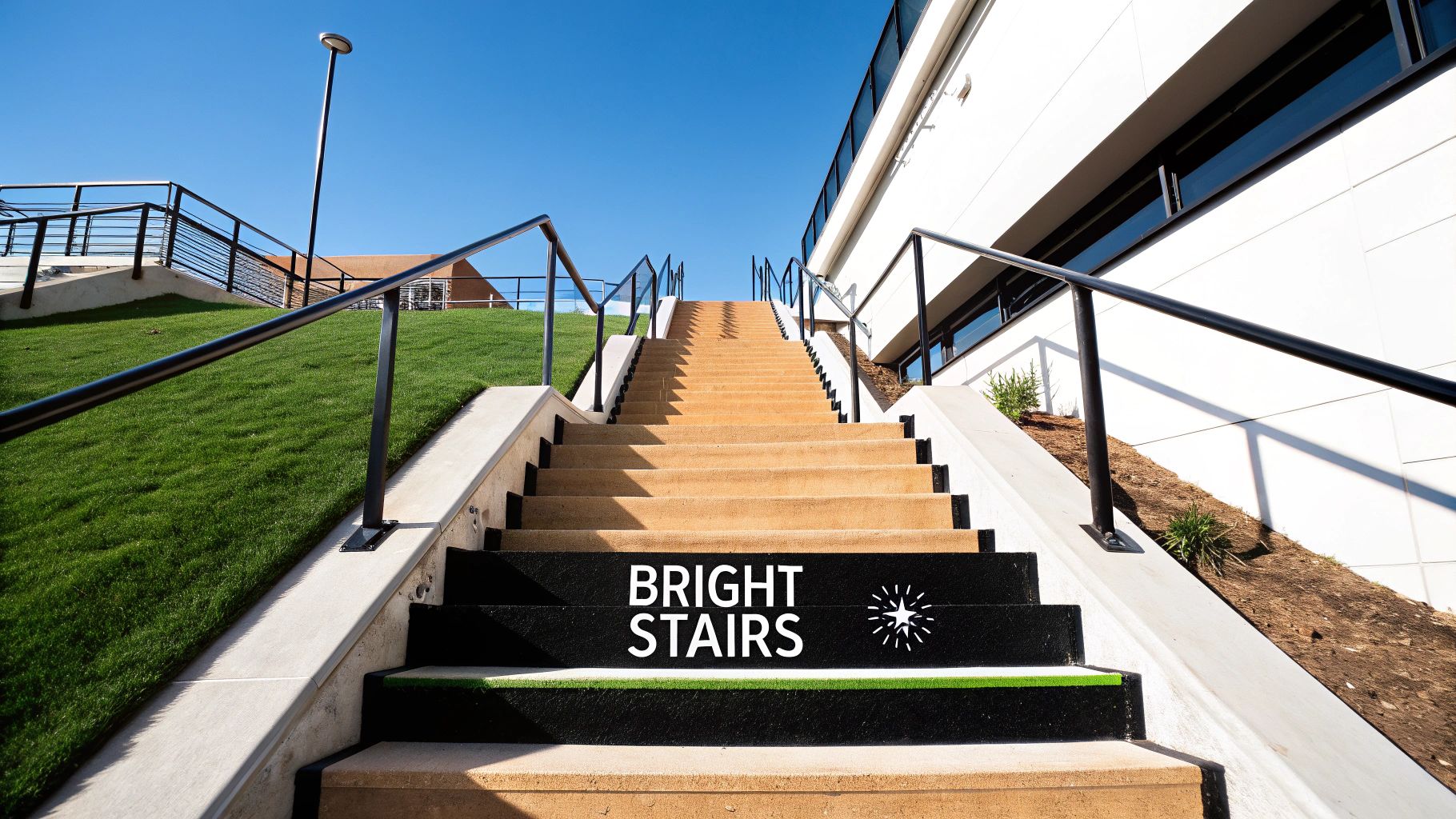
Once you've addressed the bathroom, it's time to turn your attention to two areas that go hand-in-hand: lighting and stairways. Poor lighting makes even the safest staircase a hazard, and tricky stairs are dangerous no matter how bright it is.
The great thing is, fixes in these areas are often straightforward and don't have to break the bank. But the return on safety? It's massive.
The logic is simple. If you can't clearly see where you're putting your feet, the risk of a misstep or trip skyrockets. As we age, our vision naturally changes, and lighting that used to be perfectly fine can suddenly feel dangerously dim. This isn't just about comfort—it's a fundamental part of preventing falls.
Brighten Your Home to Reduce Risks
Boosting a home's lighting is one of the quickest and most effective safety modifications you can make. It immediately improves visibility, gets rid of shadows that hide trip hazards, and cuts down on disorientation, especially at night. The goal is to create consistent, bright, and glare-free light throughout the house.
Think about that middle-of-the-night trip to the bathroom. Waking up in a dark room and fumbling for a light switch is a classic recipe for a fall. A simple solution like motion-activated night lights can be a game-changer, lighting up the path from the bedroom to the bathroom automatically.
Here are a few powerful lighting upgrades to consider:
- Swap Out for Brighter Bulbs: Ditch the old incandescent bulbs for brighter, energy-efficient LEDs. Look for "daylight" or "cool white" varieties—they produce a crisp, clear light that’s much closer to natural sunlight.
- Add Task Lighting: Place extra lights in key work areas. Under-cabinet lighting in the kitchen, a good reading lamp by a favorite chair, and bright lights in closets can eliminate those dark corners where obstacles lurk.
- Make Switches Easy to Find and Use: A light switch should be right at the entrance to every room. For long hallways or staircases, having switches at both ends is a must. We also find that rocker-style switches are much easier for people with arthritis to use than small, traditional toggles.
Think of good lighting as a safety net. It catches potential hazards before they become a problem by making every obstacle, step, and transition clearly visible. This simple change alone can transform a hazardous space into a secure one.
Securing Stairways for Safe Passage
Stairs are, without a doubt, one of the biggest fall risks in any home with more than one level. A single slip can cause a serious injury. The best approach is to combine great lighting with physical modifications to make those stairs as safe as they can be.
Reliable support is everything. We know that between 28% to 35% of people over 65 fall at home each year, and stairs are a major culprit. The good news? Research consistently shows that home modifications work. One review found that 65% of studies confirmed their effectiveness, with a separate study showing a 26% drop in fall injuries after installing things like handrails and better lighting. If you're interested, you can read more about these research findings and how they inform safety strategies.
Actionable Stairway Safety Solutions
Making a staircase truly safe requires looking at it from a few different angles. You need to consider handrails, tread visibility, and keeping the path clear.
Here are the essential steps we always recommend for making a stairway safer:
- Install Sturdy Handrails on Both Sides: So many homes only have a handrail on one side. Having them on both sides offers far more stability, which is critical for someone who may have weakness on one side of their body. Make sure they are anchored securely into wall studs and run the entire length of the stairs, from the very first step to the very last.
- Apply Non-Slip Treads: Hardwood or tile stairs can be incredibly slippery, especially in socks or slippers. Adhesive non-slip treads give each step the grip needed to prevent a foot from sliding off.
- Make Each Step Easy to See: The edge of each step needs to be clearly defined. If the stairs are carpeted, you might consider a carpet with a contrasting color along the nosing. Of course, good overhead lighting that illuminates the entire staircase without creating a harsh glare is also non-negotiable.
- Keep Stairs Completely Clear: This one sounds obvious, but it's a rule that gets broken all the time. Stairs are not a storage area. A single book, a pair of shoes, or a plant left on a step is a major tripping hazard that can easily lead to a devastating fall.
Choosing Between DIY and Professional Installation
Once you have a list of safety modifications, the big question is always, "Can I do this myself, or should I hire someone?" There's no single right answer—it really comes down to the specific job at hand. Getting this decision right is critical, because the quality of the installation directly impacts your loved one's safety.
Some updates are perfect for a weekend DIY project. Think of the simpler tasks, the ones that don't involve messing with your home's structure or needing to support a person's full weight. These are fantastic, quick wins to improve safety right away.
Then there are the jobs that absolutely need a professional's touch. For these, a small mistake isn't just a cosmetic issue; it can create a serious safety hazard. The guiding principle here is always safety first.
Projects Well-Suited for DIY
If you're reasonably handy, you can knock out several high-impact modifications yourself. These don't require specialized skills but make a world of difference.
- Placing Non-Slip Mats: This is one of the easiest and most effective things you can do. A good-quality mat in the tub, shower stall, and on the bathroom floor can prevent a devastating fall.
- Adding Plug-In Night Lights: Simply plugging in a few motion-activated or low-lumen night lights in hallways, bedrooms, and bathrooms is a five-minute job that makes nighttime navigation much safer.
- Removing Trip Hazards: Walk through the house and gather up clutter. Secure loose electrical cords against the baseboards and either remove throw rugs or tape them down securely.
- Improving Accessibility: Take an hour to rearrange the kitchen. Move everyday dishes, foods, and small appliances to lower shelves so they can be reached without a step stool.
When to Call a Professional
Some jobs are non-negotiable—they need an expert. My rule of thumb is this: if the item has to support body weight or involves electrical, plumbing, or structural changes, call a professional. An improperly installed grab bar can easily pull out of the drywall, causing a more severe injury than the slip it was meant to prevent.
For any modification that bears weight or impacts the structural integrity of your home, hiring an experienced professional is not an expense—it is the wisest and safest investment you can make.
Here are a few clear-cut examples of when to bring in the pros:
- Installing Grab Bars: A professional will locate the wall studs and use the correct hardware to ensure the bar is solidly anchored and can support hundreds of pounds of force.
- Installing Stair Lifts: This is a complex job involving mechanical and electrical components. For it to be safe and reliable, the installation has to be perfect.
- Widening Doorways: If a doorway needs to be widened for a wheelchair, it's a structural job that requires a skilled carpenter. If you're exploring options, you can learn more about wheelchair sales and rentals in St. Petersburg to see what kind of clearances you might need.
- Building Ramps: A truly safe ramp isn't just a few planks of wood. It requires a specific slope, width, and surface to meet safety standards and be genuinely usable.
Thinking Through the Finances of Home Modifications
Let's be honest: cost is a huge factor when you start planning these kinds of home updates. But I always encourage families to shift their perspective. Think of these changes less as an expense and more as a powerful investment in your loved one's independence and well-being.
Spending a little now to prevent a fall can save you from the astronomical costs of an emergency room visit, hospital stay, or long-term care later on. It’s a classic case of proactive care paying for itself many times over.
The Real-World Financial Impact
When you look at the numbers, the case for making these upgrades becomes crystal clear. A landmark study found that investing in home safety modifications can result in significant medical cost savings down the road.
Considering that a shocking number of personal bankruptcies in the U.S. are tied to medical bills, taking preventative steps at home isn't just a good idea—it's one of the smartest financial moves a family can make. If you want to dive deeper, you can see more in this in-depth analysis of fall prevention programs.
To Rent or To Buy? Making the Right Call
Another big question I get is whether it's better to rent or purchase equipment. The answer really comes down to how long you'll need it.
-
Renting makes sense for short-term needs. If you're helping someone through a post-surgery recovery, renting a hospital bed or a wheelchair for a few weeks or months is the perfect solution. You get the support you need without the long-term cost.
-
Buying is better for permanent solutions. For things that will become a permanent part of the home—like grab bars in the shower, a raised toilet seat, or a sturdy shower chair—purchasing is almost always more economical in the long run.
By thinking carefully about the expected duration of need, you can avoid unnecessary expenses. This is all about getting the right support in place without overstretching the budget.
Making the right choice here helps you put your resources where they matter most. For families in our area, checking out local medical equipment rental options can give you a great sense of what’s available for those temporary situations, ensuring safety is never out of reach.
Answering Your Home Safety Questions
Thinking about home safety modifications often brings up a lot of questions. It's completely normal to wonder where to start or how to handle certain situations. Over the years, we've heard just about every concern, so we've put together some answers to the questions we get asked most often.
Let's clear up some of that uncertainty so you can feel confident in your next steps. Remember, you're not in this alone.
When Is the Right Time to Start Making Changes?
This is easily the most common question we hear, and my answer is always the same: before you think you need to. It's far better to be proactive than to react to a fall or an injury.
The perfect time to start is when you first notice subtle shifts in a loved one's mobility. Maybe they've started using furniture to steady themselves or seem a bit hesitant around the stairs. Those are your cues. Waiting for a crisis forces you into rushed decisions, whereas starting early allows for thoughtful planning and a much smoother transition.
How Do I Talk to a Reluctant Parent?
This is a tough one. The conversation about home safety can feel really sensitive, especially since many older adults worry it's the first step toward losing their independence. The key is to frame it as a way to preserve their freedom.
Instead of leading with, "You need grab bars so you don't fall," try a softer, more collaborative approach. Something like, "I was thinking a grab bar right here would make getting out of the shower feel a lot more stable and comfortable. What are your thoughts on that?"
Focus the conversation on how home safety modifications for elderly are tools that empower them to stay independent in the home they love for as long as possible.
What Modifications Offer the Biggest Immediate Impact?
If you need to make the biggest difference on a limited budget, you'll want to target the high-risk zones first. I always advise people to focus on the "big three" because they prevent the most common—and often most serious—accidents.
- Secure the Bathroom: This is non-negotiable. The bathroom is statistically the most hazardous room in the house. Start with properly installed grab bars for the shower and toilet, add a sturdy shower chair, and use high-quality non-slip mats.
- Create Clear Pathways and Add Light: Get rid of tripping hazards. That means securing or removing throw rugs and clearing any clutter from walkways. Then, light the way! Good lighting is crucial, especially for those nighttime trips from the bedroom to the bathroom. Simple plug-in night lights can make a world of difference.
- Make Stairs Safer: Every staircase needs solid handrails on both sides. If your stairs aren't carpeted, adding non-slip treads is an easy and effective fix.
Tackling these areas first builds a solid foundation for safety and addresses the most immediate dangers.
Creating a home that is safe, comfortable, and allows for independence is one of the greatest gifts you can give a loved one. If you have more questions or you're ready to see what's possible, our team at Affinity Home Medical Equipment is here for you. With more than two decades of hands-on experience, we've been helping families find practical solutions right here in Pinellas County.
Explore Our Home Safety Solutions at Affinity Home Medical Equipment
Share This Article

Written by : Rich affinityrich@gmail.com
Follow Us
Latest Articles

October 14, 2026

October 14, 2026

October 14, 2026
