
How To Choose A Wheelchair: A Guide For St. Petersburg

Choosing a wheelchair is a deeply personal decision, one that [...]
Choosing a wheelchair is a deeply personal decision, one that can truly shape your daily freedom and mobility. It’s about finding the right fit for your body, your lifestyle, and your goals. The journey starts with an honest look at your physical abilities and daily routines, whether you need a lightweight transport chair for appointments and errands or a standard wheelchair for getting around every day. Making the right choice from the start is the key to living a more comfortable and active life.
Starting Your Wheelchair Selection Journey

When you first start looking, the sheer number of options can feel a bit overwhelming. But the best first step is always the simplest one: getting a clear picture of your unique needs. This goes beyond just a medical diagnosis—it’s about how you actually live your life, especially here in Pinellas County.
Just think about a typical day. Will you be maneuvering through the tighter spaces of a condo, or are you hoping to spend afternoons cruising along the waterfront at the St. Pete Pier? Answering questions like these will immediately help you narrow down the field.
Consider Your Physical Abilities and Environment
Your own physical strength and endurance play a huge role. For example, do you have enough upper-body strength to comfortably self-propel a manual chair all day? Or would a power wheelchair be a better match for your energy levels and help you achieve your mobility goals?
Here are a few key points to get you started:
- Your Mobility Level: Are you able to walk short distances, or will you rely on the wheelchair as your main way of getting around?
- Caregiver Assistance: Will a family member or caregiver often be the one pushing the chair? If so, a lightweight transport chair could be the perfect solution for both of you.
- Your Daily Environment: Think practically about your home's layout. Consider doorway widths, flooring types (carpet vs. tile), and any outdoor terrain you’ll encounter, like sidewalks, parks, or ramps.
Your selection journey is all about matching a wheelchair's features to your specific lifestyle. The goal is to find a tool that enhances your freedom, not one that creates new limitations.
Understanding the Financial Aspect
A common question we get is about payment options. It's important for our customers to know that we do not accept insurance for wheelchair purchases or rentals. This direct-to-consumer model lets us provide clear, upfront pricing without the delays and complexities that often come with insurance claims. It puts you in complete control of the decision, based on your needs and budget.
This kind of clarity is more important than ever. With an aging population and mobility impairments affecting nearly 250 million people worldwide, the demand for mobility aids is soaring. The global wheelchair market, valued at USD 9.34 billion in 2025, is projected to hit USD 19.56 billion by 2034.
If you have any questions about specific models, features, or pricing, our team is always here to offer personalized guidance. Just get in touch with our team, and we'll be happy to help.
Manual, Power, or Transport Chair? Finding the Right Fit
Once you’ve taken a good look at your daily life and mobility needs, it’s time to dive into the different types of wheelchairs available. The three main players are manual wheelchairs, power wheelchairs, and transport chairs. Each one is built for a different purpose, and figuring out their strengths is the key to matching a chair to your lifestyle.
The biggest question to ask is: who will be moving the chair? Is it you, or will you have a family member or caregiver helping out? The answer to that will point you in the right direction.
For instance, a classic manual wheelchair is perfect for someone who has the upper body strength to get around on their own. It keeps you active and in control. A transport chair, on the other hand, is designed to be pushed, making it a fantastic, lightweight option for quick trips to the doctor's office or running errands around Pinellas County with a companion.
The Self-Propelled World of Manual Wheelchairs
When most of us picture a wheelchair, the manual chair is what comes to mind. The user pushes on the large rear wheels to get around, which is a great way to maintain independence and physical strength. But they're not all the same.
A major difference is the weight of the frame. A standard steel-frame chair is built like a tank but can be a real workout for a user or caregiver to lift into a car trunk. That's where lightweight and ultra-lightweight models come in. Made from aluminum or even titanium, they are much easier to manage and are a game-changer for active people who travel often.
Think about a real-world scenario here in St. Pete. If you want to spend the afternoon exploring the shops on Central Ave, you'll need a chair that's responsive and easy to handle. An active person would likely feel much more comfortable in a lightweight manual chair with ergonomic hand rims, making it easier to cover the distance without getting worn out.
The Grab-and-Go Convenience of Transport Chairs
Transport chairs are a completely different breed. They have four small wheels and are built exclusively for a caregiver or companion to push. This design makes them significantly lighter and more compact than a standard manual wheelchair, so they're incredibly easy to fold and toss in a car.
These chairs are real lifesavers for short-term situations, like:
- Doctor's Visits: Getting from the parking lot into a medical building becomes a breeze.
- Social Outings: Enjoying a meal at a restaurant on Beach Drive without dealing with a bulky, heavy chair.
- Post-Op Recovery: They provide the perfect temporary support when you're healing and not quite back on your feet.
A transport chair is the ultimate "grab-and-go" mobility tool for anyone who will always have someone to help push. Its simplicity and portability are its biggest selling points.
Embracing True Independence with Power Wheelchairs
For those with limited strength or endurance, power wheelchairs (or electric wheelchairs) open up a whole new world of freedom. Operated with a simple joystick, these chairs can make it possible to navigate your home, visit neighbors, or explore your community all on your own.
The market definitely shows a strong trend toward these models. In 2024, electric wheelchairs made up over 56% of the market share, and that number is only expected to climb as the technology gets better and better.
While a power chair comes with a higher price tag (often $2,000-$10,000) compared to a manual chair (typically $200-$500), the investment in personal freedom is often priceless.
When you're looking at power chairs, you'll want to pay close attention to battery life, turning radius, and how sensitive the joystick controls are. A chair with a tight turning radius is a must for navigating smaller apartments or older homes in St. Petersburg, while one with a long-range battery is perfect for a full day out enjoying the sunshine.
You can dive deeper and see what we have available by checking out our wheelchairs for sale and rent in St. Petersburg.
Getting the Right Fit: Why Measurements Aren't Just About Comfort
Once you've narrowed down the type of wheelchair you need, the next step is arguably the most important: getting the fit just right. It's easy to think of a wheelchair as a simple piece of equipment, but a poor fit is more than just uncomfortable. It can lead to serious health problems, including bad posture, poor circulation, and even painful pressure sores.
Think of it like a pair of shoes. If they’re too tight or too loose, you’ll be miserable, and you might even hurt yourself. The same goes for a wheelchair. A seat that’s too wide makes it tough to propel yourself or navigate tight spaces in your home. A seat that’s too narrow can rub and cause skin irritation. Taking a few key measurements upfront ensures the chair becomes a natural extension of you, not something you have to fight against every day.
This diagram helps visualize the three main categories we’ve discussed, highlighting how you or a caregiver will interact with each one.
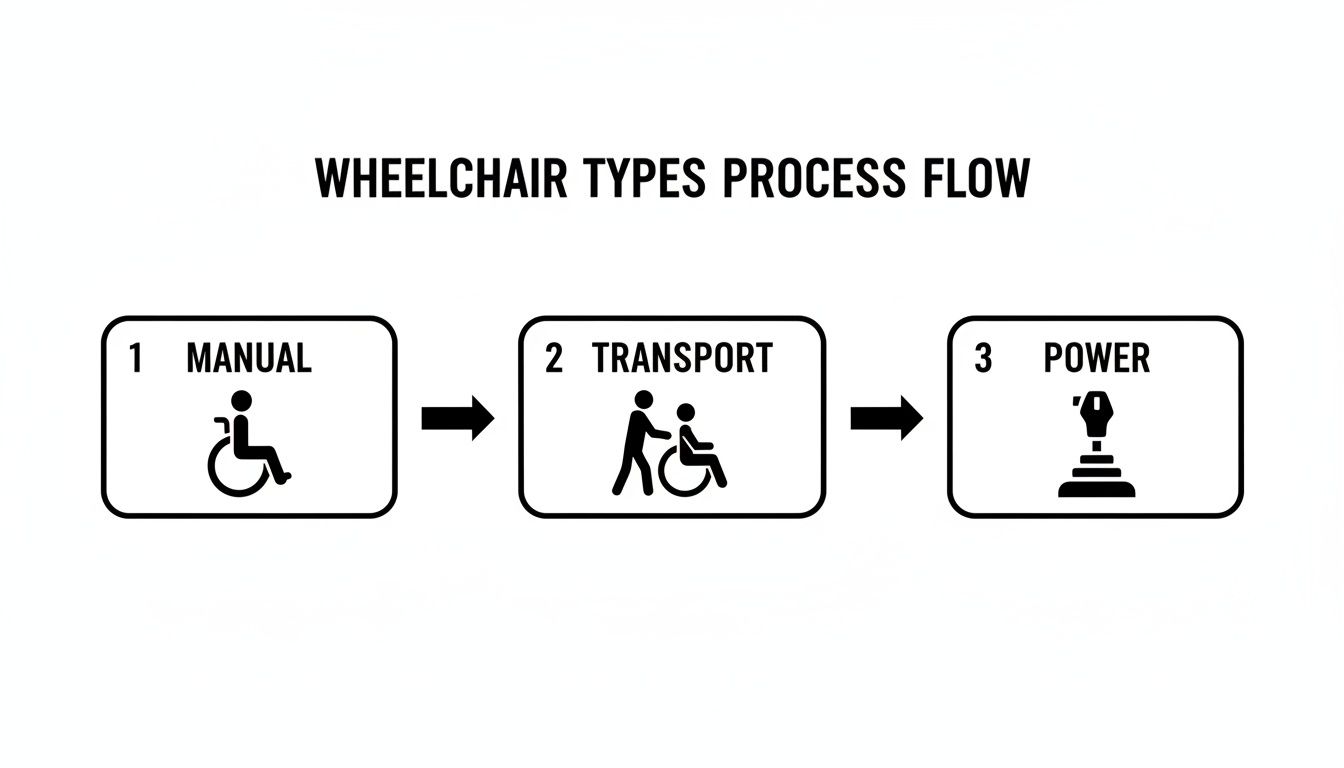
Whether it’s a self-propelled manual chair, a transport chair pushed by someone else, or a joystick-driven power chair, seeing them side-by-side clarifies your primary options.
The Most Important Measurements for Your New Wheelchair
Finding the perfect fit isn't complicated. All you need is a flexible measuring tape and a few minutes. Here are the core measurements we always start with.
Seat Width:
Have the person sit comfortably on a flat surface or a firm chair. Measure across the widest part of their hips or thighs, then add one to two inches. This little bit of extra room is crucial for comfort, allows for slight shifts in position, and accommodates bulkier clothing like a winter jacket.
Seat Depth:
While they are still seated with good posture, measure from the very back of their hips forward to the back of their knees. Now, subtract two inches from that number. This small gap prevents the front edge of the seat from digging into the sensitive nerves and blood vessels behind the knees—a common cause of pain and circulation issues.
We can't stress this enough: getting the fit right is a critical health decision. Skin breakdown from a poorly fitting wheelchair affects up to 60% of long-term users. Proper measurements are your first line of defense against these serious complications.
Looking Beyond the Seat: Other Key Dimensions
While seat width and depth are the foundation, a few other measurements are essential for creating a chair that provides all-day support and functionality.
- Back Height: This really depends on your mobility. For someone needing full torso support, you’ll want to measure from the seat base up to the shoulders. For active users who propel themselves, a lower backrest that stops just below the shoulder blades is often better, as it allows for a full range of motion for pushing the wheels.
- Seat-to-Floor Height: This is all about proper leg position. With your feet flat on the floor (wearing your typical shoes), measure from the back of your knee down to your heel. The footrests should be adjusted so your thighs are level with the floor, which helps distribute weight evenly.
- Armrest Height: Have the user sit with their arms relaxed at their sides and bend their elbow to a 90-degree angle. Measure from the seat surface up to their elbow. The armrests should be set at this height to provide support without making them hunch or shrug their shoulders.
A well-fitted chair is a game-changer. It's why we see standard seat depths of 16-18 inches on most adult chairs—it's a proven dimension for preventing skin breakdown. With the U.S. market making up about 34.1-35% of global wheelchair use, driven partly by a high rate of spinal cord injuries, the focus on proper sizing has never been more intense.
If you have more questions about fitting or any other aspect of choosing medical equipment, you might find the answer on our page covering frequently asked questions.
Customizing Your Wheelchair with Features and Accessories
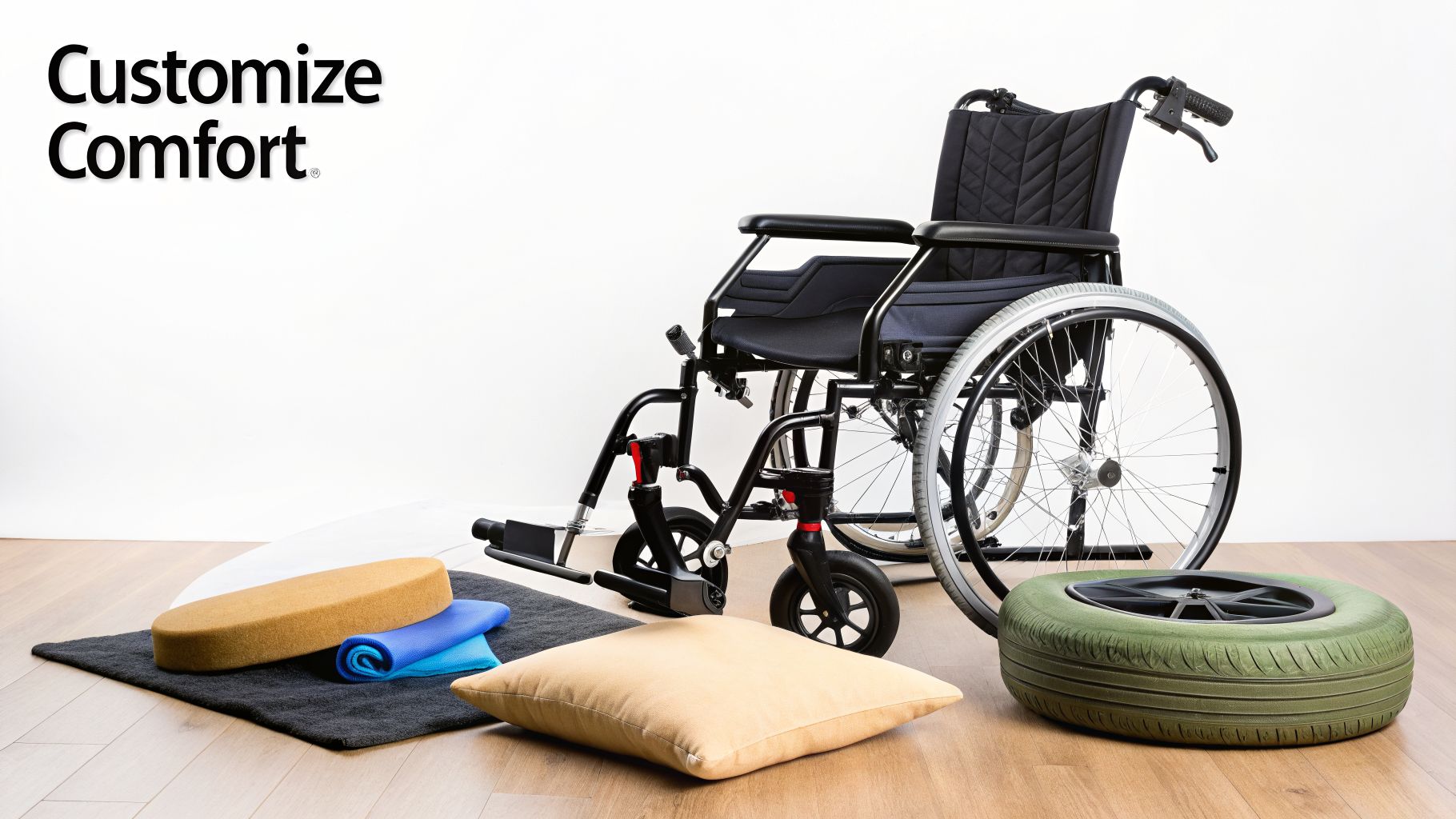
Once you've landed on the right type of wheelchair and taken all the key measurements, it's time to dial in the details. The frame is just the foundation. The real difference between a good chair and a great one comes down to the features and accessories that make it work for you.
These components aren’t just nice-to-haves; they are fundamental to your comfort, safety, and daily independence. Getting them right can turn a simple mobility device into a true extension of your body, enhancing your quality of life every single day.
Selecting Armrests and Footrests for Real-World Use
Two of the most important decisions you'll make involve the armrests and footrests. How you choose these will directly affect everything from pulling up to the dinner table to safely transferring into your car.
Armrests are your main point of contact for support and leverage. Here’s what we see work best for our clients:
- Flip-Back Armrests: These are a fantastic solution for anyone needing to get close to a desk or table. They also move completely out of the way, which makes side transfers to a bed or chair much easier.
- Height-Adjustable Armrests: If you need to customize your support to reduce shoulder or back strain, these are a non-negotiable. Finding that perfect height is key to maintaining good posture.
- Desk-Length Armrests: These are shorter than full-length arms and are specifically shaped to slide right under a table, preventing you from being stuck too far away.
Footrests are all about leg support and creating a clear path for transfers. The two primary styles serve very different functions. Standard swing-away footrests are the most common, as they pivot aside to give you clear, unobstructed space to stand up or sit down.
In contrast, elevating legrests are often a medical necessity. They're essential for anyone who needs to manage swelling, improve circulation, or keep a leg straight and supported after an injury or surgery.
Why Wheels and Cushions Make All the Difference
Don't overlook the wheels and the cushion. These two items have a massive impact on your day-to-day comfort and how the chair actually performs on different surfaces.
The wheels, for instance, dictate the quality of your ride. Solid tires are a great, maintenance-free option because they can't go flat and work perfectly on smooth indoor surfaces. But if you plan on navigating the sidewalks and varied terrain around St. Petersburg, pneumatic (air-filled) tires will give you a much smoother, more cushioned experience by absorbing the bumps along the way.
Of all the accessories, the seat cushion is arguably the most critical. A high-quality pressure relief cushion isn't a luxury—it's an essential component for preventing painful pressure sores and ensuring you can sit comfortably for hours at a time.
Whether it’s a gel, foam, or air-cell model, the right cushion distributes your weight properly and protects vulnerable skin. You can explore our diverse selection of wheelchair accessories to find the combination of support and comfort that’s perfect for you.
Making the Smart Choice: Renting vs. Buying
You've navigated the world of wheelchair types, figured out the right measurements, and picked the essential features. Now comes the big practical question: Should you rent or buy? This decision really boils down to your specific situation and how long you'll need the chair. Getting this right from the start means you get the mobility you need without paying for more than you have to.
Renting is often the perfect answer for temporary needs. Think about it—if you're just recovering from a surgery, have a family member visiting who needs help getting around, or even just want a chair for a weekend trip to the beach, renting is a flexible and affordable option. It solves a short-term problem without the long-term commitment.
The Clear Benefits of Renting a Wheelchair
Renting has some real advantages, especially when your needs are temporary or you're just not sure what the future holds. It's a low-risk way to secure your mobility without the big price tag of buying new. This is especially true in a few common situations we see all the time here in Pinellas County.
Renting makes the most sense if you're dealing with:
- Short-Term Recovery: Healing from an injury or surgery? Renting a chair for a few weeks or months gives you the support you need until you're back on your feet, without cluttering up your home afterward.
- Visiting Family or Friends: When a loved one comes to visit St. Pete and needs some help getting around, a rental is the perfect, stress-free solution. Let them enjoy the Dali Museum or a walk along the Pier without worry.
- Trying Before You Buy: Eyeing a specific model but not 100% sure it’s the one? Rent it for a week. This is the ultimate test drive, letting you see how it actually handles in your home, in your car, and during your day-to-day life.
One important thing to know about how we work: We keep our pricing simple and direct because we do not take insurance. This means no waiting on approvals or getting buried in paperwork. You can get the equipment you need, right when you need it.
When Purchasing a Wheelchair Is the Right Move
On the flip side, buying a wheelchair is the obvious choice when it's for long-term, everyday use. If a wheelchair is going to be a part of your daily life, owning it is an investment in your independence and comfort.
This is especially true if you need a chair that's customized just for you. Ownership allows you to get a perfect fit—from custom-sized seating and specialized pressure-relief cushions to the exact armrest and legrest setup that supports your body. For permanent conditions, the one-time cost of buying almost always makes more financial sense than renting indefinitely.
Ultimately, whether you rent or buy is a personal call based on your unique needs and how long you expect to use the chair. If you're looking for a flexible, short-term mobility solution, checking out our St. Petersburg medical equipment rentals is a great first step. For ongoing, daily use, purchasing offers a permanent, personalized answer.
Answering Your Top Wheelchair Questions
When you're trying to choose the right wheelchair, a lot of practical questions pop up. It's completely normal. From prescriptions and payment to why the weight of the chair is such a big deal, getting straight answers is the first step toward making a confident choice. We hear these questions all the time, so let's clear them up.
Do I Need a Prescription to Buy a Wheelchair?
This is probably the most common question we get. The short answer is no. For most standard manual wheelchairs and transport chairs, you do not need a prescription to buy one directly.
You can walk into our St. Petersburg store, find the chair that fits your needs, and take it home the same day. This direct approach means you get the mobility help you need right away, without having to wait for a doctor's appointment.
How Does Payment Work?
To keep things simple and transparent for our Pinellas County neighbors, we do not accept insurance. It’s a policy that might seem unusual at first, but it allows us to offer clear, upfront pricing without the headaches and long delays that often come with insurance claims.
This direct-pay model means you know exactly what you're paying for and can get your equipment immediately—no waiting for approvals from a third party.
As you plan for long-term accessibility, it's wise to think about the bigger picture. Home modifications are often part of the journey. For example, researching the average wheelchair lift installation cost can help you budget for future projects that make your home even more accessible.
Why Does the Weight of the Wheelchair Matter So Much?
The overall weight of a wheelchair is one of the most important—and often overlooked—details. It impacts not just the person using it, but also anyone who helps them.
Think about the daily reality for a family member or caregiver. A lighter chair makes a huge difference in these common situations:
- Lifting it into a car: A lightweight aluminum wheelchair might weigh around 25-35 pounds. Compare that to a standard steel model that can easily top 45 pounds. That extra weight adds up fast when you're hoisting it into a trunk several times a day.
- Getting over a curb: Encountering a single step or a high curb is much less of an obstacle with a lighter chair.
- Storing it away: A lighter, more compact chair is just plain easier to fold up and tuck away in a closet or the corner of a room.
For someone propelling their own manual wheelchair, a lighter frame means less work and less fatigue. It translates directly into having more energy for the things that matter. While weight capacity is vital for safety, the chair's own weight is all about practical, day-to-day use.
At Affinity Home Medical Equipment, our goal is to help you find a real solution that works for your life. Whether you need a simple transport chair for trips to the doctor or a sturdy wheelchair for daily independence, our team is here to help.
Stop by our showroom in St. Petersburg to see what we have in stock. You can try out different models and find the right fit for a same-day purchase or rental.
Take the next step toward more freedom and confidence. Learn more at https://affinityhomemedicalequipment.com.
Share This Article

Written by : lori@netcodesign.com
Follow Us
Latest Articles

October 13, 2026

October 13, 2026

October 13, 2026
