
How To Make Home Safe For Elderly: A Room-by-Room Guide

When we talk about making a home safe for an [...]
When we talk about making a home safe for an older parent or loved one, it really boils down to a few core ideas: preventing falls, addressing high-risk areas like the bathroom, and making sure the entire house is easy to navigate. It’s a proactive mindset that can dramatically lower the risk of common household accidents and help them stay independent longer.
Why Home Safety For Seniors Is So Urgent
There's a reason we're having this conversation. The comfort of home is priceless, but as we age, that familiar space can start to present new challenges. Small changes in mobility, balance, or even vision can turn a simple area rug, a poorly lit hallway, or a wet bathroom floor into a serious hazard.
This isn't about making a few minor adjustments. It’s about looking at the home through a new lens—one that accounts for a person's changing needs and works to support them.
The numbers really bring this into focus. In 2023, an almost unbelievable 125,700 people in the U.S. died from preventable injuries that happened at home. That's a huge jump from two decades ago. Falls and poisonings are the main culprits, with falls causing 32,000 of those deaths.
For older adults, the situation is even more critical. Unintentional falls led to the deaths of roughly 41,400 people aged 65 and over in 2023. You can explore the full scope of home injury data to get a deeper understanding of these risks.
From Worrying Statistics to Real-World Solutions
Those figures can feel overwhelming, but they shouldn't be a source of fear. Instead, let them be the motivation to take action. When you learn how to make a home safe for an elderly loved one, you’re equipping yourself with practical strategies that truly work. Every single change you make, big or small, adds another layer to their safety net.
This guide is designed to give you a clear, room-by-room plan to do just that. We'll walk through:
- How to spot and get rid of those common hazards that are so easy to overlook.
- Simple modifications you can make to make daily life safer and less of a struggle.
- The kind of supportive equipment that can make a world of difference for mobility and independence.
Taking these steps transforms a home from a place of potential worry into a genuine sanctuary. It's about building confidence and ensuring your loved one can continue living with dignity and security in the place they call home. It all starts with understanding the risks and then taking clear, manageable steps to address them.
Upgrading The Bathroom For Maximum Safety
Of all the rooms in the house, the bathroom is where we see the most accidents, especially for older adults. It's a perfect storm of hard surfaces, water, and the physical maneuvering needed for daily hygiene. The good news is that a few smart, targeted upgrades can turn this high-risk area into a space that feels safe and comfortable.
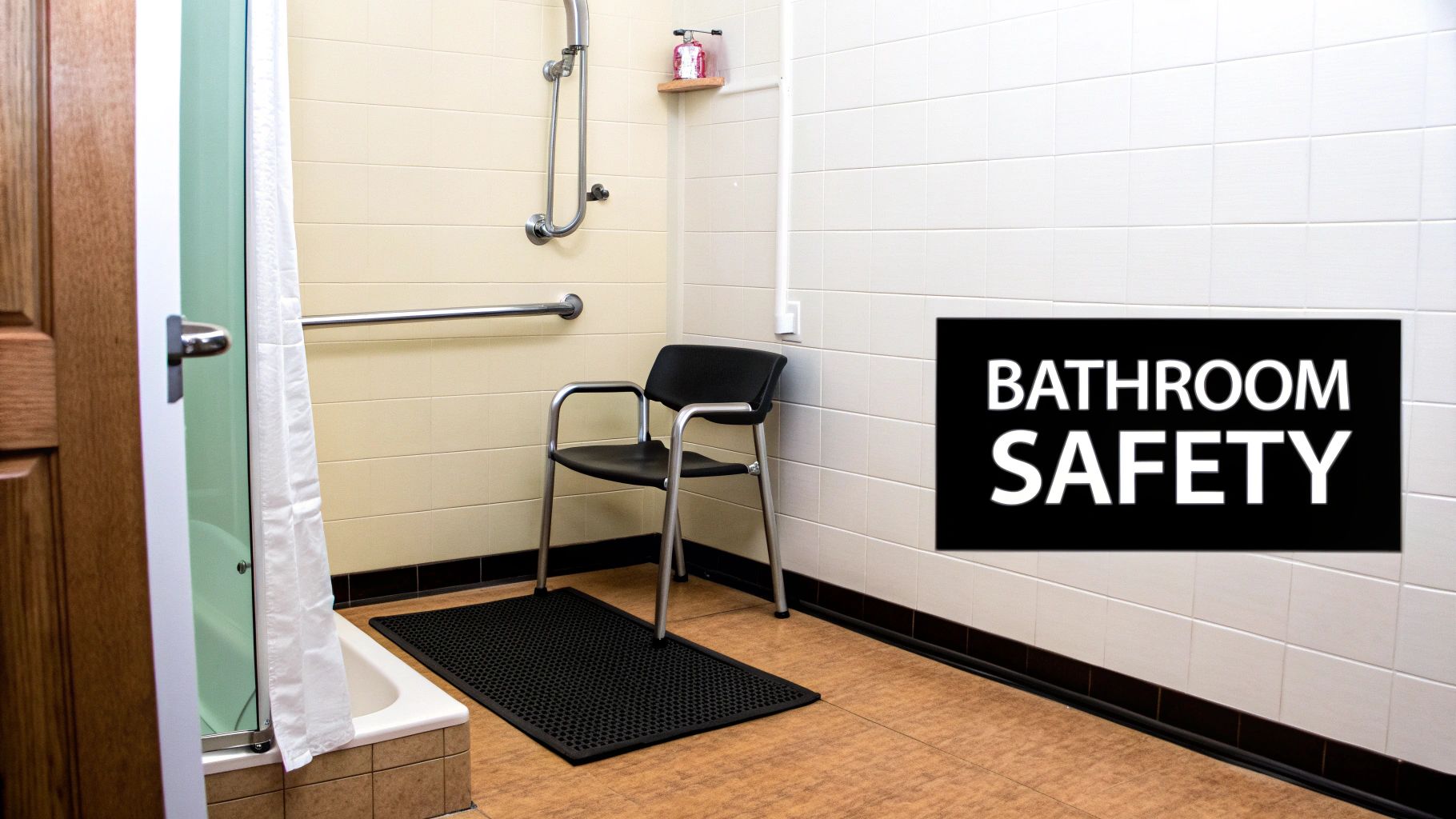
When people ask me how to make a home safe for an elderly loved one, I almost always tell them to start here. These changes aren't just about adding equipment; they're about giving back a sense of confidence and independence in a very personal space.
Strategic Placement Of Grab Bars
Grab bars are probably the single most effective safety feature you can add to a bathroom, but where you put them is everything. Just screwing one into the drywall won't cut it—they need to be anchored securely into wall studs to provide real, life-saving support when someone puts their full weight on it.
Think about the path someone takes in the bathroom:
- Inside the shower or tub: You'll want a vertical bar near the entrance for help stepping in and out, plus a horizontal one along the main wall for stability while washing.
- Next to the toilet: This is a critical spot. A grab bar here provides the leverage needed to sit down and get back up without straining joints or feeling dizzy.
- Between fixtures: If there's a short walk from the toilet to the sink, a bar along that wall provides a steadying handhold.
A well-placed grab bar gives someone a firm grip right when they need it most, dramatically cutting the risk of a fall on wet surfaces. It’s a simple change with a powerful impact.
Enhancing Stability In Wet Areas
Slick, wet tiles are a recipe for disaster. Even with grab bars in place, secure footing is non-negotiable. That's where non-slip mats and specialized seating create another layer of protection.
You'll want a high-quality, non-slip mat—the kind with heavy-duty suction cups on the bottom—both inside the tub or shower and on the floor just outside of it. This gives a person instant, secure footing the second they step out.
For anyone who gets tired easily, feels dizzy, or struggles with balance, a shower chair or transfer bench is a game-changer.
- A shower chair sits completely inside the tub or shower stall, letting a person bathe comfortably while seated. This saves energy and reduces the amount of time they have to stand on a slippery surface.
- A transfer bench is an even safer option. It straddles the side of the tub, so a person can sit down on the bench outside the tub and then safely slide across into the shower. It completely eliminates the need to step over that high tub wall.
These aren't just conveniences; they're essential tools for preventing falls. They empower someone to bathe safely and with dignity, without the constant worry of losing their balance.
Making The Toilet Safer And More Accessible
You might not think about it, but the simple act of getting on and off the toilet can be a real struggle for someone with joint pain or muscle weakness. A standard toilet is quite low, demanding a lot of effort from the knees and hips.
A raised toilet seat is an incredibly simple and effective fix. These devices fit right onto the existing toilet bowl and add 3 to 5 inches of height. That small difference is huge—it drastically reduces the distance a person has to lower themselves, easing the strain and making the process much safer.
Many models even come with built-in armrests, combining the benefits of a riser and grab bars into one handy unit. When you pair these bathroom modifications with other mobility aids, you start to build a complete safety net. To see how this fits into a bigger picture, you can learn more about walkers and rollators in our guide. This kind of whole-home approach is what truly supports a safer, more independent life.
Creating Clear Pathways In Living Spaces And Hallways
Once the bathroom is secured, the next logical place to focus on is the areas people move through most: the living room, hallways, and stairs. These are the arteries of the home, but they're often filled with subtle hazards that can easily lead to a fall. With a bit of strategic thinking, you can transform these high-traffic zones into safe, clear pathways that encourage confident movement.
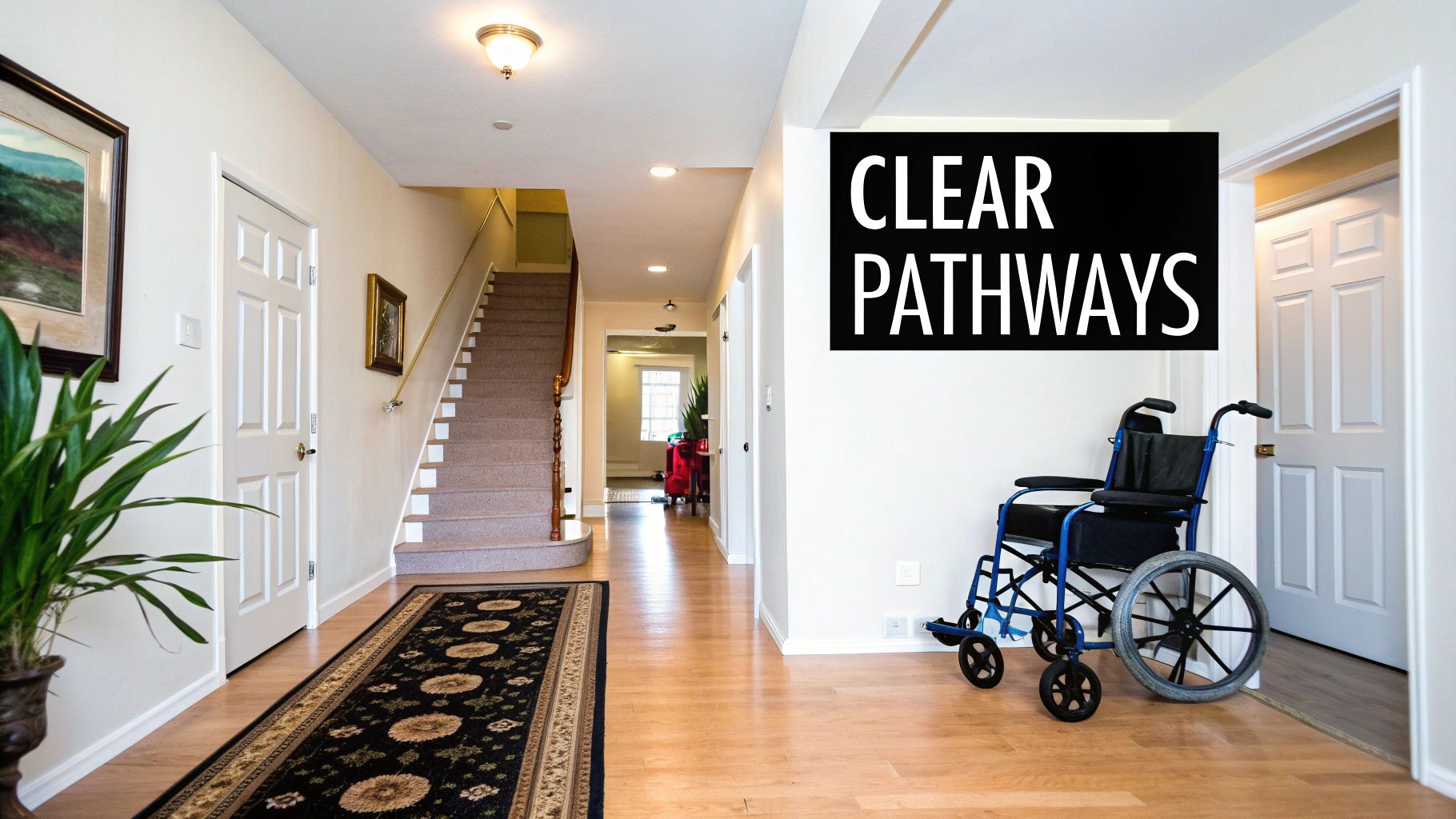
This goes way beyond simple tidying up. It's about intentionally designing an environment where someone using a cane, walker, or just their own two feet can get from point A to point B without worrying about tripping over clutter, catching a foot on a rug, or stumbling in a dark corridor.
The statistics are truly sobering. Just in 2023, falls were responsible for a staggering 32,000 deaths in U.S. homes, making up 26% of all fatal home-related incidents. When you consider that an estimated 14 million seniors experience a fall each year, it becomes crystal clear how things like poor lighting or uneven floors turn everyday spots into real danger zones. You can discover more insights on home and community safety statistics to get the full picture.
Decluttering for Clear, Wide Walkways
The single most impactful change you can make is to clear the pathways. A lifetime of belongings can quickly create an obstacle course, especially for someone with unsteady balance or who needs a mobility aid. The goal here is simple: create a clear path at least 36 inches wide throughout the home.
Walk the most-used routes yourself—from the bedroom to the bathroom, the living room to the kitchen. Keep an eye out for these common culprits:
- Excess Furniture: That extra end table might look nice, but if it forces someone to sidestep or squeeze by, it's a hazard.
- Loose Cords: Electrical and phone cords snaking across a walkway are a notorious tripping risk. Tuck them behind furniture, run them along baseboards, or use dedicated cord covers.
- Floor Clutter: Stacks of magazines, books, or stray boxes on the floor have to go. They’re accidents waiting to happen.
Think of it this way: a walker or wheelchair needs a clear turning radius. If a path is too narrow or cluttered, it doesn't just make movement difficult—it makes it dangerous.
Addressing Rugs and Flooring Hazards
Area rugs can make a room feel cozy, but for an older adult, they are one of the biggest tripping hazards in the house. A curled edge or a small mat that slides is all it takes to cause a serious fall.
You don't have to go scorched-earth and remove every single rug, but you absolutely must make them safe.
- Secure All Rugs: Use double-sided rug tape or quality non-slip pads under every area rug. Anchor them firmly to the floor so they can't bunch up or slide.
- Ditch the Throw Rugs: Small, unsecured throw rugs, especially those flimsy ones often found in kitchens and bathrooms, should be removed entirely.
- Check Carpet Edges: If you have wall-to-wall carpeting, make sure it’s securely tacked down everywhere, paying close attention to doorways and transitions between rooms.
Illuminating Hallways and Stairs
Poor lighting is another silent contributor to falls, particularly at night or on overcast days. As we get older, our eyes need significantly more light to see clearly, and shadows can easily hide obstacles or play tricks on our depth perception.
Make it a mission to brighten up the home's main arteries.
- Boost Your Bulbs: Use the highest-wattage bulbs your fixtures can safely handle, especially in hallways, stairwells, and entryways.
- Add Night Lights: Plug in motion-activated or light-sensing night lights along the path from the bedroom to the bathroom. This is a simple, inexpensive fix that makes a world of difference.
- Make Switches Accessible: Light switches should be easy to find and reach at the entrance to every room. For long hallways or staircases, having switches at both ends is non-negotiable.
Reframing Mobility Aids as Tools of Empowerment
Let’s be honest—accepting the need for a cane or a walker can be a tough emotional hurdle. It's often seen as giving up or losing independence. It’s so important to flip that script. These devices are not signs of weakness; they are tools of empowerment.
A walker provides the stability to cross a room with confidence. A cane offers that crucial third point of contact to maintain balance. Using these aids is what prevents the fall that could lead to a serious injury and a true loss of independence. Embracing them is about taking control. For those who need a bit more help covering longer distances, exploring other options can be life-changing. You might find our guide on mobility scooters for sale and rent in St. Petersburg helpful.
Another fantastic piece of equipment for the living room is a lift chair. It looks and feels just like a comfy recliner, but its powered lifting mechanism gently tilts the chair forward, easing the user into a standing position. This simple motion prevents the strain, unsteadiness, and dizziness that can happen when trying to push up from a low sofa—a very common trigger for falls.
Optimizing The Bedroom For Rest And Respiratory Health
The bedroom should be a sanctuary—a place for true rest and recovery. For many older adults, though, it can become a space filled with hidden risks, especially after the sun goes down. Navigating a dark room or managing medical equipment in the middle of the night can be a real challenge. A thoughtfully arranged bedroom is an absolute cornerstone of any effective home safety plan, focusing just as much on respiratory support as it does on preventing falls.
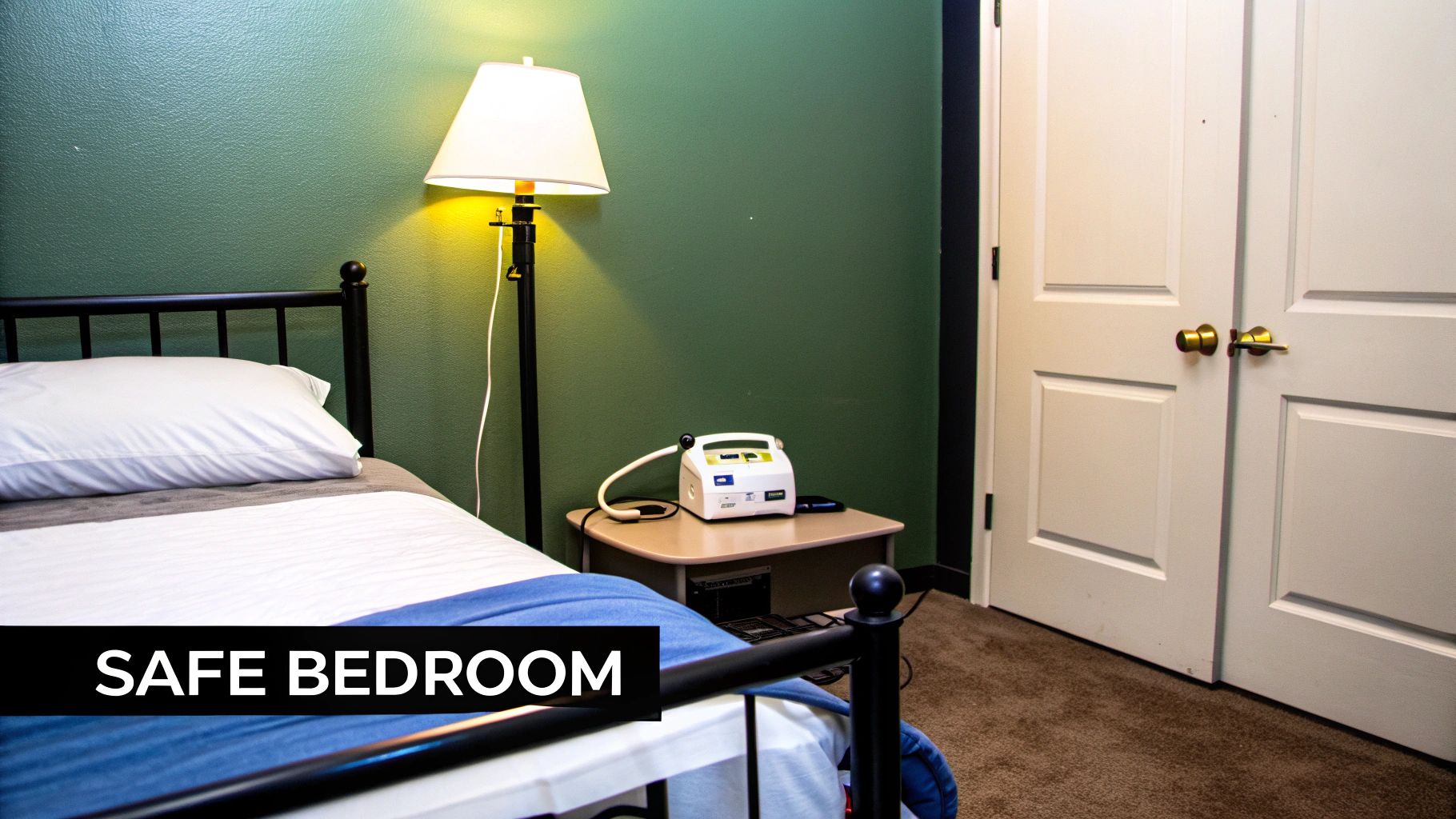
A well-organized space drastically cuts down on nighttime falls, which so often happen during those late-night trips to the bathroom. But a truly safe bedroom goes beyond just clearing a path. It also has to accommodate the specific needs of anyone dealing with conditions like COPD or sleep apnea, making sure their equipment is set up to work properly and safely.
Creating A Fall-Proof Bedroom Layout
That journey from the bed to the bathroom at 2 a.m. is one of the most common scenarios for a fall. The goal here is simple: make that trip as straightforward and obstacle-free as possible.
Start by carving out a clear, wide path from the bedside to the doorway. This means getting rid of any stray furniture, laundry baskets, or general clutter that could trip someone up in the dark. You also have to be vigilant about cords—for lamps, clocks, or medical devices. They should always be secured flush against the wall or tucked behind furniture, never stretched across a walking path.
Next, let's talk about lighting. A lamp on the nightstand, within easy reach, is non-negotiable. The light should come on before their feet hit the floor. Even better are the plug-in, motion-activated nightlights that create an illuminated runway from the bedroom to the bathroom. They provide just enough light to see clearly without a jarring blast of brightness.
The bed itself is a huge part of the equation. If a bed is too high or too low, it makes getting in and out both difficult and risky. You're looking for that sweet spot where their feet can rest flat on the floor when they're sitting on the edge of the mattress. That creates the stable base they need to stand up safely.
Prioritizing Respiratory Safety and Equipment Management
For so many seniors, especially those managing Chronic Obstructive Pulmonary Disease (COPD) or sleep apnea, the bedroom doubles as a medical hub. Handling this equipment correctly isn't just about comfort—it's absolutely critical for their health and safety.
Proper setup is everything. Long oxygen tubing and CPAP hoses are notorious tripping hazards if they’re just left coiled on the floor.
- Tame the Tubing: Use simple tubing clips or strategically run the lines along the headboard or baseboard to keep them completely out of walkways.
- Give Equipment a Stable Home: The oxygen concentrator or CPAP machine needs its own sturdy, level spot on a nightstand where it won’t get knocked over. Make sure it has plenty of room to breathe and isn't shoved against a wall or buried under blankets.
- Keep it Clean: Always follow the manufacturer’s instructions for cleaning and maintenance. This means washing masks and hoses regularly and swapping out filters on schedule to prevent nasty respiratory infections.
This kind of attention to detail ensures the equipment not only works as it should but doesn't create new dangers. Many families find professional guidance invaluable here; you can learn more about St. Petersburg oxygen concentrators for sale and rent to get a better sense of the options.
Enhancing Comfort and Accessibility
Sometimes, the smallest changes make the biggest impact. Simply having a phone or a medical alert button right there on the nightstand provides immediate access to help and can bring incredible peace of mind to everyone in the family.
You might also consider adding a sturdy bed rail. These aren't just for preventing falls out of bed; they offer a firm handhold for shifting positions during the night and for making that transition from lying down, to sitting up, to standing. It's a simple tool that delivers a major boost in stability and confidence, helping your loved one maintain their independence.
Managing Medications And Putting Emergency Plans in Place
Once the physical hazards around the home are handled, it’s time to focus on the routines that keep things running safely day-to-day. This really boils down to two key areas: managing medications and knowing exactly what to do in an emergency. Putting a little thought into these systems now provides a huge layer of security and peace of mind down the road.
Getting these organizational habits right is just as important as installing a grab bar. It helps prevent accidental poisonings—a surprisingly common cause of injury at home—and makes sure help can arrive quickly when every second counts.
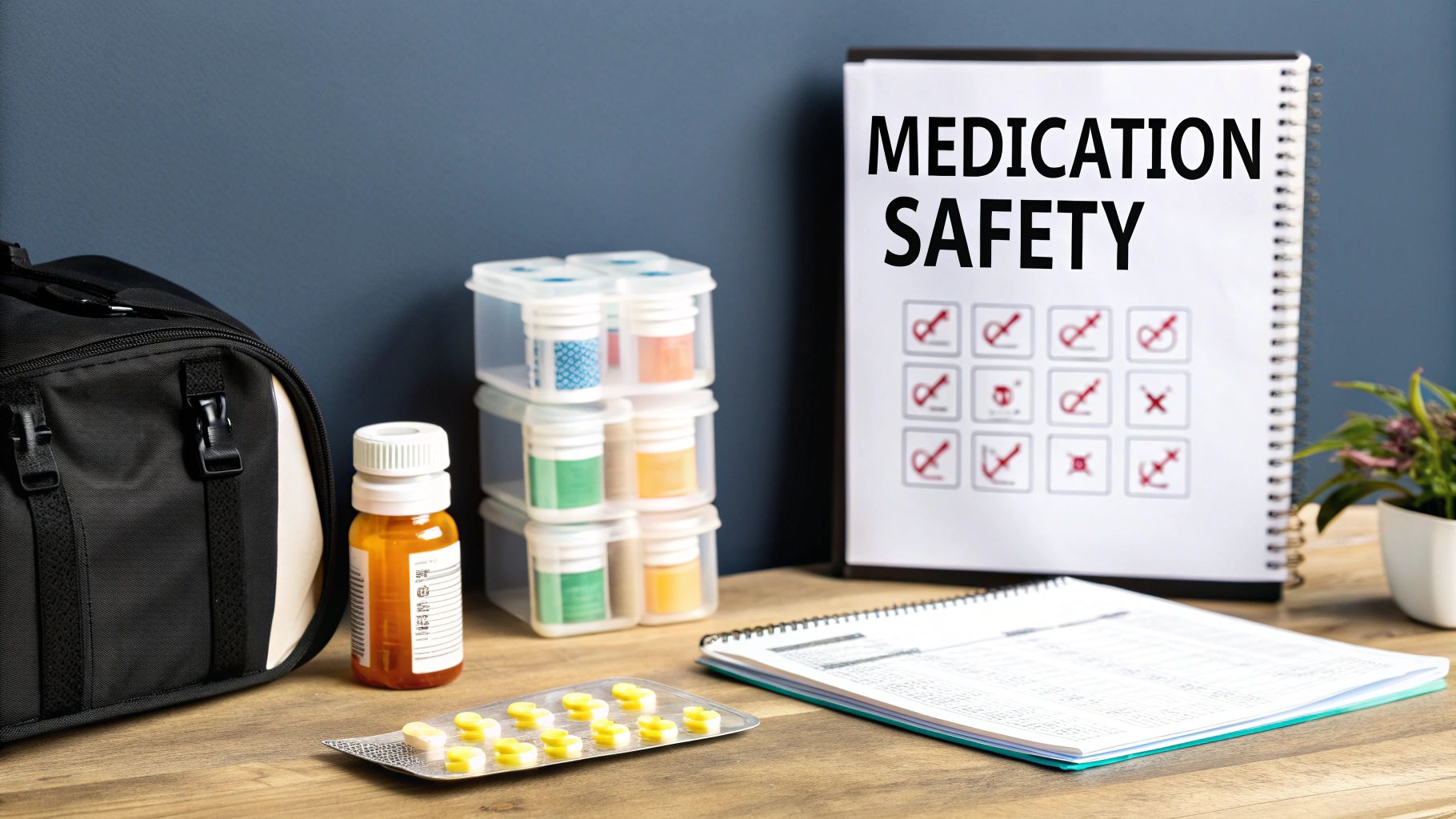
When an older adult is juggling multiple prescriptions, keeping everything straight is a real challenge. It's easy to get confused, which can lead to missed doses or, worse, accidental double-dosing. Both scenarios can have serious health consequences, but a simple, organized system makes all the difference.
Making Medication Management Foolproof
First things first: get those pills out of their original, confusing bottles and into a system that’s easy to follow. This is especially critical for anyone with vision challenges or memory issues.
A weekly or even monthly pill organizer is your best friend here. I've seen firsthand how pre-sorting medications into clearly marked slots for each day and time (morning, noon, evening) can turn a stressful daily chore into a simple, worry-free habit. It completely removes the guesswork.
Next, set up some reminders so a dose is never missed.
- Low-Tech Solutions: A basic digital watch alarm or a simple kitchen timer works wonders. Set it for each time a medication needs to be taken.
- Smartphone Nudges: Use the phone's calendar or alarm app to create recurring daily alerts. They're easy to set up and very reliable.
- Automated Dispensers: For more complex schedules, you might look into an automated pill dispenser. These devices can be programmed to release only the correct pills at the right time, often sounding an alarm to get your attention.
A "master list" of all medications is non-negotiable. Write down each drug's name, the dosage, how often it's taken, and what it's for. Keep a copy on the fridge and stick another one in an emergency "go-bag" so it’s always ready.
Building A Simple, Effective Emergency Plan
In a real emergency, it’s hard to think clearly. That's why having a plan written down ahead of time is so important—it ensures crucial information is right where you need it, when you need it most. And this plan doesn't have to be complicated to work.
Start with a highly visible emergency contact list. Print it in a large, bold font and post it somewhere central, like right on the refrigerator door or next to the main phone.
Make sure it includes:
- 911 (clearly labeled for Fire, Police, Ambulance)
- The primary doctor’s office number, including any after-hours line
- Phone numbers for a few key family members or trusted neighbors
- The Poison Control Center hotline
It’s also a great idea to prepare a small "grab-and-go" bag. This bag can hold copies of important documents (like power of attorney), the master medication list, and any other critical health info. If an unexpected trip to the hospital happens, you’ll save precious time by just grabbing the bag.
Finally, a medical alert system can be an absolute lifesaver. These devices, which usually come as a pendant or wristband, connect directly to emergency services at the push of a button. For someone living alone, they provide an incredible sense of security, knowing that help is always within reach.
If you have more general questions about setting up a safe home, we’ve answered many common ones in our list of frequently asked questions about home medical equipment.
Your Partner In Building a Safer Home
Making a home safer is a continuous effort, not a one-and-done project. We've covered a lot of ground in this guide—from the simple act of installing grab bars in the bathroom to rethinking the lighting in your hallways. Each suggestion is designed to give you real, practical solutions. The whole point is to help maintain independence and bring a little more peace of mind to everyone involved.
By tackling these changes, you're doing more than just making adjustments; you're transforming a house into a true safe haven. And remember, every little thing counts. But let's be honest, it's easy to feel a bit overwhelmed with all the options and to-dos.
You Don't Have To Go It Alone
Please know you're not expected to have all the answers. While this guide gives you a solid starting point, every person and every home is different. Trying to pair the right solution with a specific challenge can feel like trying to solve a puzzle with missing pieces.
That's where talking to a professional can make all the difference. It turns a stressful task into a straightforward conversation. A team with years of hands-on experience has seen it all and can offer personalized insights you might not have even thought of. This kind of guidance helps ensure you're putting your effort (and money) in the right places.
Reaching out for help isn't giving up—it's taking a smart, proactive step to get the best possible results. A professional can help you prioritize what needs to be done, recommend the right equipment, and bring clarity to the whole process.
Finding The Right Equipment and Support
Having the right partner means finding someone who can help you tailor solutions to your exact needs, your home, and your budget. Whether you need a simple shower chair, are considering a lift chair, or have questions about respiratory supplies, a trusted local expert makes everything easier. This is about building a support system you can count on as your needs change over time.
For example, just figuring out whether to rent or buy a piece of equipment can be a big decision. For someone coming home after surgery, renting a hospital bed is often the perfect short-term fix. Our team can walk you through these kinds of choices with clear information and support. If you think this might be a good fit, you can learn more about renting or buying hospital beds in St. Petersburg and see how it fits into your plan.
Here at Affinity Home Medical Equipment, we're dedicated to being that reliable partner for families all across Pinellas County. We’re here to listen and help you find practical, effective solutions that make home a safer, more confident place to be.
Common Questions We Hear About Senior Home Safety
As a caregiver, your mind is probably swimming with questions about how to make your loved one's home as safe as possible. It’s completely normal. Over the years, we've heard just about every concern, so let's walk through a few of the most common ones.
"I'm Overwhelmed. What Are The First Three Things I Should Do?"
It's easy to feel like you have to do everything at once. You don't. Focusing on the biggest risks first makes a huge difference and helps the whole process feel more manageable.
- Tackle the Bathroom First: This room is, without a doubt, the highest-risk area for falls. Start by installing grab bars next to the toilet and in the shower. A good non-slip mat inside the tub and a bath mat with a rubber backing outside are also non-negotiable.
- Clear the Pathways: Take a walk through the house, specifically on the main routes—from the bedroom to the bathroom, from the living room to the kitchen. Remove any clutter, tape down or cover loose electrical cords, and make sure every area rug is firmly secured with double-sided tape. A simple trip can lead to a serious injury.
- Light It Up: Poor lighting is an accident waiting to happen. Boost the wattage in lamps and overhead fixtures, especially in stairwells and hallways. We're also big fans of motion-activated night lights. Placing them along the path to the bathroom can be a real game-changer for those middle-of-the-night trips.
"Do I Need a Prescription for All This Stuff?"
That’s a great question, and the answer is no, you don't. Many of the most crucial safety items are readily available.
You can walk in and purchase things like grab bars, shower chairs, raised toilet seats, walkers, and canes on your own. Think of these as preventative safety aids. It's the more specialized medical devices, like an oxygen concentrator, that will require a doctor's prescription to make sure it’s the right fit and used safely.
"Is It Better to Rent or Buy Equipment?"
This really comes down to your unique situation—there’s no single right answer.
Renting is fantastic for short-term situations. For instance, if someone is recovering from surgery for a few months or you have a relative visiting who needs a bit of extra support, renting is often the most practical and affordable choice. It's also a smart way to "try before you buy" with bigger items like a lift chair to see if it’s truly a good fit.
Buying makes more sense when you know the need is long-term. If a piece of equipment is going to be part of the daily routine for the foreseeable future, purchasing it is almost always the more cost-effective route in the long run.
At Affinity Home Medical Equipment, our goal is to help you find the right solution, not just sell you a product. If you're wrestling with these decisions, please stop by our St. Petersburg store or visit us online. We’re here to help you figure it all out.
Share This Article

Written by : lori@netcodesign.com
Follow Us
Latest Articles

October 13, 2026

October 13, 2026

October 13, 2026
