
How To Measure For A Wheelchair A Practical Guide

Getting the right wheelchair fit all comes down to a [...]
Getting the right wheelchair fit all comes down to a few key measurements. If you get the seat width, seat depth, and back height correct from the get-go, you're setting yourself or your loved one up for comfort and support, not daily frustration. Taking a few moments to measure properly is genuinely the best thing you can do to ensure the chair is a secure, functional tool for everyday life.
Why An Accurate Wheelchair Fit Is Non-Negotiable

Finding the right wheelchair is about so much more than just getting from point A to point B. It’s fundamentally about a person’s daily comfort, their safety, and their independence. An imprecise fit can, unfortunately, cause serious health issues, creating more problems than it solves. We're drawing on decades of real-world experience to show you how a few simple measurements can make a world of difference in someone's quality of life.
The Dangers Of A Poor Fit
Let’s talk specifics. When a wheelchair is too wide, a person often has to lean to one side just to reach the wheels and propel themselves. This quickly leads to bad posture and can cause real shoulder strain over time.
On the other hand, a chair that’s too narrow is just as bad. It can create painful friction and even pressure sores on the hips and thighs. These aren't just minor irritations; they can escalate into serious medical complications if they aren't addressed.
Incorrect seat depth is another common pitfall we see. If a seat is too deep, it digs into the back of the knees, which can cut off circulation and even cause nerve pain. A seat that’s too shallow, however, doesn't give enough thigh support. This leaves the user feeling unstable and puts a ton of extra pressure on their lower back.
An improperly fitted wheelchair can directly contribute to postural deformities, chronic pain, and a decreased ability to perform daily activities. It turns a tool meant for freedom into a source of confinement.
More Than Just Measurements
Thinking about how to measure for a wheelchair is the most crucial step, whether it's for short-term recovery or long-term daily use. With over 20 years of experience, the team at Affinity Home Medical Equipment knows exactly how these small details impact a person's well-being. Getting the seat width and depth just right is the first line of defense against common problems and a big step toward better overall health.
Here's what proper measurements really achieve:
- Optimal Posture: The user can sit upright and feel supported, which takes a huge amount of strain off their spine and neck.
- Efficient Mobility: A correctly sized chair is simply easier to propel. This conserves energy and reduces fatigue throughout the day.
- Enhanced Safety: A snug, secure fit prevents sliding or tipping, giving the user a much-needed sense of confidence and stability.
Getting Ready to Measure: The Right Tools for the Job
You might think you need a bunch of specialized equipment to measure for a wheelchair, but that's not the case. With a few simple items you probably already have at home, you can get all the numbers you need for a comfortable and safe fit.
Let's get your toolkit ready. You'll want to grab:
- A flexible measuring tape. The kind a tailor uses is perfect because it wraps easily around the body.
- A pen and notepad to jot down every measurement as you go. Don't rely on memory!
- A firm, straight-backed chair. A kitchen or dining chair works great.
Getting the seating right is probably the most critical part of this setup. Have the person sit on the firm chair, not a plush sofa or a squishy armchair. Sinking into soft cushions can throw off posture and skew your measurements, which is a small mistake that can lead to a big problem with the final fit.
Replicating a Real-Day Scenario
To get the most accurate dimensions, it’s best if the person wears their typical daily clothes and shoes. A bulky winter coat or thick-soled boots can add inches you don't want to account for, so sticking to everyday attire gives you a much more realistic baseline.
Taking a few minutes to set up properly now will save you from the major headache of an ill-fitting wheelchair down the road. When your numbers are solid from the start, you can be confident you’re choosing the right equipment when you look through the Affinity Home Medical Equipment shop.
Getting the Five Core Wheelchair Measurements Right
When it comes to a wheelchair, a good fit is everything. We're talking about a difference of inches that can make or break comfort, safety, and independence. Let's walk through the five measurements that matter most: seat width, seat depth, back height, seat-to-floor height, and armrest height. They all work together, and getting each one dialed in is key to avoiding the pain and health issues that come from a poorly fitted chair.
You don't need a lot of fancy equipment for this. As you can see below, it really just comes down to a good measuring tape, a notepad, and a solid chair for the person to sit in while you work.
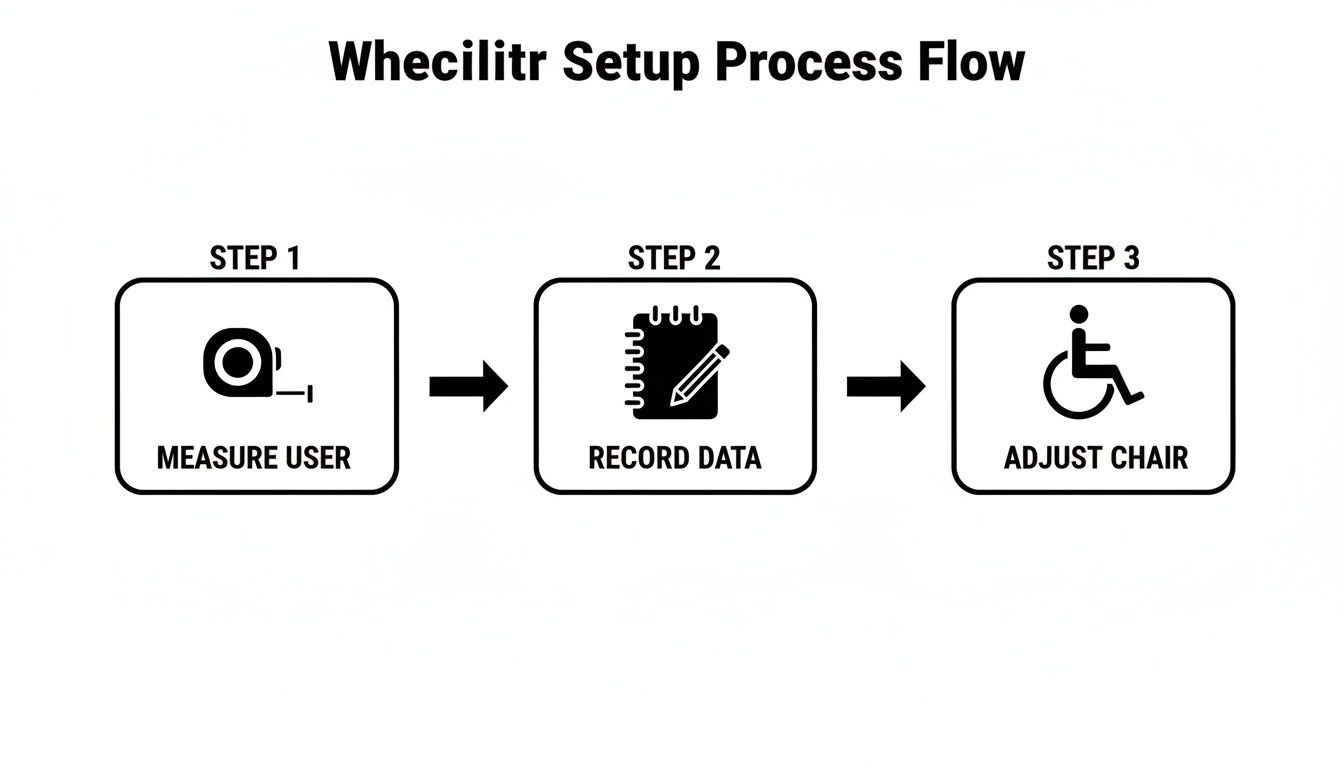
The real secret isn't the tools, but the technique and paying close attention to the details.
Finding The Perfect Seat Width
If you get one measurement right, make it this one. Seat width is the foundation for stability and comfort. Too narrow, and you're looking at painful pressure and chafing. Too wide, and the user has to lean to one side to propel themselves, which leads to bad posture and a world of hurt for their shoulders and back.
Here's how to nail it: Have the person sit on a firm, flat surface. Measure across the widest point of their hips or thighs—whichever is greater. Take that number and add one to two inches. That little bit of extra room is crucial; it accommodates for bulky clothing and gives them space to shift their weight, which is vital for preventing pressure spots.
This isn't just a suggestion; it's a critical step. A personalized fit is important for getting through doorways and tight spaces. More importantly, that extra cushion of space helps prevent pressure sores, a severe complication that can affect up to 60% of long-term wheelchair users.
Dialing In The Right Seat Depth
Next up is seat depth. This is all about making sure the user's weight is distributed evenly across the seat, providing full support for their thighs. Get this wrong, and you can cause some serious problems.
A seat that's too short leaves the thighs unsupported, putting a ton of strain on the lower back and making the user feel like they're about to slide off. On the other hand, a seat that’s too deep will dig into the sensitive area behind the knees, which can pinch nerves and even restrict blood flow.
To find the sweet spot, measure from the person's lower back, along their thigh, stopping about two inches from the back of their knee.
A good rule of thumb is to leave a gap of about two finger-widths between the front of the seat and the back of the knee. This provides full thigh support without cutting off circulation.
Establishing Correct Back Height
Back height isn't a one-size-fits-all deal. The right height is completely dependent on the user's upper body strength and how they'll be using the chair.
For an active person who propels themselves, a lower backrest that ends just beneath the shoulder blades is ideal. This frees up their arms and shoulders for a full range of motion. But for someone who needs more help with posture and stability, a taller backrest that supports the entire upper body is the only way to go. You'll measure from the seat of the chair up to the right spot on their back—be it their shoulder blades or the top of their shoulders.
Setting The Ideal Seat-To-Floor Height
This measurement is a big one for both safety and function. It dictates whether the user's feet can rest flat on the footrests (or the floor), which is essential for proper posture and stability. If the seat is too high, their feet will dangle uncomfortably. If it's too low, their knees will be forced up higher than their hips, which gets painful fast.
Have the person sit down with their knees bent at a 90-degree angle and their feet flat on the ground. Measure from the back of their knee down to the floor. Now, add two inches to that measurement. That extra height ensures the footrests will clear the ground when they're moving around.
Adjusting Armrest Height For Comfort
Last but not least, let's get the armrests right. Properly adjusted armrests support the upper body and take the strain off the neck and shoulders. When they're at the correct height, a person can rest their arms naturally without having to slouch over or shrug their shoulders up.
This is a simple one. With the person sitting up straight and their shoulders relaxed, have them bend their elbow to a 90-degree angle. Measure from the seat base right up to their elbow, and that's your target height.
For more practical advice and tips, feel free to check out our medical equipment news and blog.
Turning Your Numbers into the Right Choice
Alright, you've got your list of measurements. This is where the hard work pays off. Now, we take those numbers and turn them into a real, comfortable, and safe wheelchair. It’s about more than just matching specs on a product page; it’s about understanding how those numbers translate to everyday life.
Your first stop is usually seat width. This measurement is the quickest way to narrow down your options, as most manufacturers group their chairs into a few standard categories.
Here's a quick cheat sheet for how your measurements typically line up with what you'll see on the market:
- Narrow Adult (16 inches): This is a great fit for more petite users. It provides that snug, secure feeling you want, preventing them from sliding around.
- Standard Adult (18 inches): Think of this as the "medium" T-shirt of wheelchairs. It's the most common size and works well for a broad range of people.
- Wide Adult (20 to 22 inches): These are built to offer more room for larger individuals, ensuring comfort without compromising on safety.
These categories are a fantastic starting point, but don't stop there. The specific numbers are what will make all the difference between a decent fit and a perfect one.
Looking Beyond The Seat Dimensions
Seat width and depth are the foundation, but your other measurements are just as critical for safety and simple day-to-day use. One of the most common—and frustrating—mistakes I see people make is forgetting about the wheelchair's overall width.
You can have a chair that fits the user like a glove, but what good is it if they can't get through the bathroom door? A standard interior doorway is usually around 32 inches wide, but if you're in an older home, those openings can be much, much tighter. Always measure your narrowest doorway and check it against the wheelchair’s total width (that’s from the outside of one handrim to the outside of the other). This one simple step can save you a massive headache.
Another absolute deal-breaker is the weight capacity. Every single wheelchair has a maximum weight it's rated to handle safely. Pushing this limit isn't just a bad idea; it's a genuine safety hazard that can lead to the chair's frame failing. Double-check that the user’s weight is comfortably under the chair’s listed capacity.
Remember, the goal is to find a wheelchair that fits both the person and their environment. A chair that is perfect on paper but impractical for daily navigation is not the right choice.
Making An Informed Decision
Finally, you'll need to decide whether to rent or buy. If the need is short-term—maybe for recovery after surgery or for a visiting relative—exploring wheelchairs in St. Petersburg, FL, rentals & sales is often the smartest, most cost-effective route.
For anyone who will be using the chair long-term, investing in a purchased model that's perfectly matched to their measurements is the way to go for lasting comfort and durability. The key is to use the data you've gathered to confidently read product descriptions and make a choice that genuinely enhances the user's mobility and quality of life.
Getting it Right: Sidestepping Common Measurement Mistakes

Knowing the steps to measure for a wheelchair is one thing, but avoiding the little mistakes that can lead to big problems is where experience really counts. I've seen it time and again—even the most well-intentioned measurements can go wrong, leading to discomfort and poor support. A few simple checks can make all the difference.
One of the most common oversights is forgetting about the accessories that are part of daily life. For instance, if the user needs a specific seat cushion for pressure relief, you have to measure with that cushion on the chair. Leaving it out will throw off everything from the seat-to-floor height to the back support, completely changing the chair's fit.
The same goes for clothing. Measuring someone while they're wearing a bulky winter coat can easily add an inch or two to the seat width. That extra space might seem trivial, but it can make a snug, supportive fit feel dangerously loose. The best practice is always to measure in typical, everyday indoor clothing.
Why an Inaccurate Seat Depth is Such a Big Deal
Of all the potential missteps, getting the seat depth wrong is one of the most critical and, unfortunately, one of the most common. A seat that’s too long will dig into the sensitive area behind the user's knees.
This constant pressure can be more than just uncomfortable; it can actually impede circulation, leading to pain or swelling in the lower legs. To compensate, people often slide forward into a slouch, which creates a whole new set of problems like poor posture and chronic back pain. Leaving that crucial two-inch gap isn't just a suggestion—it's essential for long-term health and comfort.
A correct measurement is more than just a number. It's the foundation for the user's comfort, safety, and independence. Double-checking your work now is the best way to prevent easily avoidable problems later on.
Other Measurement Pitfalls to Watch For
A few other subtle details can throw off your measurements. Keeping these in mind will help ensure your numbers are spot-on.
- Measuring on a Soft Surface: Never measure someone while they're sitting on a cushy couch or a soft bed. When a person sinks into a surface, their posture changes completely, which will skew every single dimension you take. Stick to a firm, flat-backed chair, like a dining chair.
- Forgetting the "Wiggle Room": After you get the hip width measurement, you need to add one to two inches. This isn't just for comfort; it provides the necessary space for small shifts in position throughout the day, which is absolutely vital for preventing pressure sores.
- Letting Posture Slip: Make sure the person is sitting up straight, with their feet flat on the floor and knees bent at a 90-degree angle. If they're slouching or leaning to one side while you measure, none of your numbers will be accurate.
By paying close attention to these common issues, you can be confident you’re getting reliable measurements. If other questions pop up during the process, take a look at our frequently asked questions section—we’ve answered many of them there.
When You Absolutely Need a Professional Fitting
Following a guide like this one is perfect for many situations, especially for temporary use or for users with straightforward mobility needs. But let's be clear: sometimes, a DIY approach just isn't enough. There are moments when calling in a professional isn't an upsell; it's a necessity for long-term health, comfort, and safety.
So, when should you stop measuring and pick up the phone? A professional fitting is non-negotiable for anyone with complex medical needs. This is especially true for users dealing with significant postural challenges, like scoliosis, spinal deformities, or muscle tone issues that affect their seating position.
An expert can spot subtle asymmetries and recommend specialized supports or custom-molded seating that a tape measure and a simple chart will completely miss.
What an Expert Sees That You Might Not
A professional fitter—usually an occupational or physical therapist specializing in seating and mobility—does so much more than just take measurements. They're looking at the whole picture.
Their evaluation digs deep into things like:
- Your Clinical Profile: They’ll assess muscle tone, joint range of motion, and critically, your risk for developing pressure injuries.
- Your Real-World Life: They want to know about your daily grind. Where do you go? What surfaces will you be rolling over? How will the chair fit into your work, school, or home life?
- Your Home Environment: They'll consider how the wheelchair will actually work in your space. Can it clear that tight bathroom doorway? Will it navigate the ramp to your front door?
This isn't just about getting the numbers right. It's about creating a solution that promotes good posture, helps you function at your best, and actively prevents other health problems down the road. For anyone who will spend a good chunk of their day in a wheelchair, this level of detail is critical.
A professional fitting makes sure the wheelchair is more than just a set of wheels—it becomes an extension of the person. It’s built around their specific clinical needs to support their health and independence.
If you're on the fence, the best advice I can give is to talk to a healthcare provider. They can help you figure out if a professional fitting is the right call, ensuring the chair you end up with is safe, comfortable, and a perfect match for the user's life.
Common Questions When Measuring for a Wheelchair
Even with a guide, a few tricky situations can pop up when you're measuring for a wheelchair. Let's tackle some of the most common questions I hear from people to make sure you get the right fit.
How Do I Measure Seat Width If Hips Are Wider Than Thighs?
This is a great question and a very common scenario. The golden rule is simple: always measure the widest point of the person's body that will sit in the chair. If their hips are the widest part, measure across from one side to the other while they're sitting on a flat, firm surface.
Once you have that measurement, add one to two inches. This isn't just for comfort; that little bit of extra space is crucial for preventing the frame from rubbing against their skin, which can lead to painful pressure spots.
What Are The Signs Of A Seat Depth Being Too Long?
You'll know the seat depth is too long if the front edge of the cushion is digging into the back of the user's knees. This is a red flag because it can cut off circulation and lead to numbness or pain in their legs.
You might also notice the person constantly slouching or sliding forward in the chair. They're doing this to try and relieve that pressure behind their knees, but it throws their posture out of alignment and can cause serious back pain over time.
A correctly measured seat depth should leave a gap of about two to three finger-widths between the front edge of the seat and the back of the user’s knees. This ensures full thigh support without compromising circulation.
Are Measurements For A Transport Chair Different?
For the most part, no. The core principles of getting a safe and comfortable fit are exactly the same. You still need an accurate seat width and seat depth to ensure the user is stable and properly supported.
The main difference is that measurements related to self-propelling, like seat-to-floor height, aren't as critical since a caregiver is pushing the chair. With a transport chair, your top priority is always creating a secure and correctly sized seat for the passenger.
At Affinity Home Medical Equipment, we know that the right fit makes all the difference. With over 20 years of experience, our team has helped countless people find the mobility solution that fits their life perfectly. If you need guidance, we're here to help. Explore our wide range of wheelchairs and mobility aids by visiting Affinity Home Medical Equipment today.
Share This Article

Written by : Rich affinityrich@gmail.com
Follow Us
Latest Articles

October 14, 2026

October 14, 2026

October 14, 2026
