
How To Prevent Falls At Home A Practical Guide For St Petersburg Seniors

Preventing a fall at home isn't about one single fix. [...]
Preventing a fall at home isn't about one single fix. It's really a combination of smart habits: clearing out hazards, working on your own strength and balance, and bringing in the right safety equipment when you need it.
If you’re wondering where to even start, focus on the big three first: clear all your main walkways of clutter, secure any loose rugs with tape or remove them entirely, and brighten up the lighting, especially in hallways, on stairs, and in the bathroom. These simple changes make a huge difference right away.
The Real Impact of Falls in Our Community
Statistics can paint a broad picture, but the true cost of a fall is deeply personal. It's the new hesitation you feel when walking to the mailbox, the anxiety that creeps in at the top of the stairs, or that slow erosion of confidence that can keep someone from truly enjoying their own home.
Here in St. Petersburg and across Pinellas County, we see it all the time. Preventing a fall is about so much more than just avoiding a broken bone. It's about protecting independence, holding onto those cherished daily routines, and living a full, vibrant life. A single fall can set off a chain reaction, affecting not just physical health but emotional well-being, too.
This guide isn't about limitations. It’s an empowering, proactive plan to help you create a safer, more secure home environment for yourself or a loved one.
Why Proactive Prevention Matters
The conversation about preventing falls at home has never been more important. It's a major public health issue for older Americans, with mortality rates from falls climbing steadily over the past two decades.
In 2023, the death rate from unintentional falls for adults 65 and older hit 69.9 per 100,000 population. Even more sobering? More than one in four older adults reports falling each year. These aren't just numbers; they represent our neighbors, friends, and family. You can learn more about these fall prevention findings to see the full scope of the issue.
This reality really drives home why it's so critical to act before something happens. Small, thoughtful changes can make a world of difference in staying safe and feeling confident at home.
The goal isn’t just to avoid an accident. It's to build a foundation of safety that supports an active, independent life for many years to come.
Your Role in Creating a Safer Home
Taking control starts with having the right information and the right tools. For over 20 years, our team has been helping our neighbors right here in Pinellas County. You can learn more about Affinity Home Medical Equipment and our deep commitment to this community.
We firmly believe that by spotting the risks and putting simple solutions in place, anyone can make their home significantly safer. Let's get started. The next sections will walk you through a practical, room-by-room plan to do exactly that.
Quick Start Fall Prevention Checklist
Feeling overwhelmed? Don't be. You can make a huge impact by tackling a few key items today. This checklist covers the five changes that offer the most bang for your buck in immediately reducing fall risk.
- Improve Lighting: Poor visibility is a top cause of trips. Many falls happen simply because someone couldn't see an obstacle in their path, especially at night. Your first step is to add bright, easy-to-reach nightlights in the bedroom, hallway, and bathroom. Check that you have 100-watt bulbs in key areas.
- Clear the Floors: Clutter, electrical cords, and even small stacks of magazines create a literal obstacle course in your home. Your first step is to do a 15-minute "path check." Walk through your home and move anything that obstructs a clear path from one room to another.
- Secure Rugs & Runners: Area rugs and runners are notorious tripping hazards. The edges can curl up, or the whole rug can slide out from under you. Your first step is to use double-sided carpet tape to firmly secure all edges of your rugs to the floor. If a rug won't stay put, it's safer to remove it.
- Install Grab Bars: Bathrooms are high-risk zones due to wet, slippery surfaces. Grab bars provide a stable anchor point for getting in/out of the shower or using the toilet. Your first step is to identify the best spots in your bathroom—typically inside the shower and next to the toilet. Professional installation is highly recommended.
- Review Your Footwear: Shoes with poor tread, slippers without backs, or even walking in socks can lead to a slip. Good footing is your first line of defense. Your first step is to go through your most-worn shoes. Do they have non-slip soles? Do they fit well? Replace any worn-out pairs.
Completing even one or two of these actions this week is a fantastic step forward. Each small adjustment contributes to a much safer living space.
How To Conduct A Home Safety Walkthrough
The best way to prevent falls at home is to start seeing your own space with fresh eyes. Think of it as becoming a “hazard detective” in a place you know so well that you’ve probably stopped noticing the small risks that have crept in over time.
This isn’t about turning your house into a sterile, unwelcoming environment. It’s actually an empowering process of making smart, simple adjustments that can dramatically boost safety and confidence for anyone living there. A proactive walkthrough turns abstract worries into a concrete plan of action.
This process breaks down into three core ideas: first, you assess the risks. Then, you secure the hazards you find. Finally, you empower wellness through new habits and tools.
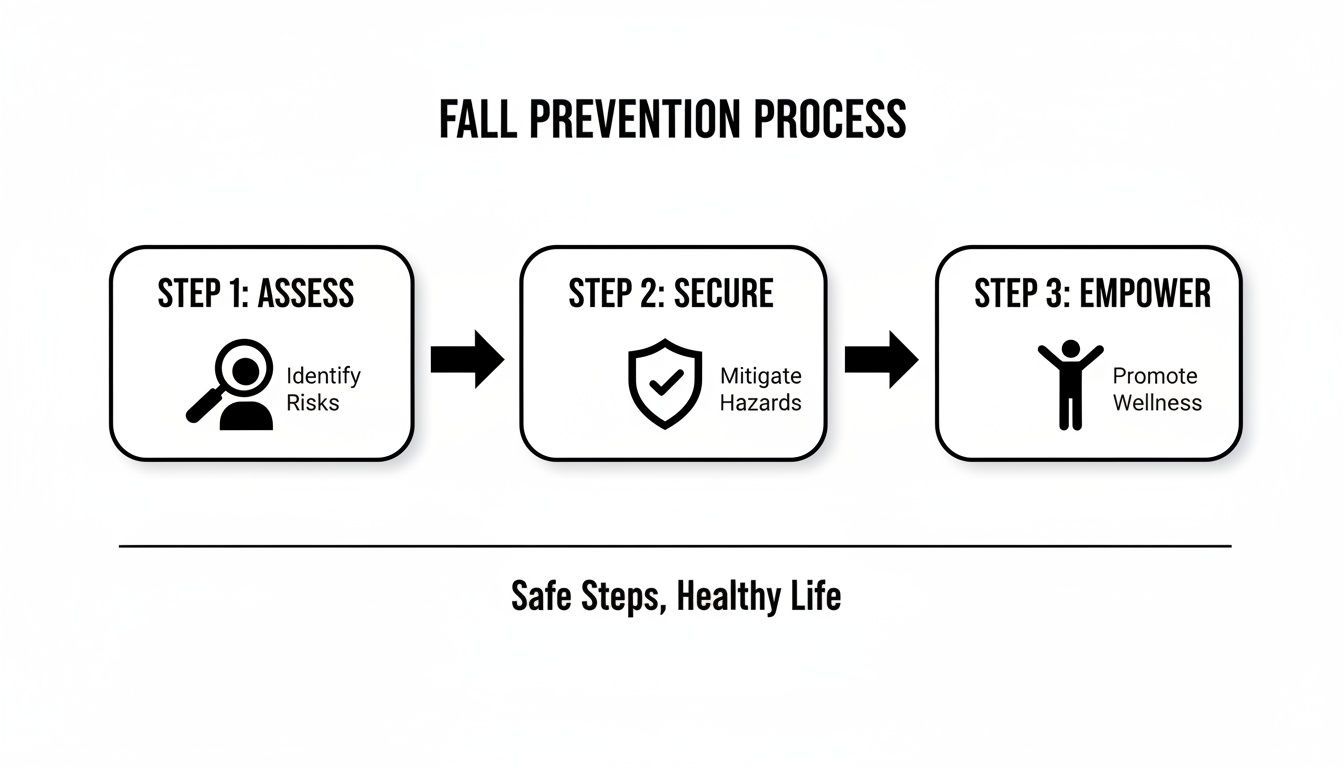
As you can see, fall prevention is more of a cycle than a one-time fix. It all begins with that clear-eyed assessment—which is exactly what this home safety walkthrough is all about.
Adopting A Safety-First Mindset
Before you even take a step, the most important thing is to shift your perspective. Don’t look at your rooms the way you normally do. Instead, imagine you’re navigating them for the very first time, maybe in low light or while feeling a bit unsteady.
What could possibly catch your foot? Where would you instinctively reach for support if you suddenly lost your balance? This mental shift is critical because the data is clear: over 60% of falls among older adults happen at home, often in the most familiar of spaces.
Your Systematic Walkthrough Checklist
Grab a notepad or just use your phone to jot down notes and snap a few pictures. It’s incredibly helpful to do this with a family member or friend—a second set of eyes will always catch something you missed.
Go through your home methodically, room by room, focusing on these key areas.
1. Pathways and Floors
Your main goal here is to carve out completely clear walkways. A path that seems fine for one person might become a hazard for someone using a walker or carrying a laundry basket.
- Scan for Clutter: Look for those sneaky culprits—stacks of mail, shoes, books, or small decorative items that have found their way into walking paths.
- Trace Your Cords: Are any electrical or phone cords stretched across the floor? They need to be tucked away and secured along a wall.
- Inspect All Rugs: Get down and check every area rug and runner. Are the edges curling up? Is there a non-slip backing? If a rug slides even an inch when you nudge it with your foot, it needs to be secured with double-sided tape or removed entirely.
2. Lighting Conditions
I can't overstate this: poor lighting is a huge factor in home falls. Shadows can easily hide obstacles, and dim light makes it incredibly difficult to judge distances and the height of a step.
- Check Bulb Brightness: Are the bulbs in your lamps and overhead fixtures bright enough for the space? Don't hesitate to go up in wattage (within the fixture's safety limit, of course).
- Test Switch Access: When you enter a dark room, can you easily reach the light switch? Or do you have to stumble through the dark to find it? That’s a major red flag.
- Add Nightlights: These are a game-changer. Place them in hallways, bathrooms, and especially along the path from the bedroom to the bathroom.
"I always tell families to think about the 'midnight path'—the walk from the bed to the bathroom. This short journey is one of the highest-risk areas in the home. Making sure it's well-lit and completely clear is non-negotiable."
Focusing on High-Risk Zones
While every room has potential hazards, some spots demand extra attention. Stairs and bathrooms are where a disproportionate number of serious falls happen, so be especially thorough here.
For stairs, you really need sturdy handrails on both sides, and every single step must be kept clear of items. In the bathroom, look critically at the toilet and shower area. Would grab bars help? What about non-slip mats inside and outside the tub?
If you’re not sure what kind of aids might work best, exploring options like St. Petersburg medical equipment rentals can be a smart move. It gives you a chance to try out items like a shower chair or a toilet safety frame before committing to a purchase.
By systematically going through this process, you can transform your home from a place of hidden risks into a genuine sanctuary of safety and comfort.
Room-by-Room Solutions for a Hazard-Proof Home
Once you’ve walked through the home and spotted the potential fall risks, it’s time to get to work. This is where you turn your observations into action, making the environment safer one room at a time. The best way to tackle this is to focus on the hot spots—the bathroom, bedroom, and main living areas where most falls happen.
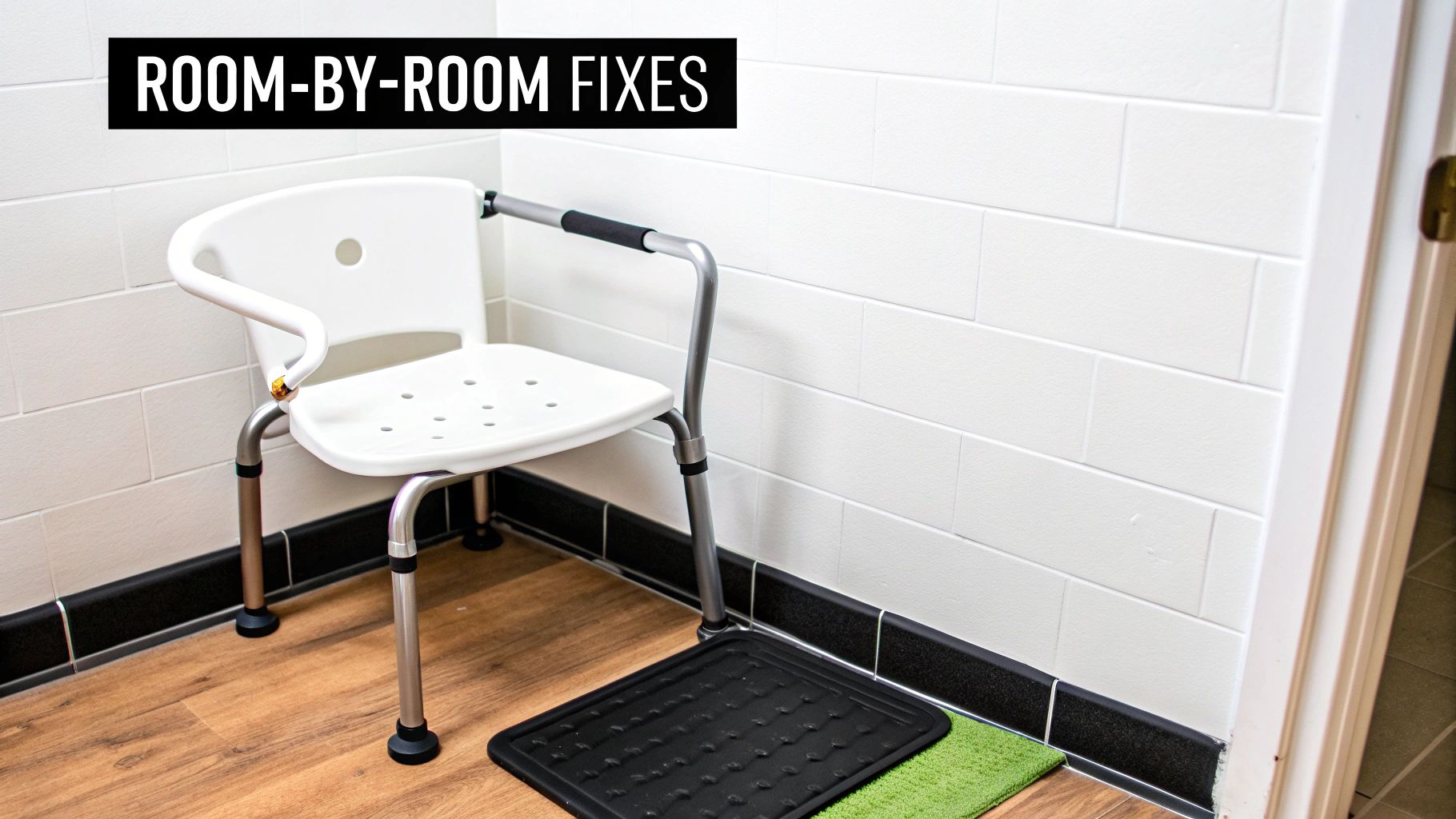
You don't need a complete home makeover. It's the small, smart adjustments in these key zones that make a world of difference, boosting safety and giving you or your loved one more confidence to move around freely.
Securing The Bathroom
Let's start with what is often the most dangerous room in the house. The combination of hard surfaces, slick tiles, and water makes the bathroom a top priority for any fall prevention plan.
The first, non-negotiable step is to get a non-slip mat with good suction cups for the bottom of the tub or shower. For an even greater layer of safety, a shower chair is a fantastic tool. It allows for safe, seated bathing, which helps tremendously when fatigue or unsteadiness sets in.
Next up: grab bars. These are essential. I can't stress this enough—towel racks are not grab bars. They are not designed to support a person's weight and will rip right out of the wall. Real, properly installed grab bars are built for this. A good setup is to have one installed vertically to help with getting in and out of the shower, and another horizontally for support while bathing.
A common and dangerous mistake is grabbing onto a towel rack for support. They simply aren't built to hold a person's weight and can fail at the worst possible moment, leading to a serious fall. Always insist on professionally installed, ADA-compliant grab bars.
Don't forget the toilet. Getting up and down can be a real strain on the knees and hips. A raised toilet seat or a toilet safety frame can make this simple daily task much easier and safer.
Creating A Safer Bedroom Sanctuary
The bedroom should be a haven, but it has its own set of risks, especially for those middle-of-the-night trips to the bathroom. That path from the bed to the door is a common fall zone.
Make sure that pathway is always clear and well-lit. A motion-activated nightlight can be a game-changer. Also, keep a lamp right on the nightstand, within easy arm's reach, so no one has to fumble for a light switch in the dark. The phone should be there too, always charged and ready in case of an emergency.
A little organization in the closet and dressers goes a long way. Arrange frequently used clothes and shoes so they're between waist and shoulder height. This simple trick means no more risky bending down or stretching up on tiptoes, both of which can easily cause someone to lose their balance.
If getting in and out of bed has become a struggle, it might be time to look at equipment designed to help. For an idea of what’s available, you can check out our information on hospital beds in St. Petersburg, FL. The adjustable features can make a huge difference in safety and independence.
Clearing Hazards In Living Areas And Kitchens
Living rooms and kitchens see a lot of foot traffic, and it's easy for them to become cluttered obstacle courses. The main goal here is simple: create wide, clear pathways and keep them that way.
Take a hard look at the furniture in the living room. Is there enough space to walk around chairs and coffee tables without turning sideways, especially if using a walker or cane? Watch out for electrical cords. They should never, ever be stretched across a walking path. Run them along the baseboards or use cord covers to tack them down securely.
Area rugs are another big one. A beautiful rug that slides around or has curled-up edges is a major tripping hazard. If you can't part with it, use heavy-duty, double-sided carpet tape to anchor it to the floor. Honestly, the safest option is often to remove throw rugs altogether.
In the kitchen, a few smart habits can dramatically reduce risk:
- Store heavy pots and appliances on lower shelves so you're not reaching overhead with something heavy.
- Keep everyday dishes and food items on the counter or in easy-to-reach cabinets.
- Wipe up spills the second they happen. A small puddle on a tile floor is incredibly dangerous.
- Use a proper step stool with a handrail for reaching high shelves. Never balance on a kitchen chair.
These room-by-room fixes aren't just feel-good suggestions; they have a proven impact. In fact, research shows that a comprehensive plan to remove these common hazards—like adding railings, improving lighting, and securing rugs—can reduce falls by a staggering 38% for high-risk older adults. You can see more of the data behind these home safety findings and how they can be applied in your own home.
Choosing The Right Safety and Mobility Equipment
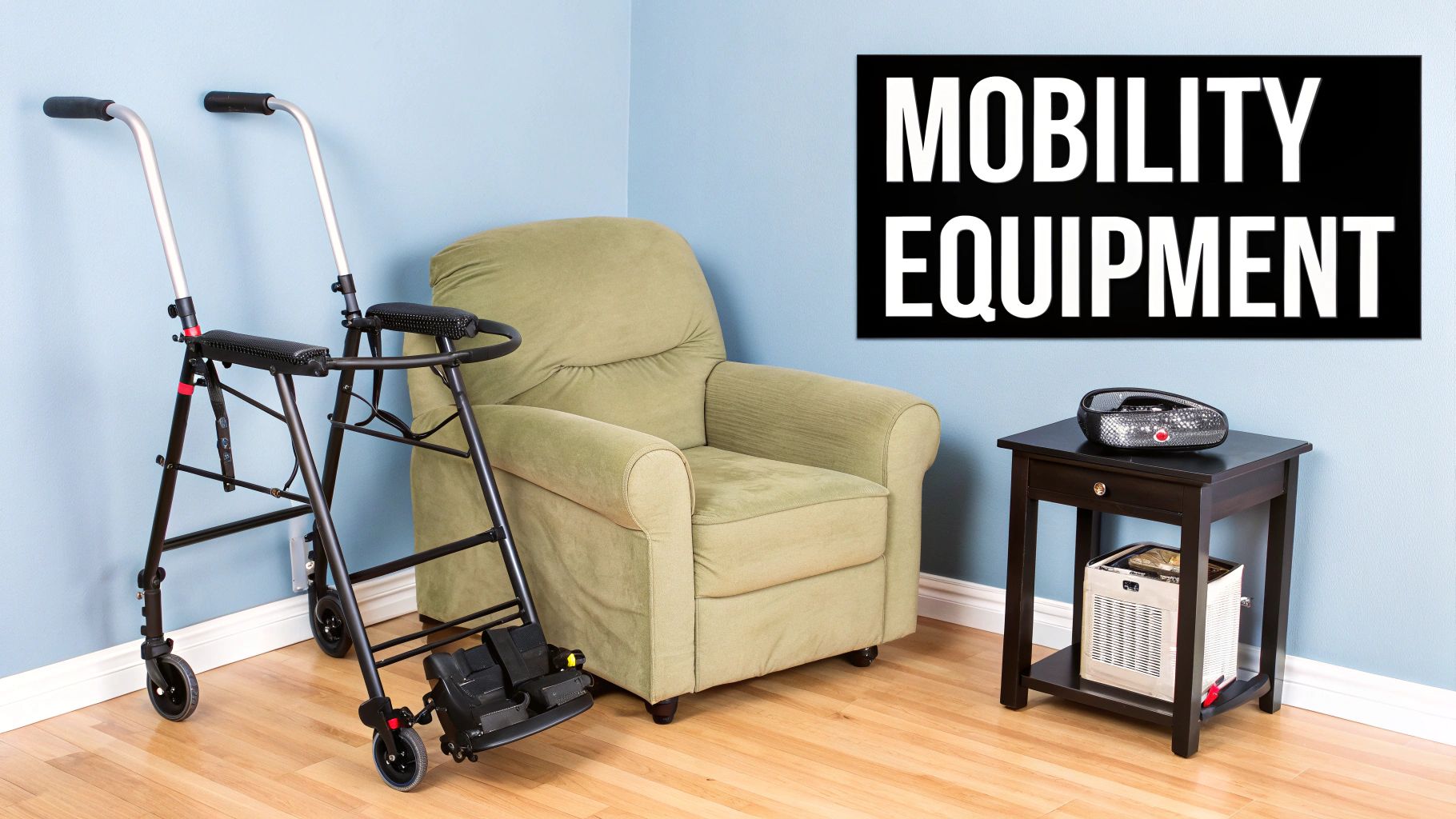
While a fall-proofed home is a fantastic start, sometimes you need a little extra personal support to feel truly steady on your feet. It's easy to get overwhelmed by all the options out there, but remember: this equipment has one job—to keep you safe, conserve your energy, and help you feel more confident as you move.
Choosing the right tool can be a genuine game-changer. For so many folks here in St. Petersburg, it’s the key that unlocks the freedom to stay active in the community instead of feeling stuck at home. The goal isn’t just about getting around; it’s about doing so safely and without that constant fear of falling.
Walkers, Canes, And Other Mobility Aids
One of the first questions we always get is, "Should I get a cane or a walker?" The best choice really boils down to how much support you truly need.
A cane is a great starting point if you just need a bit of extra stability or want to take a little pressure off one leg. Think of it as an extra point of contact with the ground. A cane is designed to support up to 25% of your body weight, which is perfect for minor balance issues.
If you need more significant help, a walker is definitely the way to go. A standard walker or a wheeled rollator can support up to 50% of your body weight. This makes them the ideal choice for anyone dealing with more pronounced weakness or balance challenges. If you're weighing your options, our detailed guide can help you compare walkers and rollators in St. Petersburg, FL to find the one that fits your needs perfectly.
Essential Bathroom Safety Equipment
We can't say it enough: the bathroom is a high-risk zone for falls. Slippery, wet surfaces combined with the bending and turning required to use the tub and toilet create a perfect storm. Beyond the grab bars we've already covered, a few other items are critical for making this space truly safe.
A shower chair or transfer bench is one of the most impactful safety tools you can add. It provides a secure place to sit while bathing, so you don't have to worry about slipping while standing on a wet surface. A transfer bench is especially brilliant—it straddles the side of the tub, letting you sit down outside and simply slide over, completely avoiding that dangerous high step.
Another must-have is a raised toilet seat or a toilet safety frame. These simple devices make a world of difference by reducing how far you have to lower yourself down and push yourself back up. A safety frame gives you sturdy armrests for support, taking a huge amount of strain off your knees and back.
Many people hesitate to add bathroom safety equipment because they’re worried about aesthetics. But I can tell you from experience, the peace of mind that comes from preventing one bad fall is worth far more than any design concern. Safety and independence are the best home accessories you can have.
Mobility Aid Selection Guide
Choosing the right mobility aid is a personal decision that depends on your specific needs, strength, and environment. A quick comparison can help you understand which device might be the best fit for your situation.
- Cane: Best for minor balance issues or relieving pressure on one leg. Good for navigating tighter spaces. It supports up to 25% of body weight but requires good arm and hand strength.
- Standard Walker: Best for significant balance problems or weakness, and ideal for indoor use and short distances. It supports up to 50% of body weight but must be lifted with each step.
- Rollator (Wheeled Walker): Best for those needing more support than a cane but who walk longer distances and want a place to rest. It has wheels, brakes, and a seat, making it better for outdoor use on smooth surfaces.
Ultimately, the best aid is one you feel comfortable and confident using. Don't be afraid to try different options to see what works best for your daily routine.
Improving Comfort And Safety In The Living Room
The bathroom isn't the only place where a little extra help can prevent a fall. Even simple, everyday movements, like getting out of your favorite armchair, can become risky.
For anyone who struggles with that sit-to-stand motion, a lift chair is an incredible asset. It looks just like a comfortable recliner, but a hidden mechanism gently tilts the chair forward, raising you to your feet. This takes all the strain off your legs, back, and arms, significantly reducing the risk of a fall every time you get up.
Think of this equipment as a bridge—it connects what you want to do with what you can safely do. By carefully selecting aids for your specific challenges, you're building a personalized fall prevention system that empowers you to live a more active and independent life.
Building Strength, Balance, and Confidence
Making your home physically safer is a massive step forward, but it's only part of the story. The other, equally crucial part of fall prevention is focusing on your own body. Just as you cleared the pathways in your hallway, you can build up your internal stability and confidence with a few simple, consistent habits.
This isn't about signing up for some intense, new workout program. It’s about weaving gentle movements and smart health checks into your daily life. A strong, aware body is truly your best defense against a sudden trip or loss of balance, working hand-in-hand with the safe environment you’ve so carefully created.
Simple Exercises to Improve Your Stability
You don't need a gym membership or any fancy equipment to make a real difference in your strength and balance. In fact, some of the most effective exercises can be done right in your own living room, using a sturdy chair for a bit of support.
The real secret here is consistency. Just a few minutes each day is all it takes to maintain the muscle tone and coordination you need to react quickly if you happen to stumble.
- Chair Leg Lifts: While sitting, straighten one leg out in front of you, hold it for a few seconds, then slowly lower it back down. This simple move is fantastic for strengthening your quadriceps—the big thigh muscles you rely on for walking and climbing stairs.
- Sit-to-Stands: Start from a seated position in a sturdy, armless chair. Without using your hands, stand all the way up and then slowly sit back down. This is one of the best "functional" exercises because it mimics a movement you do countless times a day.
- Heel-to-Toe Walk: Try walking in a straight line, placing the heel of one foot directly in front of the toes of the other, like you're on a balance beam. Keep a hand on a wall or countertop for light support until you feel more confident.
These movements directly target the muscles and skills essential for staying steady on your feet. The key is to start slow, focus on control, and always listen to your body.
The goal isn't to become an athlete. It's to maintain the strength you need for everyday life—carrying groceries, getting out of a low chair, or walking on an uneven sidewalk—with less fear and more stability.
Don't Overlook Your Medications and Vision
Sometimes, the biggest fall risks aren't on the floor but are happening inside your body. Two areas that are often overlooked yet are major contributors to falls are medications and vision.
It’s incredibly important to schedule a regular medication review with your doctor or pharmacist. So many common prescriptions, and even over-the-counter drugs, can have side effects like dizziness, drowsiness, or lightheadedness that can throw you off balance. A quick review can spot potential problems and help you find safer alternatives.
Your senses are your body's built-in alarm system, and vision is at the top of that list.
- Annual Vision Check-ups: Poor eyesight makes it tough to spot hazards like a curled-up rug edge or to judge the height of a curb. Make sure you get your eyes checked at least once a year and that your prescription is up to date.
- Hearing Health: It might surprise you, but your inner ear is the command center for your sense of balance. Unaddressed hearing loss can disrupt this delicate system and lead to a feeling of unsteadiness.
Never underestimate the power of these simple check-ups. They are one of the most proactive things you can do to prevent a fall before it ever happens. Taking care of your health from the inside out is the final piece of the puzzle.
Your Top Fall Prevention Questions, Answered
When you start looking into fall prevention, it’s natural to have a lot of questions. Getting clear, practical answers is the first step toward making your home safer and feeling more confident on your feet. Here in St. Petersburg, we’ve spent more than 20 years helping families find real-world solutions, and these are some of the most common questions we hear.
How Can I Help A Loved One Who Refuses To Use A Walker?
This is a tough one, and it's a situation we see all the time. Resistance to using a walker often comes from a place of pride and a fear of losing independence—or at least looking like they have. The key is to approach the conversation with empathy and frame the walker as a tool for freedom, not a limitation.
Instead of insisting, "You need this," try connecting it to an activity they enjoy. You could say, "This could help you feel steadier on your feet, so we can walk around the farmer's market without you getting so tired." The goal is to show them that a mobility aid is a smart way to maintain their independence and keep doing what they love, just with more stability.
Are My Throw Rugs Really That Big of a Deal?
Honestly? Yes, they are. Those small, unsecured throw rugs and bathmats are probably the single most common tripping hazard we encounter in people's homes. Their edges curl, they bunch up, and they can shoot out from underfoot on a tile or wood floor in a split second.
If you can't part with a particular rug, the next best thing is to secure it on all sides with heavy-duty, double-sided carpet tape. An even better option is to replace it with a rug that has a solid, non-slip rubber backing built right in. But from a purely safety-focused perspective, the best choice is to remove them entirely from hallways, bathrooms, and other main walkways.
Many people think a fall won't happen to them, but it only takes one small slip on a familiar rug to cause a serious injury. Removing that single hazard is one of the most impactful changes you can make today.
Which Room Should I Make Safe First?
While it’s best to assess the whole house, if you have to start somewhere, start with the bathroom. No question. It’s a perfect storm of hazards: wet, slippery surfaces, hard tile floors, and lots of bending, turning, and reaching. This combination makes it the most dangerous room in the home for falls.
Here’s your action plan for the bathroom:
- Have grab bars professionally installed in the shower/tub and right next to the toilet.
- Put a good non-slip mat inside the tub or on the shower floor.
- Get a shower chair or a transfer bench so bathing can be done safely while seated.
Making the bathroom a fall-proof zone gives you the biggest safety return on your investment, right away. After that, focus on clearing pathways and improving lighting in hallways and on staircases.
When Is It Time to Think About a Lift Chair?
A lift chair is a game-changer for anyone who has trouble getting up from a regular sofa or armchair. If you notice yourself (or a family member) using armrests to push off, rocking to build momentum, or feeling dizzy and unsteady right after standing, that’s your sign.
These chairs are far more than just comfortable recliners; they are a crucial piece of safety equipment. By gently lifting you to a standing position, they eliminate the strain on your knees, hips, and back. This simple mechanical assistance dramatically reduces the risk of a fall every single time you get up.
We've been answering questions like these for decades. For even more detailed answers, feel free to explore our full FAQ page for additional insights.
At Affinity Home Medical Equipment, we're here to help you find the right tools to live safely and independently. Stop by our showroom in St. Petersburg or check out our products online to start building a safer home today at https://affinityhomemedicalequipment.com.
Share This Article

Written by : lori@netcodesign.com
Follow Us
Latest Articles

October 13, 2026

October 13, 2026

October 13, 2026
