
Oxygen Concentrator Repairs A Practical Troubleshooting Guide

When your oxygen concentrator isn't working right, it's more than [...]
When your oxygen concentrator isn't working right, it's more than just an inconvenience. It's a serious problem that needs to be solved—fast. Knowing a bit about oxygen concentrator repairs can make all the difference, helping you keep your machine running safely and giving you the peace of mind that comes with a steady, reliable flow of oxygen.
This guide is here to help you figure out what to do, from simple fixes you can try yourself to knowing when it's time to call in an expert.
Your Guide To Oxygen Concentrator Repairs
For anyone relying on an oxygen concentrator, that machine is a lifeline. It represents freedom, independence, and a better quality of life. So, when it starts making a funny noise, flashing an error code, or just won't turn on, it’s natural to feel a wave of panic.
We want to take that stress off your shoulders. Here in St. Petersburg and Pinellas County, we've seen it all. Our goal is to walk you through everything, step-by-step, so you feel confident handling your equipment. We’ll cover the most common reasons these machines act up and what you can safely do about it.

Making Informed Decisions About Repairs
When your equipment needs service, figuring out the best next step can feel overwhelming. We believe in keeping things simple and transparent, especially when it comes to payments and service.
It’s important for our customers to know that we do not work with insurance providers for repair services. This direct-pay approach allows us to give you clear, straightforward pricing and get your machine back to you much faster, without waiting on third-party approvals.
This way, you know the full cost right from the start—no hidden fees, no complicated bills. It puts you in control, allowing you to make the best choice for your health and your budget. While specific to concentrators, understanding the mechanics of air-purifying equipment is always helpful. General buying guides for air cleaning devices can offer insights into concepts like filtration and airflow that apply here, too.
What You Will Learn In This Guide
We’ve structured this guide to build your knowledge one step at a time, empowering both patients and their caregivers to manage their respiratory equipment with confidence.
Here’s a quick look at what we'll cover to help you navigate oxygen concentrator repairs:
- Common Causes of Failure: We’ll dig into the usual suspects, from simple clogged filters to more complex compressor problems.
- Safe DIY Troubleshooting: You’ll learn a few easy checks you can perform at home that might just solve the issue right away.
- Recognizing Red Flags: We’ll show you the tell-tale signs that scream "call a professional."
- Repair Costs and Timelines: Get a realistic idea of what to expect for repair expenses and how long it might take.
Why Oxygen Concentrators Stop Working
When your oxygen concentrator starts acting up, figuring out why is the first step to getting it back online. These are sophisticated medical devices, for sure, but the most common reasons they fail are actually pretty straightforward. It helps to think of the machine as a complete system—each part relies on the others, and a problem in one area can quickly cause a chain reaction.
Often, the alarms and shutdowns you see are the end result of a smaller, underlying issue. A lot of it just comes down to simple wear and tear. After running continuously for thousands of hours, some parts are naturally going to wear out before others, just like the tires on a car.
The Most Common Mechanical Failures
Inside every concentrator, a few key components do all the heavy lifting, turning regular room air into medical-grade oxygen. If you're hearing a strange new noise or the machine just isn't performing like it used to, one of these parts is usually the reason.
- Clogged Filters: This is, without a doubt, the most common and preventable problem we see. Imagine trying to run a marathon while breathing through a dusty cloth. It’s tough, right? Dirty filters do the same thing to your machine, restricting airflow and forcing the compressor to work way too hard. This can lead to overheating and, eventually, a total breakdown.
- Worn-Out Sieve Beds: Think of the sieve beds as the "lungs" of your concentrator. They're filled with a special material called zeolite that filters nitrogen out of the air, leaving behind concentrated oxygen. Over time, this material just can't do its job as well, which leads to low oxygen purity—a serious issue that needs professional oxygen concentrator repairs.
- A Weakening Compressor: The compressor is the powerful "heart" of the unit. It’s the muscle that pulls air in and pressurizes it. But after 15,000 to 20,000 hours of constant work, its internal parts can wear down. The result is a weaker airflow and the machine's inability to produce the oxygen you need.
Power, Portability, And Environmental Factors
It's not always the internal parts that cause trouble. Sometimes, the problem is related to the machine's power source or its immediate surroundings. These issues can pop up out of nowhere, especially with portable units that are always on the move.
The need for reliable repair services has shot up as more people receive oxygen therapy at home. The number of U.S. Medicare patients using home oxygen has grown significantly, and data shows that a notable percentage of these devices require professional service each year for things like failing batteries or worn-out sieve beds.
Something as simple as where you place the machine can cause it to fail. Overheating is a big one. If the concentrator is crammed against a wall or has a blanket thrown over its vents, it can't circulate air to cool itself down. Most units will automatically shut off to prevent permanent damage.
A key takeaway is that an oxygen concentrator needs "breathing room" just like its user. Ensuring at least 6-12 inches of clear space around the unit is one of the easiest ways to prevent service calls for overheating.
Power issues are another frequent culprit. Plugging a concentrator into an old extension cord or an overloaded power strip can starve it of the steady voltage it needs, potentially frying its sensitive electronics. With portable concentrators, batteries are a common point of failure. They can only be recharged so many times before they start losing their ability to hold a charge, leaving you with shorter run times until they finally give out completely. If you're exploring different equipment choices, our guide to St. Petersburg oxygen concentrators sales and rentals is a great resource.
Simple Fixes You Can Safely Try At Home
When your oxygen concentrator suddenly cuts out or an alarm starts blaring, it’s natural to feel a bit of panic. But before you jump to the worst conclusion and call for oxygen concentrator repairs, take a deep breath. There are a handful of simple checks you can do yourself.
More often than not, the culprit is something surprisingly basic—not a major mechanical failure. Walking through these quick troubleshooting steps is perfectly safe and could get your machine back up and running in minutes, saving you the time and expense of a service call.
This decision tree gives you a straightforward path to follow for the most common hiccups, from simple filter checks to figuring out if it’s time to call a pro.
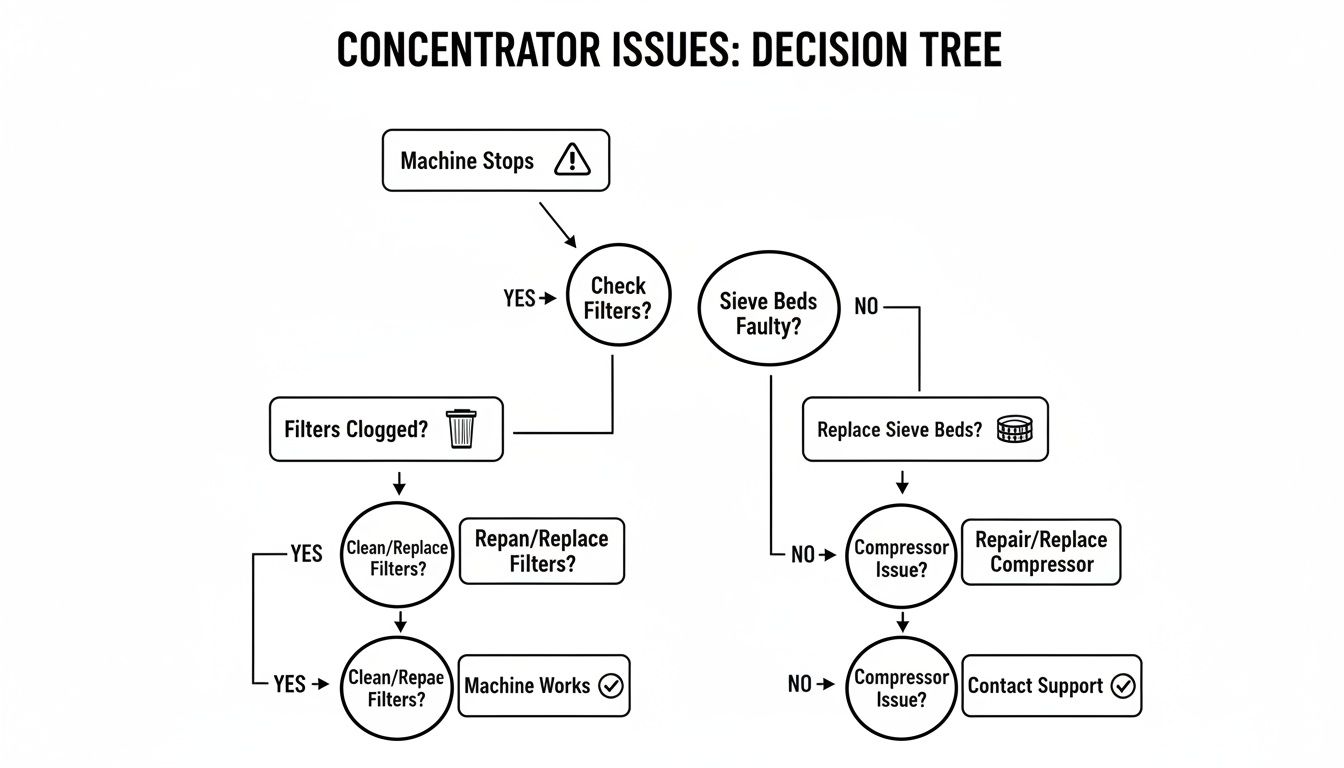
As you can see, the first and most important step is always the basic maintenance you can do yourself, like checking the filters. It's the best way to rule out the easy stuff before assuming there's a serious problem inside.
Check Your Power Connection First
I know it sounds almost too simple, but you'd be surprised how often a power issue is the real problem. An oxygen concentrator pulls a lot of electricity, and it needs a very stable connection to work properly.
Start by making sure the power cord is pushed all the way into the back of the machine. It can sometimes work its way loose. Then, trace the cord to the wall and confirm it’s plugged snugly and directly into the outlet.
Crucial Safety Tip: Never, ever plug your oxygen concentrator into a power strip or an extension cord. They simply can’t handle the consistent power draw the motor requires. Doing so can cause the machine to overheat, perform poorly, and could even fry the sensitive internal electronics.
Inspect Filters and Tubing
Next up, let's look at everything related to airflow. A clogged filter or blocked tubing is easily one of the most frequent reasons we get service calls.
- Clean the Cabinet Filter: Look for a small foam screen on the outside of the machine. This is your concentrator's first line of defense against dust, lint, and pet hair. If it gets clogged, the machine struggles to pull in air, which makes it work harder and overheat. Most of these filters pop right out and can be washed with a little soap and water. Just be sure it’s 100% dry before you put it back in.
- Check Your Tubing: Take a moment to inspect your oxygen tubing from end to end. Look for any sharp kinks or twists. Also, check to see if it’s been accidentally pinched under the leg of a chair or bed frame. It’s also a good idea to look for any moisture inside the tube, as water droplets can build up and block the flow of oxygen.
Perform a Simple Reset
If the power is solid and the airways are clear, the machine’s own circuit breaker might have tripped. This is a built-in safety feature that protects the motor from things like a power surge or from overheating.
Most stationary units have a small reset button, usually on the back or side. Give it one firm press. If the concentrator starts back up and keeps running, you’re all set. If it runs for a minute and then trips again, that's a tell-tale sign that something internal needs a professional look.
If you have more questions about taking care of your equipment, our Frequently Asked Questions page has some great tips.
When To Call A Professional For Repairs
While a few simple checks can often get your machine running smoothly again, an oxygen concentrator is a sophisticated piece of medical equipment. Certain symptoms are clear red flags, signaling that something inside is on the brink of failure and needs professional oxygen concentrator repairs. Trying to "fix" these yourself or simply ignoring them can lead to even bigger problems or, worse, a total breakdown right when you need it most.
The key is learning to tell the difference between a minor hiccup and a serious internal issue. Think of your concentrator's alarms and strange noises as its only way of telling you something is wrong. These are the signals you absolutely shouldn't ignore.

Heeding The Alarms And Error Codes
Your concentrator is packed with sensors that act like a built-in "check engine" system. When a critical part strays from its normal operating range, it triggers an alarm—usually a loud, insistent beep with a flashing light or an error code on the screen. These aren't suggestions; they're urgent warnings.
Here are the critical alarms that mean it's time to call in a pro, no questions asked:
- Low Oxygen Purity: This is the big one. This alarm means the machine is failing to produce medical-grade oxygen (usually dropping below 87% purity), and you're not getting the therapy your doctor prescribed. This nearly always points to exhausted sieve beds or an internal leak.
- Service Required Light: This is a more general alarm, but it's just as important. The machine's internal computer has flagged a fault somewhere in the system—it could be the compressor, the cooling system, or the main control board.
- High or Low-Pressure Alarms: These alerts are a dead giveaway that there's a problem with the compressor or the internal valves that manage the airflow.
It's crucial to understand that these alarms are not just notifications; they are safety mechanisms. Continuing to use a machine with a persistent low oxygen alarm can be detrimental to your health. Shut the unit down and switch to your backup oxygen supply immediately.
Listening For Mechanical Trouble
Beyond what you can see, what you can hear is one of your best diagnostic tools. A healthy oxygen concentrator makes a consistent, rhythmic "puffing" sound as it works. If you start hearing new, loud, or strange noises, it's a sign of mechanical distress.
Keep an ear out for these specific sounds that often signal an impending breakdown:
- Loud Grinding or Rattling: This is the classic sound of a failing compressor. The bearings or pistons are likely wearing out, and if you keep running it, the whole thing could seize up.
- High-Pitched Whining or Squealing: This noise often points to a problem with the motor itself or a failing cooling fan that's struggling to spin.
- A Loud "Clunking" Sound: A sudden, heavy clunk can mean a major internal part has broken off or come loose.
Trying to pop the case open to find the source of these noises is a bad idea—it’s dangerous and will instantly void your warranty. These sounds are definitive proof that it’s time to find professional oxygen concentrator repairs.
Noticing Changes In Performance
Sometimes, the signs of trouble are more subtle than a shrieking alarm. A slow, gradual decline in performance can be just as serious. Pay attention to how your machine feels and acts from day to day. If you notice a significant drop in the airflow, even though the setting hasn't changed, that's a major red flag.
Another tell-tale sign is when the unit starts blowing excessively warm air. All concentrators generate some heat, but if it suddenly feels much hotter, the internal cooling fan has likely failed. This can cause the compressor to overheat quickly, leading to permanent damage.
When you notice these performance issues, don't wait for things to get worse. Getting expert help by contacting us for a professional diagnosis can stop a small problem from turning into a costly, machine-ending failure.
Understanding Repair Costs And Timelines
When your oxygen concentrator needs a professional fix, the last thing you want is more stress. Wondering about the cost and how long you'll be without your machine can be overwhelming. We get it. That's why we're upfront about what you can expect when it comes to both the financial and time commitments for expert oxygen concentrator repairs.
We start by making things simple. To get your machine back to you as fast as possible, we handle all payments directly and do not work with insurance providers. This approach cuts through the red tape and long approval waits, letting us dive right into the repair and focus on getting your equipment running perfectly again.
Breaking Down Common Repair Costs
The final bill for any repair really comes down to what's broken and the hands-on time needed to fix it. Think of it like a car repair—a mechanic can’t give you an exact price until they've had a look under the hood. We operate the same way, performing a full diagnostic to give you a precise and honest estimate.
That said, we can give you a ballpark idea for the most common issues we tackle:
- Sieve Bed Replacement: This is a big one. The zeolite material in the sieve beds eventually wears out and can't filter nitrogen effectively, leading to low oxygen purity. It's often the most significant repair for a machine that's been in service for a while.
- Compressor Rebuild or Replacement: The compressor is the heart of your unit, and it works hard around the clock. A full rebuild can often bring it back to life, restoring its power for much less than the cost of a brand-new unit.
- Electronic Control Board Repair: This is the "brain" of the concentrator. A power surge or just plain age can cause it to fail. Fixing it is a delicate job that requires a skilled touch to make sure every sensor and alarm works as it should.
For a bit of perspective on equipment upkeep, this article on understanding maintenance costs for other home systems offers a useful comparison.
Typical Repair Timelines And What To Expect
Once your concentrator is in our hands, the first step is always a deep-dive diagnostic check. This usually takes us about 24 to 48 hours. Our technicians will test the oxygen purity, check all the pressure levels, and give every internal part a thorough inspection to find the root cause of the problem.
As soon as we know what's wrong, we'll call you with a detailed quote and a clear timeline for the repair. The biggest variable here is parts. We keep a good stock of common components, but sometimes a specific part has to be ordered directly from the manufacturer, which can add a few days to the process.
From start to finish, a typical repair—including diagnosis—takes anywhere from three to seven business days, as long as we have the parts on hand. We promise to keep you in the loop every step of the way, especially if there are any unexpected delays.
It's no secret that oxygen concentrators are more common than ever. This huge demand also means a growing need for reliable repairs. Studies even show that a high percentage of these units need service in their first five years, simply because constant, 24/7 use wears down the internal parts.
Ensuring Uninterrupted Therapy During Repairs
We know that going even a day without your oxygen concentrator isn't an option. Your therapy can't just be put on pause. That's why we've made sure you have a solution to bridge the gap while your machine is with us.
For anyone who needs a reliable source of oxygen, we offer high-quality rental units. You can check out our St. Petersburg medical equipment rentals to see how we can keep your therapy on track without any interruptions. Your health and peace of mind are always our top priorities.
Your Local Partner In Respiratory Care
For over 20 years, our team has been a familiar face here in the community, providing reliable, expert support for respiratory care. We get it—when your oxygen concentrator needs a repair, you want a partner you can trust, not some faceless national company. That’s precisely why we’ve built our reputation right here in St. Petersburg and Pinellas County, offering the kind of personal service our neighbors have come to rely on.
When you bring your equipment to us, you’re not just another repair ticket. You’re working directly with seasoned professionals who take the time to actually listen, diagnose the problem accurately, and walk you through your options in plain English. Our deep roots in this community mean we're genuinely invested in your well-being.
More Than Just Repairs
While we’re experts at fixing oxygen concentrators, our commitment to your respiratory health doesn’t end there. We strive to be your all-in-one resource, making it simple to find everything you need in one convenient, local shop. Think of us as providing a complete circle of care, right here at home.
Our other services include:
- New Equipment Sales: We carry a carefully curated selection of new, dependable oxygen concentrators.
- Flexible Rental Options: If you need a temporary unit during a repair or for short-term use, our rental program ensures you never have to go without your therapy.
- A Full Range of Accessories: From tubing and cannulas to filters and batteries, we have all the essential supplies to keep your equipment in top shape.
Our direct-pay model is a cornerstone of our service philosophy. By not accepting insurance, we can offer clear, upfront pricing and much faster turnaround times. This straightforward approach means no more waiting on approvals—we just get your equipment back to you sooner.
Your Next Step To Breathe Easier
Dealing with a faulty oxygen concentrator is stressful enough; finding a solution shouldn't add to it. You don't have to figure this out on your own. Our knowledgeable team is here to take that weight off your shoulders and give you the expert help you deserve.
There's real peace of mind in working with a local professional you know you can trust. If your machine is acting up or you just want a professional to give it a look, we invite you to take the next step. Give us a call or stop by our St. Petersburg store for an expert diagnosis. We’re here to help you breathe easier.
Common Questions About Oxygen Concentrator Repairs
When your oxygen concentrator needs attention, you're bound to have questions. Getting straight answers is the first step to making the right call for your health and your equipment. Here are some of the most common things we get asked by our customers.
We want to give you the information you need to feel confident about maintaining your device and keeping your therapy on track.
How Often Does My Concentrator Need a Professional Tune-Up?
Think of it like an annual check-up for your car—it’s essential for keeping things running smoothly for years to come. We strongly recommend bringing your concentrator in for a professional preventative service at least once a year.
This isn't just a quick wipe-down. A certified technician digs deeper, testing the oxygen purity levels to make sure you're getting the prescribed therapeutic dose. They also inspect the internal filters and check the compressor's health, which lets them spot minor issues before they turn into major, expensive breakdowns.
Should I Fix My Old Concentrator or Just Buy a New One?
That's the million-dollar question, and the answer really depends on the machine's age and what's wrong with it. There's no one-size-fits-all solution.
For a concentrator that’s around five to seven years old, a common fix like replacing the sieve beds is usually a smart, budget-friendly move. But if that same older unit has multiple things going wrong at once, or if it needs a major part that's no longer being made, it's probably time to consider a replacement. A new machine offers peace of mind and the latest in reliability.
A key piece of this decision is how payment works. It's important for us to be upfront: we do not accept insurance for our repair services. By operating as a direct-pay provider, we can give you clear, straightforward pricing and much faster service without waiting for insurance company approvals. This puts you in the driver's seat.
Can Any Repair Shop Fix My Medical Equipment?
Absolutely not, and this is a critical point for your safety. Your oxygen concentrator is a life-support device, not a simple household appliance. You should only ever trust it to a certified technician with specific training in medical-grade respiratory equipment.
A botched repair isn't just an inconvenience—it's a serious safety risk. An improperly serviced machine could deliver low-purity oxygen or fail when you need it most. That’s why choosing an experienced, qualified provider for oxygen concentrator repairs is non-negotiable for your health and well-being.
When you need expert service you can count on, it pays to work with a local partner you trust. Affinity Home Medical Equipment is here for our St. Petersburg and Pinellas County neighbors, providing professional diagnostics, sales, and rentals to keep you safe and comfortable. Find out how we can help at https://affinityhomemedicalequipment.com.
Share This Article

Written by : lori@netcodesign.com
Follow Us
Latest Articles

October 13, 2026

October 13, 2026

October 13, 2026

