
Your Guide To Oxygen Tubing Nasal Cannula Use And Care

Starting oxygen therapy at home can feel like a lot [...]
Starting oxygen therapy at home can feel like a lot to take in, but the equipment is actually quite straightforward. The simplest way to think about an oxygen tubing nasal cannula is as your personal delivery system. The tubing is the highway, and the cannula is the small, comfortable set of prongs that delivers the oxygen you need to feel your best. It's designed to let you get on with your life—talking, eating, and relaxing—without getting in the way.
Getting Started With Your Oxygen Cannula And Tubing

When you're managing your health from home, getting to know your equipment is the first step toward feeling confident. The nasal cannula is one of the most common pieces of gear for a reason. It's just a lightweight tube that splits into two prongs that sit gently inside your nostrils to deliver oxygen.
It's a world away from a full oxygen mask that covers your nose and mouth. Because of its minimal design, a cannula gives you so much more freedom and comfort. This is exactly why doctors often recommend it for people who need a steady, low-to-medium flow of oxygen throughout the day. It’s practical and makes daily life feel much more normal.
Understanding The Purpose And Benefits
At its core, a nasal cannula has one simple job: get a reliable stream of oxygen from your concentrator or tank directly into your lungs. Its simplicity is its biggest advantage.
- Comfort and Mobility: You can talk, eat, and drink without ever having to take it off.
- Reduced Claustrophobia: If the idea of a full mask makes you feel confined, a cannula is a much less restrictive, more open alternative.
- Effective Delivery: It's highly efficient at delivering the correct amount of oxygen to keep your saturation levels where they need to be.
The real goal of home oxygen therapy is for it to blend into your life, not make it more complicated. Having the right equipment, like a comfortable nasal cannula that fits well, is the key to striking that balance and holding onto your independence.
For more advice on weaving your therapy into your daily life, resources on mastering chronic condition management at home can be incredibly helpful. Our guide is here to take the mystery out of your equipment and empower you to manage your own therapy with confidence.
How To Choose The Right Cannula And Tubing
Picking out the right oxygen tubing and nasal cannula isn't just a clinical task—it's about making your daily life more comfortable and giving you back your freedom. Think of it like finding the perfect pair of shoes; the right fit changes everything. The success of your oxygen therapy really boils down to having equipment that matches your unique needs, from the material that rests against your skin to the length of the tube that travels with you through your home.
A great place to start is with the materials. Most people are familiar with standard vinyl cannulas—they’re budget-friendly and get the job done, which is why they're so common. But if you have sensitive skin or find the vinyl irritating, soft silicone cannulas are an absolute game-changer. They're much more flexible and gentle, which significantly cuts down on chafing, especially behind the ears where soreness can easily develop.
Comparing Oxygen Tubing And Cannula Features
When selecting your equipment, consider these common options to pinpoint what will work best for your homecare setup and personal comfort.
- Material: Choose between standard vinyl for short-term, budget-conscious use, or soft silicone, which is ideal for long-term users and those with sensitive skin.
- Tubing Length: A shorter 7-foot tube offers maximum portability with portable oxygen concentrators and minimizes tripping hazards. A 25-foot length allows freedom of movement in a large room, while a 50-foot length is best for moving between rooms on one floor, offering maximum indoor independence.
- Cannula Type: Standard adult cannulas fit most users, but pediatric and infant options are available and specifically sized for smaller facial structures to ensure a proper fit and seal.
Ultimately, the goal is to find a combination that feels like it’s barely there, allowing you to focus on your life, not your equipment.
Matching Tubing Length To Your Lifestyle
The length of your oxygen tubing is a constant balancing act between mobility and safety. Shorter tubes, typically around 7 feet, are perfect when you're out and about with a portable oxygen concentrator. They're much less likely to get tangled up or become a tripping hazard.
For more freedom at home, longer tubes are the way to go.
- A 25-foot tubing length is a fantastic middle-ground, giving you plenty of room to navigate a large living area without lugging your oxygen source with you.
- With 50-foot tubing, you can often move between adjacent rooms on the same floor, which offers a real sense of independence.
Of course, with more length comes more responsibility. Longer tubing creates a greater risk for trips and falls, so you always have to be aware of where it is. Using clips to secure it to your clothing or furniture can help keep it managed and safely out of your path.
Ensuring The Perfect Fit And Flow
Beyond the material and length, the cannula itself has some key differences. The nasal prongs are not one-size-fits-all; they come in various sizes for everyone from adults to infants. Getting the fit right is crucial. The prongs should rest comfortably just inside your nostrils, curving gently downward, without stretching the skin or feeling so loose that they might fall out. A snug, proper fit is the only way to guarantee you're receiving the exact oxygen flow rate your doctor prescribed.
You can find a variety of these essential supplies by exploring our home medical equipment shop.
The need for these devices is huge. In fact, the global nasal cannula market was valued at an estimated USD 6.83 billion in 2023. Plastic and vinyl versions dominate the market, making up over 85.3% of all cannulas sold because they are so affordable and accessible for people managing their therapy at home.
Properly Fitting and Wearing Your Nasal Cannula
Getting a comfortable and secure fit for your nasal cannula is one of the most important parts of successful oxygen therapy. If the fit is off, it can cause everything from skin irritation to, more critically, an incorrect dose of your prescribed oxygen.
Think of it like a leaky garden hose—if the connection isn't tight, you lose water. It’s the same idea here. A proper seal ensures you get every bit of the oxygen you need, exactly as your doctor ordered. This guide will walk you through the simple steps to wear your equipment correctly, so you can manage your therapy with confidence.

As you can see, the right material, length, and fit are the three pillars of choosing the right gear for your needs.
A Step-By-Step Guide To A Perfect Fit
Positioning your nasal cannula correctly only takes a few seconds, but it makes a huge difference in your comfort and the effectiveness of your therapy. Just follow these steps every time you put it on.
- Position the Prongs: Start by looking at the nasal prongs. You'll notice they have a slight curve. This is designed to follow the natural shape of your nostrils. Make sure the prongs are curving downwards into your nose, not up toward the bridge. This small detail is key.
- Loop the Tubing: Next, gently drape the tubing over both of your ears, almost like you're putting on a pair of glasses. The tubing should feel secure, but it shouldn't be digging into your skin.
- Secure the Slider: Find the small plastic slider on the tubing below your chin. Gently pull it up until the cannula feels snug but not uncomfortably tight. Some people actually prefer wearing the slider at the back of their head—either way works just fine, as long as it keeps the cannula securely in place.
A well-fitted cannula should feel so light you almost forget it's there. It needs to stay put when you turn your head, talk, or eat, without creating any sore spots or pressure points.
Tips For Avoiding Common Discomforts
Even with a great fit, wearing a cannula for long periods can sometimes lead to minor issues like irritated skin or a dry nose. The good news is these are usually very easy to fix. For the cannula to work best, it also helps to understand the difference between nasal breathing vs mouth breathing, since good airflow through the nose is what makes it all work.
Here are a few practical tips to keep you comfortable:
- Prevent Ear Soreness: If the tubing starts to bother the skin behind your ears, try wrapping that section with a bit of soft fabric tape. You can also find soft ear cushions or foam protectors designed specifically for this.
- Combat Nasal Dryness: A constant flow of oxygen can dry out your nasal passages over time. Using a simple saline nasal spray a few times a day is a great way to add moisture back. If the dryness continues, talk to your doctor about using a water-based lubricant on the prongs. Crucially, never use petroleum-based products like Vaseline, as they are a serious fire hazard when combined with oxygen.
If you have more questions about using your equipment, our Frequently Asked Questions page is a great resource.
Cleaning And Replacement For Safe Oxygen Use
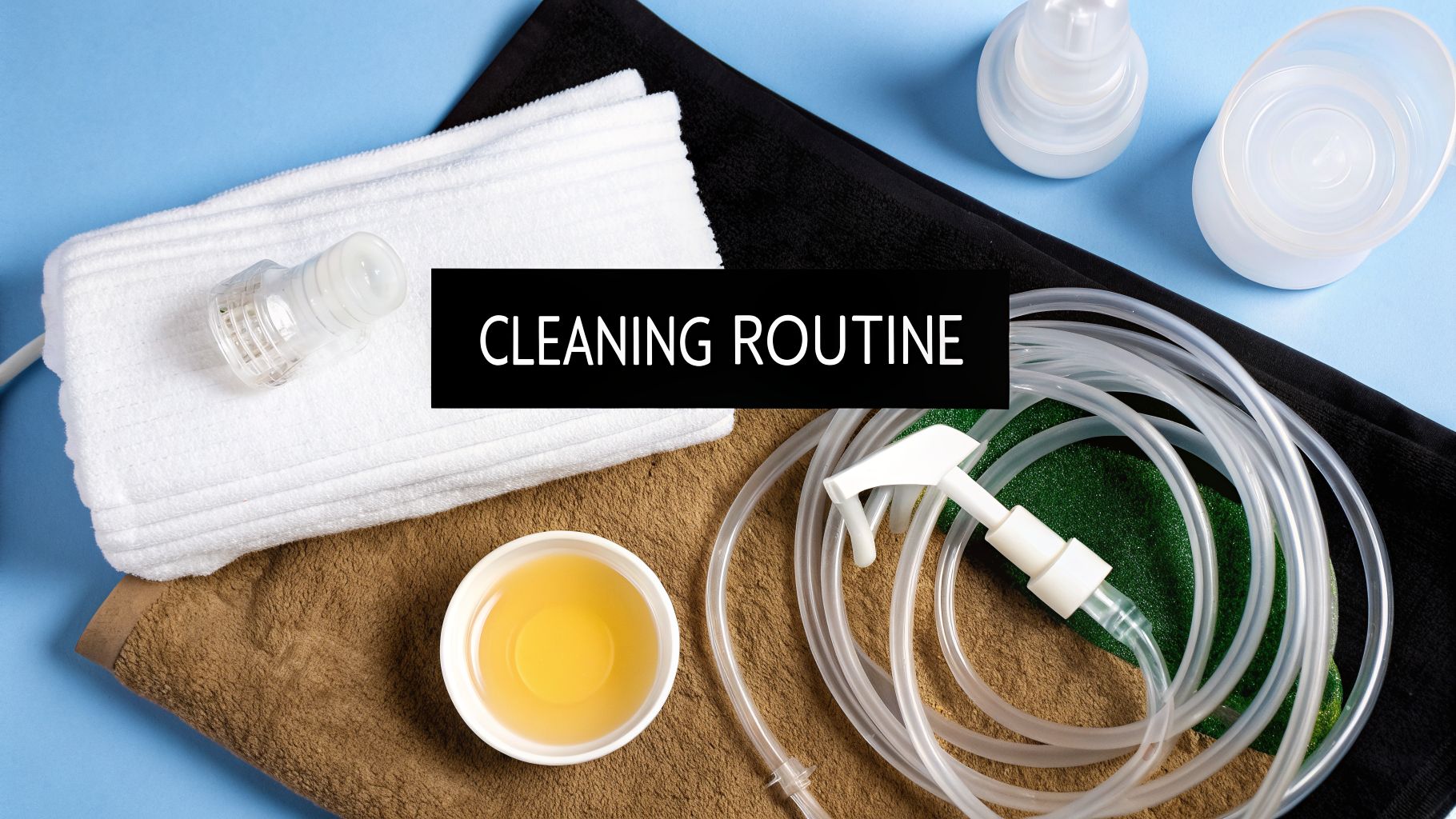
When you're on home oxygen, keeping your tubing and nasal cannula clean isn't just a good idea—it's absolutely critical for your health. Think about it: these components are your direct lifeline to the oxygen you need. Over time, they can collect dust, germs, and even mold, which you definitely don't want to be breathing in.
A simple cleaning routine is your best line of defense. It’s a small, easy habit that plays a massive role in preventing respiratory infections and making sure your therapy is as effective as possible. Just a few minutes a day and a bit more once a week can keep your equipment in prime condition and protect your lungs.
Your Simple Cleaning Schedule
The best routines are the ones you can actually stick with. Here’s a straightforward schedule to keep your gear clean and safe.
- Daily Wipe-Down: Once a day, take a moment to wipe down the prongs of your nasal cannula. You can use an alcohol wipe or just a soft cloth with a little warm, soapy water. This quick clean removes any buildup from the part that sits in your nose.
- Weekly Deep Clean: Give your cannula and tubing a proper wash once a week. Disconnect them from your oxygen machine and let them soak in a sink or basin filled with warm water and a bit of mild dish soap for about 10-15 minutes. After the soak, rinse everything thoroughly and hang it up to air dry.
It's crucial that your equipment is 100% dry before you use it again. Any trapped moisture can become a breeding ground for bacteria, completely undoing all your cleaning efforts.
Knowing When To Replace Your Supplies
Even with the best care, your supplies won't last forever. The plastic and silicone will naturally break down, getting stiff, cloudy, or even developing tiny cracks. This wear and tear isn't just a cosmetic issue; it can cause leaks and prevent you from getting your prescribed oxygen flow.
Here’s a good rule of thumb for when to swap out your gear:
- Nasal Cannula: You should replace your cannula every 2 to 4 weeks. If you get sick with a cold or the flu, toss the old one and start fresh as soon as you're feeling better to avoid reinfecting yourself.
- Oxygen Tubing: The long extension tubing can last a bit longer, but plan on replacing it every 1 to 3 months. Keep an eye out for any signs of wear like stiffness or discoloration.
Sticking to this schedule is a key part of managing your respiratory health at home. For more practical advice on taking care of your equipment, you can always find helpful articles on our medical equipment news and blog.
The need for good home maintenance is only growing. The market for oxygen cannulas and tubing hit USD 7.9 billion in 2023 and is projected to climb to USD 14.6 billion by 2033. This huge growth shows just how many people are relying on home oxygen therapy, making these simple safety practices more important than ever. Discover more insights about the nasal cannula market growth.
Troubleshooting Common Tubing and Cannula Issues
Sooner or later, even with the best setup, you’ll probably run into a few little quirks with your oxygen tubing or nasal cannula. The good news is that most of these are quick fixes you can handle yourself without needing to call an expert. Let's walk through some of the usual suspects so you can get things flowing smoothly again in no time.
Think of a kink in your tubing just like a bent garden hose—nothing’s getting through. If you suddenly feel short of breath or like the flow has stopped, your first move should be to check the line. Follow it all the way from the machine to your nose, looking for any twists or spots where it might be pinned under a chair leg or cushion. Just straightening it out is usually all it takes.
Dealing With Condensation And Leaks
Ever see little water droplets building up inside your tubing? That’s just condensation, sometimes called “rainout,” and it’s perfectly normal, especially if you’re using a humidifier bottle with your oxygen concentrator.
While a little moisture is harmless, a lot of it can block the oxygen and just feel unpleasant. Here’s a simple way to deal with it:
- Disconnect and Drain: Pop the tubing off your cannula and hold it up, letting the water run out into a sink or onto a towel.
- Wipe the Cannula: Before you reconnect, give the prongs of your cannula a quick wipe to make sure the path is clear.
Leaks are another thing to watch for. If you hear a faint hissing sound or the flow just feels weaker than normal, check your connections. Make sure the tubing is pushed all the way onto the adapter on your concentrator or tank, and check that the cannula is connected securely to the tubing. Nine times out of ten, a loose connection is the culprit.
The real trick to troubleshooting is just to take a breath and check the simple things first. You’d be surprised how many issues with oxygen equipment can be sorted out in less than a minute.
Ensuring You Get Your Full Dose
Keeping that oxygen flowing without interruption is what makes your therapy work. Small things like a tiny leak or a partial kink might not seem like a big deal, but they can add up, preventing you from getting the full amount of oxygen your doctor prescribed. Getting into the habit of giving your equipment a quick once-over every day makes a huge difference.
Modern oxygen systems are incredibly reliable. In fact, the use of more advanced setups like high-flow nasal cannulas is exploding, with the market expected to reach USD 18.62 billion by 2033. Research has even shown that in U.S. hospitals, this kind of therapy results in 28% fewer ICU readmissions, which really highlights how dependable today's cannula systems are. You can read more about the effectiveness of high-flow nasal cannula systems.
Your Local Source For Oxygen Supplies
For over 20 years, our team at Affinity Home Medical Equipment has been right here in the community, helping folks in St. Petersburg, Clearwater, and across Pinellas County get the respiratory supplies they need.
Our mission is to empower you to take charge of your health. We make sure our shelves are always stocked with a wide variety of oxygen tubing, nasal cannulas, and other crucial accessories, all ready for you to pick up the very same day. Whether you're recovering from a procedure or managing a long-term condition, we're here to provide a hands-on, personal touch.
Personalized Guidance and In-Stock Availability
When you walk through our doors, you’re not just another customer. You get one-on-one attention from a team that truly knows this equipment inside and out. We understand that figuring all this out can feel overwhelming, so we do everything we can to make it straightforward.
We believe that getting essential medical equipment shouldn't be a hassle. Our entire process is built around providing clear pricing and having products in stock so you can feel safe, mobile, and comfortable at home without any runaround.
By keeping everything on hand, we cut out the frustrating wait times that are so common elsewhere. We’re here to help you find the perfect fit—from the right tubing length to the most comfortable cannula material—to make sure your therapy works for you.
To see more of our oxygen solutions, take a look at our guide on St. Petersburg oxygen concentrator sales and rentals. Feel free to stop by anytime; we'd be happy to help you on your path to better health and independence.
Answering Your Top Questions
We get a lot of questions about oxygen tubing and cannulas, and we're always happy to help. Let's walk through some of the most common ones so you can feel more comfortable and confident with your home oxygen setup.
How Do I Know If My Nasal Cannula Fits Correctly?
Getting the right fit is crucial—it's the key to both comfort and effective therapy. Your nasal cannula should feel snug and secure, but never uncomfortably tight. Think of it like a good pair of glasses; you want to know it's there, but you don't want it pinching or pressing.
The prongs should sit gently just inside your nostrils, curving downward along the natural line of your nose. If you're seeing persistent red marks, pressure spots, or any chafing on your face or behind your ears, that’s a big red flag. It likely means you need to try a different size or even a softer material. A proper fit makes all the difference.
Is It Safe To Use Petroleum Jelly For A Dry Nose?
This is a critical safety point: absolutely not. You should never use petroleum-based products like Vaseline anywhere near your oxygen equipment. These products are flammable and pose a serious fire risk when they come into contact with concentrated oxygen.
If you’re dealing with a dry, irritated nose, the best first step is to talk to your doctor. They will likely recommend a water-based lubricant made specifically for people using oxygen. Even better, a humidifier bottle attached to your oxygen concentrator is often the perfect solution, as it adds a bit of moisture directly into the air you’re breathing.
What Is The Longest Oxygen Tube I Can Safely Use?
Most home oxygen concentrators are designed to push oxygen effectively through tubing up to 50 feet long. This gives you a fantastic amount of freedom to move around your home—from the living room to the kitchen—without having to lug the machine with you.
That said, you should always double-check the user manual for your specific concentrator. Every model is a little different, and you want to be certain there’s no drop in pressure that could affect your prescribed flow rate.
At Affinity Home Medical Equipment, we keep a full stock of oxygen tubing, cannulas, and other essential accessories ready for same-day pickup. Stop by, and we'll make sure you get exactly what you need for your therapy. Find the right supplies at Affinity Home Medical Equipment
Share This Article

Written by : Rich affinityrich@gmail.com
Follow Us
Latest Articles

October 14, 2026

October 14, 2026

October 14, 2026

