
Oxygen Tubing Water Trap: Safe Setup, Cleaning, And Home Use Tips

If you’re using humidified oxygen, you've probably noticed condensation building [...]
If you’re using humidified oxygen, you've probably noticed condensation building up inside your tubing. That's where an oxygen tubing water trap comes in. It's a simple but crucial little device that collects that excess moisture, making sure it doesn't cause problems with your therapy.
Think of it as a small, clear reservoir that splices right into your oxygen line. Its entire job is to catch water droplets before they can travel all the way to your cannula or mask. This is an absolutely essential accessory for anyone whose oxygen therapy includes a humidifier.
What Is An Oxygen Tubing Water Trap

When your oxygen concentrator uses a humidifier bottle, it sends warm, moist air down the long tubing to you. As that air travels and cools, the water vapor naturally turns back into liquid droplets. It’s the same thing that happens when a cold drink "sweats" on a hot day. This condensation process is often called "rainout."
Without a water trap, that rainout has nowhere to go. It can pool inside the tubing, leading to a surprise splash of water on your face or interrupting your sleep with a gurgling sound. Even worse, that moisture can flow back toward your concentrator, risking damage to the machine.
Why Is Moisture A Concern
The biggest concern with this collected moisture, however, is health-related. Stagnant water sitting inside a warm tube is the perfect breeding ground for bacteria. This creates a direct path for potential respiratory infections, which is the last thing anyone on oxygen therapy needs.
An oxygen water trap solves this by physically intercepting the condensation. It's a clear plastic cylinder with connectors on both ends that you install at the lowest point in your oxygen line. Gravity simply does its job, pulling the water droplets down into the trap and keeping the rest of the tubing clear and dry.
I like to explain it this way: your long oxygen tube is like a river. The water trap acts as a reservoir built to collect runoff, preventing a flood (or a gurgling splash) from happening downstream at your nose. It’s a small piece of equipment, but it plays a huge role in keeping your home oxygen therapy safe and effective.
Key Benefits Of Using A Water Trap
Adding a water trap to your setup is a simple, proactive step with some really important benefits. It’s all about improving your comfort and, most importantly, your safety.
Here’s what it does for you:
- Prevents Water Splash: It stops that annoying and uncomfortable sensation of condensation hitting your face or gurgling in your cannula.
- Protects Your Equipment: By capturing moisture, the trap keeps water from backing up into your expensive oxygen concentrator and causing damage.
- Reduces Infection Risk: It eliminates the standing water where harmful bacteria could otherwise grow, helping you breathe cleaner and safer air.
Ultimately, this little accessory is one of the most important parts of a safe humidified oxygen setup. You can explore a wide range of respiratory solutions at https://affinityhomemedicalequipment.com/ to find the supplies that work for you. Please be aware that we sell these supplies directly to our customers and do not accept or process any insurance.
Why Trapping Moisture Is Critical For Your Health
If you use a humidifier with your oxygen concentrator, you’re sending warm, moist air through a long tube. But as that air travels across the room to you, it starts to cool down. This cooling causes the water vapor to turn back into liquid water droplets right inside your tubing.
We call this process "rainout," and it's the reason you suddenly get a disruptive gurgling sound or, even worse, an unwelcome splash of cold water on your face. While it’s certainly an annoyance that can ruin a good night's sleep, the bigger problem is the hidden health risk this moisture creates.
The Hidden Danger In Your Tubing
So, why is this moisture so bad? The number one reason we need to trap it is to prevent infection. Think about it: a dark, enclosed tube filled with warm, stagnant water is the perfect environment for bacteria and mold to flourish. Every breath you take could be pulling those harmful germs directly into your lungs.
This is a serious concern for anyone, but it's especially dangerous for older adults or individuals managing conditions like COPD. For them, a respiratory infection isn't just a minor setback—it can lead to serious complications. A water trap acts as your first line of defense, a simple but powerful tool for keeping your oxygen supply clean and safe. It's the same principle as why understanding the dangers of mold and mildew in a bathroom is so important, just applied to your respiratory health.
This isn't just a theoretical risk. Research has shown that even when tubing looks perfectly clean, it can be teeming with germs. A 2018 study, for example, found that 16.1% of high-flow oxygen circuits were contaminated with bacteria after only 48 hours of use. That’s a startlingly quick turnaround, highlighting just how fast germs can take hold in the warm, humid conditions inside the tubing.
A Proactive Step For Better Health
At the end of the day, an oxygen tubing water trap isn't just another accessory. It's a non-negotiable part of a safe home oxygen setup. By capturing that "rainout" before it becomes a problem, you’re not only avoiding discomfort but actively protecting yourself from potential illness.
Taking this one simple step ensures the oxygen you breathe is as pure as it can be, all the way from the concentrator to you. If you’re looking to get set up with the right equipment, you can find helpful information in our guide to St. Petersburg oxygen concentrators and sales.
Just a quick note: to keep things simple and transparent, we provide high-quality equipment directly to you. This means we do not accept or bill any type of insurance, allowing us to offer clear, straightforward pricing on everything we sell and rent.
How To Install Your Water Trap Correctly
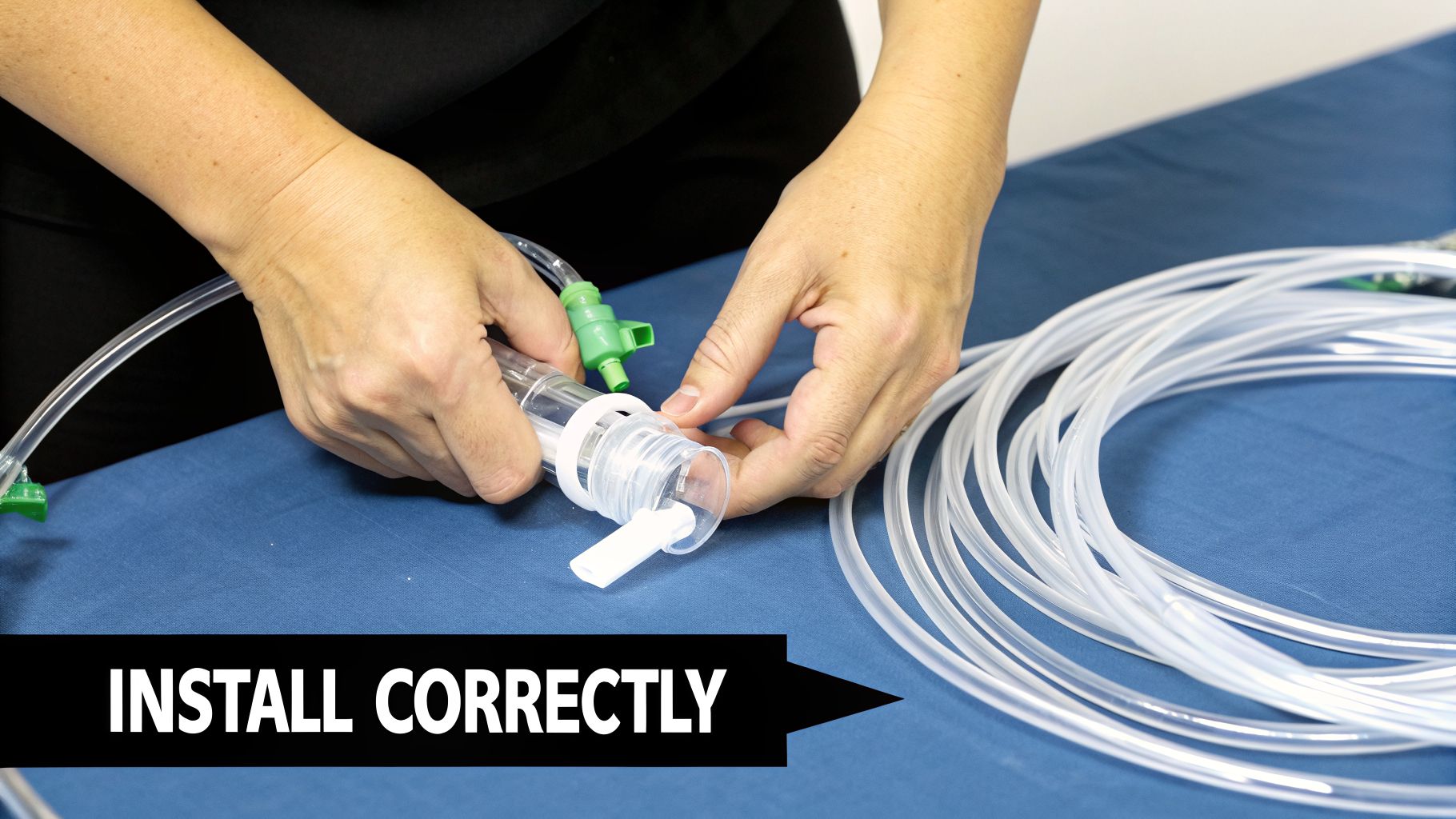
Getting your oxygen tubing water trap installed correctly is surprisingly simple, but it makes a world of difference for your comfort and safety. The good news is you don’t need any special tools or technical know-how. The entire process hinges on one simple rule: place the water trap at the lowest point of the tubing loop. This lets gravity do all the work for you.
Think about how a drain works in a sink. Water always flows downhill to the lowest spot. Your oxygen tubing should work the same way—it drapes from your concentrator, dips down to where the trap is on the floor, and then comes back up toward you. This low point creates a natural collection spot, ensuring any condensation runs right into the trap where it belongs.
Your Simple Installation Guide
Setting up your water trap only takes a minute. Just follow these quick steps for a secure, leak-free connection.
- Gather Your Supplies: All you'll need is your oxygen tubing, a pair of scissors, and the new water trap.
- Find the Lowest Point: With the tubing already connected to your concentrator, walk over to where you usually sit or rest. Let the tubing hang naturally on the floor and find the very lowest point in the loop. That’s your spot.
- Cut the Tubing: Take your scissors and make one clean, straight cut through the oxygen tubing at that lowest point. You should now have two separate ends of the tubing.
- Connect the Trap: Your water trap has two ends, usually marked with arrows indicating an "in" and an "out." Attach the piece of tubing coming from the oxygen concentrator to the "in" side. Then, connect the tubing that goes to your cannula or mask to the "out" side.
- Check for Leaks: Make sure you push the tubing firmly onto both connectors for a tight seal. Turn on your oxygen concentrator and listen closely for any hissing sounds, which would tell you there’s a leak.
And that’s it! Your system is now properly set up to catch that pesky moisture.
Common Installation Mistakes To Avoid
Proper placement is everything. If you install the trap in the wrong spot or orientation, it can become useless or even create new problems.
Key Takeaway: Always install the water trap with the collection chamber pointing down. If it’s installed upside down or sideways, it can’t collect water effectively, and any moisture it does manage to catch could easily spill right back into the tubing.
Another common mistake is placing the trap too close to the oxygen concentrator. You need to give the warm, humidified air enough tubing length to travel and cool down, which is what causes condensation in the first place. Placing it several feet away from the machine is ideal.
If you have questions about finding the right supplies, feel free to browse our selection of oxygen tubing water traps and other accessories. Please remember that we focus on providing high-quality equipment directly to our customers and do not process insurance claims.
Simple Cleaning And Maintenance For Your Water Trap
Getting your oxygen tubing water trap set up correctly is only half the battle. Keeping it clean is just as important, and thankfully, it’s not complicated. A simple daily routine is all it takes to keep your oxygen flowing safely and hygienically. Think of it like brushing your teeth—a small habit that prevents bigger problems down the road.
The most critical part of this routine is emptying the water collected in the trap. You absolutely have to do this daily. If you live in a humid area or have your humidifier turned up, you might even need to check and empty it more than once a day. Don't let water sit in there; it's an open invitation for trouble. Make it a habit, just like taking a morning medication.
A Clear Cleaning Routine
You don’t need any fancy equipment or harsh chemicals to get your water trap perfectly clean. Just some mild soap and warm water will do the trick. Here’s a simple process we recommend to all our clients.
- Power Down and Disconnect: First things first, turn off your oxygen concentrator. Then, you can gently disconnect the water trap from the tubing on both sides.
- Wash and Scrub: Clean the trap inside and out with warm water and a little bit of mild dish soap. A small bottle brush can be a huge help for getting into all the nooks and crannies.
- Rinse, Then Rinse Again: This step is vital. You need to rinse the trap with clean water until there’s absolutely no soap residue left. The last thing you want is to breathe in any lingering soap particles.
- Let It Air Dry: Place the trap on a clean paper towel and let it air dry completely. Reconnecting it while it's still damp will just trap moisture inside, which defeats the whole purpose.
A Crucial Word of Warning: Please, never use bleach, alcohol, or any harsh chemical cleaners on your water trap. These substances can eat away at the plastic over time, causing it to crack and fail. Even worse, they can leave behind harmful fumes that you could inhale, which can seriously irritate your lungs.
When To Replace Your Supplies For Optimal Safety
Even the best-maintained equipment wears out. Over time, tiny, invisible scratches can form in the plastic, creating places for bacteria to hide. That’s why regularly replacing your supplies is a non-negotiable part of staying safe with oxygen therapy.
We advise our patients to replace their oxygen tubing every two months and their nasal cannula at least once per month. As for the water trap, plan on swapping it out for a new one every few months. Of course, if you ever see any cracks, stubborn discoloration, or other damage, replace it immediately.
Staying on top of this simple maintenance ensures your equipment works exactly as it should, day in and day out. For more practical advice on managing your home medical equipment, check out the other articles on our medical equipment news and blog. While we love providing these resources and selling equipment, please remember that we do not work with insurance.
Troubleshooting Common Water Trap Issues
Even with the best setup, you might occasionally hit a small snag with your water trap. Don't worry—most of these little hiccups are easy to sort out on your own. Let’s walk through the most common issues and their quick fixes to keep your oxygen therapy running smoothly.
My Water Trap Isn't Collecting Any Water
Seeing an empty water trap when you expect it to be collecting moisture can be confusing, but it usually points to a simple adjustment rather than a faulty device.
- Check Your Humidifier: First things first, is your humidifier bottle filled with distilled water and actually turned on? If you're not using humidification, there's no moisture to trap, so the collector will stay dry.
- Adjust Humidifier Settings: The air in your home might be especially dry, requiring you to turn up your humidifier. A lower setting simply may not produce enough moisture to create the condensation that the trap is designed to catch.
- Verify Trap Placement: Take a quick look at your tubing. The water trap needs to be at the absolute lowest point of the tubing line. Gravity does all the work here, so if the trap is positioned too high, water can't flow down into it.
I Hear A Hissing Sound Near The Connections
That tell-tale hissing or whistling noise is almost always the sound of an air leak. This is something you'll want to fix right away because it means you aren't getting the full, prescribed amount of oxygen.
Important Note: A secure, airtight seal is non-negotiable for effective oxygen therapy. Any leak means you're not receiving your prescribed flow rate, which can directly affect your treatment.
Start by checking the most common culprits: the connections. Give the tubing a firm push onto both the "in" and "out" ports of the water trap to ensure a snug fit. If the hissing persists, carefully examine the trap itself for any cracks. Even a tiny, hairline fracture can be enough to cause a leak. If you find one, the trap needs to be replaced immediately.
There's Still Excessive Moisture in My Tubing
If your trap is installed correctly but you’re still getting that gurgling sound or feeling moisture in the tubing near your cannula, it’s likely a positioning issue.
Make sure the trap is placed far enough away from you so the tubing has a gentle upward slope leading to your cannula. This simple adjustment uses gravity to your advantage, preventing any water that has been collected from sloshing back "uphill" toward you.
For those navigating ongoing respiratory care, understanding all your equipment options is crucial. If you find yourself in need of different solutions or temporary setups, our guide on St. Petersburg medical equipment rentals offers valuable information. Please be aware that we provide equipment directly and do not work with or bill any type of insurance.
Choosing The Right Oxygen Supplies In St Petersburg
Finding the right respiratory supplies can feel like a maze, but it doesn't have to be. Let's talk about something simple but crucial: the oxygen tubing water trap. The good news is that most of these are built with universal connectors designed to fit any standard tubing.
Even so, it’s always smart to double-check that the trap is a perfect match for your specific oxygen concentrator. A snug, leak-free seal is non-negotiable for effective therapy, and we can help you confirm you’ve got the right fit.
Partnering With A Local Provider
There's real peace of mind in getting your supplies from a local expert you can trust. For our neighbors here in St. Petersburg and Pinellas County, having knowledgeable staff nearby makes a world of difference. You get personalized advice, a chance to see the equipment firsthand, and the confidence that comes from making an informed choice.
Having a local team on your side means you have a partner to call for guidance and, just as importantly, quick access to supplies. Instead of anxiously waiting for a delivery, you can get what you need right when you need it. This is essential for keeping your therapy going without any frustrating interruptions.
This kind of reliable setup is a direct result of decades of progress. Think back to the 1970s, when home oxygen therapy first began freeing patients from long hospital stays. As humidifiers became common for the 70-80% of users who need them to prevent painful nasal dryness, a new problem appeared: condensation. That's when accessories like the water trap became so important, preventing the 20-30% of flow interruptions caused by moisture buildup in the tubing. You can read more about the origins of modern oxygen therapy to see just how far we've come.
Please note that our business model is focused on providing equipment and supplies directly to you with clear, straightforward pricing. We do not accept or handle any form of insurance, allowing us to maintain a simple and transparent process for all our customers.
By working with a dependable local supplier, you’re ensuring that every part of your oxygen system—from the concentrator right down to the water trap—is top quality and right for you. It's the surest way to build a safe, effective, and comfortable home care experience.
Your Top Questions About Oxygen Water Traps Answered
Getting the hang of new home oxygen equipment can feel like a lot at first, and it’s natural to have questions. We get it. To make things easier, we’ve put together some straightforward answers to the most common questions we hear about oxygen tubing water traps.
Our goal is to give you the confidence that comes from truly understanding your equipment. Knowing how these simple but important accessories work—and how to care for them—is a huge part of staying safe and getting the most out of your oxygen therapy.
How Often Should I Empty My Water Trap?
You absolutely need to check and empty your water trap every single day. Think of it as a non-negotiable part of your daily routine, just like taking a medication.
If you live somewhere humid or have your humidifier bottle on a high setting, you'll notice the trap fills up much faster. In that case, you might need to empty it more than once a day to keep your oxygen line clear and working properly.
Can A Water Trap Reduce My Oxygen Flow?
No, not when it’s installed and maintained correctly. A clean, properly fitted oxygen tubing water trap is designed to let oxygen pass right through while catching any moisture. It will not reduce or affect your prescribed oxygen flow.
If you ever hear a hissing sound or feel like you're not getting enough air, the culprit is almost always a bad connection or a blockage. A loose fit creates leaks, and a full or dirty trap can block the line. Just double-check that it's screwed on tight and kept clean.
Do I Need A Water Trap Without A Humidifier?
Most of the time, no. A water trap’s only job is to catch the condensation—what we call "rainout"—that forms when warm, moist air from your humidifier cools down inside the long tubing.
So, if you aren't using a humidifier bottle with your oxygen concentrator, there's no extra moisture to cause condensation in the first place. You simply don't need a water trap in that setup.
At Affinity Home Medical Equipment, we're here to make sure you have the right supplies for your specific needs. You can explore our full selection of high-quality oxygen accessories by visiting our online store.
Share This Article

Written by : lori@netcodesign.com
Follow Us
Latest Articles

October 13, 2026

October 13, 2026

October 13, 2026

