
Finding The Perfect Quiet Oxygen Concentrator For Your Home

The constant drone of medical equipment can quickly turn a [...]
The constant drone of medical equipment can quickly turn a peaceful home into a stressful one. Thankfully, technology has come a long way. A quiet oxygen concentrator can deliver the respiratory support you need without all the racket, often operating at a sound level no louder than a soft whisper or the gentle hum of a new refrigerator.
This guide is all about helping you find a device that fits seamlessly into your daily life, preserving the peace and quiet you deserve.
Your Guide To A More Peaceful Home Oxygen Therapy Experience
The whole point of home oxygen therapy is to improve your quality of life, not trade one problem for another. A loud, clunky machine can make it hard to talk on the phone, watch TV, or even get a good night's sleep. That constant background noise can add a lot of unnecessary stress, which is why finding a quiet oxygen concentrator is such a high priority for so many people.
Think about the difference between an old, rattling window air conditioner and a modern central air system. Both cool your house, but one makes a racket while the other works almost silently. Today's best oxygen concentrators are designed with that same quiet efficiency in mind.
What To Expect From This Guide
We put this guide together to give you all the information you need to make a smart choice. We'll walk you through the things that really matter, such as:
- Understanding what decibel ratings actually mean in the real world.
- Pinpointing the specific features that make a machine both quiet and reliable.
- Learning how to compare different models to find the perfect match for your needs and lifestyle.
Our goal is simple: to help you find a machine that provides the therapy you need without becoming the loudest thing in the room. To take your home's tranquility a step further, you might even consider solutions like sound proof insulation spray to create an even more serene environment for your therapy.
It's important to note that while we are committed to helping you find the best equipment for your needs, we do not accept insurance. This direct-to-consumer model allows us to offer straightforward pricing and personalized service without the complexities of insurance billing.
What Actually Makes an Oxygen Concentrator Quiet?
When you see the word "quiet" on the box of a medical device, what does that really mean? It’s not just a nice-to-have marketing term; it's a specific, measurable output of sound that can make or break your experience at home. Let's dig into what that number means for your peace and quiet.
The key is a unit of measurement called decibels (dBA). Think of it as a ruler for sound. The lower the dBA number, the quieter the machine. This single metric is your best tool for cutting through the advertising noise and comparing how different models will actually sound in your living room or bedroom.
Putting Decibel Levels in Perspective
Numbers on a spec sheet don't mean much without some real-world context. A quiet conversation or the low hum of a modern refrigerator typically sits around 40 dBA. This is really the sweet spot—the benchmark for a home oxygen concentrator that won't disrupt your sleep or daily life.
On the other hand, a normal conversation or a dishwasher in the next room can easily hit 60 dBA. That's a level that can definitely be distracting and disruptive, especially when you're trying to rest.
To help you get a better feel for these numbers, here's a quick comparison of concentrator decibel ratings to some common, everyday sounds:
- Leaves rustling, a soft whisper: 30 dBA
- A quiet library or a premium home oxygen concentrator: 40 dBA
- Moderate rainfall: 50 dBA
- A typical office, an older or standard concentrator: 60 dBA
What's really surprising is how our ears perceive these changes. A jump of just 10 decibels sounds twice as loud to us. So, choosing a machine rated at 40 dBA over one at 50 dBA isn't a small upgrade—it makes a massive difference in creating a tranquil home environment.
For more tips on selecting the right equipment, you can always explore our medical equipment news and blog.
The Technology Behind The Silence
So, what's the secret sauce? How do manufacturers get these machines to run so quietly? It all comes down to clever engineering and using the right parts.
The heart of the concentrator is its compressor, and this is where most of the noise comes from. The best quiet models use advanced compressors built with materials and designs that drastically cut down on vibration. Less vibration means less noise. It’s that simple.
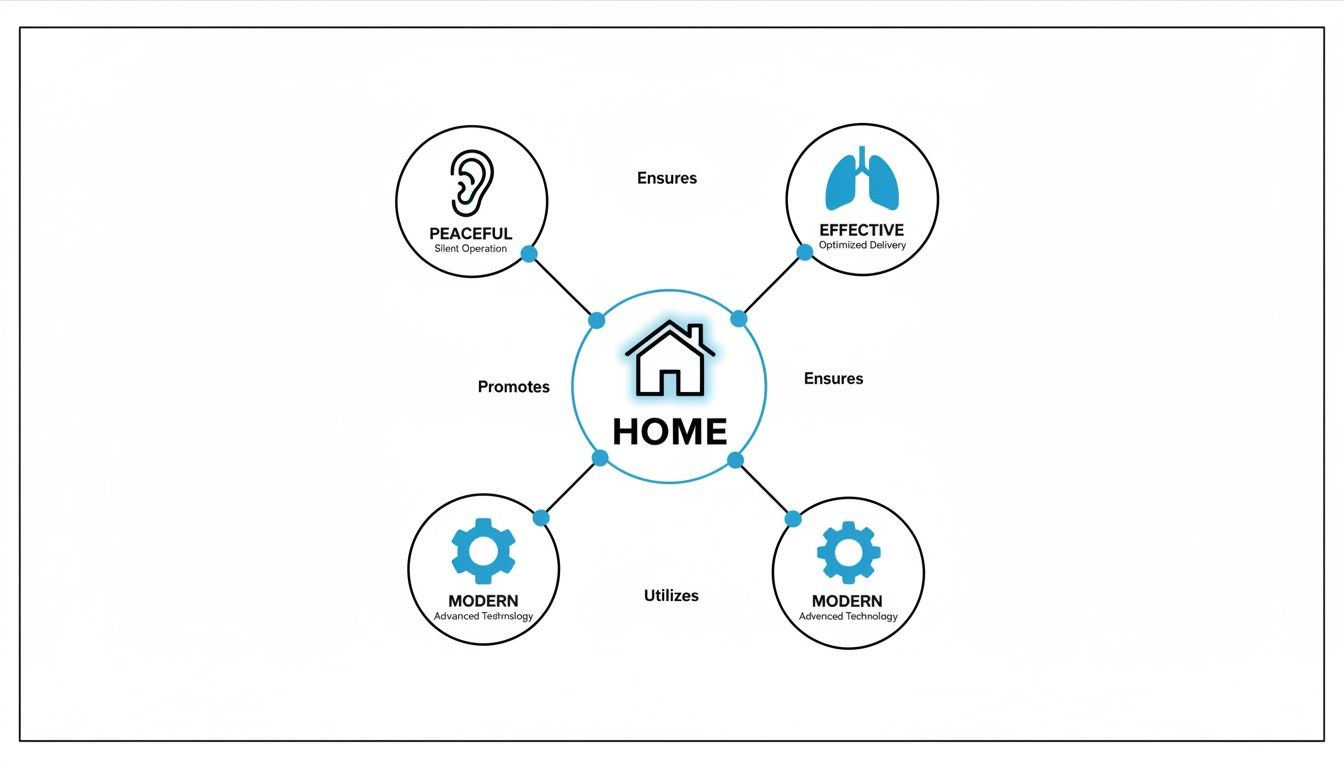
On top of that, engineers use special sound-absorbing materials to line the inside of the machine's case, acting like soundproofing for the internal components. These materials trap and muffle the operational sounds before they ever reach your ears.
Finally, many modern units feature smart oxygen delivery systems that adjust the machine's output based on your breathing patterns. This means the concentrator isn't running at full tilt all the time, which not only reduces noise but also saves energy and cuts down on wear and tear.
Key Features to Look For in a Quiet Stationary Concentrator

When you're searching for a quiet oxygen concentrator, it’s easy to focus solely on the decibel rating. But from my experience, the features that truly make a difference are the ones that fit seamlessly into your daily life. Stationary concentrators often run for hours on end, especially overnight, so a machine's subtle operation is critical for getting a good night's sleep. Beyond just being quiet, a great machine has to be convenient, safe, and easy on your wallet.
The demand for reliable home units like these is growing fast. The global oxygen concentrator market hit an impressive $4.85 billion in a recent year, and it’s expected to climb to $8.31 billion by 2033. This growth is largely driven by an increasing number of people managing respiratory conditions at home. It’s no surprise that stationary models, specifically designed for quiet operation, made up a huge 54.1% of that market revenue.
Beyond the Decibel Rating
As you start comparing different models, I always advise people to look beyond the sound level and think about the features that will genuinely impact their day-to-day routine and budget. A quiet machine that’s a headache to use isn’t a good solution.
-
Energy Efficiency: This is a big one. An oxygen concentrator is a long-term investment, and its power consumption will show up on your monthly electricity bill. Always check the wattage—a more efficient unit can save you a surprising amount of money over time.
-
User-Friendly Controls: Imagine trying to adjust your settings in the middle of the night or when you're not feeling your best. You'll want a machine with large, easy-to-press buttons and a clear, backlit display that you can read without fumbling for the lights.
-
Mobility and Design: Even though they're called "stationary," you'll still need to move the unit for cleaning or just to rearrange the room. Look for smooth-rolling wheels and a solid handle that’s easy to grip. It makes a world of difference.
Safety and Peace of Mind
At the end of the day, nothing is more important than your safety. A dependable, quiet oxygen concentrator must have solid alarm systems that give you and your family peace of mind, especially while you sleep.
Key safety indicators to look for include alarms for low oxygen purity, power failure, and high or low pressure. These alerts are your safety net, making sure your therapy stays effective and uninterrupted when you need it most.
By weighing these practical features alongside the noise level, you can find a machine that truly supports your health without disrupting your home. When you feel ready to see what’s out there, you can explore the oxygen concentrators available in our shop.
Renting vs. Buying: What's the Right Move for You?
Deciding whether to rent or buy a quiet oxygen concentrator is a big decision, and honestly, there's no one-size-fits-all answer. The best choice really comes down to your unique situation—your health needs, how long you'll need the machine, and your budget.
Renting is often the perfect fit for short-term needs. Think of it as a flexible, no-strings-attached solution. If you're recovering from surgery or just starting oxygen therapy, renting lets you access a top-notch machine without the hefty upfront cost. You can use it for a few days or a few weeks, and that's it.
Weighing Your Options
On the flip side, if you're managing a chronic condition like COPD and know you'll need oxygen for the long haul, buying your own unit often makes more financial sense. The initial investment might be higher, but over many months or years, it can be significantly cheaper than paying a rental fee month after month.
To figure out which path is right, ask yourself a few key questions:
- How long will you need the therapy? If it’s just for a few months, renting is almost always the way to go.
- What's your upfront budget look like? Buying is a bigger one-time expense, while renting spreads that cost into smaller, more manageable payments.
- Is there a chance your oxygen needs could change? If your doctor might adjust your prescription, renting gives you the freedom to easily swap out your machine for a different model.
It's important to know that while we offer clear, straightforward pricing for both renting and buying, we do not take insurance. This allows us to keep our costs transparent and focus on providing personal service without the delays and paperwork that come with insurance claims.
This decision is more relevant than ever as healthcare continues to shift toward home-based care. The global oxygen therapy market is massive—projected to grow from $27.4 billion to $41.1 billion by 2033—largely because more people are managing conditions like COPD and sleep apnea from the comfort of their own homes.
Before you make the call, it can also be helpful to understand the basic differences between an oxygen concentrator vs. oxygen tank. By looking at your medical needs and financial picture, you can feel confident in your choice. For our neighbors here in Pinellas County, we offer plenty of flexible options, and you can find more details on our St. Petersburg medical equipment rentals page.
Simple Tips For Maintaining A Quiet Operation

Even the quietest oxygen concentrator on the market can start making a racket if it isn't set up and maintained correctly. The good news is, keeping things peaceful is pretty straightforward. A few simple habits can make a huge difference in the day-to-day noise level, ensuring your machine runs as smoothly and silently as it was designed to.
Believe it or not, the most common culprit behind extra noise is simple vibration. You might think a soft surface like a thick carpet would dampen the sound, but it often does the opposite by amplifying the machine's natural hum. The best practice is to always place your concentrator on a hard, level surface—think tile, hardwood, or laminate flooring—to keep those vibrations to a minimum.
Give Your Machine Room to Breathe
Just like us, your concentrator needs to breathe. Proper airflow is absolutely critical for it to operate quietly and efficiently. When a machine gets pushed up against a wall or crammed next to furniture, its air intake vents get blocked. This forces the internal fan to spin faster and work much harder to cool the compressor, making it noticeably louder.
To keep things quiet, just follow a few common-sense placement rules:
- Maintain Clearance: Always leave at least 6 to 12 inches of open space on all sides of your concentrator.
- Avoid Tight Spaces: Never run the unit in a small, enclosed area like a closet where air can't circulate.
- Keep Away From Drapes: Make sure curtains or other fabrics can’t get sucked against the vents.
Think of it as creating a small buffer zone. This space allows the machine to pull in air effortlessly, which keeps the cooling fan running at a low, quiet speed. It’s one of the easiest things you can do to ensure peaceful therapy and even extend the life of the machine.
One last, crucial task is keeping the cabinet filter clean. This little screen is the first line of defense against dust, lint, and pet hair. When it gets clogged, the machine has to strain to pull in air, which—you guessed it—makes it louder. A quick wipe-down once a week and a proper wash following the manufacturer's directions will go a long way in preserving the quiet you paid for.
How to Get Your Oxygen Concentrator Locally
Trying to figure out medical equipment on your own can be a real headache. The good news is, you don't have to. When you partner with a local provider, you get a level of hands-on support and genuine expertise that you just can't find with big, faceless online retailers.
Having someone right here in the community who can walk you through your prescription, answer your questions face-to-face, and help you find the right quiet oxygen concentrator makes all the difference. You're not just buying a machine; you're gaining a local partner dedicated to your health. We take the time to really understand what you need so the model you take home actually fits your life.
The Advantage of Local Expertise
We've been serving this community for over twenty years, helping your friends and neighbors find the perfect solutions for their home oxygen therapy. All that experience means we know how to give practical advice that truly helps.
- Same-Day Pickup: We know that when you need oxygen, you can't wait days for shipping. We offer same-day pickup on our in-stock concentrators so you can start your therapy right away.
- Personalized Guidance: Our team is here to show you the ropes. We'll explain how different models work and make sure you feel completely comfortable using your new equipment before it leaves our store.
- A Straightforward Process: We keep things simple. It's important to know that we do not take insurance. This allows us to offer clear, upfront pricing without the frustrating delays and red tape that often come with insurance billing.
Choosing the right stationary oxygen concentrator is an investment in your well-being. These devices, prized for their ultra-quiet operation, are central to effective home therapy.
The growing preference for these quiet, reliable machines is clear. The global market for stationary oxygen concentrators hit $0.85 billion in a recent year and is projected to reach $1.58 billion by 2033. This jump shows just how much people value a peaceful and comfortable environment for home care. You can dive deeper into these stationary oxygen concentrator market trends to see where the industry is headed.
Expert help is just around the corner. If you're in Pinellas County, you can find out more about what we offer by reading our guide to St. Petersburg oxygen concentrators sales and rentals.
Frequently Asked Questions About Quiet Oxygen Concentrators
We get a lot of great questions about quiet oxygen concentrators. Here are some quick, straightforward answers to the ones we hear most often, helping you clear up any confusion and get right to what matters.
Do I Need A Prescription For A Quiet Oxygen Concentrator?
Yes, absolutely. An oxygen concentrator is medical equipment, and you must have a prescription from your doctor to rent or buy one. Think of oxygen as a prescribed medication—the prescription tells us the precise flow rate you need, measured in liters per minute (LPM), to keep you safe and healthy.
Our team has years of experience with these prescriptions. We'll make sure the quiet concentrator you choose is a perfect match for what your doctor ordered, so you can breathe easy knowing you're getting the right level of therapeutic oxygen.
How Loud Is A Quiet Concentrator In A Bedroom At Night?
This is probably the most common question we get! A quiet, modern oxygen concentrator typically runs somewhere between 35 and 45 decibels (dBA). For context, a quiet library is around 40 dBA.
So, what does that actually sound like in your bedroom at night? It’s a soft, steady hum. Most people describe it as a gentle white noise that's easy to tune out and sleep through, which is a world of difference from the disruptive noise of older, standard machines.
Are Stationary Oxygen Concentrators Good For Travel?
Stationary concentrators are designed to be the workhorses of your home therapy. They have wheels, sure, but that’s just to make it easier to move them from the living room to the bedroom. They are simply too big and heavy to be practical for travel, especially for flights.
When you need to get out and about, you'll need a different device altogether: a Portable Oxygen Concentrator (POC). These are built specifically for life on the go. We can help you figure out a solution that covers all your bases, both at home and away.
For a deeper dive into other common questions, feel free to check out the full FAQ page on our website.
What Is The Difference Between Continuous Flow And Pulse Dose?
This comes down to how the oxygen is delivered.
- Continuous Flow: This is the standard for most home units. It provides a constant, steady stream of oxygen, no matter what.
- Pulse Dose: Found mostly in portable models, this technology is smarter, delivering a "puff" or "bolus" of oxygen only when it detects you inhaling.
For sleeping, doctors almost always prescribe continuous flow. It’s the only way to guarantee your body receives consistent oxygen levels all night long, even when your breathing becomes shallow. This is why having a quiet home concentrator is so essential for truly restful, effective therapy.
At Affinity Home Medical Equipment, our goal is simple: to help you find the right equipment to make your life better. If you have more questions or need a hand picking out the perfect quiet oxygen concentrator, visit us online at https://affinityhomemedicalequipment.com or stop by our store.
Share This Article

Written by : lori@netcodesign.com
Follow Us
Latest Articles

October 13, 2026

October 13, 2026

October 13, 2026
