
A Guide To Reducing Hospital Readmission Rates

A hospital readmission is a deeply personal setback. It’s more [...]
A hospital readmission is a deeply personal setback. It’s more than just a statistic—it’s a disruptive, stressful, and often preventable ordeal for patients and the people who care for them. True success isn’t measured by simply being discharged from the hospital. It’s about what happens in the days and weeks that follow, because a safe and supportive home is where lasting recovery truly takes root.
The Bridge Between Hospital And Home
That first walk through the front door after a hospital stay should be a moment of relief. For far too many, however, it feels like stepping onto a tightrope. The time immediately after discharge is incredibly fragile. One small misstep—a missed medication, a stumble on a rug, or confusion about follow-up care—can quickly snowball into a major health crisis and another trip to the ER.
This is where we can build a better bridge between the controlled environment of a hospital and the realities of recovering at home. This is especially critical for older adults and their families here in Pinellas County. A coordinated plan that combines professional medical guidance with practical, in-home support is the key to reducing hospital readmission rates. It’s about creating a safety net to catch problems before they become emergencies.
The Real Cost Of Readmissions
The impact of a readmission ripples far beyond the hospital walls. For the patient, it means another round of illness, a frightening loss of independence, and the emotional toll of feeling like they're going backward. For their family, it’s more missed work, more anxiety, and the exhaustion of navigating a complex healthcare system all over again.
Hospital readmissions are a clear sign that the transition from a controlled medical setting to the realities of home life has broken down. Addressing this requires focusing on the patient's entire environment, not just their medical condition.
The numbers paint a stark picture. Between 2016 and 2020, the 30-day all-cause hospital readmission rate in the U.S. hovered at 13.9 per 100 admissions. That means nearly one in seven patients ends up back in the hospital within a month. While there's been progress in lowering these rates for specific conditions like heart failure, the risk is still substantial.
In fact, for every 1.5 percentage point increase in a hospital’s readmission rate, there's a 13% higher risk of adverse events. With each readmission costing an average of $15,000, the financial strain is immense. You can explore more patient readmission statistics and their financial impact to see just how widespread this issue is.
To get a clearer picture of what drives these readmissions, it helps to look at the primary causes.
Primary Causes of Hospital Readmissions
Understanding these common pitfalls is the first step toward preventing them and ensuring a smoother, safer transition home. Key causes include:
- Medication Errors: Wrong doses or missed medications can quickly destabilize a patient's condition. Effective interventions include clear medication reconciliation, pill organizers, and caregiver education.
- Lack of Follow-Up: Missed doctor's appointments mean a professional can't spot warning signs early. Pre-scheduling appointments before discharge and arranging for transportation are crucial.
- Inadequate Home Safety: A home with fall hazards like rugs or poor lighting can lead to injuries and re-hospitalization. A thorough home safety assessment and the installation of grab bars and other aids are effective strategies.
- Poor Caregiver Education: When family caregivers don't understand the care plan, they can't effectively support the patient. Hands-on training for caregivers on tasks like wound care or using medical equipment is necessary.
- Unmanaged Symptoms: Not knowing when to call the doctor about new or worsening symptoms can let small issues escalate. A clear action plan outlining "red flag" symptoms and who to contact is vital.
Why A Local Focus Matters
Managing a recovery in Pinellas County comes with its own unique challenges and advantages. Tapping into our local resources can make a world of difference. When you know the local landscape, you can build a recovery plan that’s not just strong, but resilient.
Here’s where a community-focused approach really shines:
- Access to Equipment: Local providers can deliver essential items like a hospital bed, oxygen concentrator, or walker—often on the same day. This speed is crucial for avoiding dangerous gaps in care after discharge.
- Caregiver Support: A strong local network means a caregiver in St. Petersburg or Clearwater has direct access to support groups and hands-on help, without getting lost in a national directory.
- Building Confidence: There is immense peace of mind in knowing that help is just a phone call or a short drive away. This empowers both patients and their families to manage the recovery process with less fear and more confidence, breaking the cycle of readmission.
Your Post-Discharge Playbook: Preventing a Return Trip to the Hospital
The time immediately following a hospital stay can feel chaotic, but it doesn't have to be. A good plan, created before your loved one is discharged, is your single best defense against a quick and stressful readmission. It's about turning uncertainty into a clear, confident path to recovery.
This all begins with an honest look at the potential risks. Before the patient even packs their bag to go home, the care team and family need to talk openly about what could go wrong. It might be a complex medication schedule with lots of new pills. It could also be environmental—things like throw rugs, narrow hallways, or a lack of bathroom safety rails.
The goal is to break the all-too-common cycle of going from the hospital, to home, and right back to the hospital again.
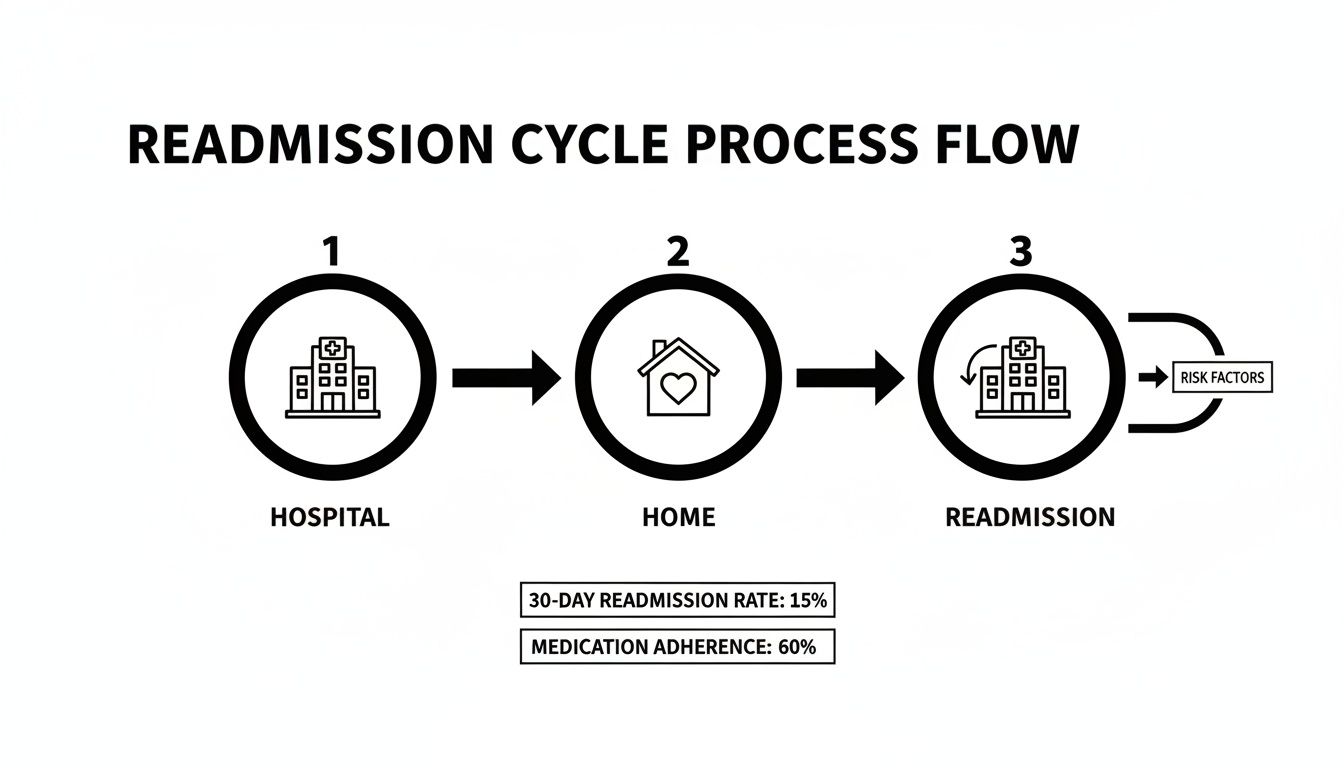
As you can see, a breakdown in any part of the at-home care plan can easily land a patient back where they started. This is what we're working to prevent.
Working with the Hospital Team
Your best ally inside the hospital is the case manager or discharge planner. In Pinellas County, these professionals are worth their weight in gold. They are your point person for getting all the necessary prescriptions, paperwork, and instructions squared away before you walk out the door.
This is also the time to have a straightforward conversation about cost. Financial stress only makes recovery harder. We find that being direct is best. We operate on a direct-payment basis, so we provide completely transparent pricing for all our equipment. This allows you to plan and budget without any surprises. You get the right equipment right when you need it.
Set Small, Achievable Goals
Recovery is a marathon, not a sprint. The key is to set small, manageable goals that build momentum and confidence. A vague target like "get stronger" is frustrating and hard to track.
Instead, get specific. Create weekly milestones that feel like real wins:
- Week 1: Walk to the mailbox and back each day with the walker.
- Week 2: Prepare one simple meal while sitting on a kitchen stool for support.
- Week 3: Get through the follow-up doctor’s appointment without feeling completely wiped out.
Celebrating these small victories makes the entire process feel less overwhelming and keeps everyone motivated.
The best post-discharge plans are built on simple routines, clear communication, and realistic goals. It's about empowering the patient and their family, not burying them in a complicated list of rules.
To add another layer of support, you can look into modern tools. For example, some families find that using remote patient monitoring provides extra peace of mind and helps them keep a closer eye on vital signs between appointments.
Keep It Simple to Ensure Success
When it comes to a recovery plan, complexity is the enemy. The easier a plan is to follow, the more likely everyone is to stick with it. This is especially true for managing medications—one of the top reasons for hospital readmissions.
Forget complicated charts. A simple, color-coded medication list taped to the refrigerator door works wonders. A daily pill organizer is another low-tech but incredibly effective tool for preventing missed doses or accidental double-ups.
Good communication habits are just as crucial. Keep a dedicated notebook or a shared digital doc on your phone where every caregiver can log meds given, jot down new symptoms, or list questions for the next doctor’s visit. This creates a single, reliable record that keeps the entire team—patient, family, and medical providers—on the same page. If you're wondering which medical equipment could best support your plan, you can always learn more by contacting our team in St. Petersburg for some personalized advice.
Navigating The First 48 Hours At Home
The first two days back at home are, without a doubt, the most fragile period in a patient's recovery. That structured, 24/7 support of the hospital is suddenly gone, and it's incredibly easy for both patients and their families to feel adrift. This is the moment your transitional care plan has to move from paper to practice, and where a few focused actions can truly make all the difference in reducing hospital readmission rates.
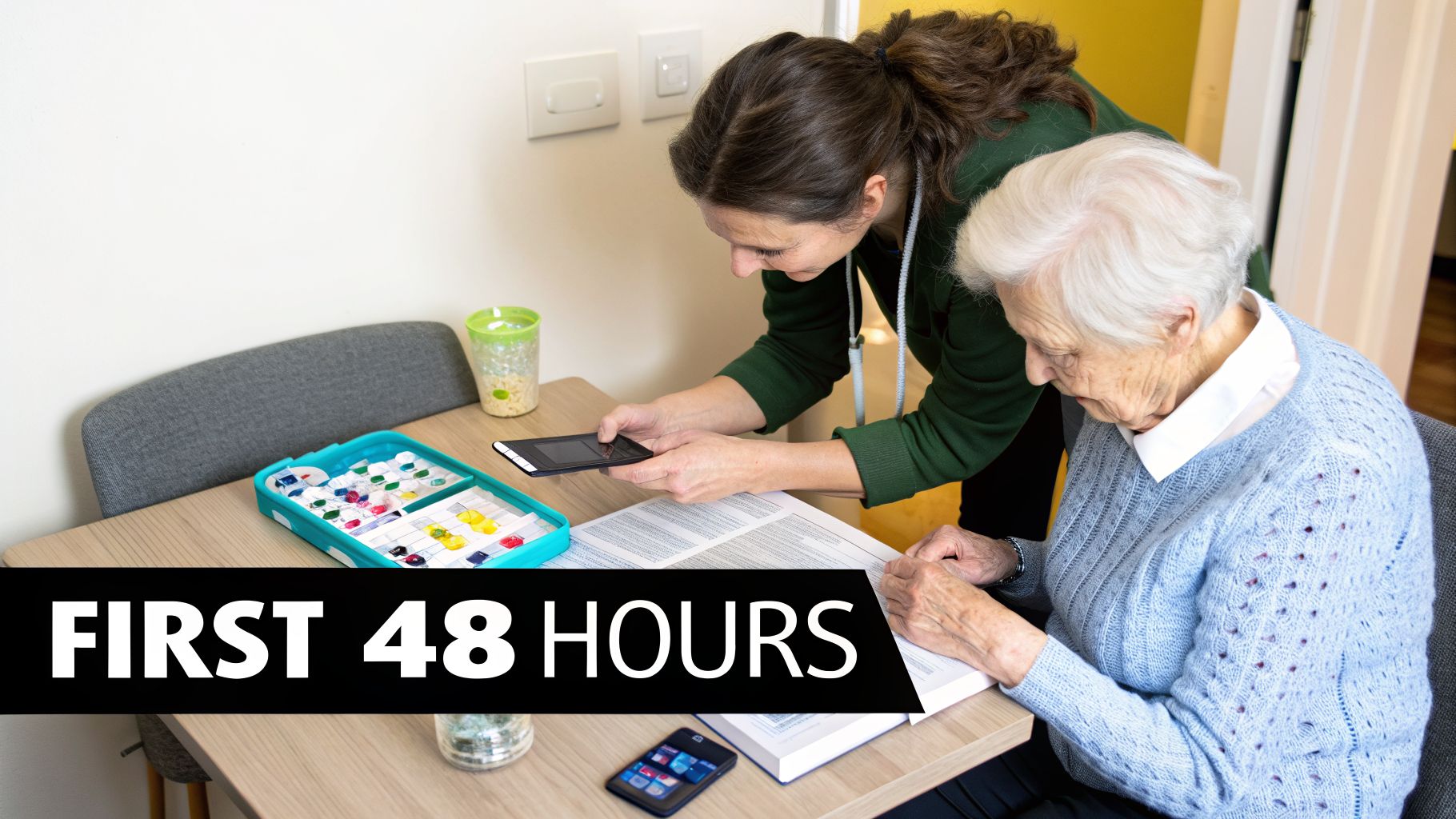
Think of this time as establishing a new, temporary normal. It isn’t about achieving perfection; it’s about ensuring safety and building simple routines that promote healing. Your immediate goal is to manage the most pressing needs and head off the common missteps that often lead to early complications and another trip to the ER.
Day One Essential Actions
The minute your loved one walks through the door, it’s time to move. Don’t put these tasks off until tomorrow. Getting a few key things done on day one sets the foundation for a successful recovery and can prevent a crisis before it even begins.
- Do a Quick Home Safety Sweep: Take a walk through the main living areas—the path from the bedroom to the bathroom, the living room, and the kitchen. Clear away any obvious trip hazards like throw rugs, stray electrical cords, or general clutter. You want to create wide, clear pathways, especially if they're using a walker or just feeling unsteady on their feet.
- Set Up the Medications—Immediately: This one is non-negotiable. Get that pill organizer out and fill it for the week. As you do, double-check every bottle against the hospital's discharge paperwork to make sure nothing was missed or misunderstood. Find one central, visible spot for all medications and keep them there.
- Confirm All Follow-Up Appointments: Pull out the discharge instructions and find every single scheduled follow-up visit. Get on the phone right away to confirm the date and time with each doctor’s office. Then, get those appointments on a big, shared calendar where everyone can see them.
Taking these simple steps creates an immediate sense of order and safety. You're tackling two of the biggest culprits behind early readmissions head-on: falls and medication errors.
Tackling Real-World Scenarios
It’s one thing to have a plan on paper, but it's another thing entirely to put it into action when real-life stress and exhaustion set in. Let's walk through a common scenario we see in homes right here in Pinellas County.
Imagine a patient coming home after a bout of pneumonia. They're weak, tired, and completely overwhelmed by a bag full of new inhalers and pills. Their spouse, the primary caregiver, is just as anxious, terrified of doing something wrong. The patient starts to withdraw, and the caregiver feels like they're "nagging" every time they bring up a breathing treatment.
This is where proactive communication becomes your best tool. Instead of letting that uncertainty and tension build, the caregiver can create a simple logbook.
A shared logbook or a small whiteboard is so much more than a tracking tool—it’s a communication hub. It provides a neutral space for both the patient and caregiver to record what's happening, ask questions for the doctor, and see progress. This simple act reduces that feeling of being policed or overwhelmed.
By jotting down when medications were taken or noting symptoms like shortness of breath, the caregiver creates a factual record. This takes the emotional weight out of reminders and provides concrete data to share during the next doctor's visit. It empowers both people and shifts the dynamic back to one of teamwork.
The Critical Role of Home Support
Frankly, a rushed or incomplete discharge process is a huge risk factor for readmission, particularly when hospitals are stretched thin. That gap in care is precisely where dedicated home support becomes essential. Research shows a startling variation in readmission rates across U.S. hospitals—heart failure readmissions can range from 11% to 32%, and pneumonia from 8% to 27%. Those wide gaps highlight a massive opportunity for improvement through better post-discharge support. You can see more on how hospital practices and patient support are key to lowering readmission rates.
This is why we focus on providing direct, transparent solutions. Because our services are private pay, we sidestep the bureaucratic red tape that can stall a recovery. If a doctor recommends an oxygen concentrator or a specialized walker during a follow-up, you can get it right away. There's no waiting period that puts a patient's health on hold. This direct model makes financial planning straightforward, letting you focus entirely on what matters most: your loved one’s well-being and a smooth, uninterrupted transition home.
How Home Medical Equipment Supports Recovery
Getting a patient home from the hospital is a huge milestone, but the work doesn't stop there. The environment they return to is just as important as their prescriptions. We've seen firsthand how the right home medical equipment can be the deciding factor in a successful recovery, directly tackling some of the most common reasons patients land right back in the hospital.
It’s about turning a house into a safe space for healing.
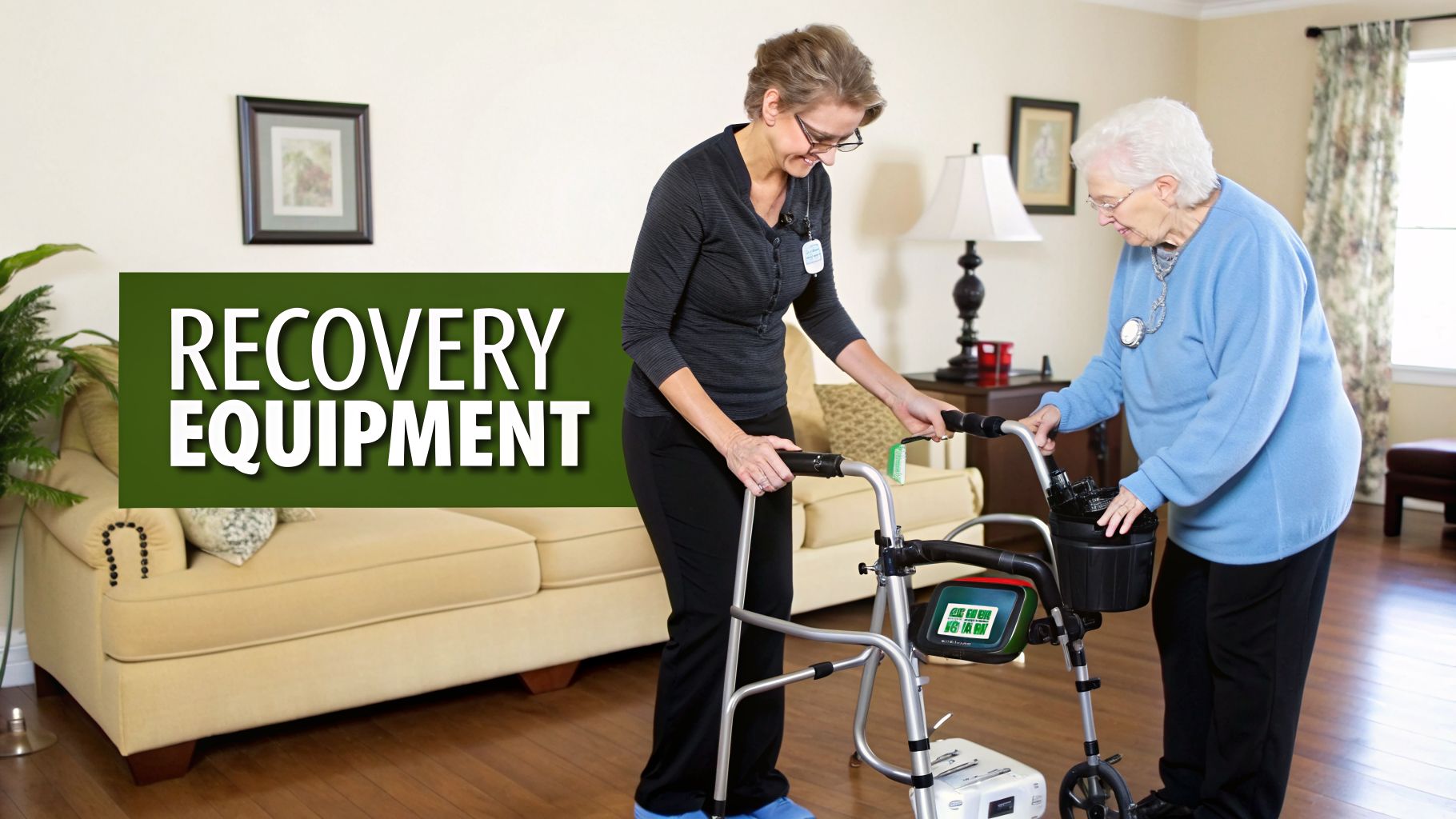
Think of it as a practical, preventative strategy. By placing the right tools in the home, you address major risks—falls, breathing difficulties, and poor rest—before they can escalate into a full-blown crisis that requires another trip to the emergency room.
Preventing Falls With Enhanced Mobility
Falls are one of the top culprits for hospital readmissions, especially for older adults or anyone weakened by surgery. A single fall can undo weeks of progress, cause a new injury, and start the hospital cycle all over again. This is where mobility aids are non-negotiable.
Picture a patient coming home after a hip replacement. Their balance is shaky, their strength is zapped, and a simple walk to the bathroom can feel treacherous. A standard cane just won't cut it.
This exact scenario is why a walker or transport chair is so critical:
- Walkers and Rollators: These provide a solid, wide base of support that is essential for maintaining balance. A rollator that includes a seat is even better, giving them a chance to rest before they get too exhausted and risk a stumble.
- Transport Chairs: For getting to and from follow-up appointments, a lightweight transport chair is a game-changer. It eliminates the risk of a fall from sheer exhaustion, ensuring they can travel safely.
These aren't just pieces of equipment; they are tools that restore confidence and independence.
Managing Respiratory Conditions At Home
For patients with conditions like COPD or those recovering from pneumonia, stable oxygen levels are everything. Any significant drop can spiral into a respiratory crisis that demands immediate emergency care. The first line of defense is having the right equipment ready at home.
An oxygen concentrator delivers a steady, reliable supply of medical-grade oxygen. This helps patients breathe easier and prevents the terrifying shortness of breath that often leads to panic and a 911 call. The goal is to keep their condition stable and avoid the severe flare-ups that force a readmission.
Having the right respiratory equipment on hand from day one is not a luxury—it's a critical safety measure. It bridges the gap between the constant monitoring of a hospital and the independence of being at home, preventing dangerous drops in oxygen that often precipitate a readmission.
This also applies to patients with sleep apnea. Ensuring they have clean tubing, properly fitting masks, and functioning CPAP supplies is vital. Consistent therapy fights the fatigue and other health complications that can undermine their entire recovery.
The Importance Of Bathroom Safety
Statistically, the bathroom is one of the most hazardous rooms in any home. When you combine hard, slick surfaces with the physical challenge of bending and balancing, you have a recipe for disaster. Thankfully, a few simple pieces of equipment can dramatically lower this risk.
Imagine an older adult, still weak from their hospital stay, trying to lift their leg over a high tub wall or lower themselves onto a standard-height toilet. The danger is clear.
A few key items can make all the difference:
- Shower Chairs: A shower chair allows a person to sit safely while bathing, removing the need to stand on a wet, slippery surface. It's a simple change that drastically cuts down on fall risk.
- Toilet Risers and Safety Frames: These devices raise the toilet seat and provide sturdy armrests for support, making the act of sitting and standing much safer and less strenuous.
- Grab Bars: When installed correctly, grab bars offer a secure handhold in the shower, next to the toilet, or anywhere else a little extra support is needed to stay balanced.
For families in the St. Petersburg area looking to improve rest and safety, our guide on choosing the right hospital beds for home use provides even more valuable insights. Because our services are based on direct payment, you can secure these essential items without waiting for lengthy authorizations, ensuring your loved one's home is safe the moment they return.
Giving Caregivers the Tools and Confidence to Succeed
When it comes to preventing a return trip to the hospital, an informed and confident caregiver is your secret weapon. Let’s be honest—after a hospital stay, the patient is usually exhausted and overwhelmed. It's the family members, the friends, the dedicated caregivers who become the true managers of recovery at home.
The success of any plan to reduce hospital readmission rates almost always comes down to equipping these caregivers with practical knowledge before their loved one is even discharged. This is about more than just handing them a thick folder of papers. It’s about turning their natural anxiety into confident, decisive action.
Create a Caregiver's "Command Central"
I've seen firsthand how a little organization can bring a sense of calm to a stressful situation. One of the best things you can do is create a "Command Central" for all the patient's information. This doesn't have to be anything elaborate; a simple binder or a dedicated folder on a kitchen counter works perfectly. The goal is to have everything you need in one spot, so you're not scrambling in a moment of crisis.
Your go-to binder should have:
- A Master Contact List: Phone numbers for every doctor, the pharmacy, the home health agency, and a clear "who to call first" for those non-emergency questions.
- The Medication Master Plan: A simple, easy-to-read chart of every medication, what it's for, the dose, and what time it needs to be taken.
- A Clear Appointment Schedule: Keep a calendar of all upcoming follow-up visits, physical therapy sessions, or lab work.
Getting this organized is an empowering first step. If you’re looking for more tips on managing the day-to-day of caregiving, we share a lot of practical advice on our medical equipment news and blog.
Learning to Spot Trouble Before It Starts
A huge part of a caregiver's role is learning to recognize the early warning signs that something is off. Many readmissions don't happen because of a sudden, dramatic event. They happen because small, subtle symptoms were missed. The hospital team should give you a written list of "red flags" that are specific to the patient's condition.
For someone recovering from congestive heart failure, for instance, those red flags might be:
- A sudden weight gain of more than 2-3 pounds in one day.
- New or worsening swelling in their legs, ankles, or feet.
- Shortness of breath that seems worse than normal, especially when they're lying down.
Knowing exactly what to look for—and who to call when you see it—transforms a caregiver from a worried bystander into an essential part of the care team. This is how you stop a small issue from becoming a 911 call.
Encouraging Patient Safety and Independence
Empowerment works both ways. Patients who feel involved in their own recovery journey often have better, faster results. This means helping them understand their own care plan and, just as importantly, feel confident using any new medical equipment.
You can help by making it a team effort. If a walker is new, encourage them to practice with you in a clear, open hallway. If they're starting on an oxygen concentrator, sit down and go over the basic functions together. When you learn together, it builds confidence for everyone involved.
Of course, caring for someone is incredibly demanding work, and burnout is a very real danger. To provide the best care, you also have to care for yourself. Understanding your options for support, like respite care services, is not a luxury—it's a necessity. Taking scheduled breaks allows you to recharge and come back with the energy needed for this important role.
Because we offer our equipment on a private-pay basis, you can completely sidestep the long, frustrating delays that often come with authorizations. This means if a doctor recommends a hospital bed or a patient lift at a follow-up appointment, you can get it set up that very same day. There are no dangerous gaps in the safety net you're building at home, allowing you to focus completely on your loved one’s recovery.
Finding Local Support in Pinellas County
Trying to manage a loved one's recovery on your own is an overwhelming task. The good news is, you don’t have to. A huge part of reducing hospital readmission rates is building a solid support network right here in Pinellas County to bridge that tricky gap between the hospital and home.
Tapping into these community resources can make all the difference, offering both practical help and much-needed peace of mind.
A smooth recovery often hinges on getting the right tools at exactly the right time. Think about short-term needs, like a hospital bed rental for a few weeks or an oxygen concentrator for a temporary breathing issue. Working with a local business means you can get your hands on this vital equipment immediately, avoiding the dangerous delays that can happen with large, out-of-state suppliers.
Creating Your Local Support System
Building this network is about more than just equipment. The communities of St. Petersburg, Clearwater, and Seminole have a fantastic ecosystem of services designed to help patients—and their caregivers—thrive at home.
Here are a few essential resources you should look into right away:
- Aging and Disability Resource Centers: These are always my first recommendation. They are a goldmine of information on all the services available to older adults and people with disabilities.
- Meal Delivery Services: Healing takes energy, and proper nutrition is non-negotiable. Meal delivery can be a lifesaver when a patient or caregiver is simply too exhausted to cook.
- Non-Emergency Medical Transportation: Getting to follow-up appointments is critical. These services provide safe, reliable transport for anyone who can't drive themselves, ensuring no crucial check-ups are missed.
Putting together a local support team isn't just about convenience—it's about creating a safety net. When you know exactly who to call for a ride, a meal, or a piece of medical equipment, you can solve problems before they spiral into a crisis.
As a local business with deep roots in this community, we get it. We understand the urgency. We’ve built our entire model around providing clear, direct service without the usual headaches. You can read more about our story and our commitment to serving Pinellas County to see how our team works.
Because our services are direct-pay, we cut through all the frustrating red tape and pre-authorization delays. That means if a doctor recommends a walker or a shower chair during a follow-up visit, you can get it that very same day. This immediate response makes the recovery plan stronger and helps keep your loved one safe, comfortable, and—most importantly—at home.
Answering Your Top Questions About Preventing Readmissions
When a loved one comes home from the hospital, families naturally have a lot of questions. Over the years, we've heard them all, and we've seen firsthand how being prepared can make all the difference in a smooth recovery. Let's walk through some of the most common concerns we hear from families right here in Pinellas County.
What's the Single Most Important First Step?
If you take away only one piece of advice, let it be this: get to that first follow-up doctor's appointment. Everything else in the recovery plan hinges on it.
This appointment, usually scheduled 7 to 14 days after coming home, is the first real opportunity for a doctor to see how things are going outside the controlled hospital setting. It’s your chance to flag any new symptoms, ask about medications, and get professional eyes on the recovery progress before a small issue becomes a big problem. Don't go in cold—keep a running list of questions and observations in the days leading up to the visit.
How Can We Make the Home Safer for Someone with Limited Mobility?
Making a home safer is crucial for preventing falls, which are a primary driver of hospital readmissions. The good news is you don't need a full-scale remodel. Focusing on a few key areas can have a huge impact.
We always tell families to start with these high-priority fixes:
- Create Clear Pathways: Get rid of throw rugs, stray electrical cords, and any general clutter in the main walkways. Think about the path from the bed to the bathroom and the path to the kitchen.
- Secure the Bathroom: This is non-negotiable. A shower chair, a raised toilet seat, and securely installed grab bars can transform the most hazardous room in the house into a much safer space.
- Light the Way: Good lighting is essential. Make sure hallways are bright, and place nightlights to illuminate the path for those inevitable late-night trips to the bathroom.
Making a home safer isn't just about preventing accidents; it's about restoring confidence. When a patient feels secure moving around their own space, they are more likely to stay active, which is vital for a strong recovery.
If you're looking for more specific ideas on home safety or equipment, you can find a ton of helpful information by reading through our Frequently Asked Questions page.
My Loved One Hates Their Walker. What Can I Do?
This is a conversation we have almost every day. It's an incredibly common and sensitive issue, because for many, a walker feels like a symbol of losing independence. The key is to approach this with empathy.
Instead of making it a demand, try reframing the walker as a tool for empowerment. It isn’t a sign of weakness; it’s a smart and temporary strategy to regain strength without the risk of a fall setting them back.
Explain that the walker gives them the stability to do the things they want to do—walk to the mailbox, spend time in the garden, or move around the house with confidence. It’s a bridge to help them reclaim their freedom, not a sign that it's gone for good.
At Affinity Home Medical Equipment, we know how overwhelming this process can be. Our private-pay model means you can get the critical equipment you need right away. To see our equipment for sale or rent, visit us online at https://affinityhomemedicalequipment.com.
Share This Article

Written by : Rich affinityrich@gmail.com
Follow Us
Latest Articles

October 14, 2026

October 14, 2026

October 14, 2026
