
Finding The Best Seat Cushion For Tailbone Pain In 2026

If you've ever had that sharp, focused pain in your [...]
If you've ever had that sharp, focused pain in your tailbone after sitting for a while, you know how disruptive it can be. This is where a good coccyx cushion makes all the difference. It works by creating a "no-pressure zone" that allows your tailbone to essentially float, so it never makes direct contact with the chair. For many, this simple change provides immediate relief and helps calm long-term inflammation.
Understanding How A Seat Cushion Relieves Tailbone Pain
That persistent ache at the very bottom of your spine, known as coccydynia, usually comes down to one thing: sustained pressure. Whether you’re stuck at a desk for eight hours, on a long drive, or recovering from a fall, the constant force on your tailbone, or coccyx, can lead to real discomfort. It’s an incredibly common problem for anyone who spends a good chunk of their day sitting down.
A proper coccyx cushion is designed with one primary goal: to get that pressure off your tailbone. It’s not just a simple pillow for extra padding; its design is far more intentional.
- The Cutout is Everything: You'll notice most coccyx cushions have a U-shaped, V-shaped, or wedge-shaped cutout at the back. This isn't a stylistic choice—it's the most critical part of the cushion.
- Creating a "No-Pressure" Zone: When you sit down, you position the cushion so this cutout is directly underneath your tailbone. This design strategically suspends the coccyx, making sure it doesn’t even touch the seating surface.
- Encouraging Healthier Posture: As a bonus, the cushion’s shape often lifts your hips slightly. This encourages a gentle forward pelvic tilt, which helps you maintain a much better spinal alignment and can take a surprising amount of strain off your lower back.
The Simple Science Behind the Relief
You can think of it as a small hammock just for your tailbone. The firm, supportive material of the cushion holds up your weight under your "sit bones," while your sensitive coccyx rests over an open space. This is what instantly breaks the cycle of pressure and pain.
By completely eliminating that direct contact, the cushion gives the inflamed area a chance to rest and heal—even while you have to keep sitting. This is why people so often feel a sense of relief the very first time they use one.
This principle of redistributing pressure is fundamental to good ergonomic support. It’s a similar idea behind finding the best mattress for back pain, where the goal is to support the body correctly to alleviate stress points. You can find more tips for improving your daily comfort and mobility by visiting our medical equipment news and blog.
It’s worth noting that we keep things simple when it comes to payment for these cushions. We do not process insurance for these products, allowing us to provide you with direct, immediate access to the relief you need.
Choosing The Right Cushion Material And Design
When you’re dealing with tailbone pain, you quickly learn that not all seat cushions are created equal. It's tempting to just grab the plushest one you can find, but finding real relief is more about smart design than just softness. The secret lies in understanding the materials and, most importantly, the specific features that take pressure off your coccyx.
Let's break down what's inside these cushions. The material is the heart of the product, defining its support, comfort, and longevity.
-
Memory Foam: This is a popular one for a reason. It contours to your unique shape, providing a custom-molded feel that distributes your weight evenly. It feels soft yet supportive.
-
High-Density Foam: If you need something firmer that won't "bottom out," high-density foam is your best bet. It offers robust, stable support that keeps you elevated.
-
Gel or Gel-Infused Foam: A fantastic choice if you tend to get warm when sitting for long periods. Gel is brilliant at dissipating heat. It also provides a unique, fluid-like support that’s excellent at relieving pressure points.
Key Design Features For Coccyx Relief
Beyond what's on the inside, the actual shape of the cushion is what truly delivers the relief. If a cushion doesn’t have a cutout for your tailbone, it’s not the right one for this kind of pain. Period.
Here are the non-negotiable features you should look for:
-
U-Shaped or V-Shaped Cutout: This is the most critical feature. This small gap at the back of the cushion allows your tailbone to "float" above the seat, completely eliminating direct contact and pressure.
-
Contoured Surface: A good cushion won't be flat. It will have ergonomic contours that guide your legs and hips into a healthier position, which naturally promotes better posture.
-
Non-Slip Base: This might seem like a small detail, but it’s crucial. A grippy bottom keeps the cushion from sliding around on your chair, ensuring the cutout stays right where it needs to be.
This simple infographic does a great job of showing how these design elements come together.
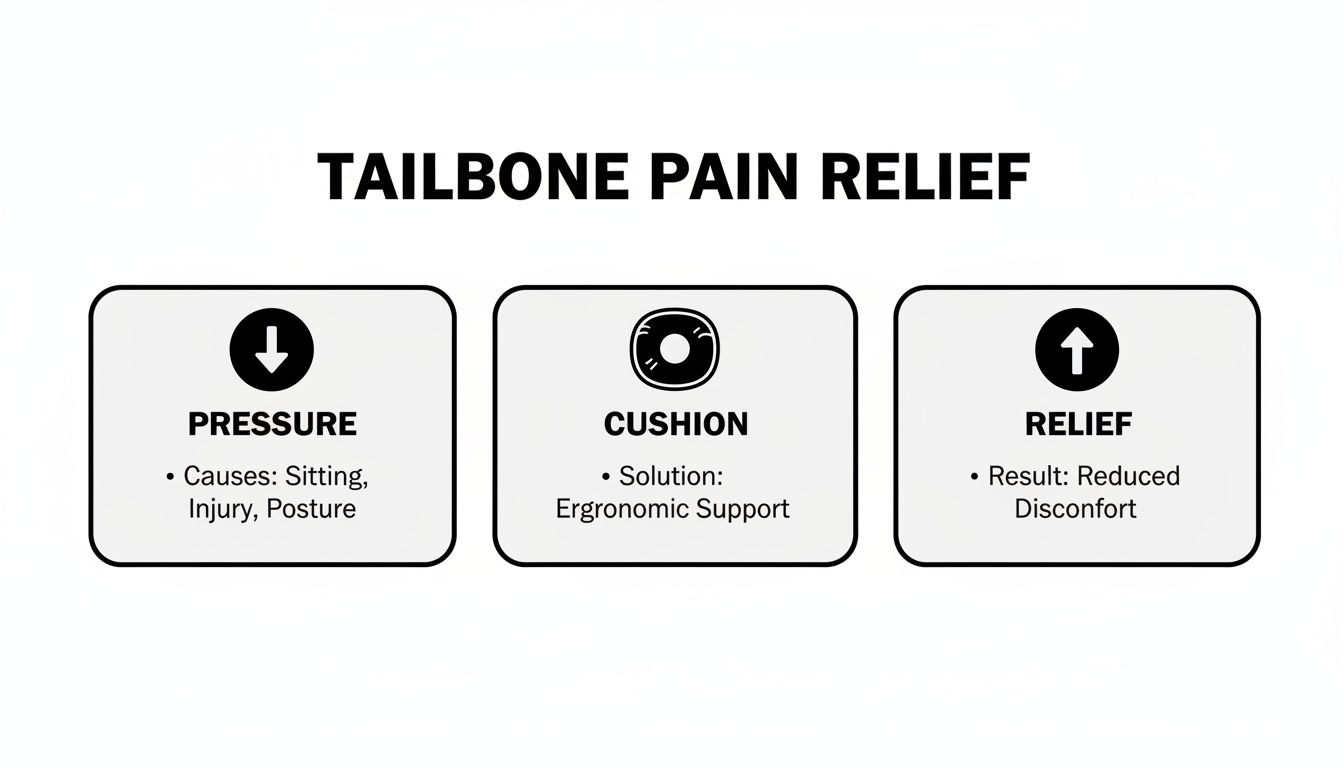
As you can see, it's all about offloading that pressure. By suspending the coccyx, the cushion allows the inflamed area to heal without the constant aggravation of bearing weight.
Making An Informed Choice
Your body weight, the chair you'll be using it on, and your personal comfort are all part of the equation. Someone with a larger frame, for instance, will likely get better results from a firm, high-density foam or gel cushion that can stand up to the pressure without flattening.
The goal is to elevate your hips and suspend the tailbone, not just to sink into a soft pad. If your "sit bones" sink too far down, you lose the benefit of the cutout.
Learning about supportive materials can be helpful in other areas, too. For example, understanding what makes a good cushion can give you clues when searching for the best mattress topper for back pain, as many of the principles around pressure relief and support are the same.
Just so you know, we keep our purchasing process simple and direct by not accepting insurance. This lets us serve you more efficiently. When you're ready to find the right fit, you can explore our full collection of mobility and comfort aids online.
How To Use Your Cushion For Maximum Relief
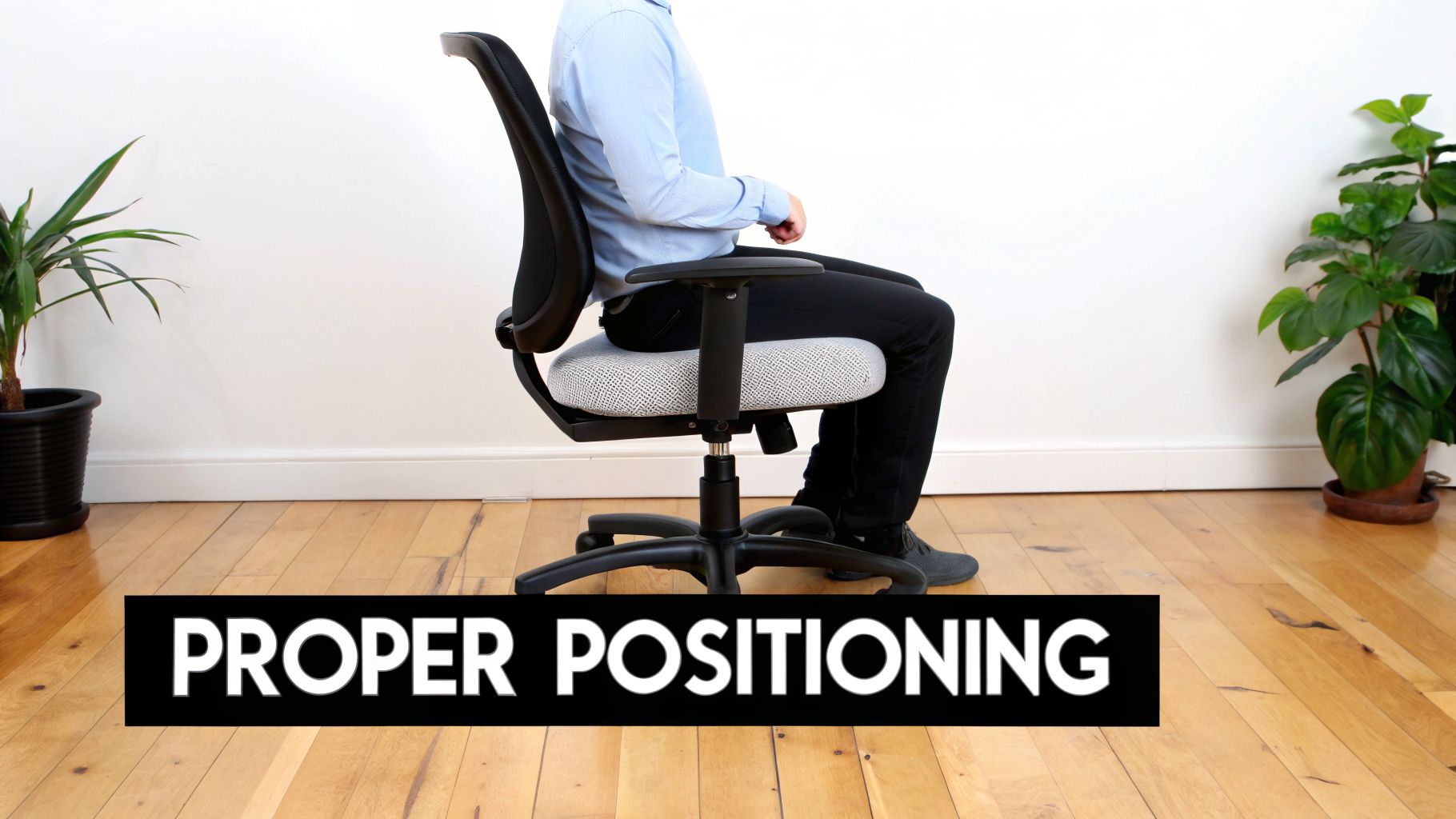
So you’ve found a great seat cushion for tailbone pain. That's a huge step toward getting rid of that nagging discomfort. But getting the most out of it isn't just about owning it—it’s about how you use it. I've seen countless people make a few simple, easy-to-fix mistakes that prevent them from getting the relief they’re looking for.
Let's start with the single most important rule, which is also the simplest: the cutout always goes to the back. Always.
Whether your cushion has a U-shape, a V-shape, or a basic gap, that opening is designed to go right under your tailbone. This is the magic of the design. It creates a space that suspends your coccyx, completely eliminating the direct, painful pressure from the chair surface.
Putting it on backward is by far the most common mistake, and it makes the cushion useless for tailbone pain. Just think of it as creating a "no-pressure zone" right where you need it most.
Fine-Tuning Your Seated Posture
Once your cushion is facing the right way, a couple of quick adjustments to your posture can make a world of difference. A good cushion is meant to enhance your seated posture, not work against it.
First, check your chair height. The cushion will add a little height, so you might need to adjust. Your feet should rest flat on the floor, with your knees bent at about a 90-degree angle. If the cushion lifts you so high that your feet are dangling, lower your chair until you’re back in that sweet spot.
Next, look at how the cushion fits the chair itself. If it’s too big and hangs over the edges, you'll feel unstable. If it's too small, it won't properly support your sit bones, and you might find yourself rocking or feeling off-balance. The right fit covers most of the chair's seat without getting squished by the backrest.
Avoiding Common Pitfalls From Day One
Beyond just placing the cushion backward, a couple of other issues can sabotage your comfort. If you know what to look for, you can sidestep these problems right from the start.
-
Using a Cushion That’s Too Soft: We often think softer is better, but with support cushions, that’s not the case. If a cushion is too plush for your body weight, it will "bottom out" and compress completely. When that happens, the cutout closes up, and your tailbone is right back under pressure.
-
Ignoring Your Body’s Feedback: Some people feel immediate relief, but for others, it can take a few days for your body to get used to a new way of sitting. Listen to what you're feeling. Don't be afraid to shift the cushion slightly forward or back until it feels just right.
A quality cushion shouldn’t just feel soft; it has to feel supportive. The whole point is to lift your hips just enough to create that crucial pocket of air for your coccyx. You should feel your weight resting comfortably on your "sit bones"—not your tailbone.
By keeping these simple tips in mind, you can ensure your seat cushion for tailbone pain does exactly what it's supposed to do: give you consistent and reliable relief. Please remember that we offer a straightforward purchasing process and do not work with insurance for these products. This allows us to get you the comfort you need without any delays.
Why Trying A Cushion In Person Matters
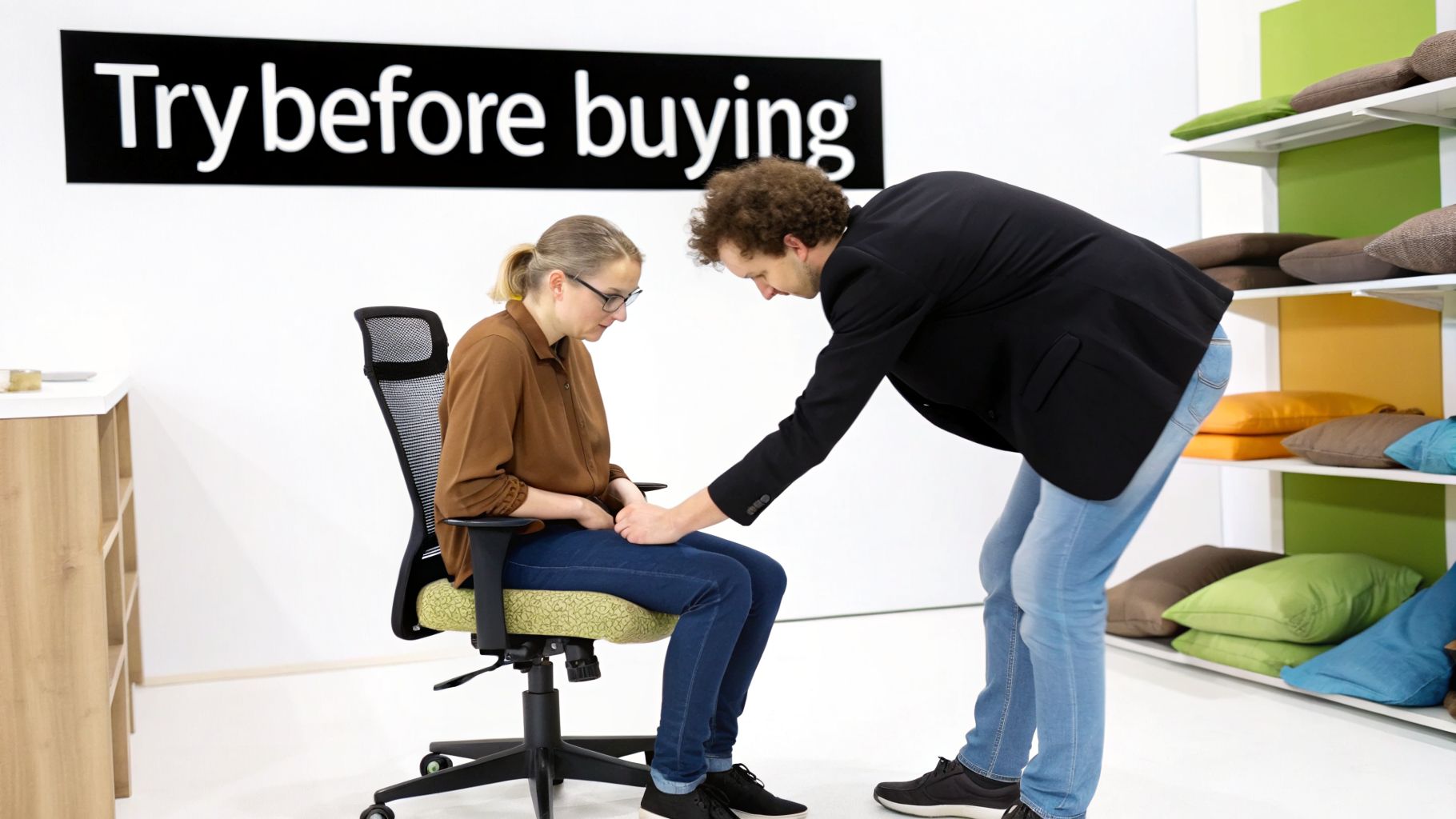
You can spend hours scrolling through online reviews and comparing product photos, but nothing tells you the whole story about a seat cushion for tailbone pain. When you're dealing with something as personal as pain relief, there’s simply no substitute for feeling it for yourself.
A cushion that brings total relief to one person might feel completely wrong for another due to differences in body weight, shape, and the specific source of the pain. The only way to know for sure is to sit on it. An in-person trial gives you immediate feedback on how different materials—like firm memory foam, supportive high-density foam, or a cooling gel—actually feel under your pressure points.
The Advantage Of Expert Guidance
When you stop by a local store, you're getting more than just access to products. You’re tapping into years of hands-on experience helping people find real solutions. We can see how you sit, listen to your specific challenges, and make recommendations that actually make sense for your situation, whether the cushion is for an office chair, car, or wheelchair.
This guidance is invaluable. For example, a customer might come in set on a cushion with a cutout, not realizing that for their body shape, it could accidentally put pressure on the sciatic nerve. An expert can spot that potential issue right away and steer them toward a better design, like a gel grid cushion that distributes weight more evenly.
The real benefit of an in-person fitting is certainty. You leave knowing you’ve chosen a cushion that provides genuine relief, not one you just hope will work. It removes all the guesswork.
Test Driving On Different Surfaces
Another huge plus is the ability to try a cushion on chairs similar to what you use every day. A seat cushion for tailbone pain will perform very differently on a hard kitchen chair compared to a plush recliner or a contoured car seat.
Testing it in-store helps you check for the little things that matter in the real world. Does the non-slip bottom actually grip the fabric of your office chair? Does the cushion's size cause it to overhang the edges of your primary seat? These are details you can only confirm firsthand.
We also know that some people need a cushion for short-term recovery after an injury, while others need a long-term solution for a chronic condition. That’s why we offer both cushions for purchase and flexible rental options. If you're recovering and only need support for a limited time, you can learn more about our medical equipment rentals. It’s also good to know that we do not accept insurance, which allows us to keep the process straightforward and transparent for you.
Maintaining Your Cushion and Knowing When to See a Doctor
Once you’ve found the right cushion, you’ll want to make sure that amazing relief lasts. Taking good care of it is pretty straightforward, but a few simple habits will go a long way in preserving the support you count on, whether it's a foam, gel, or hybrid model.
Most cushions come with a removable cover that you can toss in the washing machine. Keeping it clean is about more than just hygiene; it prevents body oils and dirt from breaking down the materials inside. Just be sure to check the tag for washing instructions to avoid any shrinking.
The inner core itself—the foam or gel part—should never be soaked or put in the dryer. If you have a spill, just spot-clean it with a damp cloth and a bit of mild soap. Let it air dry completely before putting the cover back on, as heat can permanently warp the materials.
Keeping Your Cushion Effective
Even the best seat cushion for tailbone pain will start to show its age after months of daily use. You might feel it getting a little softer or notice that you’re “bottoming out,” meaning you can feel the hard chair surface underneath you.
To get the most life out of it, try rotating your cushion every so often, if its shape allows. It’s also a good idea to keep it out of direct sunlight and hot cars, since extreme temperatures can really mess with the foam or gel. When you're not using it, storing it on a flat surface helps it hold its shape.
When A Cushion Isn't Enough
A specialized cushion can be a game-changer for coccyx pain, but it's important to be realistic about what it can do. Its job is to relieve pressure and make sitting comfortable—it isn't a cure for an underlying medical issue. Your body will give you clues if something more is going on.
It’s time to check in with a doctor if you’re experiencing any red flags, such as:
- Pain That Gets Worse: The pain intensifies or simply doesn’t get better after a few weeks of using the cushion correctly.
- Numbness or Tingling: You have persistent numbness, tingling, or a feeling of weakness in your legs, feet, or around your pelvis.
- Pain After an Injury: The pain started right after a bad fall, an accident, or another direct trauma to your tailbone.
- Changes in Bowel or Bladder Control: This is a big one. Any sudden difficulty with bowel or bladder function requires immediate medical attention.
Your health always comes first. A cushion is an essential part of your comfort toolkit, but it should never replace a proper medical diagnosis when your symptoms point toward a bigger problem.
Please note that we keep our purchasing process simple and direct by not accepting insurance for our products. If your symptoms are getting worse or you're concerned, please contact us for guidance on what to do next, or better yet, speak directly with your doctor.
Frequently Asked Questions About Tailbone Cushions
When you’re dealing with nagging tailbone pain, finding the right seat cushion for tailbone pain can feel like a big decision. We get it. You have questions, and you need clear answers to feel confident you're making the right choice for your own comfort. We've heard just about every question there is, so we've put together some answers to the ones that come up most often.
Our goal is simple: to give you practical, no-nonsense information to help you find what truly works for your body and your life.
How Long Does It Take For A Tailbone Cushion To Work?
This is the big one, and what everyone wants to know. For many people, the relief is almost immediate. The second you sit down on a good cushion, that U-shaped cutout gets to work, lifting your tailbone off the chair surface. It instantly takes the direct pressure off that sensitive spot, which is often the main source of the pain.
But what if your pain is more chronic? If the area is already inflamed from weeks or months of pressure, it's going to take a bit longer for that deep, persistent ache to fade. You'll need to use the cushion consistently for several days, maybe even a week, to give that inflammation a chance to calm down. Stick with it, and make sure your posture is good—that's when you'll really notice a major difference.
Can I Use My Tailbone Cushion On Any Chair?
For the most part, yes. These cushions are designed to be portable and versatile, so they work great on most firm, flat surfaces. Think of places like:
- Office chairs
- Dining room chairs
- Car seats
- Wheelchairs
- Hard stadium benches
The real key here is a firm base. If you try to use your cushion on a super soft surface, like a plush sofa or a deep armchair, the cushion will sink right in along with you. When that happens, it can't hold its shape, the tailbone cutout becomes ineffective, and you won't get the support you need.
For the best results, always place your seat cushion on a solid, stable surface. This is what allows the cushion to maintain its ergonomic shape and properly suspend your coccyx, which is the whole point!
Using it correctly makes all the difference. For more answers to common questions about our products, you can always check out our full frequently asked questions page.
Is A Prescription Needed To Buy A Seat Cushion?
Nope, not at all. You don't need a doctor's prescription to buy a seat cushion. These are considered wellness and comfort products, so they're available for anyone to purchase directly. This makes a seat cushion for tailbone pain a fantastic and easy first step for managing your discomfort.
You can just come in, try a few out, and pick the one that feels right for you. It's a straightforward process that lets you find relief without having to schedule appointments or deal with extra paperwork.
On that note, we're up-front about our process: we do not accept or process insurance for these cushions. By keeping things direct, we make the buying process as simple and efficient as possible, so you can get the comfort you need without any delays.
At Affinity Home Medical Equipment, we’re here to help you find real-world solutions for your everyday comfort. If you’re done letting tailbone pain run your day, come explore our selection of high-quality seat cushions. Find the perfect fit and start sitting comfortably again by visiting Affinity Home Medical Equipment.
Share This Article

Written by : lori@netcodesign.com
Follow Us
Latest Articles

October 13, 2026

October 13, 2026

October 13, 2026

