
Essential Senior Fall Prevention Tips For A Safer Home

Simple things can make a world of difference in preventing [...]
Simple things can make a world of difference in preventing falls and helping an older loved one stay independent. Clearing out clutter, upgrading the lighting, and talking to the doctor about medications are small steps that have a huge impact. It's easy to think a fall is just part of getting older, but it's not—it’s a preventable event, and being proactive is the key.
Understanding The Real Risks Of Senior Falls
For so many families here in Pinellas County, the thought of a parent or grandparent falling is a constant worry. And it's a completely valid one. A single fall can have a domino effect on their health, confidence, and ability to live on their own. The first step is to realize that most falls aren't just random accidents; they're usually caused by factors we can identify and manage.
It’s time to shift the conversation from fear to empowerment. By focusing on practical, actionable senior fall prevention tips, you can create a real safety net that allows your loved one to continue living a full, active life. This guide will walk you through exactly what you need to do to make their home safer and build up their physical resilience against falls.
The Growing Concern Around Senior Falls
The numbers behind senior falls are pretty eye-opening, and they really drive home why prevention is so critical. Globally, there were an astonishing 45,657,816 new falls reported among older adults in 2021 alone. That’s a staggering 182% increase since 1990. This shows how falls have become a silent epidemic as our population ages. Interestingly, while women tend to fall more often, men often experience more fatal outcomes from a fall. You can discover more insights from the Global Burden of Disease study to see the full picture.
This data isn't meant to scare you; it's a call to action. It shows that being proactive is more important than ever. The most common risk factors generally fall into a few key areas:
- Environmental Hazards: Think of these as the hidden dangers lurking in the home—loose throw rugs, dim hallways, and cluttered pathways.
- Personal Health Factors: This covers everything from poor vision and medication side effects (like dizziness) to physical conditions that throw off balance and strength.
- Behavioral Risks: Little habits can make a big difference. Rushing around, grabbing onto a wobbly chair for support, or wearing flimsy slippers can dramatically increase the chances of a fall.
A truly effective prevention plan has to tackle all three of these areas at once. Making the home environment safe is a huge piece of the puzzle, but it has to be combined with managing personal health and adopting safer daily habits.
Debunking Common Myths About Falling
A few persistent myths can actually stop people from taking the right precautions. Let’s clear the air on some common misconceptions that get in the way of effective fall prevention.
-
Myth 1: "Falling is just a normal part of getting old."
This is one of the biggest ones, but it’s just not true. While the risk of falling does go up with age, it is absolutely not inevitable. Think of it as a medical issue that can be prevented with the right interventions, like exercise, home modifications, and regular health check-ups. -
Myth 2: "If I just stay home and don't move around much, I won't fall."
Actually, the opposite is often true. Limiting your activity leads to weaker muscles and poorer balance, which makes you more likely to fall. Staying active is one of the best things you can do to maintain the strength and stability you need to stay on your feet.
It's also important for you to know that while we provide guidance on equipment that can greatly enhance safety, we do not take insurance for purchases or rentals. Our goal is to provide clear, direct pricing so you can make informed decisions without navigating complex billing. This approach ensures you can get the equipment you need quickly and without fuss.
Making the Home a Fall-Proof Zone

Turning a house into a truly "fall-proof" home is one of the most powerful things you can do. From my experience, many falls aren't caused by a major medical event, but by something as simple as a misplaced rug or a poorly lit hallway. The key is to walk through the home and spot these everyday hazards before they cause a problem.
This isn't just about tidying up. It’s about looking at each room with fresh eyes, imagining how someone with changing mobility, balance, or vision navigates the space. This proactive mindset transforms a familiar environment into a much safer one.
First Stop: High-Traffic Hallways and Stairways
Think of your hallways and stairs as the main arteries of the home—they get the most foot traffic, making them prime spots for trips and stumbles.
Start with the floor. Get rid of throw rugs, or at the very least, secure them completely. I've seen too many falls caused by a rug that bunched up or slid out from underfoot. If you must have one, use double-sided carpet tape or a quality non-slip backing to lock it in place.
Next, let's talk about lighting. Hallways and staircases are notorious for being dim, which creates shadows that can hide obstacles or mess with depth perception.
- Boost the Brightness: Swap out old bulbs for brighter, higher-wattage LEDs. You want to see everything clearly.
- Light the Way at Night: Place motion-activated nightlights along the path from the bedroom to the bathroom. This is a game-changer for late-night trips.
- Easy-to-Reach Switches: Make sure light switches are located at both the top and bottom of the stairs and at both ends of a long hallway. No fumbling in the dark.
Finally, give the handrails a good shake. They need to be absolutely solid, run the entire length of the staircase, and be easy to grip. If a rail is even slightly wobbly, it needs to be fixed right away.
A big red flag I often see is when someone starts using furniture for support—leaning on chairs or tables as they walk down a hall. This is a clear sign that it’s time to consider a walker or cane for stability.
Upgrading the Bathroom for Maximum Safety
Statistically, the bathroom is one of the riskiest rooms in the house. The combination of water, tile, and porcelain is a recipe for disaster. Luckily, a few key modifications can make a world of difference.
The number one goal here is adding stability. Installing grab bars is non-negotiable. Put them in the shower, next to the tub, and beside the toilet to provide a solid handhold for getting up, sitting down, and stepping over the tub ledge.
Here are a few other simple but highly effective additions:
- Non-Slip Surfaces: Place a non-slip mat or apply adhesive strips inside the tub or shower. On the floor outside, use a bath mat with a non-slip backing.
- Raised Toilet Seat: A raised seat, especially one with armrests, shortens the distance a person has to lower themselves, making using the toilet much easier and safer.
- Shower Chair or Bench: This is a fantastic tool that allows for safe, seated bathing, which is crucial for anyone who gets dizzy or struggles with standing for extended periods.
- Handheld Shower Head: This makes it easy to wash thoroughly while seated, cutting down on the need to twist and turn on a wet surface.
Creating Safer Kitchens and Living Spaces
The kitchen and living room have their own unique hazards. In the kitchen, the rule is simple: wipe up any spills the second they happen. Reorganize your cabinets to keep frequently used items—plates, glasses, coffee, popular ingredients—on lower shelves that are easy to reach. This small change prevents the dangerous temptation to grab a chair or step stool.
In the living room, take a look at your furniture layout. You want to create clear, wide pathways. Make sure you tuck away or secure any electrical cords and speaker wires so they aren't snaking across the floor.
If a loved one struggles to get up from a deep, cushy sofa, a lift chair can be an incredible help, preserving both their energy and their independence. For other areas, it's worth learning more about hospital beds in St. Petersburg to see how adjustable features can make getting in and out of bed safer.
Ultimately, these changes are about creating an environment that supports independence. Every small adjustment adds up, building a foundation of safety and giving everyone involved greater peace of mind.
The Critical Role Of Personal Health In Stability
Making your home safer is a huge win, but it’s really only half the battle in a solid fall prevention plan. True stability, the kind that lets you move with confidence, starts from within. It’s a team effort between your body's strength, your mind's awareness, and how clearly you see the world around you.
Think of it this way: your personal wellness is the foundation. Without paying close attention to movement, medications, and vision, even the most trip-proofed home can't completely eliminate risk. Let's dig into these three pillars that are so vital for maintaining independence.
Building Strength And Balance Through Movement
One of the absolute best things you can do to prevent a fall is to keep moving. When your leg and core muscles are strong, they act like your body’s personal support system, helping you stay upright and catch yourself if you stumble. We're not talking about running marathons here—just gentle, consistent activity that builds both strength and balance over time.
I often hear from older adults who worry that exercising might actually cause a fall, but it’s quite the opposite. Sitting still is the real risk; it leads to weaker muscles and poorer coordination, making falls much more likely. The secret is choosing the right activities that build you up safely.
Here are a few excellent, low-impact options to get started:
- Tai Chi: This gentle practice, with its slow and flowing movements, is a powerhouse for improving balance. Studies have shown it can dramatically reduce fall risk.
- Chair Yoga: This is a fantastic way to build strength and flexibility while having the full support of a chair, taking the fear of falling out of the equation.
- Simple Leg Exercises: You can do these right in your own kitchen. Try standing on one foot while holding the counter, walking heel-to-toe down a hallway, or doing simple calf raises.
It's a common misconception that you need a gym to get stronger. Just 15-20 minutes of balance-focused activity three times a week can make a significant and noticeable difference in stability.
The numbers don't lie. Over one in four older adults—that's more than 25%—takes a tumble each year in the U.S. In 2021 alone, this resulted in 3 million emergency department visits and a heartbreaking 38,000 deaths among those 65 and older. On the flip side, evidence shows that practices like Tai Chi can slash falls by 20-30%. Discover more key facts on falls prevention to really grasp the scope of the issue.
Managing Medications To Reduce Dizziness
Medications are often essential for our health, but they can bring side effects that put us at risk. Things like dizziness, drowsiness, or that feeling of lightheadedness can easily throw anyone off balance. That risk gets even higher when someone is taking multiple prescriptions from different doctors.
This is why having a regular "brown bag" review with your doctor or pharmacist is so important. Gather up everything you take—prescriptions, over-the-counter drugs, vitamins, and supplements—and talk through it all.
Make sure to ask pointed questions:
- Could any of these make me feel dizzy or sleepy?
- Is there a chance any of these are interacting poorly with each other?
- Can we adjust the timing of certain pills to minimize side effects when I'm most active?
Whatever you do, never stop or change a medication on your own. The goal is to collaborate with your healthcare provider to find a regimen that keeps you healthy without compromising your stability. This kind of proactive communication is a non-negotiable part of staying safe.
The Importance Of Clear Vision
Our eyes are one of our most critical safety tools. They're constantly scanning for hazards, whether it's a rumpled rug, an uneven bit of sidewalk, or a puddle on the kitchen floor. When vision is compromised, the risk of a misstep goes way up.
Conditions like cataracts or glaucoma can mess with depth perception, making it tough to judge how far away that curb or step really is. Even something as simple as an old, outdated glasses prescription can make the world a blurry, hazardous place. For those who might need extra support while getting their vision sorted out, it's a good idea to explore options for wheelchairs in St. Petersburg to ensure they can get around safely.
Don't skip your eye exams. A comprehensive check-up every year allows your optometrist to catch problems early and make sure your prescription is giving you the clearest view possible. Keeping your vision sharp is one of the simplest yet most powerful things you can do to prevent a fall.
Choosing The Right Mobility And Safety Equipment
Picking out the right equipment is one of the most practical, immediate things you can do to prevent a fall. I know the world of mobility aids and safety devices can seem overwhelming, but it helps to think of them as simple tools for specific jobs. The real goal is to match the right tool to the right challenge, giving you (or your loved one) more confidence with every single step.
This isn't about giving in to a limitation. It’s about empowerment. It's about being able to move around your own home more freely and safely. Whether it’s a simple cane for a bit of extra stability or a lift chair that makes getting up from the sofa effortless, these tools are here to solve everyday problems. When you make the right choice, you can spend more time living and less time worrying.
The decision-making process doesn't have to be complicated. This chart offers a clear path, starting from that first feeling of unsteadiness and guiding you toward talking with a doctor, reviewing medications, and checking your vision.
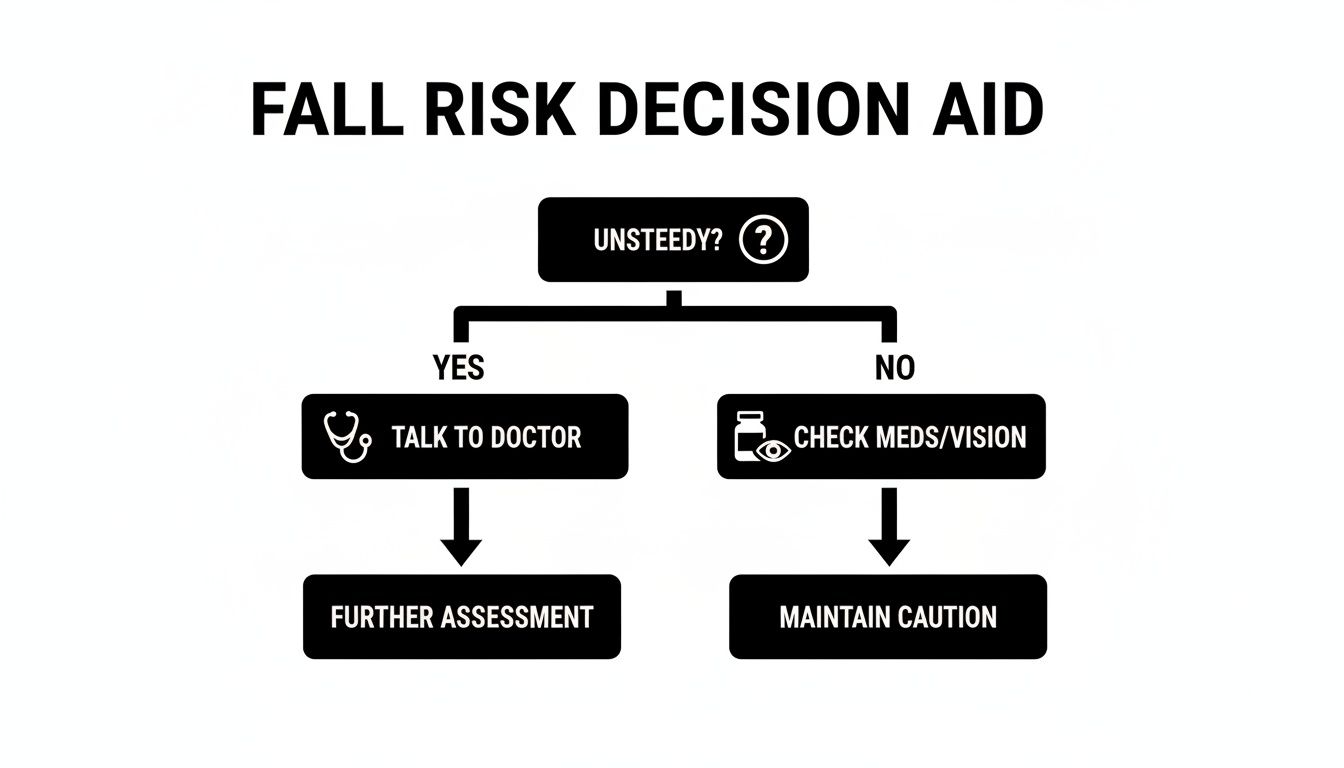
As you can see, that initial feeling of being a bit wobbly is the most important cue. It's the sign to be proactive and get professional medical advice before anything else.
When To Choose a Cane Versus a Walker
This is a question I hear all the time. The answer really just boils down to how much support is needed.
A cane is a fantastic option for someone who is generally steady but could use a little extra balance support. It's also great for taking some weight off a sore knee or hip.
On the other hand, a walker is the clear choice when more significant balance and stability are required. If you see someone frequently reaching for walls or furniture to steady themselves, or if they have weakness in both legs, a walker provides that much wider, more secure base of support they need.
- Single-Point Cane: Best for minor balance issues or a little weakness on one side.
- Quad Cane: This has four small feet at the base. It offers more stability than a standard cane but isn't as cumbersome as a walker.
- Standard Walker: No wheels. This type provides maximum stability because you have to lift it with each step. It’s for people who need to lean on it for significant support.
- Rolling Walker (Rollator): These have wheels, a seat, and hand brakes. They're perfect for those who need good stability but can walk more freely and might want a place to rest now and then.
The single most important thing for any mobility aid is proper fitting. If a cane or walker is too high or too low, it can throw off posture and balance, creating a brand new fall risk. The handgrip should be right at the user's wrist crease when their arm is hanging naturally at their side.
Essential Bathroom Safety Equipment
Did you know that over 80% of falls in the home happen in the bathroom? That staggering number makes it the single most important room to secure. When you combine hard, slippery surfaces with all the bending, turning, and stepping involved, you have a recipe for disaster.
Thankfully, installing just a few key pieces of equipment can slash that risk dramatically. These aren’t luxuries—they are absolute essentials for staying safe and independent.
- Grab Bars: This is your #1 priority. Get them professionally installed (the suction cup ones are not safe enough) in the shower, next to the tub, and beside the toilet. They provide a solid, reliable handhold when you need it most.
- Shower Chair or Transfer Bench: A shower chair lets you bathe while seated, which is infinitely safer for anyone with balance problems, weakness, or dizziness. A transfer bench is a game-changer for bathtubs, allowing you to sit and slide over the high tub wall instead of taking a risky step.
- Raised Toilet Seat: This simple device makes a huge difference. By reducing how far you have to lower yourself, it's much easier on the knees and hips. Many models even come with armrests for extra help when standing back up.
- Handheld Shower Head: This allows you to wash thoroughly while seated, cutting out all the dangerous twisting and reaching in a wet, slippery shower.
By identifying the specific "trouble spots" in a home, you can make targeted, effective choices that directly address the most significant fall risks.
Making Daily Life Easier with Other Aids
Beyond the basics, other pieces of equipment can solve specific daily challenges that might otherwise lead to a fall. For caregivers here in Pinellas County, knowing these exist can be a huge help.
A lift chair, for instance, looks just like a comfy recliner. But with the push of a button, a quiet motor lifts the chair forward, gently easing a person to their feet. It's a lifesaver for anyone who lacks the strength or balance to push up from a deep couch.
Even simple tools like a reacher/grabber can make a world of difference by eliminating the need to stand on a wobbly stool or bend down precariously. These small investments in safety pay off in a big way.
You can learn more about how to select the right walkers and rollators in St. Petersburg to match very specific mobility needs. We keep things straightforward—we have clear pricing and do not take insurance, so you can get the equipment you need without any bureaucratic delays.
A Practical Guide For Pinellas County Caregivers
As a caregiver, you're on the front lines. You notice the little things—a new hesitation before standing up, a hand reaching for a wall for balance—long before anyone else does. That unique perspective makes you the most important person in your loved one's fall prevention plan.
But let's be honest: talking about these changes can be tough. Bringing up the idea of a walker or a grab bar can feel like you're pointing out a loss of independence, and that’s a conversation no one wants to have.
The secret is to shift your mindset. You're not there to take over; you're there to team up. The goal is the same for both of you: keeping them safe, healthy, and independent at home for as long as humanly possible. It's all about how you start the conversation.
Starting The Conversation About Safety
Trying to convince a proud parent they might need a walker is delicate territory. If you lead with, "You need a walker now," you’re likely to hit a brick wall. It feels like an order, not a suggestion.
A better approach comes from a place of care and collaboration.
Try something like this: "Hey Mom, I've noticed you've been holding onto the furniture a bit when you walk through the living room. I just want to make sure you feel totally steady on your feet. What would you think about trying a walker, just to see if it makes getting around feel easier?"
See the difference? It’s an invitation to a discussion, not a verdict. Here are a few ways to keep that dialogue open and productive:
- Frame it as a gain, not a loss. A walker isn't about being "old." It's a tool that can increase their freedom—making it safer to get the mail, visit a neighbor, or join a community event.
- Listen first. They might be scared, frustrated, or even embarrassed. Hear them out. Acknowledging their feelings ("I know this isn't what you pictured, and it's okay to feel that way") shows you're on their side.
- Suggest a "no-strings-attached" trial. Renting equipment is a fantastic low-commitment option. You can check out medical equipment rentals in St. Petersburg for exactly this kind of flexibility. Frame it as an experiment—if they hate it, you can take it back.
Your Home Safety Audit Checklist
One of the most powerful things you can do as a caregiver is to walk through their home with a fresh set of eyes. We get so used to our surroundings that we stop seeing the tripping hazards right in front of us.
Grab a notepad and use this as your guide:
- Pathways & Floors: Is there a clear, wide path from room to room? Look for the obvious culprits: clutter, stacks of papers, and stray electrical cords. Pay special attention to throw rugs—they are one of the biggest fall risks. If they aren't securely taped down or backed with non-slip material, they need to go.
- Lighting: Flip every switch. Are the hallways, stairs, and especially the path from the bed to the bathroom bright enough? Motion-activated nightlights are an easy and inexpensive fix for safer trips in the middle of the night.
- Stairs: Are the handrails rock-solid? Ideally, there should be one on each side running the full length of the staircase. And, of course, make sure the steps themselves are kept completely clear.
- The Bathroom: This is a major high-risk zone. Look for grab bars—are they installed securely next to the toilet and inside the shower? Is there a non-slip mat in the tub and a bathmat with a rubber backing outside it?
- The Kitchen: Think about reach. Are the dishes, glasses, and pots they use every day on lower, easy-to-access shelves? The last thing you want is for them to be climbing on a wobbly step stool.
Remember, the goal is to create an environment that supports, rather than challenges, your loved one's mobility. Each small fix you make contributes to a much larger safety net.
Recognizing Warning Signs Of Increased Fall Risk
Beyond what you can see in the house, you need to watch for changes in their physical condition. Spotting these red flags early lets you get ahead of a potential problem.
Keep an eye out for:
- New Unsteadiness: Are they "furniture walking"—using walls and furniture to steady themselves as they move around the house?
- Difficulty Standing: Do they need to push off with their arms or make a few attempts to get up from their favorite chair?
- A Change in Gait: Watch how they walk. Are their steps getting shorter? Do they seem to shuffle their feet instead of lifting them?
- Recent "Near Misses": Listen for comments like, "Whoops, almost went down there!" or "I stumbled on the rug again." These are warnings.
- Fear of Falling: This is a big one. If they start turning down invitations or avoiding activities they used to love because they're afraid of falling, it's time to act.
Global health data is sobering: falls impact 30-40% of older adults worldwide every single year, tragically resulting in over 684,000 deaths. Prevention is everything. We know that things like strength-building exercises, regular medication reviews, and simple home fixes like grab bars and better lighting work. Here in St. Petersburg, we have the resources to tackle these issues head-on. You can read more about this global public health concern to grasp the full importance of taking these steps.
Common Questions About Senior Fall Prevention
As you start making changes to prevent falls, a lot of practical questions are bound to pop up. It's completely normal. Getting clear answers ahead of time can make the whole process feel less overwhelming and give you the confidence to take action. Let's walk through some of the most common concerns we hear from families every day.
We want to give you straightforward, useful information that backs up everything we've talked about in this guide. Think of this as turning that feeling of worry into a concrete plan.
How Do I Know When It’s Time For A Mobility Aid?
This is probably one of the most important questions a family can ask, and the answer isn't always obvious. The key is to look for the subtle clues instead of waiting for a serious fall to happen. The need for a mobility aid usually shows up in small, everyday habits that signal a shift in balance, strength, or confidence.
Have you noticed your loved one "furniture walking"—using walls, tables, and chair backs to steady themselves as they move around a room? Or maybe they hesitate before getting up from a chair, needing a few tries to finally stand. These are tell-tale signs that the extra support from a cane or walker could be a game-changer for their safety.
The decision to use a mobility aid isn't about losing independence; it’s a smart strategy to preserve it. A walker or cane provides the stability needed to keep moving safely, which helps reduce the fear of falling and encourages more activity, not less.
What Should I Do After A Minor Fall?
Even when you've done everything right, a small slip or stumble can still occur. What matters most is how you handle it. After any fall, even one that seems minor and doesn't cause an obvious injury, it's critical to talk to their doctor.
Think of a minor fall as a warning light on a car's dashboard. It could be signaling an underlying issue you can't see, like a new side effect from medication, a change in vision, or a developing balance problem. Reporting it ensures you get to the root cause. It's also the perfect time to take another look around the house and review their health to stop a more serious fall from happening down the road.
How Much Does Safety Equipment Cost?
Worries about cost are completely understandable, and it's a topic that comes up a lot. The good news is that many of the most effective safety items—like grab bars, non-slip mats, or raised toilet seats—are surprisingly affordable and offer a massive return on investment when it comes to peace of mind. For larger equipment like walkers or lift chairs, there are always options to fit different budgets.
It’s important for you to know that we operate on a direct-payment basis. We do not take insurance for equipment rentals or purchases. We've found this approach keeps our pricing clear and simple, without the complicated paperwork and delays that often come with insurance billing. This means you can get the equipment you need right away, often with same-day pickup for items we have in stock. You can find more details by reviewing our frequently asked questions about equipment and services.
At Affinity Home Medical Equipment, our goal is to give you the practical tools and straightforward advice you need to make home a safer place. Whether it's a walker, grab bars, a lift chair, or a shower seat, our experienced team is here to help you find the right fit. Visit us in St. Petersburg or see our products online at https://affinityhomemedicalequipment.com.
Share This Article

Written by : Rich affinityrich@gmail.com
Follow Us
Latest Articles

October 14, 2026

October 14, 2026

October 14, 2026
