
Shower Assistance For Elderly: Safe, Dignified Care Guide

Helping a loved one with their shower is a true [...]
Helping a loved one with their shower is a true act of care, but let's be honest—it can be stressful for everyone involved without the right preparation. This guide is designed to be your practical playbook, moving beyond sterile instructions to address the real-world risks and the human side of this daily routine.
Why Safe Showering is So Critical
The bathroom is, statistically, one of the most dangerous rooms in the house for an older adult. It’s a sobering fact, but studies show that nearly 80% of falls among seniors happen right there. Add a wet, slippery floor to mobility challenges, and a simple daily task quickly becomes a high-risk situation. The whole point of helping with a shower is to create a safe, supportive space that removes those dangers.
But it's about so much more than just the physical task. It's about preserving a person's dignity and their sense of independence. By getting the space ready, using the right equipment, and taking a gentle, respectful approach, you can turn what might be a source of anxiety into a manageable and even comforting routine.
The Growing Need for Bathroom Safety
It’s no surprise that the demand for reliable bathroom safety equipment is on the rise. The global market for these products was valued at a staggering USD 5.09 billion back in 2022, and it’s expected to climb to USD 9.23 billion by 2030.
This isn't just a business trend; it shows a massive shift in understanding how vital tools like shower chairs and grab bars are for keeping people safe at home. With roughly 25 million older Americans needing some help with daily activities, having the right gear is no longer a "nice-to-have"—it's an absolute necessity.
A safe showering experience is built on a foundation of trust, preparation, and respect. It’s about creating a partnership where your loved one feels secure and in control, not just cared for.
Building a Foundation of Trust
Great shower assistance starts long before you ever turn on the water. It really begins with an open conversation and a clear plan that you both agree on. This guide will walk you through everything, from setting up the bathroom to picking out the best tools for their specific needs.
Here are the key things we'll cover to make showering safer and more comfortable:
- Preparing the Environment: How to make the bathroom a fall-proof zone.
- Essential Equipment: What you need and how to choose it based on mobility.
- Gentle Techniques: Hands-on support that always prioritizes dignity.
- Emergency Readiness: What to do if something goes wrong.
Focusing on these areas will help you give your loved one the support they need with confidence. Getting a handle on these core principles is the first step, and you can learn more about our commitment to helping families navigate these challenges.
How to Prepare the Bathroom for Safety
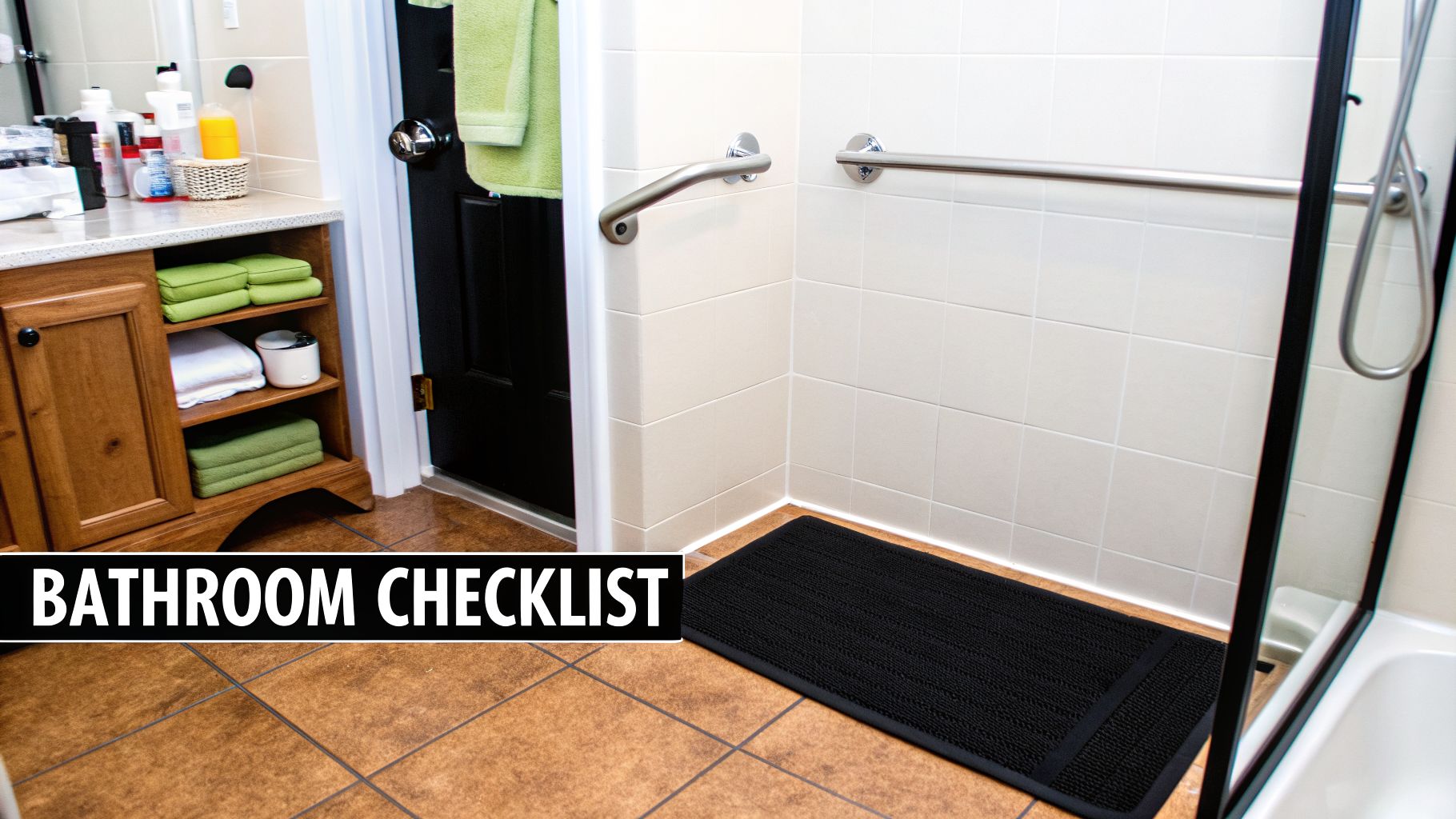
Before your loved one even steps foot in the bathroom, your preparation is what truly sets the stage for a safe and comfortable shower. Think of it as transforming a potentially high-risk room into a secure, calm space. This isn't just about preventing accidents; it's about building confidence for both of you.
Your prep work starts outside the bathroom door. Make sure the path from their bedroom to the shower is completely clear. Get rid of throw rugs, stray cords, or any other clutter that could easily become a trip hazard, especially if they need to get up in the middle of the night. A clear path is one of the simplest and most effective ways to prevent falls.
Setting the Right Atmosphere
The feel of the room itself matters more than you might think. Older adults are often more sensitive to temperature shifts, and a blast of cold air can be jarring enough to cause dizziness. I always recommend warming the room up ahead of time. You can do this by running the hot water in the shower for a few minutes or, if you have one, using a small, bathroom-safe space heater.
And, of course, there's the water temperature. This is a critical safety check. Always test it yourself before they get in. A good rule of thumb is to keep the water heater set at or below 120°F (49°C). This simple setting can prevent a painful, and entirely avoidable, scalding injury. Finally, make sure the room is well-lit with bright, non-glare lighting so they can easily spot any wet patches on the floor.
A safe bathroom is an organized one. Having every tool and supply within arm's reach eliminates the need for risky stretching, turning, or bending, which are common causes of slips and falls in the shower.
Arranging Supplies for Easy Access
Now, let's talk about supplies. Get everything you’ll need together and place it where you can grab it without losing your balance or taking your supportive hands off your loved one. This little bit of organization makes a huge difference in providing dignified and efficient care.
- Hygiene Products: Keep the shampoo, body wash, and washcloth on a shower caddy or shelf that’s at a comfortable height for you both.
- Towels and Clothing: Have a big, fluffy towel waiting on a nearby towel bar or chair. Lay out a clean set of clothes nearby for after the shower.
- Essential Safety Aids: This is non-negotiable—make sure you have non-slip mats securely in place, both inside the tub or shower and on the floor outside. For more significant support, you might want to look into renting equipment. Many places offer St. Petersburg medical equipment rentals that include shower chairs or transfer benches, which can be game-changers.
For a more permanent fix, investing in dedicated accessible bathroom solutions can dramatically improve safety and independence long-term. Just keep in mind that any payments for these kinds of modifications or equipment are typically handled directly.
Choosing The Right Bath Safety Equipment
The right tools can make all the difference in the world when it comes to safely helping an older adult in the shower. Getting the bathroom properly equipped isn't just about their safety; it's about giving you, the caregiver, more confidence and peace of mind. Let’s move beyond a simple shopping list and dig into how to choose the best equipment based on real-world mobility and needs.
The very first step is to take a realistic look at the person's unique challenges. Can they stand, even for just a few minutes? Is their biggest struggle simply getting over the high wall of a bathtub? Answering these practical questions is what will point you toward the tools that will make the most significant, immediate impact.
Must-Have Items for Shower Safety
Some pieces of equipment are simply foundational to a safer shower routine. I like to think of these as the non-negotiables for drastically cutting down the risk of slips and falls, which are all too common in wet, slippery bathrooms.
- Shower Chairs or Benches: These are absolute game-changers. A sturdy shower chair, especially one with a back and armrests, provides a stable place to sit. It’s perfect for someone who can manage stepping into a walk-in shower but gets tired, weak, or dizzy while standing for more than a minute or two.
- Transfer Benches: If you’re dealing with a traditional tub-and-shower combo, a transfer bench is practically essential. It’s designed to straddle the wall of the tub. This allows your loved one to sit down safely outside the tub, then swing their legs over the side and slide into the shower—all without having to stand up on a slick surface.
- Handheld Shower Wands: These detachable showerheads put you in complete control. Instead of a fixed stream from above, a wand makes it so much easier to rinse hair and wash hard-to-reach areas while the person remains comfortably and safely seated.
Evaluating Your Loved One's Needs
The choice between a standard shower chair and a transfer bench is a classic example of matching the equipment to the specific need. A senior who is still fairly mobile but just needs to conserve energy will likely do just fine with a simple chair. But for someone with more significant balance issues or leg weakness, a transfer bench is by far the safer bet.
The goal is to select equipment that empowers your loved one to participate as much as they safely can, while you remove the biggest risks. The right tool should reduce fear and build confidence for both of you.
The growing demand for these devices tells a clear story. The global market for elder care and assistive devices, which includes all these bathroom safety products, was valued at USD 31.57 billion in 2024. It’s projected to climb to USD 41.46 billion by 2029, which shows a massive, widespread recognition of how crucial these tools are for helping people stay safe and independent at home.
To help you decide, here's a quick breakdown of the most common pieces of equipment.
- Shower Chair: Provides a stable seat inside a walk-in shower. Ideal for seniors who can step into the shower but struggle with standing, balance, or fatigue.
- Transfer Bench: Bridges the bathtub wall for a seated transfer. Ideal for seniors who cannot safely step over the tub wall due to mobility or balance issues.
- Grab Bars: Offer sturdy support for standing, sitting, and moving. Ideal for seniors who need a reliable handhold to steady themselves while navigating the bathroom.
- Handheld Shower Wand: Allows for targeted, controlled rinsing while seated. Ideal for seniors who need assistance with washing and find a fixed showerhead impractical or unsafe.
- Non-Slip Bath Mat: Increases traction on wet, slippery surfaces. Ideal for seniors who are at risk of slipping. Essential for virtually every bathroom setup.
Thinking through these options will get you much closer to a setup that truly works for your specific situation.
Installing and Paying for Equipment
Remember, proper installation is just as critical as the equipment itself. Grab bars, for instance, are only safe if they are securely mounted directly into the wall studs. A tension-mounted or suction-cup bar is never a safe substitute for one that's been professionally installed. When you're ready to see what's out there, you can browse our shop for reliable bath safety equipment.
Beyond the basic, removable equipment, it's also worth thinking about what long-term safety features to add during bathroom remodels, like a curbless shower. Please note that any purchases of equipment or payments for modifications are handled directly.
A Gentle Approach To The Showering Process
Helping a loved one with a shower is one of the most personal and intimate things you can do as a caregiver. It’s all about striking a delicate balance between safety and respect. Think of it less as a task you're performing for them and more as a partnership. When you lead with gentleness, communicate clearly, and always prioritize their dignity, you can turn a potentially stressful moment into a calm and trusting routine.
It all starts before you even step into the bathroom. A little communication goes a long way. Gently explain what's about to happen—something simple like, "Let's get you a nice, warm shower to help you feel refreshed." Just setting that expectation can ease a lot of anxiety and helps them feel involved, not just like something is happening to them.
Guiding a Safe Transfer
Getting into the shower or onto the bath bench is often the trickiest—and riskiest—part of the whole process. This is where slips and falls are most likely to happen, so moving slowly and deliberately is key. Never, ever rush. You need to move at their pace, not yours.
Start by guiding them to the shower chair. If you’re using a transfer bench, have them sit on the edge outside the tub first. From there, you can provide steady support at their back or under their arm as you help them swing their legs over the tub wall, one at a time. All the while, use short, clear instructions like, “Okay, let’s lift your right leg now.”
This simple framework breaks down the core elements of setting up a safe bathing environment.
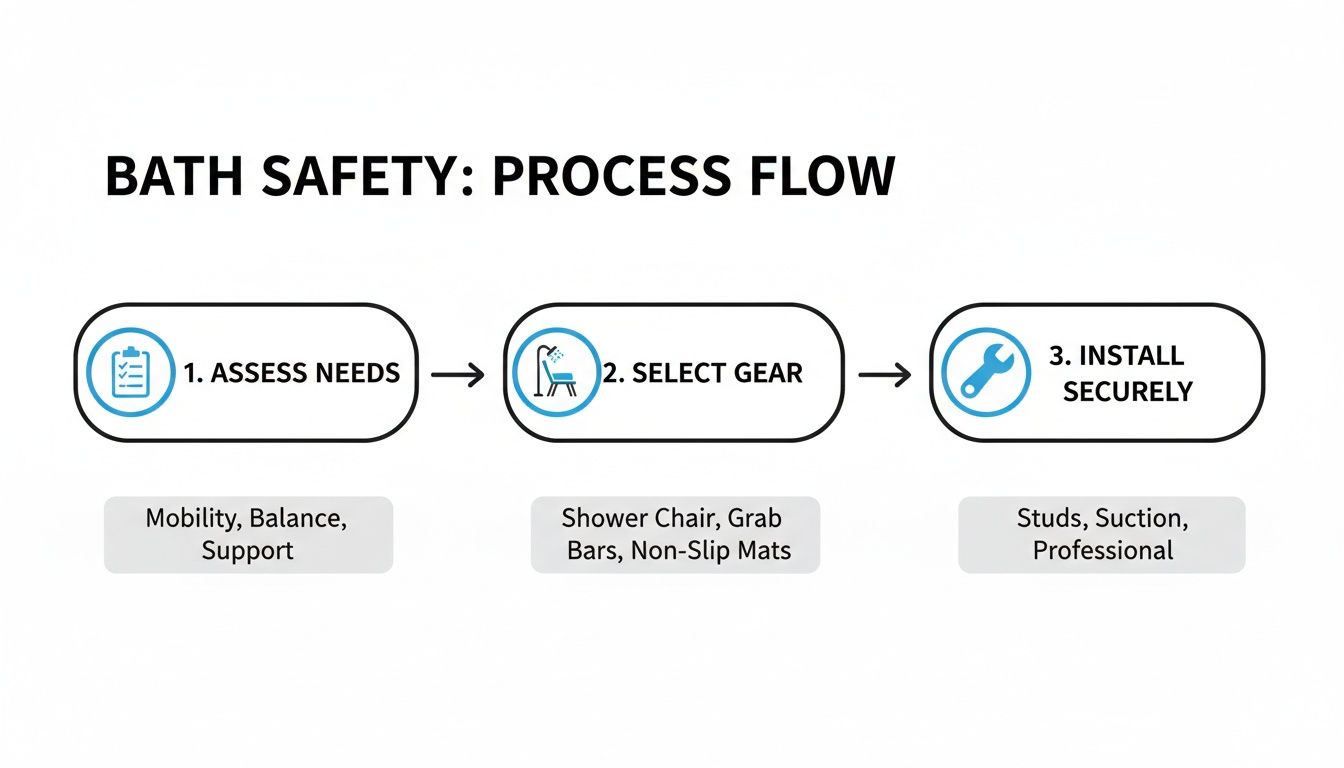
As the diagram shows, a safe shower experience always starts with a thoughtful assessment of their specific needs, which then informs the equipment you choose and how it's installed.
Preserving Dignity During Washing
Once they’re seated securely, your focus should shift to keeping them comfortable and preserving their privacy. It’s completely understandable for an older adult to feel vulnerable or even embarrassed needing this kind of help. Your approach here can make all the difference.
One of the best things you can do is keep them covered as much as possible. A large bath towel or even a small blanket draped across their lap and chest works wonders. You just uncover the specific area you’re washing at that moment. This small act provides warmth and a powerful sense of privacy.
A key takeaway: Let your loved one do as much as they can for themselves. If they're able to wash their own face and arms, hand them the washcloth and let them. This reinforces their independence and gives them a feeling of control.
Encourage them to participate wherever they feel able. Hand them the soaped-up washcloth and let them take the lead. This is where a handheld shower wand becomes invaluable. It lets you direct the water exactly where you need it, making it easier to rinse specific areas without drenching them and causing a chill.
The Final Steps: Drying and Dressing
When the washing is done, the next steps require just as much care. As soon as you turn the water off, have a large, warm towel ready.
Gently pat their skin dry—don't rub. Older skin can be quite fragile and prone to tearing. Be sure to pay extra attention to skin folds, like under the arms or in the groin area, as moisture trapped there can cause rashes and irritation.
Help them get out of the shower using the same slow, supportive method you used to get them in. Have their clean clothes laid out and within easy reach. And just like before, let them do as much of the dressing as they can handle.
For more practical tips on creating a safer home, you can explore additional articles on our medical equipment blog. Please keep in mind that for any equipment or home modifications, payment is handled directly.
What to Do If a Fall Happens
Let's be realistic: even when you’ve done everything right, a slip or fall can still happen. It’s the reality of caregiving. But how you react in that moment makes all the difference. Panicking only makes a scary situation worse, so having a clear plan in your head is your best tool.
The absolute first rule, and I can't stress this enough, is to never try to lift the person by yourself. Your instinct will be to hoist them up, but this is a surefire way to cause serious injury—to them and to you. We're talking muscle tears, back injuries, and making any potential injury they have even worse. Your job is to stay calm and manage the situation from the ground.
Your Immediate Action Plan
Okay, it happened. They’ve fallen. Before you do anything else, take a deep breath. Your calm presence is incredibly reassuring to them when they’re likely feeling scared, hurt, or embarrassed.
- Check for Injuries: First things first, assess the situation without moving them. Ask them where it hurts. Are they conscious and alert? Look for any obvious signs of bleeding, swelling, or a limb that looks out of place.
- Keep Them Comfortable: If they seem okay but are just shaken, focus on comfort. Grab a few dry towels to cover them for warmth and dignity. You can roll up another towel to place under their head for support.
- Know Who to Call: This is critical. If you suspect any serious injury—like a broken hip, head injury, or if they are unconscious—call 911 immediately. If they seem uninjured but simply can't get up on their own, don't be a hero. Call your local non-emergency line; many fire departments offer a "lift assist" service for exactly this scenario.
The need for this kind of knowledge is only growing. The World Health Organization estimates that by 2050, the number of people aged 60 and over will hit 2.1 billion. This global shift highlights just how crucial reliable shower safety protocols have become.
Have Your Tools Ready Before You Need Them
An emergency is a bad time to realize your phone is in another room. Keep a waterproof phone or a medical alert button within arm's reach of the shower at all times. This one simple step can turn a potential crisis into a manageable incident. Thinking through the worst-case scenario beforehand is truly the best way to prevent a minor slip from escalating.
If you have any questions about creating a safer bathroom setup or what equipment might be right for your home, please don't hesitate to contact our team for expert guidance. It's important to note that we do not work with insurance providers; all equipment and services are paid for directly.
Answering Your Top Questions About Shower Assistance
When you're helping an older family member with something as personal as showering, a lot of questions pop up that go beyond just the "how-to." You're not alone if you've wondered about how often they really need to bathe, what to do when they say "no," or when it's time to call in a professional. Let's tackle some of those common concerns.
One of the first things caregivers ask is about frequency. You might be surprised to learn that a daily shower isn't always necessary or even healthy for an older adult. For many, a full shower 2-3 times per week is plenty to stay clean and healthy.
Older skin is thinner and more delicate, and too much soap and hot water can strip away its natural oils, leading to uncomfortable dryness and irritation. On the days in between, a simple sponge bath focusing on the face, hands, and private areas is usually all that's needed. The goal is a safe, comfortable routine, not a strict daily mandate.
What if They Don't Want to Shower?
It can be really tough when your loved one refuses to bathe. It's a common challenge, but it almost never comes from a place of just being difficult. More often than not, there's a real fear or discomfort behind the refusal—a fear of falling, embarrassment over losing their privacy, or just feeling out of control. For those with dementia, the sound and feel of running water can even be confusing or frightening.
The key is to approach the situation with patience, not pressure. Try to gently figure out what's really going on.
- Is it the temperature? The bathroom might feel chilly to them. Try running a space heater for a few minutes before you even start.
- Is it about dignity? Feeling exposed is a huge concern. Keep a large, warm towel or a bath robe handy to cover them up as much as possible.
- Is it a fear of falling? Verbally point out the safety measures you've put in place. Saying, "Remember, we have the sturdy shower chair and the non-slip mat right here to keep you safe," can be incredibly reassuring.
If they're still not on board, don't force it. Suggesting a warm sponge bath at the sink might be a more welcome alternative for that day. Building trust is far more important than winning a battle over a single shower.
When Should I Call for Professional Help?
Knowing your own limits is one of the most important parts of being a good caregiver. It's not giving up; it's being smart and safe. It might be time to bring in a professional home health aide if you find yourself in these situations:
If you're starting to feel physically strained or worried you can't prevent a fall, if their mobility has changed and transfers are becoming risky, or if shower time is causing both of you significant emotional distress, it's time to get help.
A trained professional has the skills and strength to manage more complex situations, like using a patient lift or working with someone who has advanced dementia. Making that call protects your loved one from injury and preserves your own health and well-being, which is just as important.
At Affinity Home Medical Equipment, we know these are the real-world challenges you face. We're here to help you find the right equipment to make the bathroom a safer place. From grab bars to transfer benches, we have practical solutions to give you peace of mind. You can explore our bath safety equipment to see what might work for your home.
Share This Article

Written by : lori@netcodesign.com
Follow Us
Latest Articles

October 13, 2026

October 13, 2026

October 13, 2026
