
A Complete Guide To Choosing A Sit To Stand Device

It's one of the most common struggles we see: the [...]
It's one of the most common struggles we see: the simple act of getting up from a chair becomes a daily challenge. This single difficulty can chip away at a person's independence and introduce a real risk of falling. This is where a sit-to-stand device comes in—it's not just equipment, it's a supportive partner that helps you or your loved one get back on their feet safely and with dignity.
Regaining Independence with a Sit to Stand Device
For many people, standing up from a chair, the edge of a bed, or the toilet is a major obstacle. This can be due to anything from muscle weakness and joint pain to recovering from surgery or an injury. When this happens, it puts a strain not only on the individual but on their caregiver as well, making every transfer a potential risk.
A sit-to-stand device is far more than a simple lift. It’s a tool designed to empower the user. By providing a secure, stable base and handles, it encourages the person to participate in the transfer, using their own strength. This active involvement is fantastic for maintaining muscle tone and staying engaged in daily movements.
Restoring Confidence in Daily Life
When someone can move safely again, the impact is huge. It means navigating their own home with more freedom, easing the physical burden on family or professional caregivers, and regaining a feeling of control over their life. This is the very essence of independence and a core principle of what aging in place means—living comfortably and safely in your own home.
Navigating Your Options
Picking the right piece of equipment is the most important step. It’s crucial to understand the different kinds of sit-to-stand aids available, how each one works, and who they are best suited for.
One of the first questions we often get is about payment. To keep things simple and transparent, we do not work with insurance companies. Instead, we offer straightforward pricing for both rentals and purchases, allowing you to make a quick, informed decision without getting tangled up in claims paperwork.
This guide is designed to walk you through everything you need to know, giving you the confidence to choose a solution that brings back safety, comfort, and independence.
How a Sit to Stand Device Actually Works
At its core, a sit-to-stand device is a powerful mobility partner. It’s not meant to do all the heavy lifting on its own; instead, it’s designed to assist someone who can still bear some of their own weight, helping them move safely from sitting to standing. Think of it less like an elevator and more like a steady, supportive dance partner, providing just the right amount of help at the right time.
The whole idea is to bridge the gap between what a person can do independently and what’s needed for a safe, stable transfer. This cooperative approach is key because it allows the user to stay actively involved in their own movement. By engaging their own muscles during the lift, they get to maintain strength and a crucial sense of dignity.
The Key Components Working in Harmony
To really get how these devices work their magic, it helps to break them down into their main parts. Each piece has a specific job, and they all work in concert to create a secure and smooth transition. It's this synergy that makes the device so incredibly effective.
Three elements are the real workhorses:
- The Footplate: This is the foundation. It provides a non-slip, stable base for the user's feet, creating a solid anchor point for the entire movement.
- The Knee Pads: These are more important than they look. Padded and usually contoured, they brace the user’s shins and knees, preventing them from buckling or sliding forward while providing critical leverage as they begin to stand.
- The Handles and Grips: These give the user something secure to hold onto. Well-designed handles allow them to use their own upper body strength to help pull themselves up, making them an active part of the process.
Is a Sit-to-Stand the Right Fit?
It's crucial to understand that this device isn't a one-size-fits-all solution. It's specifically built for people who have some strength left and can actively participate in the transfer. Getting this right is absolutely vital for safety.
A sit-to-stand device is perfect for someone who can bear some weight on their legs and has enough core and upper body strength to sit upright and pull up with assistance. It empowers them by using the strength they already possess.
On the other hand, this aid is not the right choice for individuals who can't bear any weight on their legs at all, or who may not have the cognitive ability to follow simple instructions during the transfer. In those situations, a full-body patient lift is a much safer and more appropriate solution. Making this distinction ensures every transfer is done with the right tool for the job, protecting both the user and their caregiver.
Exploring the Different Types of Stand Assist Aids
When you start looking into sit-to-stand devices, you’ll quickly find they aren't a one-size-fits-all solution. Picking the right one is crucial, and it really comes down to understanding the different types and what they're designed to do. The main choice you'll make is between a powered lift and a manual one, and how they operate makes all the difference.
Powered Lifts for Effortless Transfers
Powered sit-to-stand lifts are the heavy hitters in both home care and clinical settings for a good reason. They use a battery-powered motor to do all the heavy lifting—literally.
With just the press of a button on a handheld remote, the lift smoothly and gently raises the person from a seated to a standing position. This takes virtually all the physical strain off the caregiver, which is a massive relief and a key safety feature. It also makes the transfer predictable and comfortable for the user.
These powered models have become a cornerstone of patient handling, allowing people with some mobility to stand up safely with minimal effort. This is a game-changer for reducing fall risks, especially for older adults or anyone recovering from surgery. It’s no surprise they dominate the market, as you can see in research on patient lifting equipment trends.
Manual Lifts and Specialized Aids
On the other side of the coin, you have manual or hydraulic models. These rely more on the caregiver's input to get the job done. Some use a hand-pump, kind of like a car jack, which engages a hydraulic system to help with the lift. It definitely reduces the effort, but it still requires some physical strength from the person assisting.
Another common type is the simple standing frame, sometimes called a stand-assist lift. This one requires a bit more active participation from the user. They need to have the upper body strength to pull themselves up using the device's handles while a caregiver secures the padded supports behind them.
To get a better sense of how all the parts come together, this diagram breaks it down nicely.
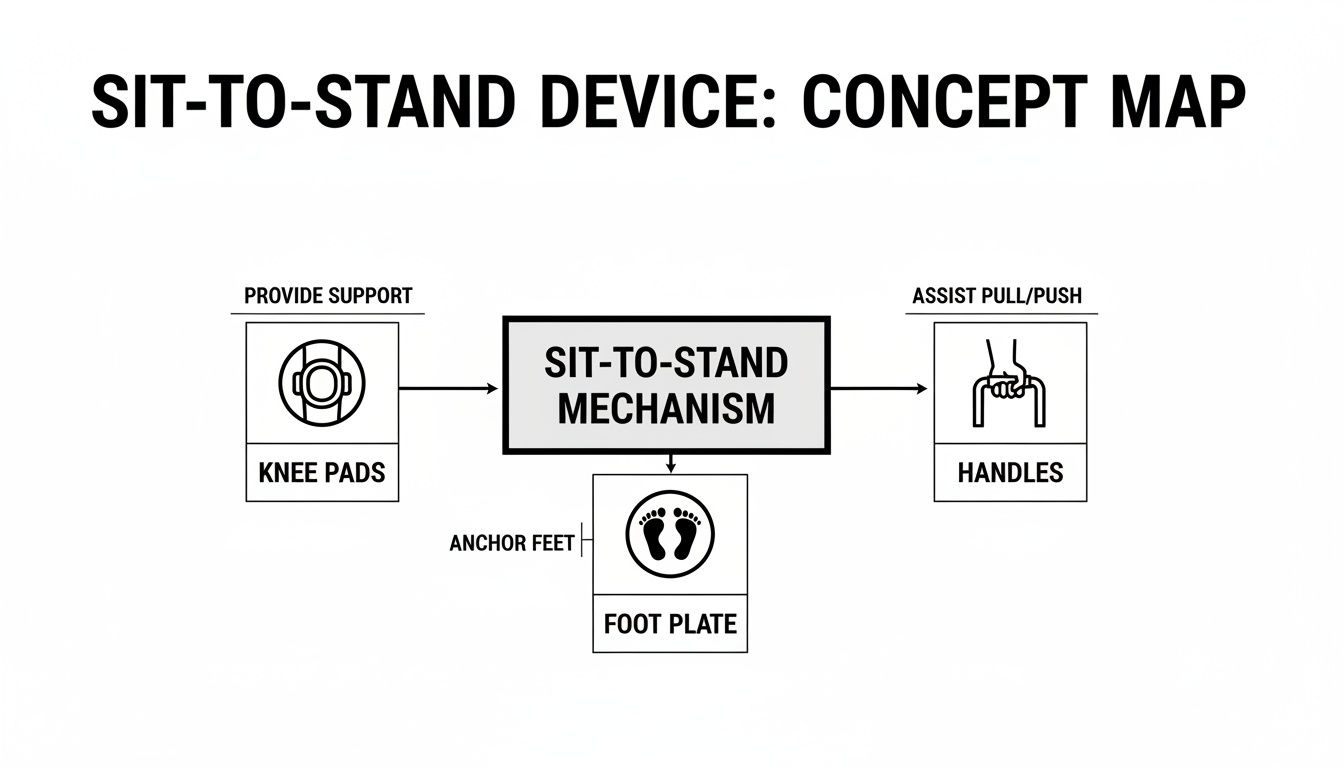
You can see how the knee pads, footplate, and handles all work in concert to create a secure and stable transfer from sitting to standing.
It's also important to talk about standing slings. These aren't just accessories; they are a critical part of the system. These specially designed supports wrap securely around the user’s back and under their arms, then attach to the lift. They provide the necessary stability to keep the user safe from start to finish.
We are often asked about insurance coverage for these devices. To keep things simple and fast for our customers, we do not take insurance. Our focus is on providing clear, straightforward pricing for both rentals and sales, ensuring you can get the equipment you need without any bureaucratic delays.
By understanding these different categories—powered, manual, and the essential slings—you're in a much better position to figure out which device aligns with your needs, your home, and your physical abilities. If you’re also exploring other ways to get around, you might find our guide to St. Petersburg mobility scooter sales and rentals helpful.
The Real-World Benefits for Safety and Health
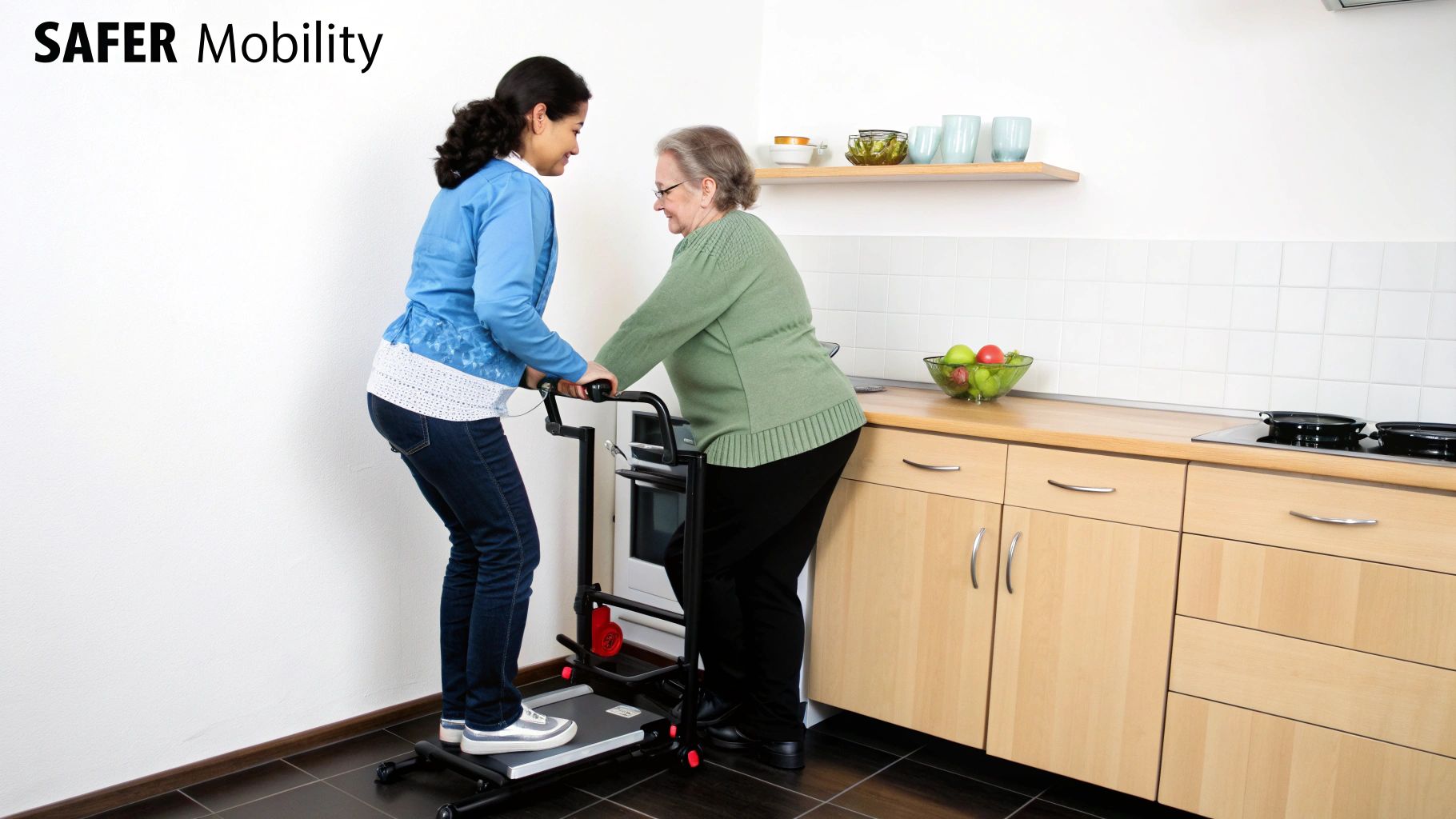
A sit-to-stand device is about so much more than just a lift—it’s a powerful tool for improving safety, health, and quality of life for everyone involved. For the person using it, the most immediate impact is a massive reduction in the risk of falling, which remains a leading cause of serious injury.
These devices provide a steady, controlled way to get up and down, taking the guesswork and unsteadiness out of the equation. This newfound stability often encourages people to move around more, which is absolutely vital for staying physically well.
Enhancing Physical and Emotional Well-Being
Beyond just preventing falls, the consistent and safe movement a sit-to-stand makes possible delivers some huge physiological perks.
- Promotes Better Circulation: Getting up and standing helps prevent blood from pooling in the legs, which is a great boost for cardiovascular health.
- Maintains Joint Flexibility: Gentle, weight-bearing movement is fantastic for keeping joints limber and fighting off stiffness.
- Prevents Pressure Sores: Simply changing positions regularly is the single best defense against painful and dangerous pressure ulcers from sitting too long.
Of course, joint pain often goes hand-in-hand with conditions that require a sit-to-stand. Learning how to ease joint pain naturally can make a world of difference, complementing the physical support the lift provides.
Don't underestimate the psychological lift, either. Being able to stand up on your own terms is a huge boost to confidence, reinforcing a sense of dignity and independence that can truly change a person's outlook on life.
A Safer Environment for Caregivers
The benefits for caregivers are just as significant. It's no secret that caregivers often put their own health on the line, and that’s where these lifts really shine. By making every transfer safer for everyone, a sit-to-stand device helps create a more positive and sustainable care environment right at home.
A critical note on payment: We do not take insurance for our rentals or sales. This policy allows us to offer clear, upfront pricing and avoid the typical delays, so you can get the equipment you need without the wait.
By making every transfer safer for everyone, a sit-to-stand device helps create a more positive and sustainable care environment right at home. If you're exploring other mobility options, you might also find our guide on wheelchairs in St. Petersburg, FL helpful.
How to Choose the Right Sit to Stand Device
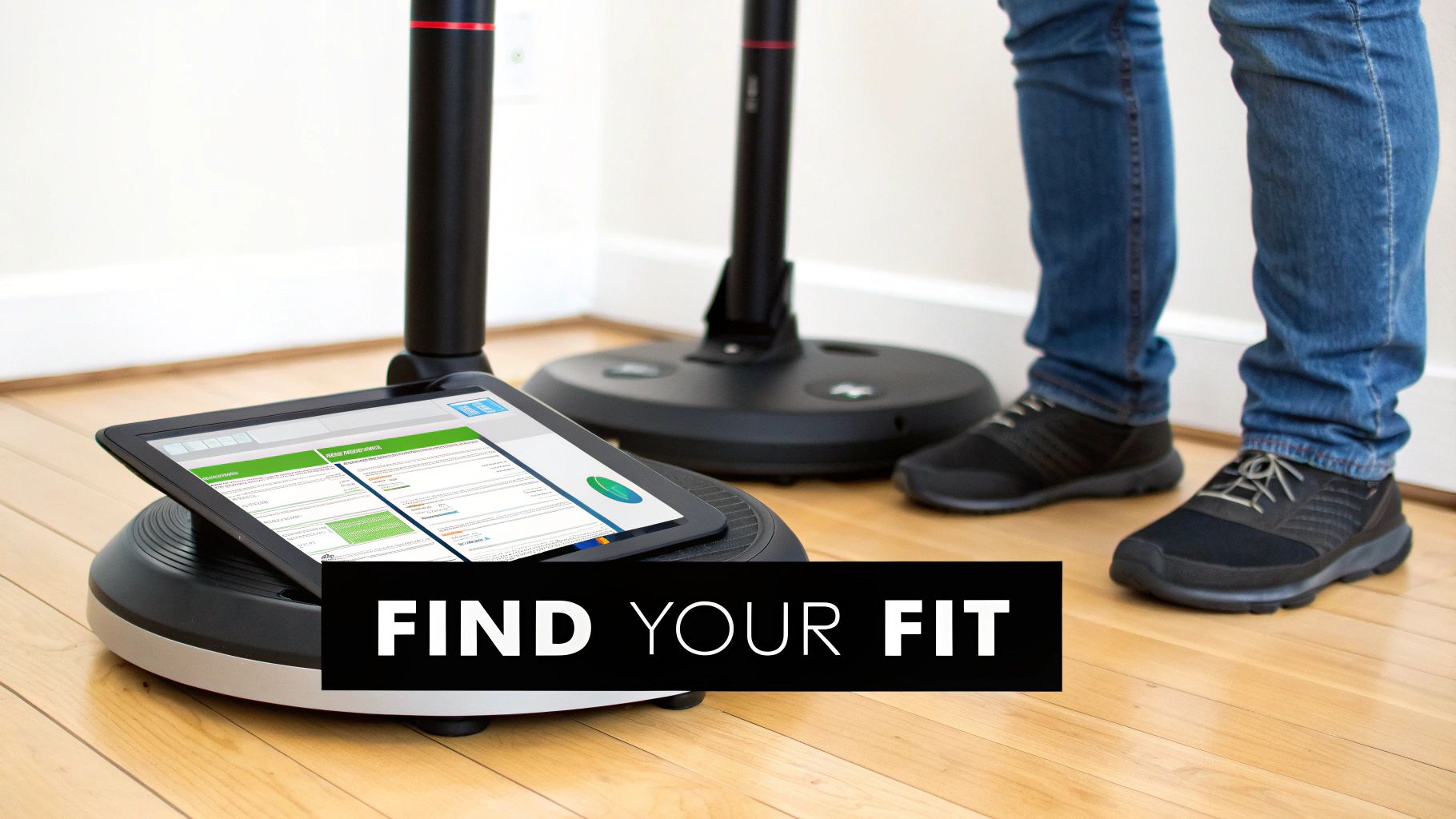
Picking out the right sit-to-stand device isn't about getting the one with the most bells and whistles. It's about finding the perfect match for the user's unique needs and the space they live in. When you get this right, the device becomes a seamless part of their daily routine, empowering them to move safely and confidently.
The best way to start is by taking a practical look at the person who'll be using the aid. Their specific abilities and physical build will point you directly to the right kind of equipment.
Evaluating the User’s Needs
Before you even start browsing different models, you need a clear picture of what the user can and cannot do. Here’s what to focus on:
- Weight-Bearing Ability: This is non-negotiable. The user absolutely must be able to bear some weight on their legs. Think of these devices as assistants, not full-body cranes.
- Physical Strength: Can they hold on? The user needs enough upper body and core strength to grip the handles and maintain a stable, seated posture.
- User’s Weight: Every single device has a maximum weight capacity. This is a critical safety feature, so always choose a model that can comfortably support the user, ideally with a little wiggle room.
- User’s Height: Proper fit is key to proper function. The knee pads and handles need to align correctly with the person's frame to provide the right leverage and support for a smooth, safe transfer.
Please note that for your convenience and to ensure straightforward pricing, we do not accept insurance. This allows us to provide equipment without the delays and paperwork associated with insurance claims, so you get what you need, when you need it.
Assessing the Home Environment
Once you’ve nailed down the user’s requirements, it’s time to think about where the device will live and work. A lift that can’t navigate the home is useless.
Get out a tape measure and check a few key spots. You'll want to measure the width of all doorways it needs to pass through and make sure there's enough clearance in hallways, especially when turning corners. Don't forget to look at the space around the bed, the toilet, and their favorite chair—the lift needs room to get in position and pivot without bumping into things.
Flooring can make a big difference, too. Powered lifts glide easily over hard surfaces like tile or wood, but thick carpeting can create drag and make them much harder to maneuver.
Finally, take a look at the base of the lift itself. Many models have legs that can be widened to fit around bulky recliners or wide chairs. This feature is often a lifesaver in real-world home settings.
Putting these two pieces together—the user's needs and the home's layout—is the surest way to pick a sit-to-stand device that will be a perfect fit.
Making The Right Choice: Renting Vs. Buying Your Device
Figuring out whether to rent or buy a sit-to-stand device is a big decision, and it really comes down to your unique situation. There's no single right answer. You have to consider how long you'll need it and what your long-term mobility goals look like.
Taking a moment to think through those factors will almost always make the best path clear.
When Renting Is the Best Fit
Renting is often the most practical and wallet-friendly choice for temporary needs. Think of it as a short-term tool for a specific job.
Renting is probably your best bet if you're dealing with:
- Short-Term Recovery: If you or a loved one is bouncing back from something like a hip or knee replacement, a rental can provide that crucial support for a few weeks or months without the long-term commitment.
- Trial Periods: Not sure which model is right? Renting lets you "try before you buy." You can make sure it works in your home and is a good fit for the user before making a significant investment.
- Temporary Guests: Having a relative with mobility challenges come to visit? A rental ensures they can move around safely and comfortably during their stay.
For anyone in our area, checking out our St. Petersburg medical equipment rentals is a great way to find a flexible, immediate solution.
When Buying Makes More Sense
On the flip side, buying a device is a smart long-term investment for anyone managing a chronic or progressive condition. When the mobility challenges aren't going away, owning the equipment means it's always there when you need it.
It becomes a reliable part of the daily care routine, providing a huge amount of stability and peace of mind for both the person using it and their caregivers.
A question we get all the time is about insurance. To keep things simple and completely transparent for you, we do not take insurance. This approach allows us to offer clear, upfront pricing and get you the equipment you need right away, without the typical delays and paperwork.
Your Questions About Sit to Stand Devices Answered
When you're considering a sit-to-stand device, it's natural to have questions. Getting the right information is the first step toward making a confident decision and using the equipment safely from day one. Let's walk through some of the most common questions we hear.
Can A Sit To Stand Device Be Used By Just One Person?
For the best and safest results, a sit-to-stand device should always be used with a caregiver present. While the machine does the heavy lifting, a second person is crucial for helping the user get into the right position, ensuring the sling is properly secured, and guiding the transfer. This teamwork is key to a smooth, accident-free lift.
How Much Strength Does The User Need To Have?
Sit-to-stand devices are built for people who still have some weight-bearing ability in their legs and a degree of upper body strength. The idea is for the user to be an active partner in the transfer, pulling themselves up with the device's help and holding their balance once standing. They aren't the right fit for someone who is completely unable to support their own weight.
One of the most common questions we receive is about payment methods. To keep our process simple and transparent for you, we do not work with insurance providers. This allows us to offer clear, direct pricing for both rentals and sales, ensuring you can get the equipment you need without delay.
How Do I Choose The Right Sling Size?
Getting the sling size right is absolutely critical for both safety and comfort. Slings are sized based on a person's height and weight, and a poor fit—whether too big or too small—can be a serious safety hazard. Our team has years of experience and can help you take the right measurements to find the perfect sling.
Are Sit To Stand Devices Hard To Move Around A House?
Most modern sit-to-stand aids are designed with maneuverability in mind, featuring smooth-rolling wheels. That said, it's always a good idea to do a quick survey of your home first. Measure your doorways and hallways, and check if you have enough turning radius in tight spots like the bathroom. Many models have adjustable bases to help with narrow spaces, but a little planning makes all the difference.
For more answers to common queries, you can review our full FAQ page.
At Affinity Home Medical Equipment, we’re here to help you find solutions that make life at home easier and more independent. Whether you're looking to rent for a short-term recovery or purchase for ongoing support, our team is ready to guide you.
Share This Article

Written by : lori@netcodesign.com
Follow Us
Latest Articles

October 14, 2026

October 14, 2026

October 14, 2026
