
Toileting Aids For The Elderly: Essential Tools For Safer Bathrooms

Toileting aids are more than just equipment; for many older [...]
Toileting aids are more than just equipment; for many older adults, they're the key to staying safe and independent in their own homes. These simple devices, like raised toilet seats or sturdy safety frames, make it easier to sit down and stand up from the toilet, which can be a real challenge for anyone with limited mobility or strength.
By reducing physical strain and the risk of a fall, these aids help seniors maintain their dignity and live with confidence.
Why Toileting Aids Are Key To Senior Safety And Independence
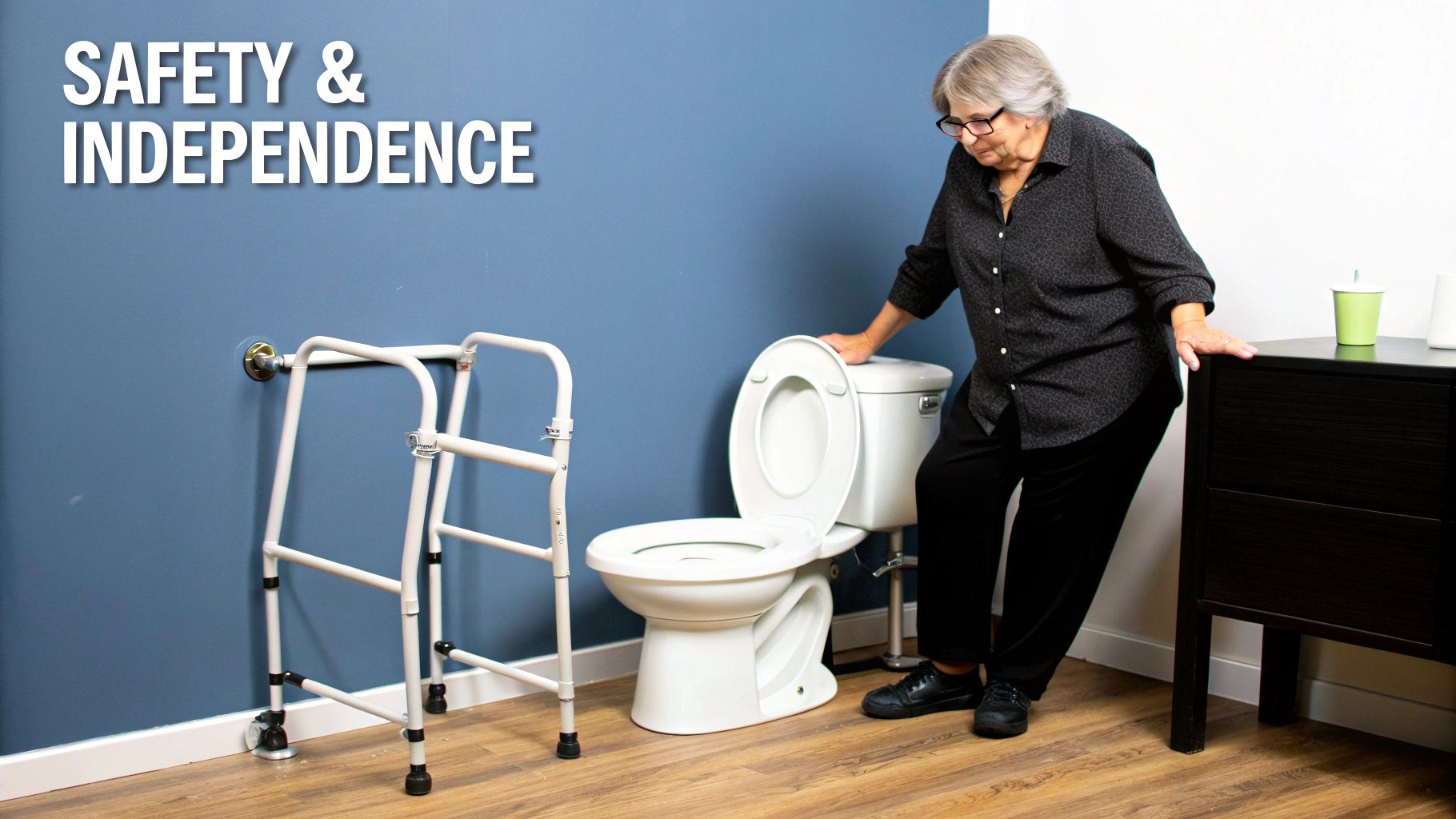
For many older adults, the bathroom can slowly turn into one of the most hazardous rooms in the house. A task that was once effortless can become a daily source of worry, making the simple act of using the toilet a prime time for falls and injuries. This is exactly where toileting aids come in. They aren't a sign of giving up; they're smart, practical tools for staying safe and in control.
Think of them like a sturdy handrail on a tricky set of stairs—they offer support right when and where it's needed most. These additions can make a world of difference, boosting confidence and allowing seniors to continue living independently. By making a risky activity manageable again, toileting aids bring invaluable peace of mind to both the people using them and their families.
Promoting Confidence Through Stability
When you're dealing with mobility issues, stiff joints, or just a bit less strength than you used to have, lowering yourself onto a standard toilet and pushing back up can be genuinely difficult, even painful. This is the very problem that toileting aids are designed to solve.
A raised toilet seat, for instance, shortens the distance you have to travel, which immediately takes a lot of pressure off your hips and knees. A toilet safety frame gives you a solid set of armrests to grip, providing the leverage you need to stand up safely. These aren't just minor conveniences; they are fundamental to preventing accidents. The stability they offer is a game-changer, helping to maintain balance and reduce the very real fear of falling.
Creating a safer bathroom environment is a crucial first step for any family helping a loved one age in place gracefully and securely. It's about adding support, not taking away independence.
The Growing Need for Bathroom Safety
The need for these devices is growing every year. As the global population ages, the market for bathroom and toilet assist devices is booming. Without the right support, simple tasks like getting on and off the toilet become much riskier, leading to falls that are a major cause of injury among seniors.
This guide will walk you through the most common types of toileting aids that can make life safer and easier. Getting to know your options is the first step toward creating a more secure home. And if mobility challenges extend beyond the bathroom, it's worth exploring other solutions, like the ones in our guide on walkers and rollators.
Breaking Down the Different Types of Toileting Aids
Walking into the world of toileting aids can feel a bit daunting at first. With so many options, how do you know what’s right? It helps to think of it like a toolbox—you need the right tool for the job. Each piece of equipment is designed to solve a very specific problem, whether that's taking the strain off weak knees or providing a steady handhold exactly where it's needed.
Figuring out these options is the first step to making a bathroom safer and more comfortable. When you match the right aid to the right challenge, you’re not just improving safety; you’re preserving dignity and empowering a loved one to stay independent at home. Let's look at the most common and effective tools available.
Raised Toilet Seats: Adding Height to Make a Big Difference
For anyone dealing with stiff joints, weak legs, or pain in their hips and knees, a standard toilet can feel incredibly low to the ground. A raised toilet seat, sometimes called a toilet seat riser, is a beautifully simple fix. It’s a sturdy, specially designed seat that fits securely right on top of your existing toilet bowl, adding a few crucial inches of height.
Why does that extra height matter so much? It drastically shortens the distance you have to lower yourself to sit down and stand back up. Think about getting up from a low-slung couch versus a dining room chair—the chair is always easier. A raised seat gives you that exact same mechanical advantage, taking a huge amount of pressure off your joints and muscles.
This simple change makes using the toilet less painful and much safer by reducing the effort involved. It's a go-to solution for anyone recovering from hip or knee surgery or managing long-term conditions like arthritis.
Toilet Safety Frames: The Power of Reliable Armrests
Sometimes, the height of the toilet isn't the main issue. The real problem is having nothing secure to hold onto when sitting down or getting up. That’s where a toilet safety frame comes in. This device is essentially a sturdy set of armrests that fits right around your toilet, giving you a firm, stable surface to grip.
A safety frame provides that critical leverage to push up with your arms, taking some of the load off your legs. That extra support is a game-changer for maintaining balance and stopping the wobbles that can easily lead to a fall. Most frames are adjustable, so you can set the height and width to get a perfect, comfortable fit.
A toileting aid isn't about creating dependency. It's a smart tool that empowers someone to keep using the bathroom safely and confidently, all on their own terms.
Bedside Commodes: When the Bathroom Is Just Too Far
For some, the trip to the bathroom itself is the biggest hurdle, especially in the middle of the night or for those with very limited mobility. A bedside commode is a practical and safe solution. It’s a freestanding toilet chair with a removable bucket that can be placed right in the bedroom, eliminating a risky walk down a dark hallway.
It’s essentially a portable toilet that brings safety and accessibility right to the bedside. Many models are also quite versatile—they can often be used directly over a standard toilet as a raised seat or safety frame. This flexibility makes them a smart, multi-purpose investment. When getting to the bathroom is the primary concern, a commode is one of the most practical toileting aids for the elderly you can find. You can explore different types of commodes and other safety equipment in our online product catalog.
Grab Bars: Strategically Placed Stability
While a safety frame gives you support right at the toilet, grab bars provide stability for the entire bathroom. These are strong bars mounted securely to the wall, usually next to the toilet or along the path leading to it. They offer a fixed, reliable handhold to steady yourself when moving from a walker to the toilet or just navigating the space.
One thing about grab bars is non-negotiable: proper installation. They absolutely must be anchored into wall studs to safely support a person’s full weight. When they’re installed correctly, they become an indispensable safety feature, giving everyone peace of mind and preventing dangerous slips in a room full of hard, slippery surfaces.
The demand for these solutions is growing fast. The global market for toilet aids for the elderly is a reflection of our aging population, which underscores just how critical it is to make our homes safer.
Bidet Seats: A Boost for Hygiene and Independence
As we age, tasks that once were simple, like personal cleaning, can become challenging due to limited dexterity or reach. A bidet seat can make a world of difference. It replaces your regular toilet seat and uses a gentle stream of water for cleaning, eliminating most of the physical twisting and reaching that traditional hygiene requires.
This does more than just improve cleanliness—it restores a profound sense of dignity and self-sufficiency. For someone with arthritis in their hands or a shoulder injury, a bidet seat can turn a difficult chore into something simple and hands-free, promoting better personal care and greater independence.
How to Select and Size the Right Toileting Aid
Choosing the right toileting aid isn't about just grabbing something off the shelf. It’s about finding the perfect fit for a specific person in their specific home. A poorly fitted device can actually be more dangerous than having no device at all. Getting the size and style just right is what makes the difference between a hazard and a reliable source of support.
The whole point is to create a setup that feels both secure and natural. That means you have to consider everything—the user's height and weight, the shape of the toilet bowl, even the layout of the bathroom itself. Taking a few simple measurements and thinking through the options beforehand will pay off big time.
Measuring for a Perfect Fit
Correct sizing is the absolute bedrock of bathroom safety. If an aid is the wrong size, it can cause strain or instability, which completely defeats the purpose. For a raised toilet seat or commode, getting the height right is everything.
So, what's the magic number? The ideal seat height is one that lets the user sit with their feet flat on the floor, with both their hips and knees at a comfortable 90-degree angle. This "sit-to-stand" position takes the pressure off joints and creates a solid, stable base for getting up and down.
To figure this out, have the person sit in a dining room chair or another sturdy chair where they can already achieve this 90-degree angle. Then, simply measure from the floor to the back of their thigh. That measurement is your target seat height.
This flowchart is a great starting point for figuring out what you need. It helps you focus on the main problem: is it an issue of needing leverage, or needing more height?
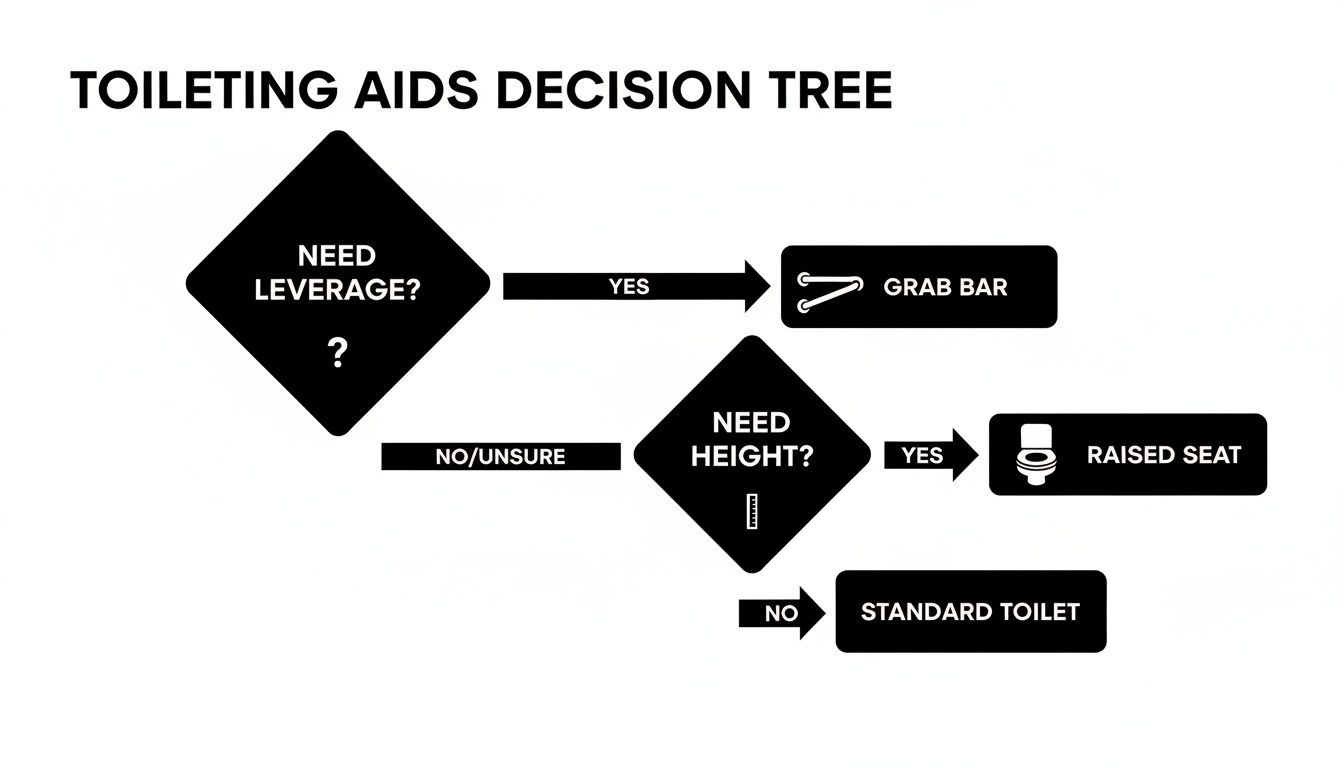
As you can see, figuring out whether the core challenge is needing something to push up from versus needing to shorten the distance to sit down is the quickest way to narrow down the options.
Key Factors to Consider Before You Choose
Height is a big piece of the puzzle, but a few other details are just as important. Doing a little homework now can save you the headache of returns later and ensure the equipment is a perfect match.
Before you make a final call, run through this quick checklist:
- Weight Capacity: Every piece of equipment has a weight limit. This is non-negotiable. Always check that the aid can safely support the user, because exceeding the capacity can lead to equipment failure and serious injury.
- Toilet Bowl Shape: Not all toilets are created equal. They generally come in two main shapes: round or elongated. Many raised seats and frames are designed specifically for one or the other, so take a look at your toilet and make sure the product you choose is compatible.
- Material and Comfort: Most seats are either hard plastic or padded vinyl. Hard plastic is incredibly durable and a breeze to clean. Padded seats, on the other hand, can provide extra comfort, which is a big deal for anyone with sensitive skin or who might need to sit for longer.
- Bathroom Layout: Take a good look at the space you're working with. Is there enough room on either side of the toilet for a freestanding safety frame? If you're thinking about grab bars, are the walls sturdy enough to mount them securely into studs? Where you put the device is just as critical as the device itself. For those who need more comprehensive mobility support, it can also be useful to explore options like the ones in our guide to wheelchair rentals and sales.
A well-chosen toileting aid should feel like a natural extension of the bathroom, providing support so seamlessly that the user can maintain their routine with confidence and dignity.
By thinking through these factors, you can move forward confidently and choose an aid that’s not just safe and functional, but truly tailored to the person who will be using it.
Best Practices For Safe Installation And Maintenance
You’ve picked out the right toileting aid—that’s a huge step. But the job isn't done until it's installed correctly. A wobbly or loose piece of equipment can actually be more dangerous than having no help at all, giving a false sense of security that could easily lead to a fall.
Think of proper installation as the foundation for safe, reliable support. A few simple checks and a consistent cleaning routine will give you the peace of mind that the equipment is secure, sanitary, and ready to do its job every single time.
Securing Your Equipment for a Wobble-Free Fit
For aids like raised toilet seats or safety frames that clamp onto the bowl, the goal is simple: zero wobble. Most are designed to be installed without any tools. They usually have adjustable brackets or knobs that you just tighten by hand until they grip the porcelain firmly.
Before anyone uses it, give it a good test. Push down on it. Nudge it from the side. Try to make it shift. If you feel even the slightest bit of movement, it’s not secure enough. Go back to the instructions and tighten everything down again until it feels like part of the toilet itself. This quick, simple check is one of the most important things you can do to prevent an accident.
Why Professional Installation Is a Must for Grab Bars
While many aids are straightforward, grab bars are a different story entirely. These aren’t just for a little extra balance—they have to be strong enough to hold a person’s full body weight, especially if they start to slip. This is a serious safety issue.
Screwing a grab bar into plain drywall is a recipe for disaster. Drywall is just not strong enough to hold under that kind of pressure.
For this reason, we strongly recommend professional installation for all grab bars.
A professional knows how to find the wooden studs inside your walls and will anchor the bar directly into that solid structure. This is the only way to guarantee it provides the life-saving support it was designed for. An improperly mounted grab bar is a major hazard.
Bathrooms are a high-risk area for falls, and these aids are proven to make a real difference.
Creating a Routine for Cleaning and Maintenance
Beyond the initial setup, a little upkeep goes a long way in keeping the equipment hygienic and safe for the long haul. A simple weekly routine is all it takes.
- Hygienic Cleaning: Wipe down all the surfaces of the aid regularly. A soft cloth with a gentle, non-abrasive disinfectant cleaner is perfect. Harsh chemicals or scrub pads can scratch the finish, creating tiny crevices where germs can collect.
- Regular Inspections: Once a week, just give everything a quick once-over. Check for any cracks in the plastic, rust spots on metal parts, or worn-out spots on the padding.
- Tighten All Fittings: While you're inspecting it, re-check all the clamps and screws. With daily use, things can sometimes loosen up over time. Making sure everything stays snug is a critical safety habit.
These simple habits will ensure your equipment remains a reliable and sanitary source of support. And if you only need something for a short period, you can always learn more about our options for medical equipment rentals in St. Petersburg.
Guidance For Caregivers Introducing a Toileting Aid
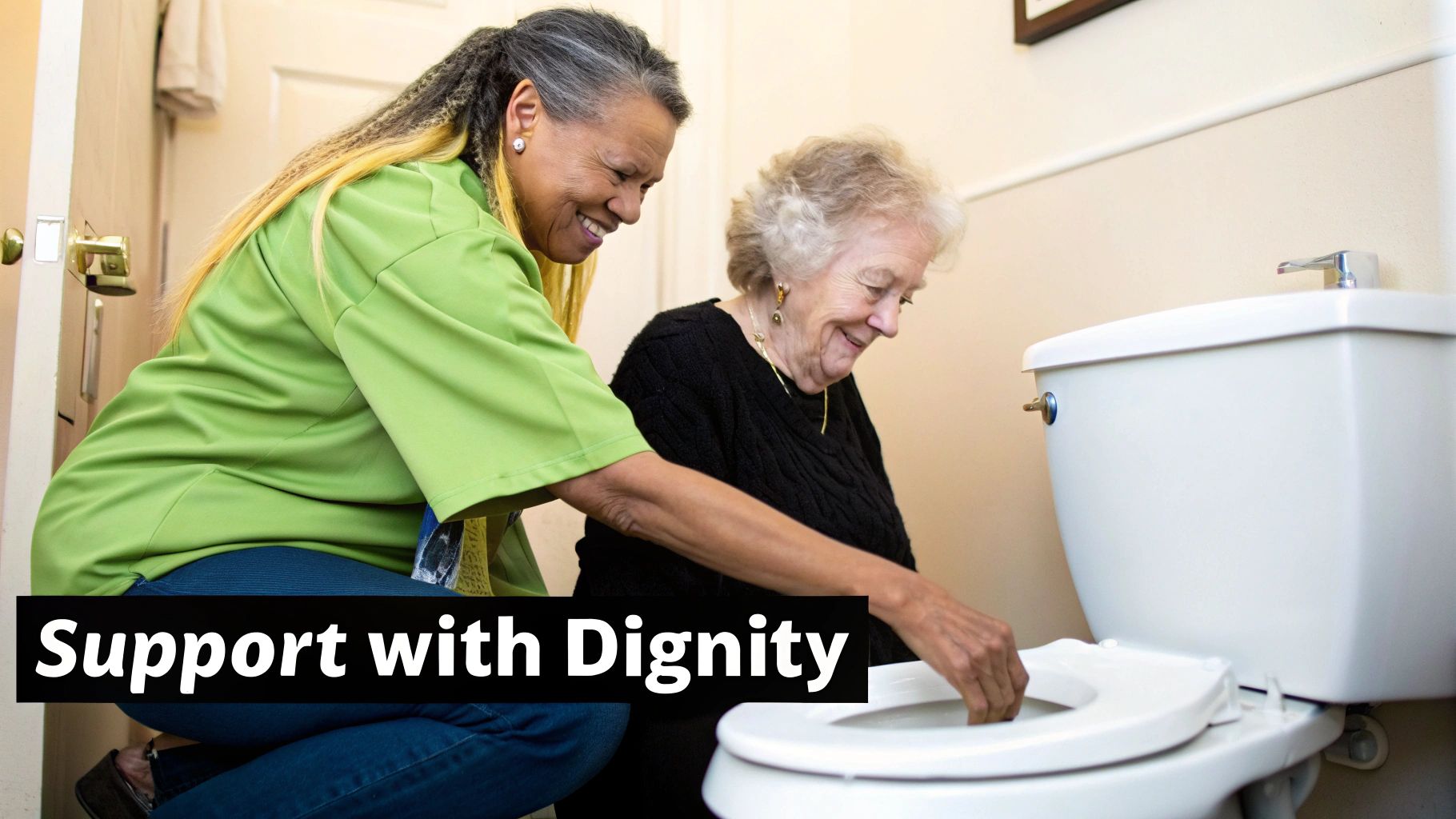
Bringing up the need for a toileting aid is, without a doubt, a delicate conversation. If you're a family caregiver, you already know that this talk requires a lot of sensitivity and tact. The whole point is to approach it with dignity and respect, so your loved one feels supported, not diminished.
How you frame the device is everything. Instead of letting it seem like a symbol of lost abilities, it’s much more powerful to introduce it as a smart tool for staying independent and safe right at home.
Framing the Conversation with Dignity
The words you choose matter more than you might think. Try to focus on the benefits that empower them directly—things like lowering the risk of a fall, taking the strain off sore hips and knees, or just making their daily routine that much easier.
Emphasize that these aids are proactive safety measures, not all that different from wearing a seatbelt. They aren't about weakness; they're about being smart and staying in control of your own life.
A toileting aid is a tool for empowerment. It is designed to help someone continue their daily routines safely and independently, preserving their dignity and confidence at home.
When you highlight how a raised seat or a safety frame helps them remain self-sufficient, you change the entire conversation. It’s no longer about what they might be losing, but about everything they are fighting to preserve. This creates a supportive atmosphere where safety becomes a team goal.
Providing Physical Assistance with Transfers
Toileting aids don't just help the person using them; they also make a huge difference for the caregiver. Helping someone get on and off the toilet can be physically draining and even risky if you don't have the right equipment.
A toilet safety frame, for example, gives your loved one a sturdy place to put their hands and use their own strength to stand up. That means you can focus on guiding and steadying them instead of trying to lift their full weight.
Here are a few practical tips that can help when assisting:
- Communicate Clearly: Before you move, walk them through what you’re about to do, step-by-step. It eliminates surprises and lets them participate in the movement.
- Encourage Their Participation: Prompt them to push up from the armrests of the commode or frame. The more they can do themselves, the more they maintain their strength and confidence.
- Use Proper Body Mechanics: Remember to protect your own body. Bend at your knees, not your back, and keep your feet apart for a solid, balanced stance while you help.
Navigating Financial Questions
Once you decide on an aid, the next question is almost always about cost. Many families want to know about payment options for items like bedside commodes or raised toilet seats.
We believe in making this part of the process as simple as possible. For that reason, we do not accept insurance. This direct approach allows us to give you clear, transparent pricing for either renting or purchasing the equipment you need. You'll know the exact cost upfront, so you can make a sound financial decision for your family without long waits or complex paperwork.
Getting expert advice from a local supplier like us can make the entire transition smoother and help you feel more prepared for the journey ahead.
Your Local Solution For Toileting Aids In Pinellas County
Trying to figure out home medical equipment can feel like a maze, but you don't have to go through it alone. When it comes to choosing the right toileting aids for an older adult, getting it right is crucial, and having a local expert to guide you can make a world of difference. For families here in St. Petersburg, Clearwater, and across Pinellas County, that trusted partner is just around the corner.
With over 20 years of dedicated service right here in our community, our team knows what it takes to find the perfect solution. We believe in personalized, one-on-one guidance, taking the time to truly understand your situation so you walk away with equipment that’s safe, reliable, and fitted correctly. You can learn more about our commitment by exploring our company's history and mission.
Flexible Options for Every Situation
We get it—every family’s needs are different. If you're dealing with a short-term situation like recovery from surgery, our rental program is a smart, cost-effective way to get the support you need without buying. For anyone planning to age in place for the long haul, we offer a wide selection of top-quality products for purchase.
The best part? You can skip the endless online searching and long shipping delays. Most of our essential toileting aids are in-stock and ready for you to pick up the very same day.
Finding the right equipment should be a straightforward, supportive process. Our job is to give you clear answers and practical solutions so you can focus on what really matters—the well-being of your loved one.
Making Your Decision Simple
To keep things as direct and transparent as possible, we do not take insurance. This might sound unusual, but it allows us to give you clear, upfront pricing without frustrating delays or red tape. You’ll know the exact cost from the start, which helps you make the best financial choice for your family.
Don’t leave safety and comfort to chance. We invite you to give our store a call or, even better, stop by and speak with one of our experts. Let us help you find the ideal toileting aids to restore independence and give everyone peace of mind.
Answering Your Questions About Toileting Aids
It's completely normal to have a few more questions pop up as you get ready to choose a toileting aid. In fact, thinking through these details is a crucial part of making a choice you'll feel good about—one that truly helps your loved one.
Let's walk through some of the most common questions we hear from families just like yours. Getting these answers will help you feel confident you're on the right track.
Should I Rent or Buy a Toileting Aid?
This is often the first thing people ask, and the answer really comes down to your unique situation. Think about how long you'll need the equipment.
Renting is a fantastic, budget-friendly option for short-term needs. If you're looking at a recovery period after surgery or an injury, renting lets you get the right equipment for just the time you need it, with no long-term strings attached. On the other hand, if you're planning for long-term aging in place, buying the equipment usually makes more financial sense.
Do You Take Insurance For Toileting Aids?
Navigating payment options can sometimes be tricky. To keep things simple and transparent for our customers, we do not take insurance. This approach allows us to provide clear, upfront pricing on all our equipment for either purchase or rental. You'll know exactly what to expect without any hidden costs or frustrating delays.
How Do I Properly Clean a Bedside Commode?
Keeping a bedside commode clean is straightforward, but it’s absolutely vital for health, comfort, and dignity. A simple, consistent cleaning routine makes all the difference in preventing odors and maintaining a sanitary space.
A clean toileting aid is a safe toileting aid. Regular, simple cleaning routines are crucial for preventing infections and ensuring the equipment remains a reliable source of support.
Here’s a good routine to follow:
- The commode pail should be emptied into the toilet, rinsed thoroughly, and cleaned with a disinfectant solution after every single use.
- Wipe down the frame, seat, and lid daily with a disinfectant cleaner or wipe.
- Stick to non-abrasive cleaners to avoid scratching or damaging the surfaces.
- Make sure every part is completely dry before it’s used again.
At Affinity Home Medical Equipment, our team is here to provide both the products and the practical advice you need to make home safer and more comfortable. You can see our full selection of toileting aids and other essential medical equipment by visiting us at https://affinityhomemedicalequipment.com.
Share This Article

Written by : lori@netcodesign.com
Follow Us
Latest Articles

October 13, 2026

October 13, 2026

October 13, 2026
