
What Is a Bedside Commode A Caregiver’s Complete Guide

A bedside commode is one of the simplest, most effective [...]
A bedside commode is one of the simplest, most effective pieces of safety equipment you can bring into a home. It's a portable, stand-alone toilet that you can place right next to the bed, providing a safe and accessible option for anyone who struggles to make it to the bathroom. This is especially crucial at night, when the risk of a fall is highest.
What Is a Bedside Commode and Who Benefits Most
Think of it this way: a bedside commode brings the toilet to the user, not the other way around. It’s essentially a sturdy, stationary chair fitted with a toilet seat and a removable collection pail underneath. Its purpose is straightforward but profound—to give someone with limited mobility a secure, immediate, and private place to go, drastically cutting down the risk of a fall or accident.
This simple device is a true cornerstone of modern home care. Its importance is reflected in the market numbers; the bedside commode segment makes up about 40% of the entire medical commode market. That market was valued at a massive USD 815.5 million in 2022 and is expected to climb past USD 1 billion by 2033, largely because it's such an affordable and practical solution for home healthcare.
Who Needs This Essential Aid
So, who is a bedside commode actually for? It’s not just for one specific condition. It's a versatile aid for anyone facing a mobility challenge, whether that challenge is temporary or a long-term reality.
Caregivers often find that a bedside commode provides a vital layer of safety and independence for their loved ones. Some of the most common users who see a real improvement in their quality of life include:
- Seniors Aging in Place: For those with unsteady balance, weakness, or urgency, a commode reduces fall risk during risky nighttime bathroom trips.
- Post-Surgery Patients: Individuals with restricted mobility during recovery can use a commode to avoid violating movement restrictions.
- People with Disabilities: For those with chronic conditions like MS or Arthritis, it provides a predictable, accessible option when walking is difficult.
- Frail Individuals: Those with general weakness or deconditioning can conserve energy and make toileting less of an ordeal.
Ultimately, a commode can be a game-changer for anyone whose walk to the bathroom has become a source of anxiety or a physical challenge.
For instance, many individuals find that managing personal hygiene after a major health event is incredibly difficult. For these patients, a commode is a key part of their after stroke care plan, giving them a much-needed sense of security while helping them conserve precious energy.
The bottom line is that a bedside commode is far more than a simple convenience—it's a critical safety device. It gives the user a renewed sense of autonomy and offers the caregiver priceless peace of mind.
When you're setting up a safe and comfortable space at home, it's helpful to see how different pieces of equipment work together. A bedside commode is often used right alongside a hospital bed. If you're exploring that option, you might find our guide on how to choose hospital beds for home use helpful.
Understanding the Different Types of Bedside Commodes
When you start looking at bedside commodes, you’ll quickly realize there isn’t a one-size-fits-all solution. Think of it like buying a car—a sports car is great for some, but you need a minivan for a big family. Choosing the right commode is all about matching the features to the person who will be using it, and that choice can dramatically improve their safety and daily life.
The folks who benefit most from a commode are often those looking for a safer way to manage their toileting needs without a long, risky walk to the bathroom.
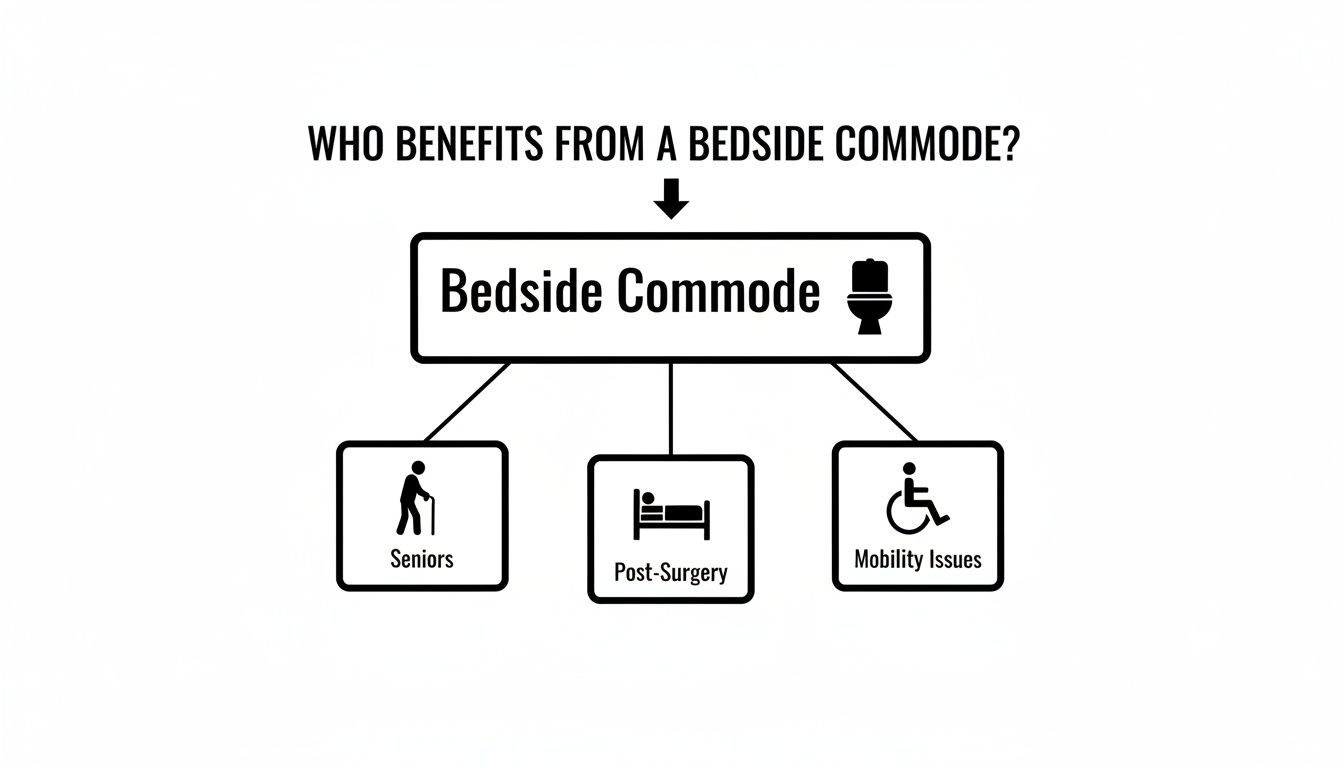
As you can see, this isn't just for one type of situation. Whether it’s for an older adult aging in place or someone recovering from surgery, each commode style is built to solve specific challenges. Let’s break down the main options you'll encounter.
Standard Bedside Commodes
The most straightforward option is the standard commode. It’s a simple, freestanding frame with a toilet seat, a lid, and a removable bucket. No bells and whistles here, just pure function.
- Best For: Someone who just needs a basic, stable toilet right by the bed.
- Key Advantage: It's incredibly simple and reliable. These are usually lightweight enough to move for cleaning but have a sturdy base that feels secure during use.
Versatile 3-In-1 Commodes
For a bit more flexibility, the 3-in-1 commode (sometimes called an all-in-one) is a popular choice. It’s the Swiss Army knife of commodes because it can adapt as a person's needs change.
It starts as a standard bedside commode. But if you remove the bucket, you can place the frame directly over your existing toilet. It then serves two functions at once: a toilet safety frame with armrests for support and a raised toilet seat that makes sitting and standing much easier.
This adaptability makes the 3-in-1 commode a fantastic long-term investment. It can go from being a bedside necessity to a permanent bathroom safety aid.
Drop-Arm Commodes
If the person using the commode is transferring from a wheelchair, a drop-arm commode is essential. The armrests on these models are designed to drop down or swing out of the way with the push of a button.
This creates a clear, open path from the side, allowing for a much safer and easier slide-transfer from the wheelchair to the commode. It significantly reduces the strain and risk for both the user and any caregiver assisting them. It’s also important to consider a person’s overall mobility; you can learn more about other aids like the walkers and rollators we offer that work well alongside a commode.
Heavy-Duty Bariatric Commodes
Finally, for larger individuals, bariatric commodes provide the necessary support and safety. These are built with reinforced steel frames, wider seats, and much higher weight capacities, often rated for 400 to over 1,000 pounds.
They’re designed to eliminate any worry about equipment stability, providing a secure and comfortable option. The need for specialized equipment like this is growing; the market for all bathroom assist devices was valued at USD 4.88 billion in 2022 and is expected to hit USD 6.48 billion by 2030. You can discover more about this market growth on The Business Research Company.
Comparing Common Bedside Commode Features
To make it even clearer, a quick comparison can help you see which type might be the best fit.
- Standard: Features a basic, sturdy frame with a pail. It is ideal for a simple, no-fuss bedside toileting solution for someone with stable mobility.
- 3-in-1: Can be used bedside, over a toilet as a raised seat, or as a safety frame. This is perfect for evolving needs, such as post-surgery recovery that transitions to long-term bathroom support.
- Drop-Arm: Armrests lower or swing away, which is necessary for individuals transferring from a wheelchair who need clear side access.
- Bariatric: Has a reinforced frame, wide seat, and high weight capacity. It's designed for larger users who require a more robust and stable commode for safety.
Looking at the features side-by-side really helps clarify the primary purpose of each model. Your goal is to find the one that best solves the specific mobility or safety challenge at hand.
How to Select the Right Bedside Commode
When you’re looking for a bedside commode, it’s easy to get lost in the different models and features. But choosing the right one isn't just about picking something from a catalog. It's about finding a piece of equipment that provides genuine safety, comfort, and dignity for the person using it. Getting this right makes a huge difference in their daily life.
Before we jump into the details, let's clear up a common question about cost. You don't need a prescription to buy or rent a bedside commode. We keep our process simple and direct, which means we do not take insurance. This straightforward approach allows you to get the equipment you need right away, without waiting on approvals or dealing with complicated paperwork.
Start With The Non-Negotiables
When it comes to safety, two things are absolutely essential: weight capacity and seat height. These aren't just suggestions; they are the foundation for keeping a person stable and secure.
-
Weight Capacity: Every commode is rated to hold a specific maximum weight. Most standard models can handle up to 250-300 pounds, but you must confirm this for the specific product you’re considering. If the user is close to or over that limit, you need to move up to a heavy-duty bariatric commode. It’s the only safe choice.
-
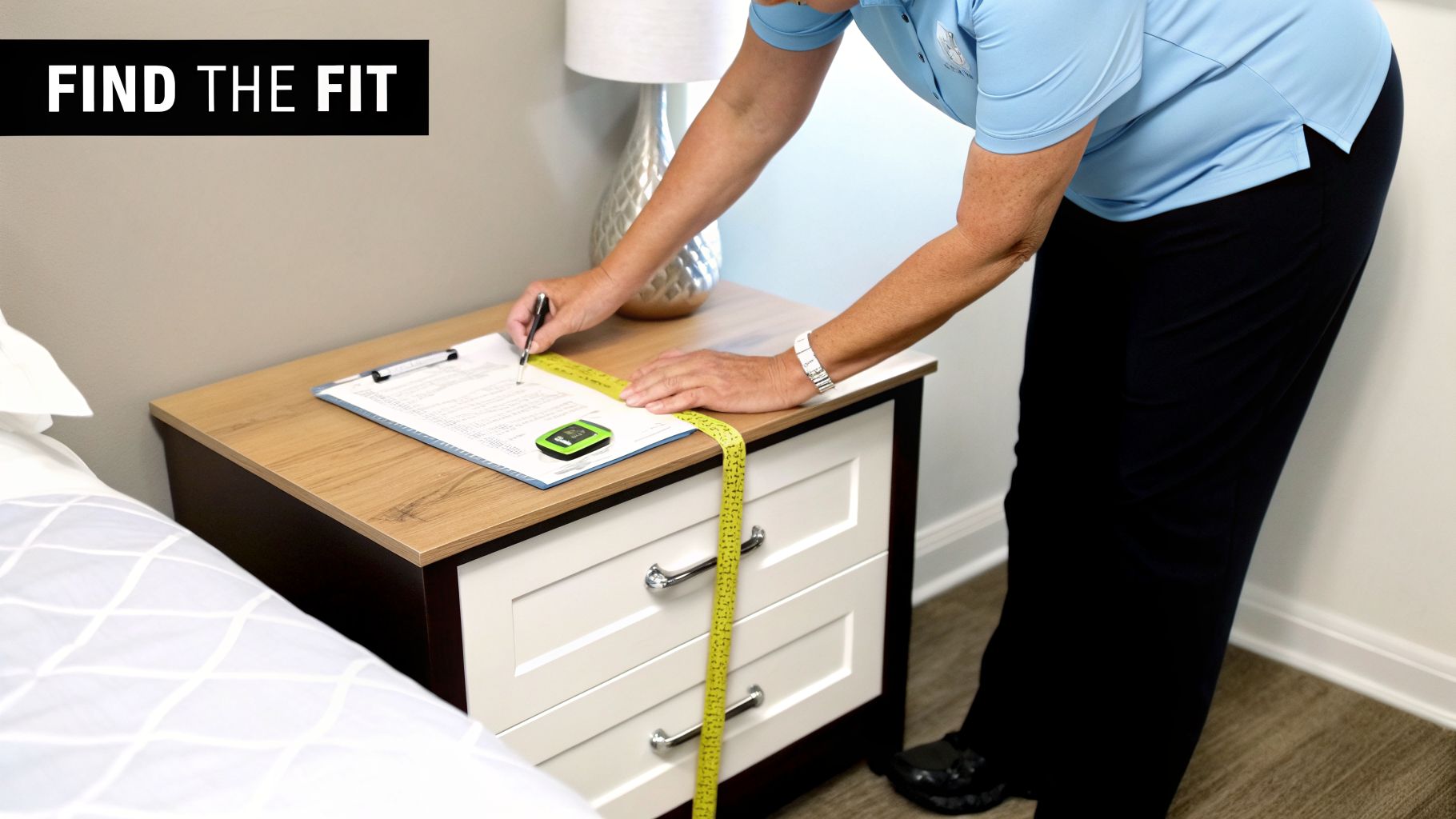
Seat Height: For the user to be stable, their feet must be flat on the floor when they are seated. It's an easy measurement to take. Just have them sit in a kitchen chair—or any chair where their feet rest flat—and measure from the floor up to the bend behind their knee. The commode seat you choose must be adjustable to that height.
Key Features to Consider
Once you’ve nailed down those critical safety points, you can start looking at the features that improve comfort and daily use. These are the details that turn a functional item into a truly helpful one.
A well-chosen commode should feel like a natural and secure part of the room, not a clunky obstacle. The right features make all the difference.
Look for a frame with good adjustability. This not only lets you set the perfect seat height but also helps you level the commode on slightly uneven floors. The material matters, too. Steel frames are incredibly durable and are the go-to for bariatric models, while lighter aluminum frames are much easier to move around for cleaning. Don't forget to measure the space where the commode will live to make sure it fits without blocking a walkway.
Here’s a simple checklist to keep you on track:
- Confirm Weight Capacity: Does it safely support the user’s weight with a bit of a buffer?
- Measure for Seat Height: Can the seat be adjusted so their feet are flat on the floor?
- Assess Room Space: Is there enough room next to the bed for the commode and for someone to access it easily?
- Evaluate Material: Do you need the strength of steel or the portability of aluminum?
- Consider Armrest Style: Are drop-down arms necessary for easier transfers from a wheelchair?
Working through these questions will give you the confidence that you’re choosing a commode that is safe, functional, and perfectly suited for your needs. You can see many of these options in our comprehensive online shop.
Essential Commode Safety and Hygiene Routines
Once you've picked out the right commode, the real work begins. Setting up consistent safety and hygiene routines is what makes this piece of equipment a genuine help, not a hassle. It's about more than just cleaning—it’s about preserving dignity, preventing infections, and making sure the person using it feels safe and comfortable.
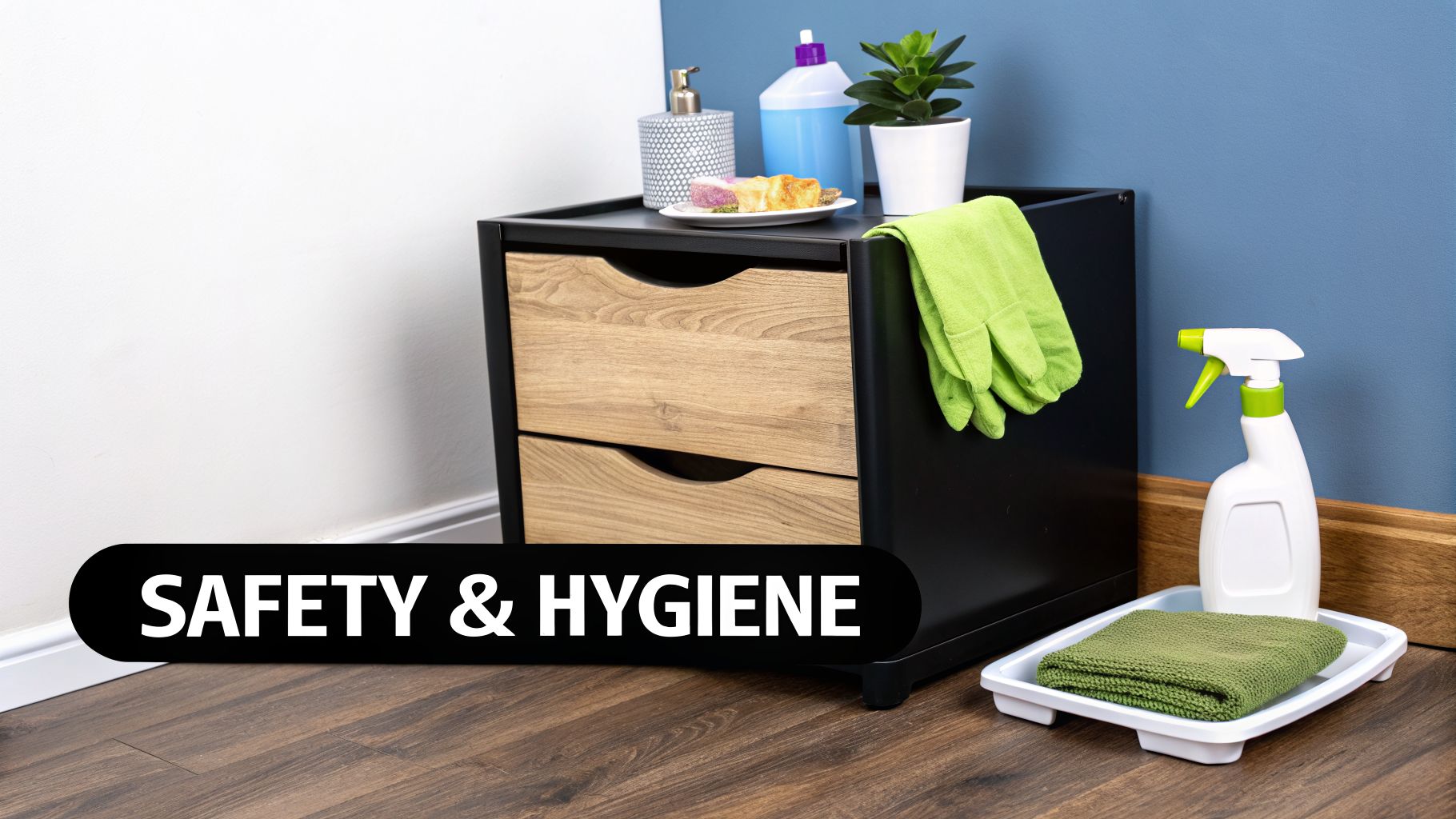
Before we get into the step-by-step, it's incredibly helpful for caregivers to get a handle on understanding the fundamental difference between cleaning and disinfecting. Knowing this difference is crucial for stopping germs in their tracks.
Creating A Safe Commode Environment
Safety really starts with where you put the commode. You need to find a spot on a flat, level surface so it won’t wobble or tip. Just as important, make sure the path from the bed to the commode is totally clear. Rugs, electrical cords, and stray furniture can become serious trip hazards, especially in the middle of the night.
After you’ve positioned it, give it a little shake. Make sure any locks on the legs or wheels are fully engaged. It’s a tiny step that makes a huge difference, creating a stable base that won't slide when someone is sitting down or trying to stand up.
Think of the area around the commode as a "safe zone." Keeping it clear and ensuring the commode is locked firmly in place gives the user the confidence they need to manage it safely.
When you're helping someone transfer, guide them to use the armrests for support. It's a simple coaching cue that helps them stay balanced and drastically reduces the chance of a fall.
A Simple Hygiene Routine For Daily Care
Let’s be honest: consistent cleaning is non-negotiable. It's the only way to manage odors and stop harmful bacteria from growing. The best way to tackle this is with a simple, repeatable process that just becomes second nature.
Here’s a straightforward guide for emptying and cleaning the commode pail:
- Gather Your Supplies: Before you do anything, get your disposable gloves, disinfectant cleaner, and have the toilet ready for disposal.
- Empty Promptly: The pail should be emptied as soon as you can after each use. This is the single best thing you can do for odor control.
- Rinse Thoroughly: After dumping the contents into a toilet, give the pail a good rinse with warm water to get rid of any residue.
- Clean and Sanitize: Now, wipe down the inside and outside of the pail, plus the commode seat and frame, with a disinfectant or a basic soap and water solution.
- Dry Completely: Let all the parts air dry completely before you put the commode back together. Trapped moisture is a breeding ground for bacteria.
Sticking to this routine helps the bedside commode remain a dignified and hygienic solution. The need for these devices is growing fast—the global bedside commodes market was valued at USD 10.98 billion by 2025 and is expected to keep climbing. It's a clear sign of the worldwide demand for accessible home care options.
Deciding Between Buying and Renting a Commode
Once you’ve settled on needing a bedside commode, the next practical question is a big one: should you buy it outright or just rent one? There's no single right answer here. The best choice really comes down to your unique situation and how long you expect to need the equipment.
Figuring this out upfront can save you a fair bit of money and hassle.
When Renting Makes The Most Sense
For a lot of people, renting is the perfect, stress-free solution. Think of it as a short-term tool for a temporary problem. If a loved one is just recovering from surgery and will only need that extra support for a few weeks or months, renting is a no-brainer.
It’s also a fantastic option when you have a relative with mobility challenges coming to visit. You can ensure they have a safe and comfortable stay without you having to buy and store a permanent piece of equipment.
Consider renting if you're facing one of these common scenarios:
- Post-Surgery Recovery: This is ideal for someone whose mobility is limited for a set amount of time, like after a hip or knee replacement.
- Visiting Family: Easily accommodate a guest who depends on a commode in their own home.
- A Trial Period: If you’re not quite sure which model or style is the best fit, renting lets you "try before you buy."
Renting means you get a clean, professionally sanitized piece of equipment dropped off, and when you're done, it's simply taken away. No storage, no fuss. If you’re in the St. Petersburg area, you can easily check out options for local medical equipment rentals that work with your timeline.
When Buying Is The Smarter Choice
On the flip side, buying a commode makes far more sense when you're dealing with a long-term or permanent need. If the person using it has a chronic illness, a lasting disability, or is navigating the natural mobility changes that come with aging, owning the equipment is simply more practical.
For ongoing needs, purchasing a bedside commode provides a sense of stability and ownership. It becomes a permanent part of the home's safety infrastructure, always ready and available.
When the need is indefinite, buying is the clear winner. The cost of renting will eventually add up and surpass the purchase price, making ownership the more economical decision in the long run. It also means the commode can be permanently adjusted to the user’s exact height and comfort needs, without having to reconfigure it every time.
Your Bedside Commode Questions, Answered
When you're caring for a loved one, a lot of practical questions come up. You want to make sure you're doing everything right, especially when it comes to safety and hygiene. Let's walk through some of the most common questions we hear from caregivers about bedside commodes.
How Can I Keep a Bedside Commode From Smelling
This is probably the number one concern we hear, but trust me, managing odors is simpler than you might imagine. The absolute best thing you can do is to have a consistent, immediate cleaning routine. As soon as the commode is used, it needs to be emptied and cleaned.
After you've emptied the pail, a quick rinse with a mix of water and white vinegar, or a dedicated commode cleaning spray, will neutralize almost any lingering smell. For some extra peace of mind, you can add a little bit of water or a special deodorizing liquid to the bottom of the clean pail. Many caregivers also swear by disposable commode liners—they contain everything and make cleanup incredibly fast and sanitary.
Can a Bedside Commode Go Over a Regular Toilet
Yes, absolutely! This is actually one of the handiest features of what we call a "3-in-1" commode. They're specifically designed to be versatile.
All you have to do is take the bucket out of the commode frame. Then, you can set the entire frame right over your existing toilet. When you use it this way, it pulls double duty for safety:
- It works as a sturdy toilet safety frame, giving the user solid armrests to hold onto when sitting down and getting back up.
- It also acts as a raised toilet seat, which means the person doesn't have to lower themselves as far. This is a big deal for anyone with a bad back or sore knees.
This flexibility makes 3-in-1 models a really smart investment, since a person’s needs can easily change over time.
We often get asked about prescriptions and insurance. The good news is you generally don't need a prescription to buy or rent a bedside commode. We keep things simple and direct—we do not take insurance for rentals or purchases. This lets you get the equipment you need right away without having to deal with long approval processes.
How Do I Know What Weight Capacity to Get
This is non-negotiable. Choosing the right weight capacity is crucial for safety. Your standard bedside commodes will typically hold up to 250-300 pounds. But you always need to double-check the specific weight limit on any model you're considering.
If the person using it is close to that limit or weighs more, you must get a bariatric commode. These are built differently, with reinforced steel, wider seats, and heavy-duty construction to provide the stability needed for larger individuals. Bariatric models are designed to support anywhere from 400 to over 1,000 pounds. Always, always choose a commode with a weight capacity that is comfortably above the user's weight to eliminate any risk of it breaking.
If you have more questions, our frequently asked questions page is another great resource.
For over 20 years, Affinity Home Medical Equipment has been the local partner for families throughout St. Petersburg and Pinellas County. Whether you need to rent for a short time or buy for the long term, our team knows this equipment inside and out. We're here to help you find the perfect solution to make home safer and more comfortable.
Find the perfect equipment for your needs at Affinity Home Medical Equipment.
Share This Article

Written by : lori@netcodesign.com
Follow Us
Latest Articles

October 13, 2026

October 13, 2026

October 13, 2026
