
What Is A Gait Belt Used For: Essential Safety And Transfers

A gait belt is an incredibly useful tool that helps [...]
A gait belt is an incredibly useful tool that helps a caregiver safely move or walk with someone who struggles with mobility. The best way to think of it is as a set of sturdy handles for the person, giving the caregiver a secure place to hold on. This simple device prevents falls and dramatically reduces the risk of injury for everyone involved.
What Is A Gait Belt And How Does It Work
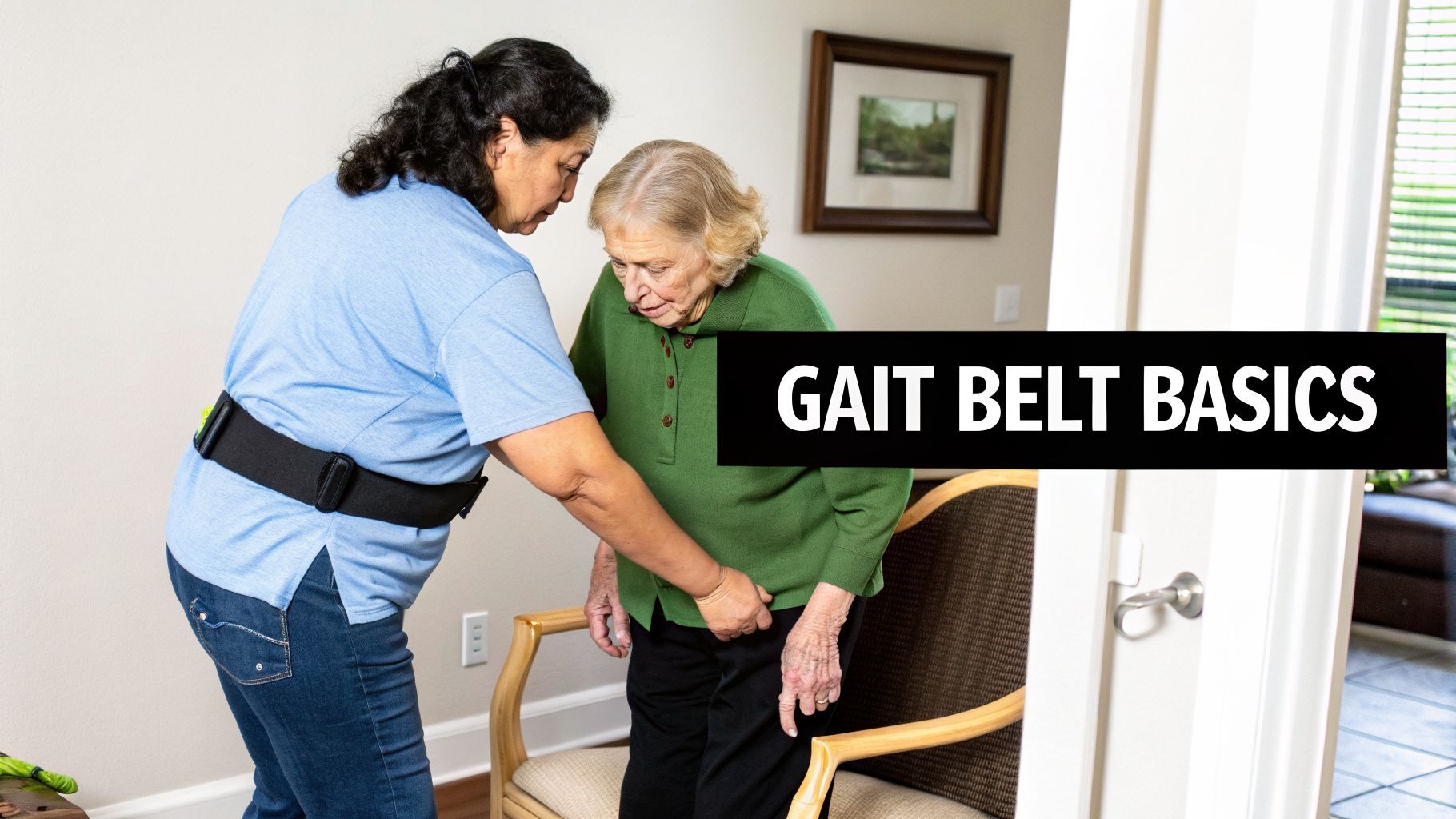
At its core, a gait belt is a simple but powerful safety device. It’s usually a strap made of durable cotton or nylon with a secure metal buckle that fastens around a person’s waist.
Its main job is to give a caregiver a reliable point of contact. This completely eliminates the need to grab someone by their arms, shoulders, or clothing—all of which are unstable and can be unsafe or even cause bruising. This one little change makes a world of difference during transfers and walking.
The Two Primary Functions
Gait belts are staples in professional care services and home care for good reason. They mainly serve two critical functions:
-
Assisting with Transfers: Everyday movements like getting from a bed to a wheelchair, rising from a chair, or getting into a car can be high-risk moments for anyone with limited mobility. A gait belt allows the caregiver to guide and support the person’s body in a much more controlled and stable way.
-
Providing Stability During Ambulation: When someone is unsteady on their feet, a caregiver can lightly hold the gait belt from behind while walking with them. This offers constant, gentle support and lets the caregiver instantly stabilize the person if they start to stumble or lose their balance.
This simple device is just as much about protecting the caregiver as it is the person they're helping. By using proper body mechanics and the belt as an anchor, caregivers can avoid the back strain that so often comes from awkward lifting.
Ultimately, a gait belt helps people move with greater confidence and safety. It’s an essential tool for seniors, patients recovering from surgery, and anyone dealing with balance disorders.
Who Truly Needs A Gait Belt
A gait belt isn't for just one type of person; it’s a remarkably versatile tool for anyone who needs a bit of extra stability, and for the person helping them. Think of it as a secure handle that creates a safe connection between a caregiver and the person they're supporting. Its value shines in a huge range of situations, making it a staple in homes and healthcare facilities alike.
Most often, you'll see them used with older adults who are dealing with the unsteadiness or weakness that can come with age. For them, a simple act like getting out of a chair can feel like a major challenge. A gait belt provides that little bit of extra security to do it safely, which can make all the difference in their confidence and independence.
Key Beneficiaries And Scenarios
It’s the same story for patients recovering from big surgeries, like a hip replacement. During physical therapy, when balance is still shaky, the belt gives a therapist or family member a safe and secure way to help with those crucial first steps. It's also a go-to for anyone managing a long-term condition that impacts their balance and muscle control.
Here are a few common scenarios where a gait belt is a game-changer:
- Stroke Survivors: A huge part of recovery is regaining mobility and balance. A gait belt offers reliable support during therapy sessions and everyday movements.
- Parkinson's Disease: People with Parkinson's often struggle with their gait and posture, which puts them at a higher risk of falling. The belt provides a steadying hand.
- General Weakness: Anyone who has lost muscle tone after a long illness or hospital stay can lean on a gait belt for that extra layer of security.
From the caregiver's side of things, a gait belt is an absolute back-saver. It offers a firm, reliable place to hold, letting them use proper lifting and assisting techniques without straining their own back.
This growing need is easy to see in the market. As our population ages, the demand for safe patient handling equipment has shot up. The significant value of the global gait belt market just goes to show how essential these simple devices are, especially in hospitals trying to prevent costly and dangerous patient falls.
For many, a gait belt becomes a key part of comprehensive fall prevention programs for seniors. When used alongside other mobility aids, like the ones in our guide on walkers and rollators, it helps build a powerful system of support.
How To Use A Gait Belt Safely And Effectively
Using a gait belt isn't complicated, but doing it correctly is non-negotiable for the safety of both the caregiver and the person they're helping. Think of it as creating a secure handle—a stable point of contact that lets you guide and support someone with confidence and control.
First things first, the belt always goes over clothing, never on bare skin. You’ll want to position it snugly around the person's natural waist, typically right around their belly button. This sweet spot keeps the belt from riding up into their armpits or slipping down their hips when you start to move.
The visual below maps out the typical journey for someone using a gait belt, whether they're a senior aging in place or a patient recovering from an injury, with the caregiver acting as the essential support link.
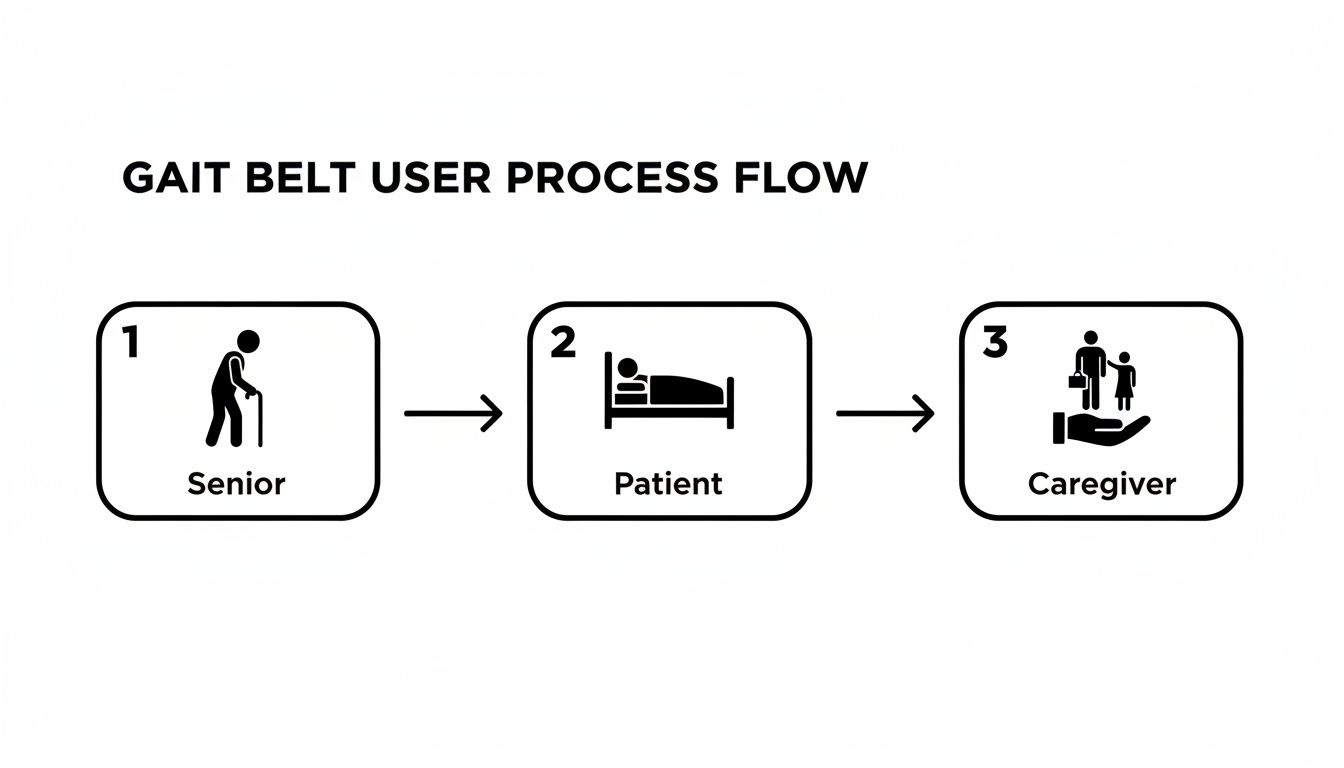
As you can see, it's a versatile piece of equipment that adapts to different situations, but its effectiveness always hinges on proper use by the caregiver.
Proper Fit And Caregiver Stance
The secret to a perfect fit is the “two-finger rule.” Once the belt is buckled, you should be able to comfortably slide two fingers—and only two—between the belt and the person's waist. Any more space means it’s too loose to be effective; any less means it’s uncomfortably tight.
Your own posture is just as critical. As the caregiver, always stand with your feet about shoulder-width apart to give yourself a solid, stable base. When you grip the belt, use a firm underhand grip. This position gives you far more leverage and control than gripping from the top.
Crucial Reminder: A gait belt is for assisting, not lifting. It's meant for people who can support at least some of their own weight. Never try to lift someone's full body weight with the belt—that's a recipe for serious injury.
Quick Safety Checklist for Using a Gait Belt
Run through this quick checklist every time you use a gait belt. It's a simple habit that makes a huge difference in preventing accidents and ensuring comfort.
- Check the Belt's Condition: Look for any frays, tears, or damage to the buckle before each use. A worn-out belt can fail unexpectedly.
- Belt is Over Clothing: Placing the belt on bare skin can cause painful pinching, chafing, and skin irritation.
- Positioned at the Waist: This central placement provides the best control and prevents the belt from slipping into a less effective or unsafe position.
- Pass the "Two-Finger" Test: Ensures the belt is snug enough to be secure but not so tight that it restricts breathing or causes pain.
- Use an Underhand Grip: This grip maximizes your control and leverage, making movements smoother and safer.
- Caregiver Has a Stable Stance: A wide, balanced stance protects your back from injury and keeps you stable if the person stumbles.
Following these steps ensures you're using the tool as it was designed—for safe, supportive assistance.
Pairing the right technique with the right equipment is everything. For individuals needing more significant help with mobility, it's worth exploring the differences between wheelchairs available for rent or purchase to find the ideal solution.
When You Should Not Use A Gait Belt
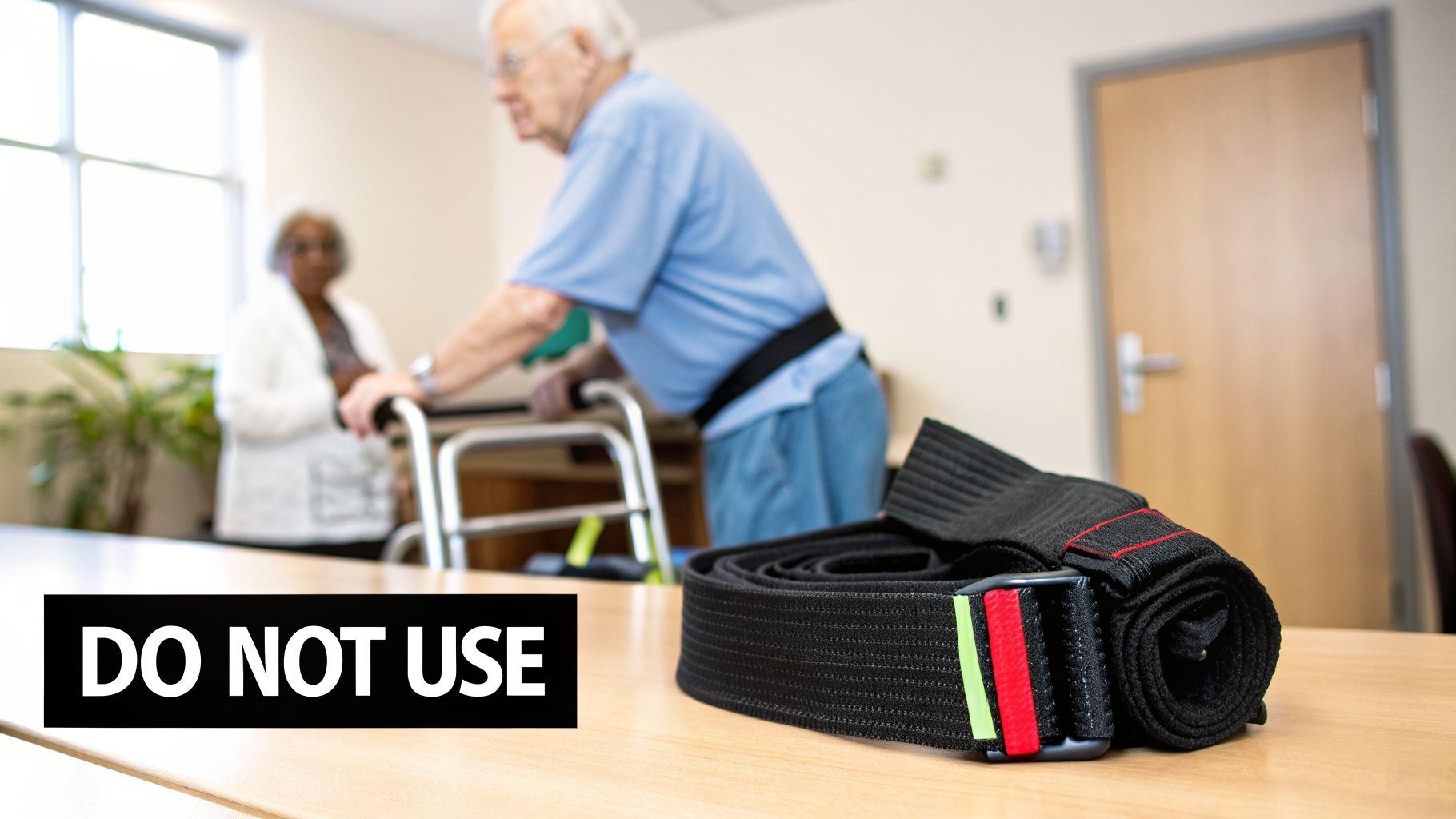
A gait belt is an incredible tool for caregivers, but it’s not always the right answer. In fact, knowing when not to use one is every bit as crucial as knowing the proper technique for using it. Think of it as a stability aid, not a lifting device.
The absolute golden rule is this: a gait belt is only for someone who can bear at least some of their own weight. If a person can't stand or support themselves on their legs, trying to move them with only a gait belt is incredibly risky. It puts both the person and the caregiver in a position for serious injury.
Medical Conditions and Contraindications
Sometimes, a person's medical condition or specific medical devices make a standard gait belt around the waist completely unsafe. The focused pressure from the belt can cause real harm or mess with critical equipment.
You should never place a gait belt directly over any of these areas:
- Recent surgical incisions on the abdomen or back
- Feeding tubes, like G-tubes or J-tubes
- Ostomy sites, such as a colostomy or ileostomy
- Certain hernias that could be aggravated by pressure
- Internal devices like pacemakers or defibrillators
In situations like these, the pressure from a belt could easily damage healing tissue, disrupt a medical device, or cause intense pain. For people with these conditions, a mechanical patient lift isn't just a better option—it's the only safe one for transfers.
Choosing the right equipment is fundamental to creating a safe home environment. All our equipment is available for direct purchase, allowing us to provide straightforward, transparent service to all our customers.
Should You Rent or Buy a Gait Belt?
Once you've decided a gait belt is the right tool, the next question is a practical one: should you rent it or buy it outright? There’s no single right answer here—it really boils down to how long you’ll need it.
Renting is a fantastic, budget-friendly option for temporary situations. Think about post-surgery recovery or a relative with mobility challenges coming to visit for a couple of weeks. A rental gives you the safety and support you need without the long-term commitment of a purchase.
Making the Call for Long-Term Care
On the flip side, buying a gait belt is a wise move for long-term care. If you or a loved one is managing a chronic condition like Parkinson's or weakness following a stroke, that belt will become a daily part of your safety toolkit. Owning it means it's always there, ready to go.
There's a real benefit to working with a local provider, too. You get hands-on advice to pick the perfect style and can take it home the same day, skipping the wait time of online shipping. When safety is the goal, that kind of immediate support is invaluable.
Gait belts are a cornerstone of safety in healthcare, and making them easily accessible can dramatically reduce injuries. In one notable Fall Prevention Pilot Project, simply making gait belts more visible in patient rooms increased their availability by 38%. This simple change boosted staff use and kept both patients and their caregivers safer.
Whether you're looking at a short-term rental or a long-term purchase, getting the right equipment is a critical step. If you're exploring what a gait belt is used for in a temporary capacity, checking out local medical equipment rentals is a flexible and affordable way to get started.
Please be aware that all our equipment is available for direct payment only.
Got Questions About Gait Belts? We've Got Answers.
Even with the basics down, you probably have a few practical questions. That's completely normal. Let's walk through some of the most common things people ask, so you can feel 100% confident when you use one.
The biggest safety question we hear is, "Can I use a gait belt to lift someone up from the floor?" The answer is a firm and absolute no.
A gait belt is a helping hand, not a crane. It's built to help you guide and steady someone who can still support most of their own weight. Trying to lift a person's entire body with one is incredibly dangerous and can lead to serious injuries for both of you. For that kind of situation, you need a mechanical patient lift—it's the only safe tool for the job.
Nailing the Finer Points
Okay, with the big safety warning out of the way, let's get into the details of using a gait belt day-to-day.
-
How Tight is Too Tight? You're looking for the Goldilocks fit: snug enough that it won't ride up toward their armpits during a transfer, but not so tight it digs in or makes it hard to breathe. A great rule of thumb is the two-finger test. Once it's buckled, you should be able to comfortably slide two fingers between the belt and their body.
-
Which Buckle is Better? You'll generally see two types: a metal buckle with teeth or a plastic quick-release buckle. The metal kind is the classic—it grips the belt material and provides a rock-solid hold. The plastic ones work just like a seatbelt and can be faster for some caregivers to secure and release. Honestly, both are perfectly safe. It really just boils down to which one you feel more comfortable using.
Knowing what a gait belt is for is just as important as knowing what it isn't for. If other questions pop up, our team is always here to help. For more answers, you can also check out our comprehensive FAQ page.
Keeping It Clean
Good hygiene is non-negotiable in a caregiving environment. So, what's the best way to clean a gait belt? The good news is that most cotton and nylon belts are made to be washed.
You can usually just hand-wash the belt with a little mild soap and warm water. The critical step is to let it air-dry completely before you use it again. A damp belt can grow mildew and the fabric can weaken over time. Always give the manufacturer's tag a quick look for any specific cleaning instructions.
Answering these common questions helps turn a good tool into a great one. When you feel sure about what you're doing, every transfer becomes safer and less stressful for everyone involved.
For all your home medical equipment needs, from gait belts to walkers and lift chairs, trust the local experts at Affinity Home Medical Equipment. We offer sales and rentals to keep you safe and mobile. Visit us online to see our full range of products.
Share This Article

Written by : lori@netcodesign.com
Follow Us
Latest Articles

October 13, 2026

October 13, 2026

October 13, 2026
