
What Is a Knee Walker and How Can It Speed Up Your Recovery

If you’re facing recovery from a foot or ankle injury, [...]
If you’re facing recovery from a foot or ankle injury, the last thing you want is another source of pain. Traditional crutches can be a real struggle, causing sore underarms and tired arms. A knee walker, often called a knee scooter, is a fantastic alternative that lets you glide through your recovery with ease.
What Is A Knee Walker
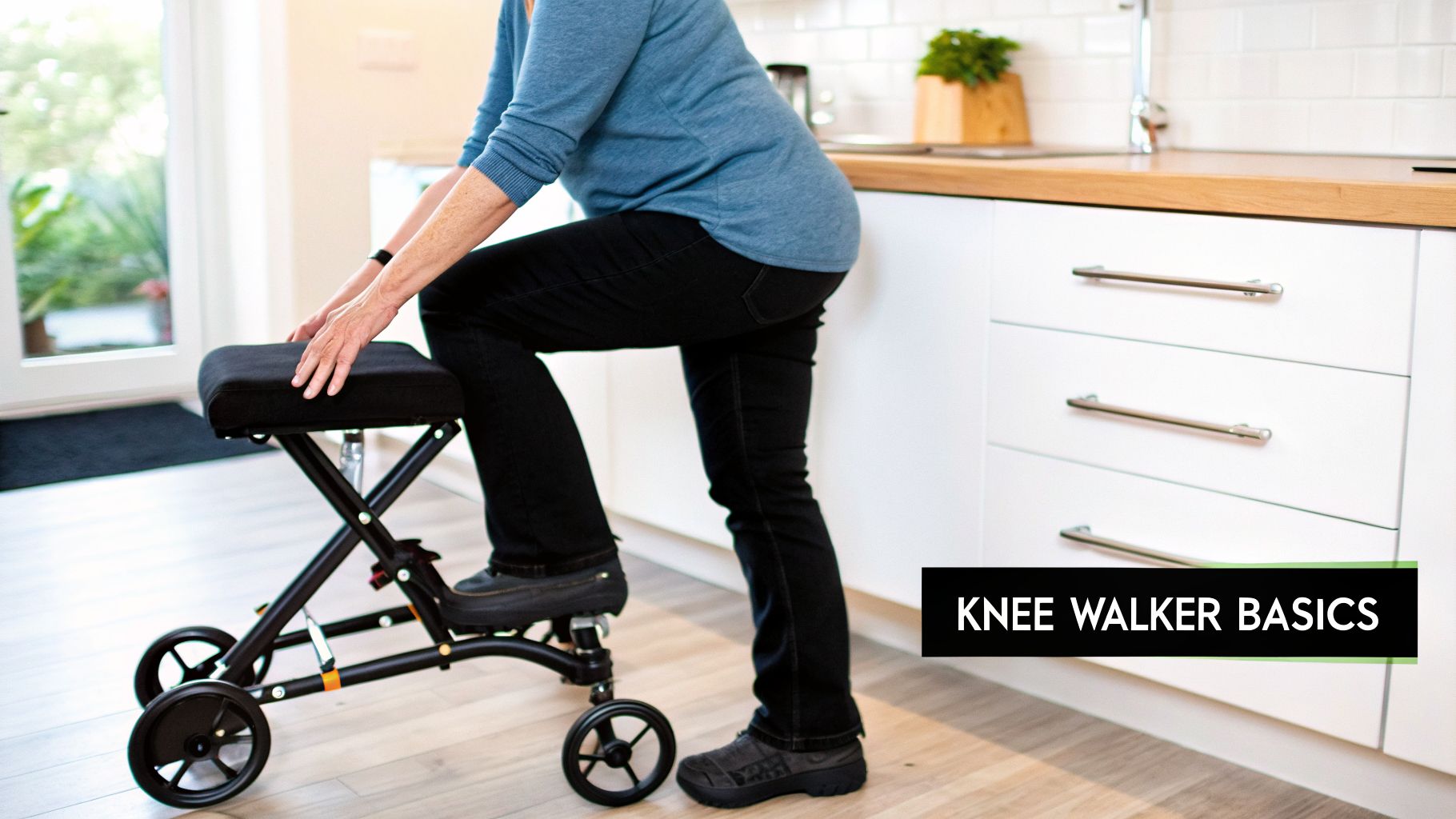
Think of a knee walker as a personal scooter built for your recovery. It’s an absolute game-changer for anyone dealing with injuries, fractures, or post-operative care for things like foot surgery or a broken ankle. It gives you a stable, wheeled platform for your injured leg, so you don’t have to rely on crutches.
The concept is beautifully simple. You rest your injured leg on a soft, cushioned pad, and then you propel yourself forward with your good leg. This clever design completely takes the pressure off your upper body and gets rid of the chafing and strain that come with using crutches. It also helps you stay upright, promoting better posture as you move.
How a Knee Walker Works
To really get how a knee walker functions, it helps to look at its main parts. Each piece is designed to provide support, stability, and comfort while you heal.
Here’s a quick breakdown of what makes a knee walker so effective. Its key parts include:
- Padded Knee Rest: Cushions and supports the injured leg to prevent pressure on the injury and enhance comfort.
- Handlebars: Provide steering control and stability, allowing for easy maneuvering and balance.
- Hand Brakes: Control speed and allow for safe stopping, increasing safety, especially on slopes or uneven ground.
- Wheels: Allow the walker to roll smoothly, reducing the effort needed to move and providing mobility.
- Steering Column: Connects the handlebars to the frame, enabling precise directional control.
Essentially, all these parts work together to create a secure and effortless way to get around when you can't put weight on your foot or ankle.
Why It’s a Better Choice for Recovery
During recovery, a knee walker brings some serious advantages to your daily routine. Instead of being confined to a chair or bed, you can move through your home and office with confidence.
- Keeps You Independent: Your hands are completely free! This means you can do simple things for yourself, like grabbing a cup of coffee or carrying a plate, without needing to ask for help.
- Much More Stable: With multiple wheels and a solid frame, knee walkers have a low center of gravity. This offers far more stability than crutches, significantly lowering your risk of an accidental slip or fall.
- Less Tiring: Gliding is way more efficient than hopping around on crutches. You'll find you can stay active for longer periods without feeling wiped out.
It's also important to see how a knee walker fits into your overall healing plan. A physical therapy perspective on recovery often emphasizes the importance of safe mobility. Our team is fantastic at helping you find the right device for your needs.
Knee walkers, or orthopedic scooters, first appeared around 1986. Early medical research quickly pointed out their benefits over crutches, noting the greater freedom on smooth surfaces and reduced energy consumption, making them a valuable tool for non-weight-bearing rehabilitation.
Knee walkers are just one of several mobility aids we offer. To see how they compare to other options, take a look at our overview of walkers and rollators in St. Petersburg, FL.
Why a Knee Walker Is Better Than Crutches
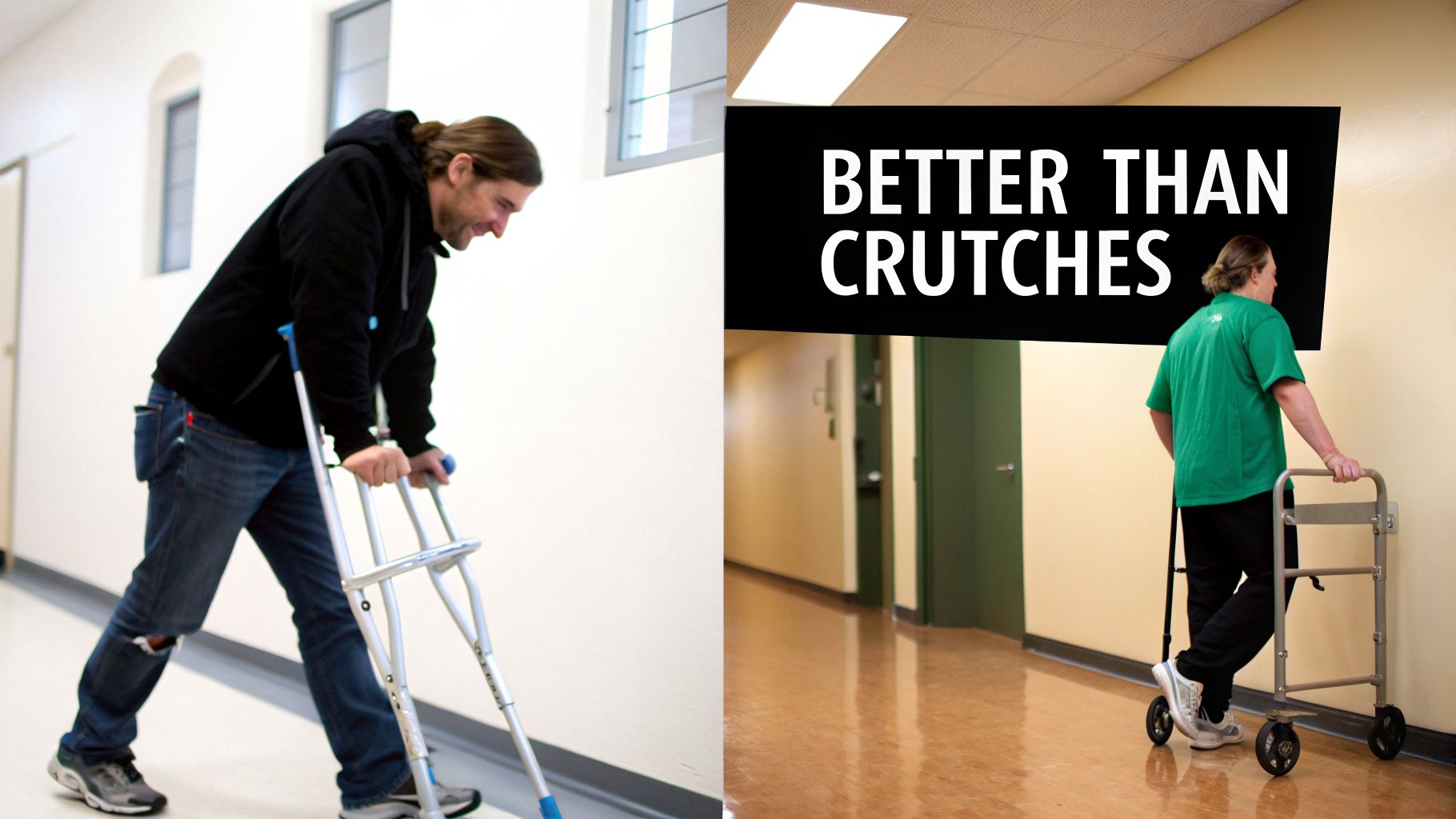
For a long time, if you had a lower leg injury, crutches were your only real option. We’ve all seen it—or experienced it ourselves. While crutches let you get around, they often come with their own set of problems: sore underarms, aching wrists, and just feeling completely wiped out from the effort.
A knee walker, or knee scooter, completely changes the recovery game. It’s a much smarter approach to mobility. Instead of requiring a ton of upper body strength, a knee walker supports your body in a natural, upright posture. You simply rest your injured leg on a cushioned platform, which takes all the strain off your arms and shoulders. This one change makes a world of difference in your comfort and energy levels.
Regain Your Independence and Comfort
Think about one of the biggest headaches with crutches: your hands are never free. Trying to carry a cup of coffee, answer the phone, or even open a door becomes a major logistical challenge. A knee walker gives you your hands back, and with them, a huge piece of your independence.
Suddenly, you can glide through the grocery store with a basket resting on the scooter or move through your office holding a laptop. These are simple, everyday things that feel almost impossible on crutches but are a breeze with a modern knee walker.
A knee walker's design prioritizes stability and user comfort, reducing the risk of slips and falls commonly associated with crutches. This focus on safety and ease of use is why many people now prefer them for non-weight-bearing recovery.
The move away from crutches is undeniable. The global market for knee scooters is expected to climb from $385.13 million in 2025 to over $637.76 million by 2034. This isn't just a fad; it reflects a real shift in how people want to manage their recovery—with more comfort, stability, and freedom.
Just a quick note: while a knee walker is an incredible mobility aid, we do not take insurance. Our focus is on providing simple, direct rental and purchase options to help you get back on your feet (or, well, your wheels!). For more helpful tips and information on mobility equipment, feel free to check out our medical equipment news and blog.
Who Is a Knee Walker For?
A knee walker can be a game-changer for your recovery, but it’s not a one-size-fits-all solution. So, how do you know if it's the right choice for you?
Think of it this way: a knee walker is designed for anyone who absolutely must keep weight off one lower leg but still has good balance and strength in their other leg. If that sounds like you, you're likely a great candidate.
The Ideal Knee Walker User
We most often see people turn to knee walkers when they're healing from specific injuries or surgeries below the knee. It's the perfect tool for staying mobile while following those strict non-weight-bearing orders from your doctor.
Common situations where a knee walker shines include recovery from:
- Achilles tendon ruptures
- Bunionectomies
- Ankle fusions
- Foot or ankle fractures
Whether you're dealing with a nasty sprain or a clean break, a knee walker can provide incredible relief and freedom. If you're unsure about your injury, it's always helpful to understand how to tell the difference between a sprain and a break.
When to Consider Other Options
On the flip side, a knee walker isn't the best fit for everyone. Because your "good" leg does all the pushing, it’s not a great option if you have an injury or weakness in that supporting leg, too.
Similarly, if you struggle with balance, have poor core strength, or deal with hip or back problems, managing a knee walker could be both difficult and unsafe. Your stability is key, and if it's compromised, there are better, more secure alternatives.
For those who aren't a good match for a knee walker, don't worry—you have excellent options. Many people in this situation find a wheelchair to be a much more stable and comfortable solution. You can always explore wheelchair options for rent or sale to find a device that fits your needs perfectly. Just as a reminder, we do not take insurance, which allows us to provide simple, transparent pricing for all our customers.
The demand for temporary mobility aids is huge. In fact, nearly 63.8% of all new mobility devices are walking aids like knee walkers. Since most people only need them for a year or less, it really shows just how valuable they are for getting through short-term recovery.
How To Use Your Knee Walker Safely
Getting the hang of your new knee walker is the key to a confident recovery. When you know how to operate it safely, you can focus on healing instead of worrying about getting around.
The first step—and honestly, the most important one—is getting the fit just right. An improperly adjusted knee walker can throw off your posture, leading to extra strain on your back and shoulders. Before you start zipping around, take a few minutes to customize it for your body.
The journey from injury to recovery often requires a period of non-weight-bearing, which is exactly where a knee walker comes in.
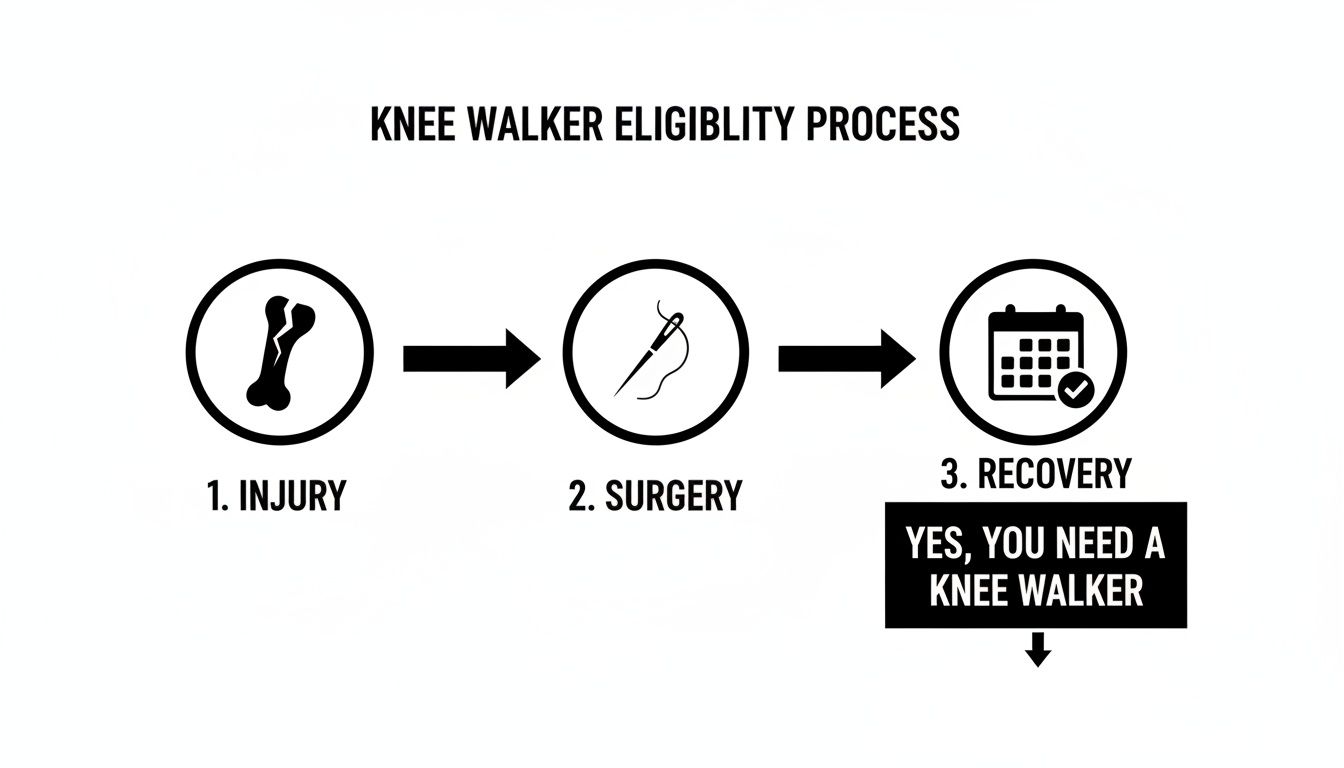
As you can see, the goal is to keep you mobile while your body does the hard work of healing.
Adjusting for a Perfect Fit
A proper fit prevents unnecessary strain and makes the walker feel like a natural extension of you. It only takes a moment, but it makes all the difference for your comfort and safety.
-
Handlebar Height: Stand up straight next to the walker with your arms hanging naturally at your sides. The handgrips should line up with your wrists. This position allows for a slight, comfortable bend in your elbows when you hold on.
-
Knee Pad Height: When you place your injured leg on the center of the pad, your hips should be level. You’re looking for a 90-degree angle at your hip, with your thigh running parallel to the floor. This keeps you stable and balanced.
Once you’ve made your adjustments, give every knob and clamp a final check to make sure they are completely secure.
Think of a well-adjusted knee walker as a stable partner in your recovery. We see it all the time—improper height is a leading cause of wobbles and falls. Getting the fit right isn't just a suggestion; it's your number one safety check.
Mastering Movement and Braking
With your walker properly adjusted, it's time for a little practice. Find an open space, like a hallway or large room, to get comfortable.
Start by giving small, gentle pushes with your good foot to glide forward. There's no need for big, powerful shoves; smooth and steady is the goal.
When you need to slow down or stop, gently squeeze the hand brake, just like you would on a bicycle. Try to avoid slamming on the brakes, as that can cause a sudden jolt. Anytime you stop, be sure to engage the locking brake so the walker stays put.
A quick reminder about our services: At Affinity Home Medical Equipment, we focus on getting you the right equipment quickly and simply. To keep things straightforward, we do not take insurance.
Choosing The Right Knee Walker For Your Needs
Not all knee walkers are built the same, and picking the right one comes down to your real-world needs. The goal is to find a model that fits your daily life, letting you heal without feeling like you're stuck on the sidelines.
The biggest question to ask yourself is this: where will you be using it? Will you mostly be at home, gliding over smooth floors? Or will your recovery involve trips outside for work, errands, or just getting some fresh air? Knowing the answer is the first step toward finding your perfect match.
Standard vs. All-Terrain Models
A standard knee walker is your go-to for indoor use. Think of it as the perfect companion for navigating your home or office. Its smaller, solid wheels are designed to move smoothly over tile, hardwood, and low-pile carpets. They're also generally lighter and nimbler, making it easier to get through tight spots like hallways or around kitchen islands.
On the other hand, if your recovery can’t be confined to the great indoors, an all-terrain knee walker is what you’ll need. These are the heavy-duty versions, built with large, air-filled tires similar to a bicycle's. That design difference is what allows them to tackle more demanding surfaces with ease.
- Grass and Dirt: An all-terrain model lets you cross your backyard or enjoy a local park without getting bogged down.
- Gravel and Cracked Sidewalks: The bigger wheels act as shock absorbers, rolling right over uneven ground for a ride that’s much smoother and more secure.
Key Features To Consider
Beyond the wheels, a few other features can make a huge difference in your day-to-day comfort and convenience. Always check the weight capacity to make sure the walker is rated to support you safely. Also, look at how it folds. Most models collapse down to fit in a car trunk, which is a game-changer for staying independent and getting to appointments.
Braking systems are another critical feature. Some knee walkers have dual brakes for maximum control, while others have a single brake. Think about your environment—if you'll be dealing with ramps or slight inclines, this can help you decide which system is best for you.
Our team is always here to offer personalized advice and help you find the right device for your specific situation. We make it simple to get the equipment you need. You can browse a wide selection of models and helpful accessories in our online medical equipment shop.
Renting A Knee Walker In St Petersburg And Pinellas County
When you're dealing with a foot or ankle injury, your recovery is usually a temporary situation. For most people in that boat, renting a knee walker just makes the most sense. It gives you the freedom of a top-notch mobility aid without the full cost and commitment of buying one outright.
We've made it our mission to make renting a knee walker simple and stress-free for our neighbors in St. Petersburg, Clearwater, Seminole, and all across Pinellas County. Your recovery has its own timeline, so we offer flexible rental periods to match, whether you need support for a few days, a full week, or several months.
A Simple And Direct Rental Process
The last thing you need when you're healing is a complicated process. We believe in keeping things straightforward so you can put your energy where it matters most—getting better.
Here’s what you can expect when you rent from us:
- Professionally Maintained Equipment: Every single knee walker is meticulously cleaned, inspected, and serviced. You can rest easy knowing your rental is safe and in perfect working order from day one.
- Flexible Timeframes: We offer rentals by the day, week, or month. If your doctor tells you that you need a little more time, extending your rental is no problem at all.
- Same-Day Pickup: Need to get moving right away? For any models we have in stock, you can come by and pick them up the very same day.
To keep our process fast and transparent for everyone, we do not take insurance. This direct rental approach means no complicated paperwork, clear pricing, and getting you the equipment you need, when you need it.
Renting gives you a premium mobility solution built for your temporary needs. You can see all of our local options by checking out our guide to St. Petersburg medical equipment rentals. Our team is always here to help you find the right knee walker to get you back on your feet faster.
Your Knee Walker Questions, Answered
If you’re new to using a knee walker, you probably have a few questions. That's completely normal. Getting the hang of the fit, learning where you can safely use it, and figuring out the logistics are all part of the process. Let's walk through some of the most common things people ask us.
How Do I Get My Knee Walker to Fit Just Right?
Getting the fit right is the most important step for both your safety and comfort. It's not complicated, but it does require a couple of quick adjustments.
First, let's set the knee pad height. When you rest your injured leg on the pad, you want your thigh to be level with the floor, creating a 90-degree angle at your hip. This simple check ensures your hips stay aligned and prevents you from developing back or hip pain from being off-kilter.
Next up are the handlebars. Stand up straight and let your arms hang naturally at your sides. The handlebars should be set right at waist height. When you grab the grips, your elbows should have a slight, comfortable bend. This helps you stand tall and avoid slouching, which can strain your shoulders and back.
Can I Use My Knee Walker on Hills or Stairs?
This is a critical safety question. You should never, ever use a knee walker on stairs. It’s incredibly unstable and creates a major risk for a serious fall. Please find an alternative way to navigate stairs, even if it's less convenient.
When it comes to ramps or gentle slopes, you can proceed, but with caution. Think of it like riding a bicycle downhill—you need to control your speed. Keep a hand on the brakes, go slowly, and always be aware of what’s ahead of you.
How Do I Get My Knee Walker in the Car?
We know you have places to be, from doctor's appointments to simple errands. That's why most of our knee walkers are designed for easy transport. They have a straightforward folding lever that lets the handlebars collapse down toward the knee pad.
Once it's folded, the walker becomes much more compact and can typically slide right into the trunk or back seat of a car.
The length of your rental really comes down to what your doctor recommends for your recovery timeline. Some people just need a walker for a few weeks, while others might need one for a couple of months. We have flexible rental periods to fit your specific needs. Just keep in mind that we do not take insurance.
Ready to get moving again? The team at Affinity Home Medical Equipment is here to help you find the right knee walker and get you back on your feet (well, one foot and a few wheels). You can see our options and get started by visiting us at https://affinityhomemedicalequipment.com.
Share This Article

Written by : Rich affinityrich@gmail.com
Follow Us
Latest Articles

October 14, 2026

October 14, 2026

October 14, 2026
