
What Is a Rollator Walker A Guide to Better Mobility

So, what exactly is a rollator walker? Think of it [...]
So, what exactly is a rollator walker? Think of it less like a traditional walker and more like a trusted companion that glides along with you. It’s a mobility aid designed with wheels, easy-to-use hand brakes, and often a built-in seat, all to provide constant support without ever needing to be lifted off the ground.
This design is a game-changer. It encourages a more natural walking rhythm, helping you build confidence and maintain an active lifestyle. By conserving your energy and reducing the risk of falls, a rollator can make all the difference for anyone facing balance or stamina challenges.
Your Guide To The Rollator Walker
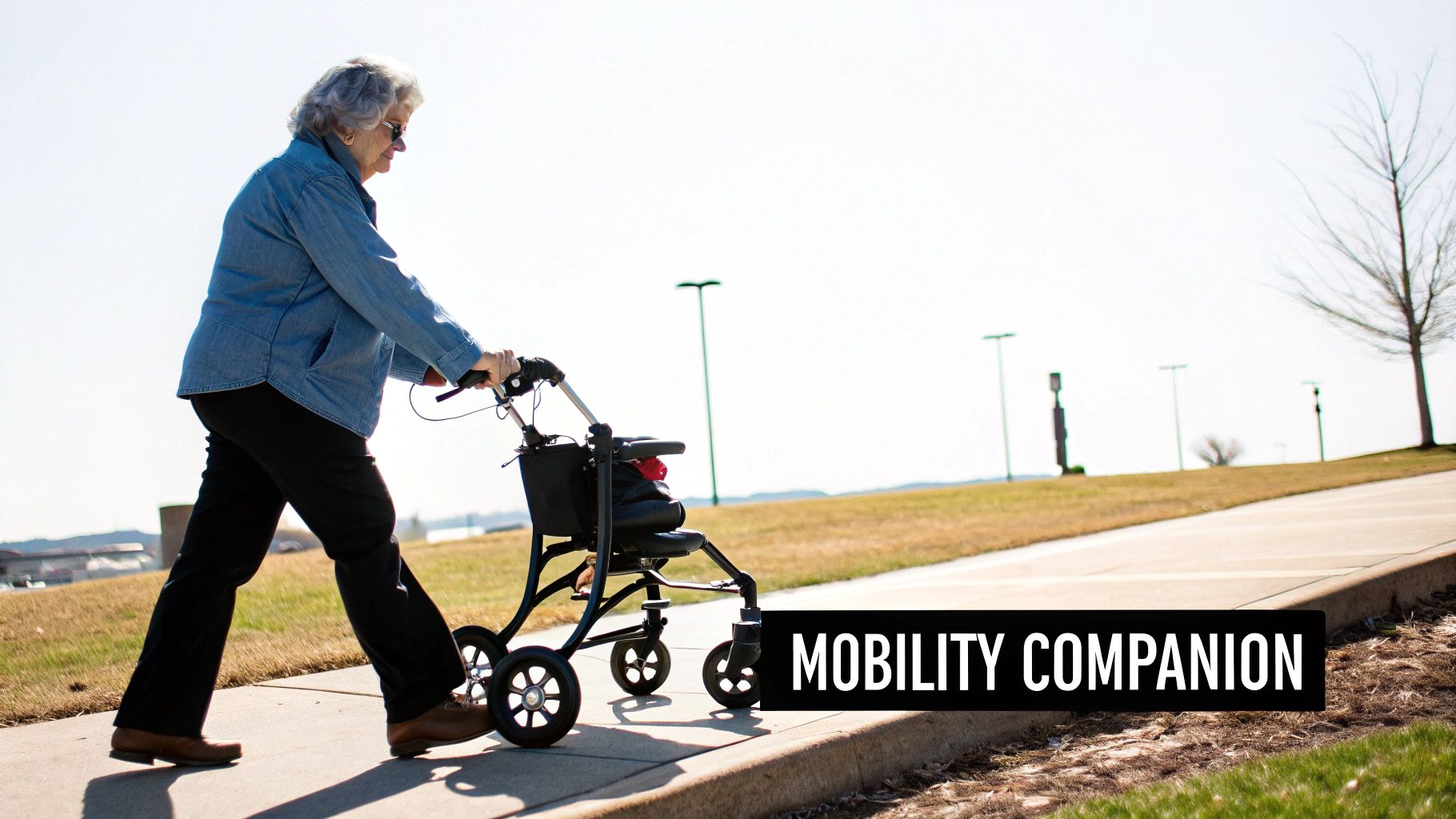
A rollator provides a sturdy, mobile base of support that moves with you, making it much easier to get around, whether you're at home or out and about. The primary goal is to offer a smooth, gliding motion that supports you with every single step—a big difference from standard walkers that you have to pick up and move.
All of its features are built for real-world, daily use. The frame, wheels, seat, and even a handy storage pouch all work together to help people, especially older adults, hold onto their independence. It's no surprise that four-wheel models are so popular, holding 56.9% of the market share thanks to their fantastic balance and ground clearance. These features are truly vital for anyone managing chronic conditions like arthritis or recovering from surgery.
A rollator’s key benefit is empowerment. It turns mobility challenges into manageable steps, allowing individuals to stay engaged with their communities and daily activities with greater safety and less fatigue.
To get a better sense of all the tools available for enhancing independence, it’s worth exploring a good guide to mobility aids for elderly. Finding the right device is a huge first step toward a more active and secure life. For even more helpful information and resources, feel free to browse through our other articles at https://affinityhomemedicalequipment.com/medical-equipment-news-and-blog/.
The Core Components of a Rollator
To really get a feel for what a rollator walker does, it helps to break it down into its key parts. Think of it this way: unlike a standard walker that you have to pick up and move with every step, a rollator is designed to glide. This simple difference allows for a more natural walking rhythm and saves a ton of energy.
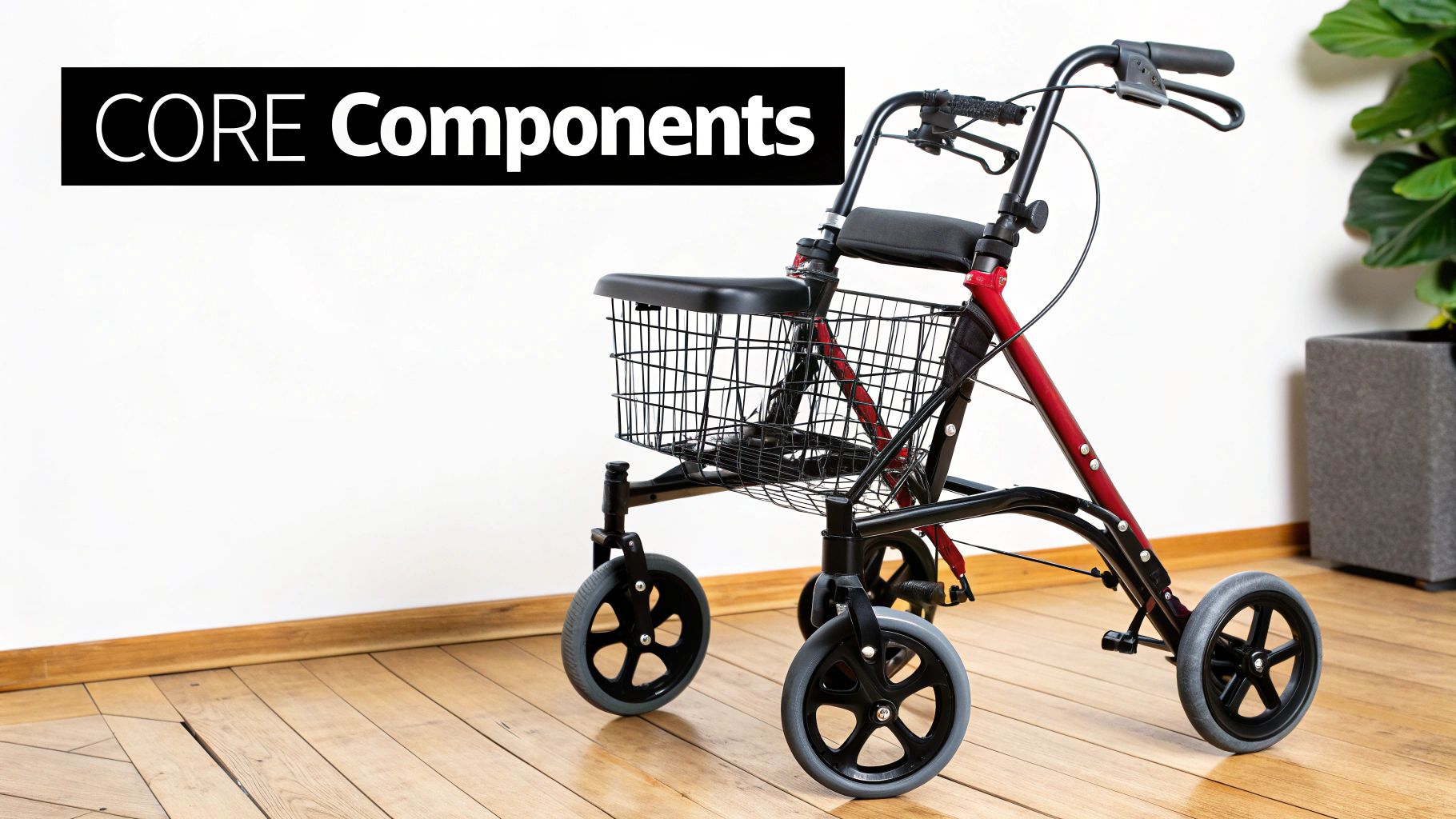
Each piece of a rollator has a specific job, and they all work together to make it a reliable tool for staying independent.
The Frame, Wheels, and Brakes
At its heart, a rollator is built on a lightweight yet sturdy frame. You'll typically find them in three-wheel or four-wheel versions. For most people, the four-wheel models are the go-to choice because they offer the best stability, whether you're navigating your kitchen floor or a bumpy sidewalk.
The ergonomic handles you grip are connected directly to a braking system. It’s a lot like the hand brakes on a bicycle, giving you total control over your speed. Crucially, these brakes also have a locking mechanism. This is a non-negotiable safety feature; you must lock the wheels before you sit, which keeps the rollator firmly in place.
A rollator's parts aren't just a list of features—they form a complete system built for confidence. The smooth interplay between the wheels, frame, and brakes lets you move freely without the constant strain of lifting.
Built-In Comfort and Convenience
Rollators are more than just a frame on wheels; they're designed for real-world living. The most-loved feature is easily the built-in seat. It provides a guaranteed spot to rest whenever you need it. Whether you're catching your breath in the park or stuck in a long queue, that seat is a game-changer for managing your energy.
To make life even easier, almost every rollator comes with some form of storage, usually a basket or a detachable pouch. It’s the perfect place to stash your purse, a few groceries, or a book, which keeps your hands where they need to be—safely on the handles. Every component is there to help you stay active and in control.
Who Benefits Most From A Rollator Walker
A rollator walker can be a real game-changer, giving back a sense of freedom to people from all walks of life. It’s a fantastic choice for older adults who are still pretty steady on their feet but feel held back by wobbly balance or just not having the stamina they used to. They don't need the full-on, weight-bearing support of a standard walker, but they thrive with a stable partner that helps them go farther, and with more confidence.
People managing chronic conditions often find rollators incredibly helpful. If you have arthritis, for example, the smooth-gliding wheels take a lot of the stress off aching joints. Likewise, someone with COPD who gets winded easily can rely on a rollator for support and a place to sit, which is a huge help for saving energy throughout the day.
Think about someone who loves their daily neighborhood stroll but has to cut it short because they get too tired. With a rollator, that built-in seat becomes a personal, portable bench. It turns a frustrating limitation into a simple, brief pause before they're ready to get going again.
Empowering Recovery And Daily Life
A rollator is also a great tool for people recovering from certain types of surgery. As you work through rehabilitation, it provides the stable support you need to get back on your feet safely and with confidence. It helps turn what might feel like a huge mobility challenge into small, manageable steps, letting you reclaim your independence.
At the end of the day, a rollator is for anyone who could use a little extra stability to stay active but doesn't need to do the constant "lift-and-move" motion of a traditional walker.
Of course, mobility isn't just about the right equipment. It’s also about making your home environment as safe as possible. Making smart changes, like creating safe, accessible bathrooms for seniors, can make a world of difference. When you tackle mobility challenges both inside and outside the home, you can keep living your life with much greater peace of mind.
Rollator Walker Vs. Standard Walker
It's easy to get confused between a rollator and a standard walker, but they’re designed for very different needs. The biggest difference boils down to how you move with them and the kind of support they offer.
A rollator, with its three or four wheels, is built to glide. You simply push it along, which helps you keep a more natural, fluid walking rhythm. A standard walker, on the other hand, has no wheels (or maybe just two in the front) and needs to be physically lifted and set down with each step. This “lift-and-move” action takes more arm strength and naturally slows you down.
Stability And Independence
So, which one is right for you? It really depends on your personal balance and strength.
- Standard Walkers are the champions of stability. Since you have to lift them, they create a super secure, fixed base of support. They're ideal if you have significant balance challenges or need to put a lot of your weight on the device.
- Rollator Walkers are a better fit for people who are fairly steady on their feet but need a bit of help with endurance or mild stability issues. They encourage you to keep moving and are far less tiring to use over longer distances.
Think of it this way: a rollator is for staying active and moving around more freely, while a standard walker is a tool for maximum safety during shorter, more careful movements.
The core trade-off is between fluidity and stability. A rollator offers a smooth, continuous gait for users with moderate balance, while a standard walker provides a rock-solid, step-by-step foundation for those who need the highest level of support.
Making An Informed Decision
The demand for these essential tools is clear—the global market for walkers and rollators has hit USD 1.96 billion and continues to expand. While standard walkers have always been a go-to for their simplicity and low cost, rollators are quickly becoming the more popular choice for their all-around convenience. If you're curious, you can discover more about mobility aid market trends and see how designs are evolving.
Please note that we do not work with insurance companies. This policy allows us to offer straightforward and transparent pricing on all our products. If you're looking into other mobility solutions, you may also find our guide on wheelchairs for sale or rent in St. Petersburg helpful.
How To Choose The Right Rollator
Picking out the right rollator is more than just a simple purchase—it’s a decision that directly affects your daily freedom and safety. The best rollator won't feel like a medical device; it will feel like a natural part of your movement.
Getting the fit right is the first and most important step. When you're standing tall with your arms hanging loosely at your sides, the handles should line up with the crease in your wrists. This simple check ensures you can walk with good posture, preventing unnecessary strain on your shoulders and back.
Key Factors For Your Decision
Beyond the basic fit, you need to think about your specific needs and where you'll be going. Always start by checking the weight capacity—this is a critical safety feature that you can't overlook. From there, consider your typical environment.
- Wheel Size Matters: Are you an outdoor adventurer or do you mainly stay indoors? Large 8-inch wheels are fantastic for handling bumps, cracks in the sidewalk, and even grassy areas. Smaller wheels, on the other hand, are nimble and perfect for navigating tight corners inside your home.
- Frame Type and Weight: Think about how you'll be transporting the rollator. Lightweight aluminum frames are a breeze to lift into a car, while heavy-duty steel models offer robust support for higher weight capacities. Three-wheel designs are also great for maneuverability in small spaces.
This simple guide can help you make that initial choice between a standard walker and a rollator.
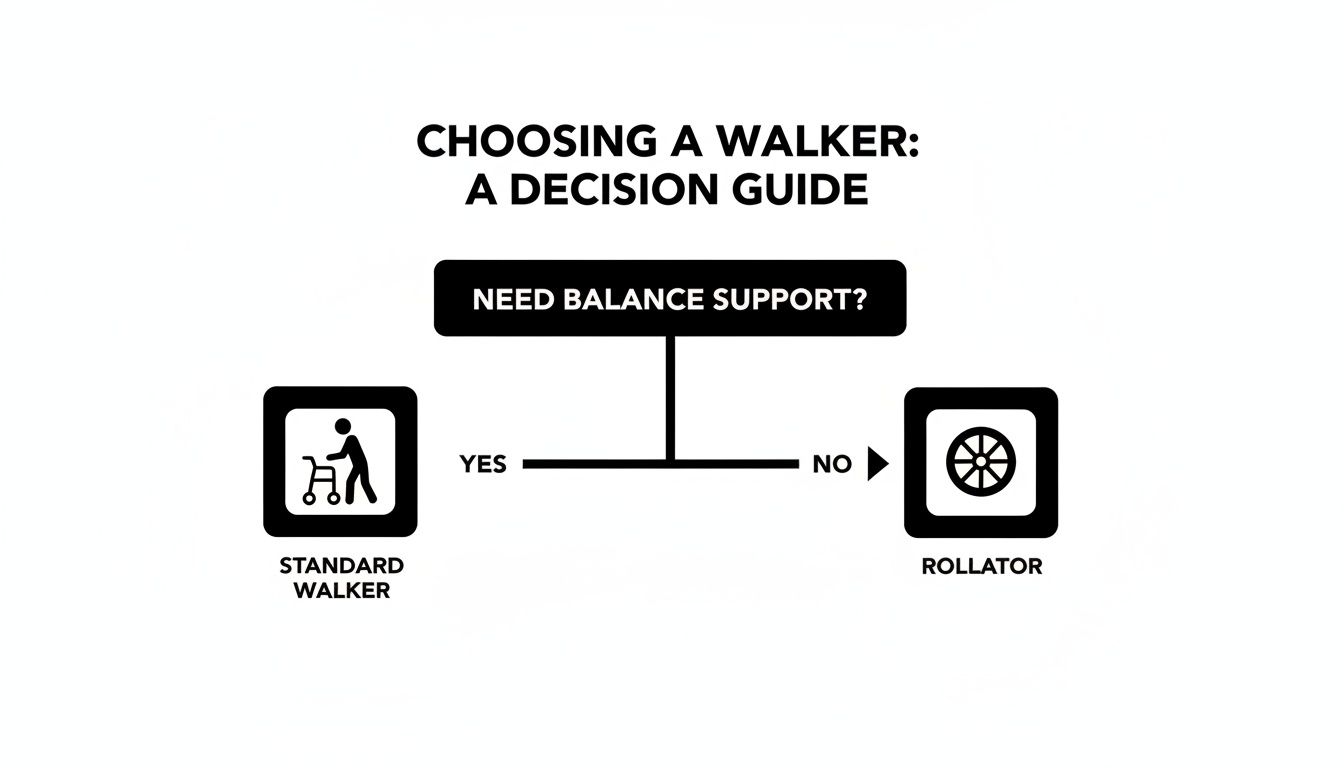
As you can see, if you need a device to lean on for significant balance support, a standard walker is the way to go. But if you're looking for something to help with stamina and smoother movement, a rollator is the perfect fit.
A well-chosen rollator should move with you effortlessly, promoting a natural walking pattern. A poor fit can create new problems, from bad posture to instability, defeating the purpose of the mobility aid.
It's important to know that we do not accept insurance for our products. This allows us to maintain simple and clear pricing for all our customers. To see our selection and get expert advice, feel free to explore the walkers and rollators in St. Petersburg, FL we have available.
Renting a Rollator for Short-Term Needs
Buying a rollator outright isn't always the best move. Sometimes, you just need a little extra support for a short period, and that’s where renting really shines.
Think about recovering from surgery, having a relative visit who needs help getting around, or even just wanting to "test drive" a specific model before you buy it. In these situations, renting is a practical, budget-friendly choice.
Why Renting Makes Sense
Renting gives you immediate access to a high-quality, reliable rollator without the big upfront cost of a purchase. It’s all about flexibility. You can set up a rental for the exact timeline you need—whether that's just for a weekend, a full week, or even a month.
Renting is a stress-free solution for temporary mobility challenges. It guarantees you get the right support, right when you need it, for exactly as long as you need it.
For anyone in the St. Petersburg area, this is a smart way to get a dependable rollator quickly. It's important to know that we do not take insurance, which helps us keep our rental process simple and our pricing clear for everyone.
You can find out more about our local options in our guide to St. Petersburg medical equipment rentals.
Common Questions About Rollator Walkers
When you're thinking about getting a rollator, it’s natural to have a few questions pop up. Getting a handle on how they work is the first step toward feeling confident and safe using one.
Probably the most common question we get is about the brakes. The good news is, if you’ve ever ridden a bicycle, you’re already halfway there. Squeezing the levers on the handles slows you down, just like a bike.
But here’s the most important safety feature: pushing those same levers down will lock the wheels in place. This is absolutely critical. You should always, always lock the brakes before you even think about taking a seat.
Getting and Maintaining Your Rollator
So, do you need a doctor’s note to get one? Usually, no. You don't need a prescription to buy or rent a rollator, which makes it much easier for people to get the support they need right away. We also want to be upfront that we do not take insurance for these items, which keeps the process straightforward for you.
Once you have your rollator, a little upkeep goes a long way. It's really just a matter of doing a quick check-up now and then—make sure the brakes feel responsive, the wheels are on tight, and the frame is clean. If you've got more questions, we've probably answered them already—you can find answers to frequently asked questions right here on our site.
At Affinity Home Medical Equipment, our job is to help you find the right tool to keep you moving safely. Take a look at our rollators and other equipment designed to give you back your independence at home. https://affinityhomemedicalequipment.com
Share This Article

Written by : Rich affinityrich@gmail.com
Follow Us
Latest Articles

October 14, 2026

October 14, 2026

October 14, 2026
