
What Is a Transport Chair: What Is a Transport Chair For Safe Outings

A transport chair is a game-changer for short trips and [...]
A transport chair is a game-changer for short trips and errands, designed specifically to be pushed by a friend, family member, or caregiver. Unlike a standard wheelchair with its big, self-propelled wheels, a transport chair features four small wheels. This makes it incredibly lightweight and perfect for navigating tight corners, doctor's offices, or busy sidewalks.
Think of it as the ultimate grab-and-go mobility solution.
What Is a Transport Chair Explained Simply
Let's paint a picture. You need to get your mom to a specialist's appointment across town, or maybe you want to take your spouse for a lovely stroll along the Dunedin Causeway. They can walk a bit, but they get tired easily. A standard wheelchair feels like overkill—it’s heavy, bulky, and a real hassle to get in and out of the car.
This is exactly where a transport chair shines. It's the perfect middle-ground solution.
Sometimes called a "companion chair" or "transit chair," it's built for one thing: getting someone from point A to point B with the help of another person. The entire design is focused on making life easier for the caregiver. The frames are usually made of lightweight aluminum, so they fold down in a snap and are easy to lift into a car trunk without straining your back.
This simple, practical design is why so many families in Pinellas County and beyond have come to rely on them. It’s no surprise that the global market for transport chairs was valued at over USD 1,096.7 million in 2021. They fill a crucial need for everyday mobility. You can learn more about the transport chairs market and its growth to see just how popular they've become.
To make things even clearer, here’s a quick breakdown of what makes a transport chair tick.
Key Characteristics at a Glance
So, what are the core features that really set a transport chair apart? Understanding these fundamentals will help you know if it’s the right fit for your situation.
- Four Small Wheels: This is the most obvious difference. Instead of the large, spoked wheels you see on traditional wheelchairs, all four wheels on a transport chair are small casters. This is the secret to its fantastic maneuverability in tight spots.
- Caregiver-Dependent: By design, the user can't propel themselves. The chair is meant to be pushed by a caregiver using the handles at the back, which is why it's often called a "companion chair."
- Lightweight and Foldable: These chairs are engineered for portability. Most weigh significantly less than standard wheelchairs and collapse into a compact size, making them ideal for people on the go.
A transport chair isn't meant to replace a primary wheelchair for someone who needs it all day, every day. Instead, think of it as a specialized tool for specific outings—a simple, manageable way to ensure a loved one can still get out and enjoy life with a little help.
A quick note on payment: We keep things simple by not accepting insurance. This allows us to offer clear, upfront pricing for rentals and purchases without the long waits and red tape of insurance claims. Our goal is to get you the equipment you need, right when you need it.
Transport Chair vs. Wheelchair: Understanding the Key Differences
It’s the first question just about everyone asks: "What's the real difference between a transport chair and a regular wheelchair?" They look a little alike, sure, but they’re built for completely different jobs. Knowing what sets them apart is the key to picking the right mobility aid for you or your loved one.
A standard wheelchair is all about independence. You'll immediately notice the two large back wheels with hand rims. That's the whole point—it’s designed so the person sitting in it can push themselves around, giving them freedom and control over their own movement. It's a tool for daily, self-sufficient living.
A transport chair, on the other hand, is purely for assisted mobility. It has four small wheels and always needs a caregiver or companion to push it from behind. This one simple difference changes everything. It’s not for getting around on your own; it's a tool to get from point A to point B with help. Think of it less like a personal car and more like a comfortable taxi.
This diagram really boils down the purpose of a transport chair, showing how it's all about assisted, portable mobility.
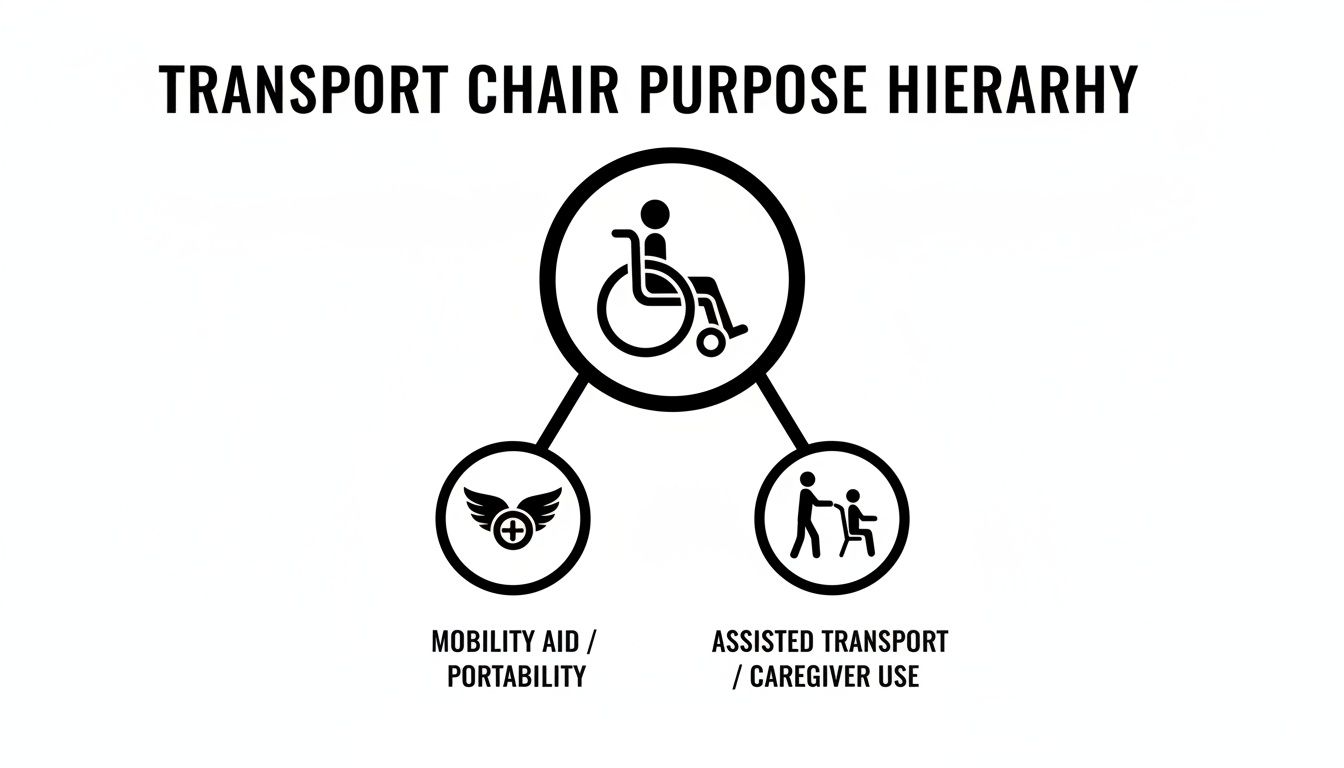
As you can see, the entire design philosophy hinges on a caregiver pushing the chair, making it fundamentally different from a self-propelled wheelchair.
Design Differences and Their Impact
The purpose behind each chair dictates how it’s built and what it does best. Since transport chairs don't have those big, heavy wheels, they are dramatically lighter and more compact.
- Portability: Most transport chairs are made from lightweight aluminum, often weighing under 25 pounds. This makes a world of difference for a caregiver who needs to fold it up and lift it into the trunk of a car. It's a game-changer.
- Maneuverability: The smaller wheels and narrower frame let a transport chair easily navigate tight spaces. Think about weaving through a crowded store, fitting into a small restaurant booth, or getting down a narrow hallway at home—it’s just so much easier than with a bulky wheelchair.
- Comfort: While they aren't meant for sitting in all day long, a good transport chair is plenty comfortable for a few hours. In fact, some studies show that modern, well-padded transport chairs can improve patient comfort by 35% during outings compared to a standard wheelchair.
The question isn't about which one is "better." It's about which one is better for the task at hand. For a quick trip to the doctor or a day out with family, the transport chair is almost always the more practical and convenient choice for everyone involved.
Making the Right Choice for You
So, how do you decide? It really comes down to the user’s level of mobility and what you plan to do.
If the person needs to be able to get around on their own throughout the day, a standard wheelchair is the only way to go. But if the goal is simply a safe, comfortable, and easy-to-manage way to get a loved one to appointments, social events, or just out of the house for some fresh air, a transport chair is the perfect solution.
You can explore a variety of these options in our guide to wheelchairs in St. Petersburg, FL. Just a quick note: we keep things simple and affordable by not dealing with insurance, so our pricing is always straightforward, with no delays.
Who Benefits Most From a Transport Chair
A transport chair is a specific tool for a specific job, and knowing who it's designed for is the first step in deciding if it's right for you. It's built for people who need a little help getting around on outings but don't need a full-time, self-propelled wheelchair. Think of it less as a wheelchair and more as a "mobility taxi"—it's all about getting from point A to point B with the help of a friend or family member.
This simple but effective aid is a game-changer for a few key groups of people, often serving as a temporary solution that makes a world of difference.
The Post-Surgery Patient
Recovering from surgery or a medical procedure almost always involves a period of weakness and limited mobility. A patient might be steady enough to walk around the house but simply doesn't have the strength for a long walk from the parking lot to a doctor's office.
For these short-term situations, a transport chair is perfect. It provides a safe, simple way to get to follow-up appointments or run a quick errand without the risk of a fall or pushing yourself too hard. It’s the perfect bridge between hospital discharge and getting back on your feet.
Older Adults With Limited Stamina
Many older adults in our community are active and independent but find that their energy levels just aren't what they once were. A long stroll along the St. Pete Pier, a day at the Dalí Museum, or even a big grocery run can feel more like a marathon than a pleasant outing.
For them, a transport chair isn’t about being unable to walk; it’s about conserving energy to enjoy the destination. It turns a potentially exhausting trip into a wonderful experience, keeping them connected to the people and places they love.
This simple change can make all the difference in staying active and involved in family and community life.
The Supportive Caregiver
Let's be honest: a transport chair is often as much a tool for the caregiver as it is for the person sitting in it. Trying to lift a heavy, clunky wheelchair in and out of a car trunk is a recipe for a strained back.
Because transport chairs are so much lighter and easier to fold, they take a huge amount of physical strain off the caregiver. This is a game-changer for a spouse, child, or friend helping a loved one get around town. It makes the entire process of caregiving a little bit easier and a whole lot safer for everyone.
For those looking to maintain as much personal independence as possible, exploring options like vehicle modifications for disabled drivers can also be a great step. And if you're exploring other aids that help with independent movement, you can learn more about walkers and rollators in St. Petersburg, FL.
Is a Transport Chair Right For You or Your Loved One?
Still not sure? A quick checklist can help you decide if a transport chair is the right fit for your needs.
If the person will always have a caregiver to push them and primarily needs mobility assistance for short trips and outings, a transport chair is likely the best choice. Its lightweight, foldable design is ideal for conserving energy and easy transport.
However, if the user needs to move around independently throughout the day and has the upper body strength to do so, a standard wheelchair with large, self-propel wheels would be the more appropriate long-term solution.
Ultimately, choosing a transport chair comes down to one key factor: assistance. If there will always be someone there to push the chair, it’s an incredibly convenient, lightweight, and practical choice for staying active and engaged.
How To Choose The Perfect Transport Chair
Picking out the right transport chair isn't just about the color or style. It’s really about matching the chair to the person who will be using it and the person who will be pushing it. Getting this right from the start makes a world of difference in comfort, safety, and overall convenience for everyone.
Let's walk through the most important things to look at so you can feel confident you're making the best choice.
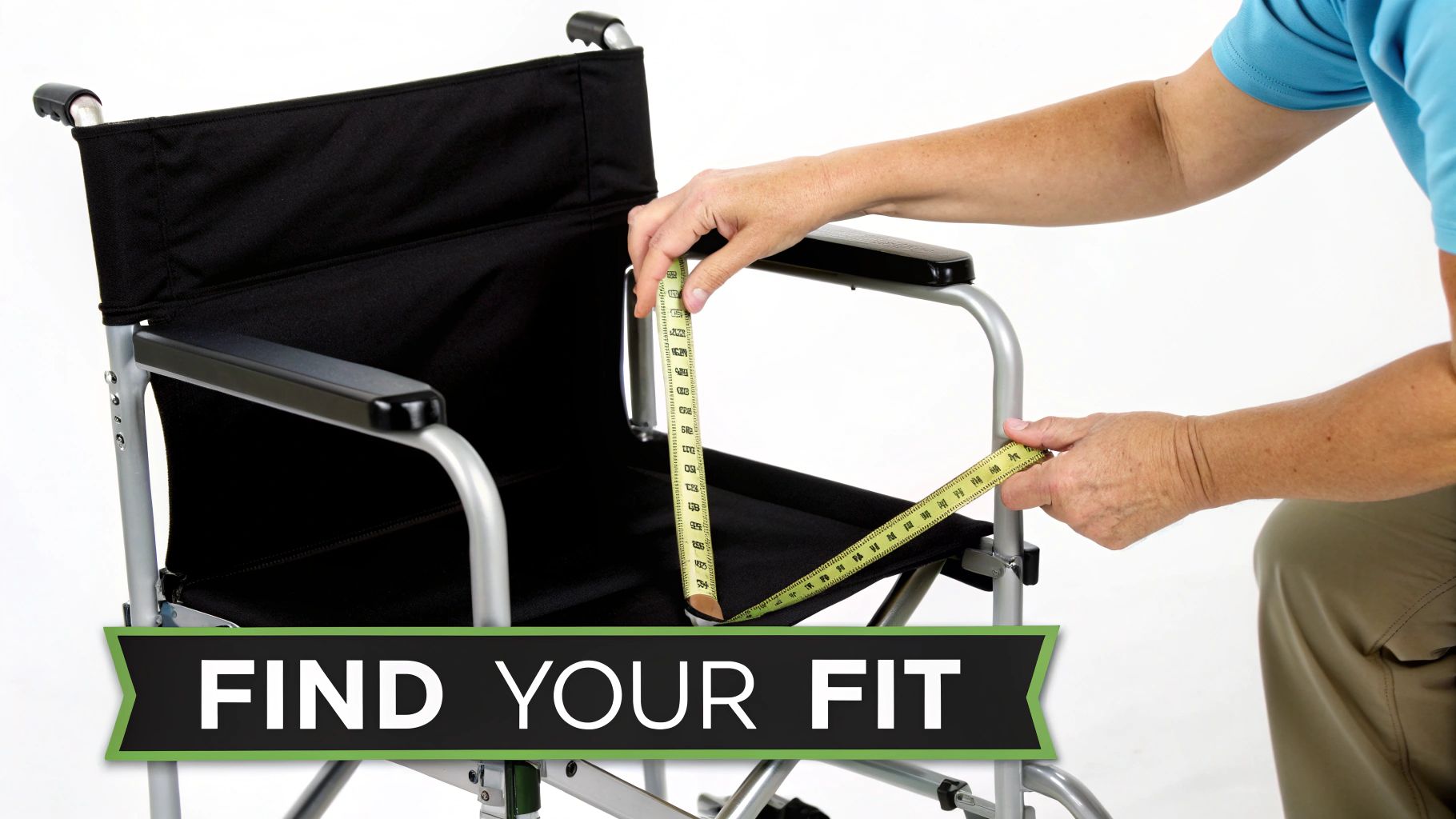
User Comfort And Fit
First and foremost, the person sitting in the chair has to be comfortable. A poorly fitting chair can lead to bad posture and general discomfort, which defeats the whole purpose of getting out and about. The most critical measurement here is the seat width.
Here’s a simple way to get it right: have the person sit on a dining chair or another flat surface. Measure their hips at the widest point, then add one to two inches. That extra space ensures a snug fit that’s secure but not restrictive, preventing them from sliding around.
Next up is weight capacity. Every chair is rated for a maximum weight, and you absolutely must stay within that limit for safety. Pushing past that number can strain the frame and compromise the brakes, which is a serious risk. Always pick a chair with a capacity that’s well above the user's actual weight.
Caregiver Convenience And Portability
While the user’s comfort is the priority, we can't forget about the caregiver. The person pushing the chair and lifting it in and out of the car needs a model that’s easy to handle. This is where the chair’s overall weight becomes a huge factor.
Keep an eye out for lightweight aluminum frames—many of these models weigh under 25 pounds. A lighter chair is a lifesaver when it comes to folding it up, lifting it into a trunk, or navigating a crowded doctor's office. This one feature can dramatically reduce the physical strain on the caregiver. If you're weighing different options, our guide on mobility scooter sales and rentals might offer some useful comparisons.
When choosing a transport chair, remember that you're selecting a tool for two people: the passenger and the pilot. The best choice is one that makes the journey safer and more pleasant for both.
Essential Safety Features
Finally, let's talk about the safety features that give you control and peace of mind. The braking system is at the top of the list.
- Hand Brakes: You'll want a chair with hand brakes located on the push handles. This gives the caregiver total control over speed, especially on ramps or slight declines, and allows for smooth, gentle stops.
- Locking Brakes: Make sure the wheel locks are easy to engage and disengage. These are non-negotiable and must be locked every single time the user gets in or out of the chair to keep it from rolling.
- Footrests: Footrests are for more than just propping up feet; they're a key safety component. Look for swing-away or removable footrests, as they clear the space in front of the seat and make transfers much, much safer. For users who need to keep a leg elevated, special elevating footrests are also an option.
As a quick reminder, we keep our services simple and direct. We don’t work with insurance companies, which means we can offer clear, upfront pricing on all our products without the hassle of paperwork or long waiting periods.
Renting vs. Buying a Transport Chair
One of the first questions that comes up when you need a transport chair is a big one: should you rent it or buy it? There's no single right answer here. The best choice really boils down to your specific situation, how long you'll need the chair, and your budget. Getting this decision right from the start can save you a lot of money and headaches down the road.
For temporary situations, renting is a fantastic, flexible solution. It's almost always the most practical option for short-term needs where buying a brand-new chair just doesn't make financial sense. For many families, it's the perfect stopgap without the commitment of ownership.
When Renting Makes The Most Sense
Renting really shines in situations where you can see a clear finish line. It gets you access to high-quality equipment without the significant upfront cost of a purchase.
Think about these common scenarios where renting is a no-brainer:
- Post-Surgery Recovery: After a procedure, you might only need mobility help for a few weeks or maybe a couple of months. Renting lets you have the chair for exactly as long as you need it—and then you simply return it once you’re back on your feet.
- Visiting Family: Have a relative with limited mobility coming to visit? Renting a transport chair for their stay is an incredibly convenient and thoughtful solution to make their trip comfortable and safe.
- Trial Periods: Not quite sure which model is the best fit? Renting is a great way to "try before you buy." You get a real-world feel for how a specific chair works for your family before you commit to a purchase.
Renting provides immediate access to the right equipment when you need it most. You can learn more about how it works in our guide to St. Petersburg medical equipment rentals.
When Buying Is The Better Investment
While renting is perfect for temporary use, buying becomes the more logical and cost-effective choice when you're looking at a long-term, ongoing mobility need. If a transport chair is going to be a regular part of daily life for the foreseeable future, owning it is definitely the way to go.
The general rule of thumb is simple: if the need is temporary, rent. If the need is permanent or long-term, buy. This approach ensures you get the most value for your money.
Buying is a straightforward investment in lasting mobility and independence. It gets rid of recurring rental fees and ensures the chair is always there when you need it, without the hassle of arranging pickups or returns.
Just a quick note on payment: to keep our process simple and our pricing transparent, we do not take insurance. This allows us to get you the equipment you need right away, skipping the delays and red tape that often come with insurance claims.
Essential Safety And Maintenance Tips
When you have a transport chair, you're taking on an important role in the user's safety. Think of it like checking the tires on your car before a long drive—a few simple, consistent habits can make every trip secure and stress-free. After a while, these checks will become second nature.
The single most important safety rule is to always engage the wheel locks before anyone tries to sit down or stand up. This simple action stops the chair from rolling away unexpectedly, which is a common reason for falls. Always take a moment to confirm the user is seated comfortably and their feet are securely on the footrests before you start moving.
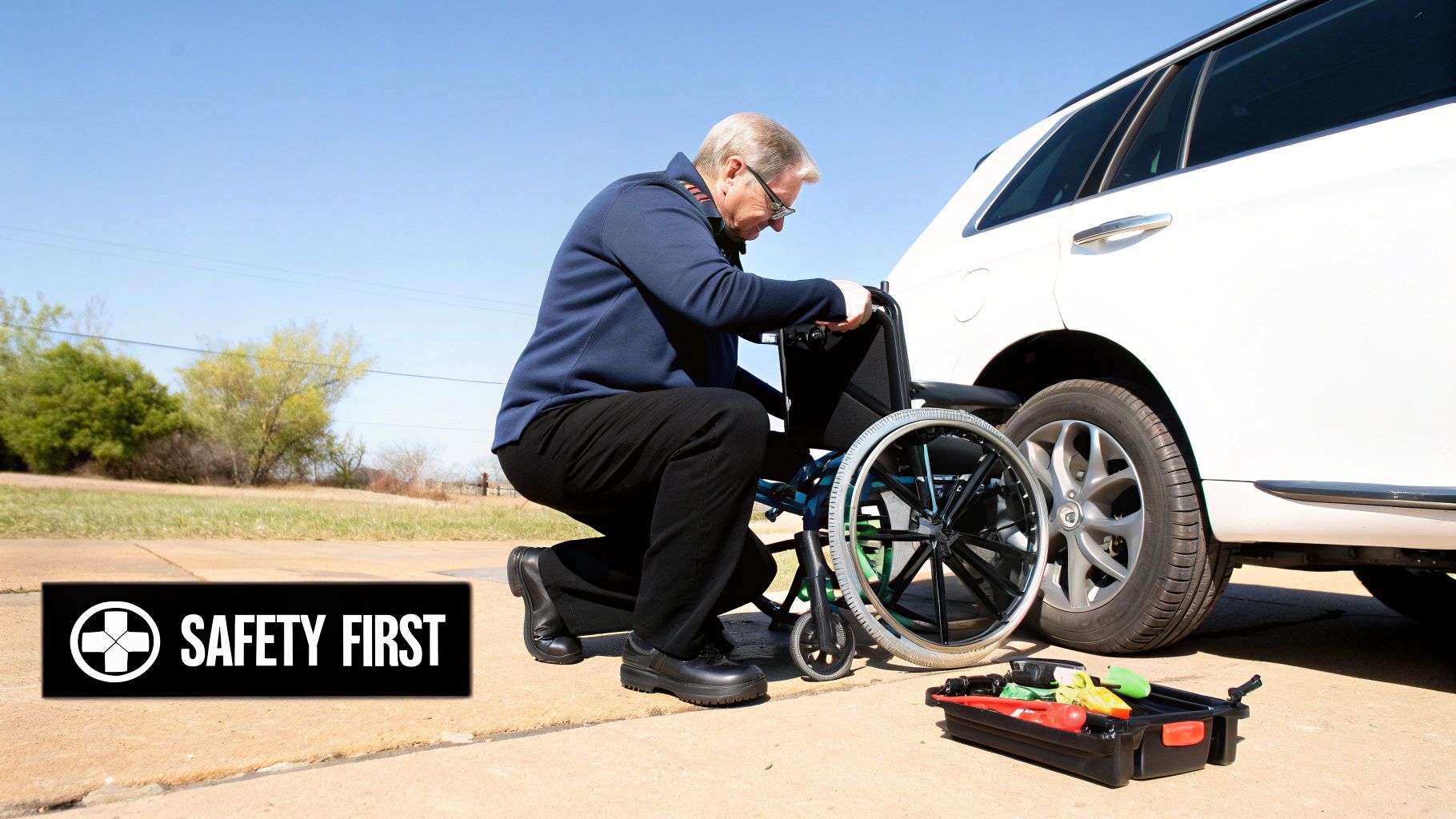
Simple Maintenance For Long-Term Reliability
Giving your transport chair a quick once-over now and then is the best way to keep it safe and extend its life. You don't need to be a professional mechanic; a quick inspection once a month can make all the difference and give you real peace of mind.
Here are the three main things to keep an eye on:
- Check Hardware: Give the handles and frame a gentle wiggle. If anything feels loose, it's time to investigate. Screws and bolts can sometimes loosen up with regular use, so take a minute to tighten them as needed.
- Inspect Tires: Look over the small wheels for any signs of wear. Make sure they spin smoothly and aren't clogged with hair, dirt, or other debris that could make them jam up.
- Keep It Clean: A simple wipe-down with a damp cloth does wonders. It keeps the chair looking nice and prevents grime from getting into the moving parts where it could cause problems.
A well-maintained transport chair is a reliable one. These small maintenance tasks are a simple investment in the safety and comfort of your loved one, ensuring the chair is always ready for the next adventure.
Please note, to keep our services straightforward and affordable, we do not take insurance. This allows us to provide clear, upfront pricing without the delays often associated with insurance claims.
Got Questions About Transport Chairs? We’ve Got Answers.
When you're choosing a mobility aid, a few questions always come up. Getting those answered is the best way to feel sure you’re making the right choice. Let's walk through some of the most common ones we hear from folks in Pinellas County.
Can The Person Sitting In The Chair Move It Themselves?
This is a big one. The short answer is no. A transport chair is built to be pushed by a caregiver or companion.
It has four small wheels, which makes it light and easy for someone else to maneuver, but it doesn't have the large rear wheels you see on a standard wheelchair. If the user needs to be able to get around on their own, a traditional wheelchair is what you’re looking for.
Are Transport Chairs Easy To Lift And Fit In A Car?
Yes, and this is where they really shine! Portability is their main advantage. Transport chairs are significantly lighter than wheelchairs, and many models weigh less than 25 pounds.
They're designed with foldable frames that collapse down easily. You can lift one into the trunk of a car without a struggle, which makes them perfect for running errands, getting to doctor’s appointments, or taking on a trip.
A quick note on payment: People often ask if they need a prescription or can use insurance. You don't need a prescription to rent or buy a transport chair. To keep things simple and affordable for everyone, we do not take insurance. This helps us get you the equipment you need right away, without the typical red tape and delays.
How Do I Know What Seat Size Is Right?
Getting the fit right is key to comfort and safety. It's actually pretty simple to figure out.
Have the person who will be using the chair sit down on a firm, flat surface. Just measure the width of their hips at the widest point, and then add about one or two inches to that number. That extra bit of space ensures a snug, secure fit without being too tight.
For more detailed answers, you can always check out our frequently asked questions section.
From short-term rentals to long-term solutions, Affinity Home Medical Equipment is here to help you find exactly what you need. Discover our full range of transport chairs and other mobility aids.
Share This Article

Written by : lori@netcodesign.com
Follow Us
Latest Articles

October 13, 2026

October 13, 2026

October 13, 2026
